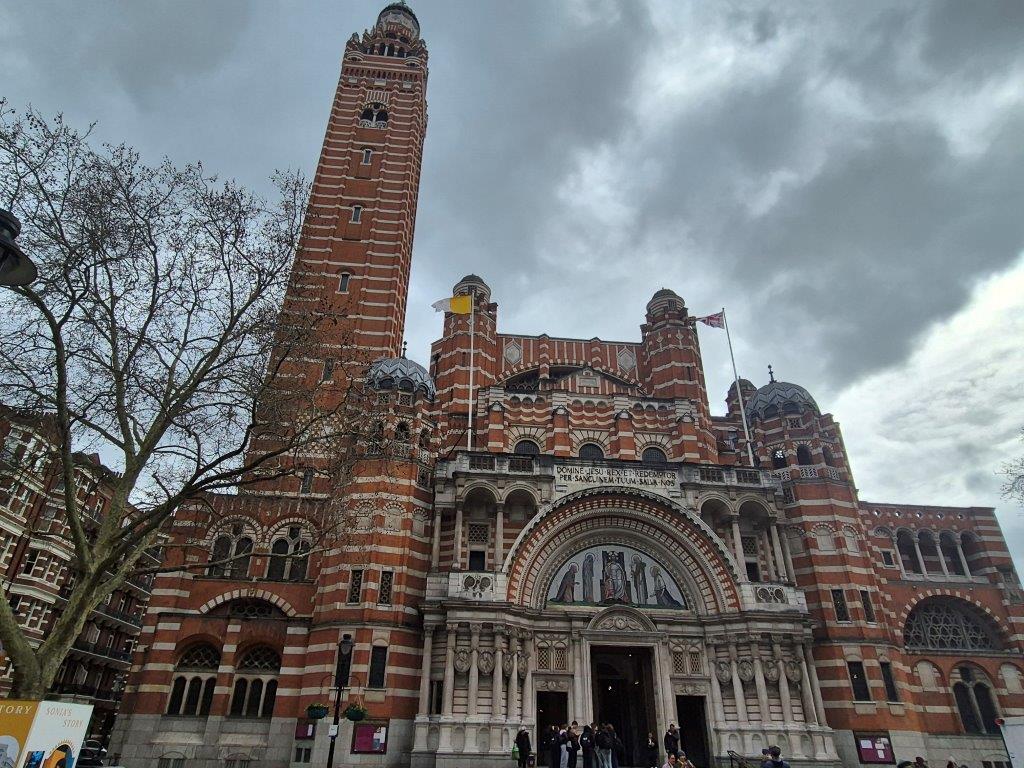
A flying visit to London gave us the opportunity to visit somewhere we have been meaning to for some time, inspired by the weekly blog A London Inheritance. In contrast to Westminster Abbey (£31 for adults to get in!) down the road, Westminster Cathedral is free, although we would have happily paid for the lift up to the viewing platform atop the campanile had it been open. Next time!
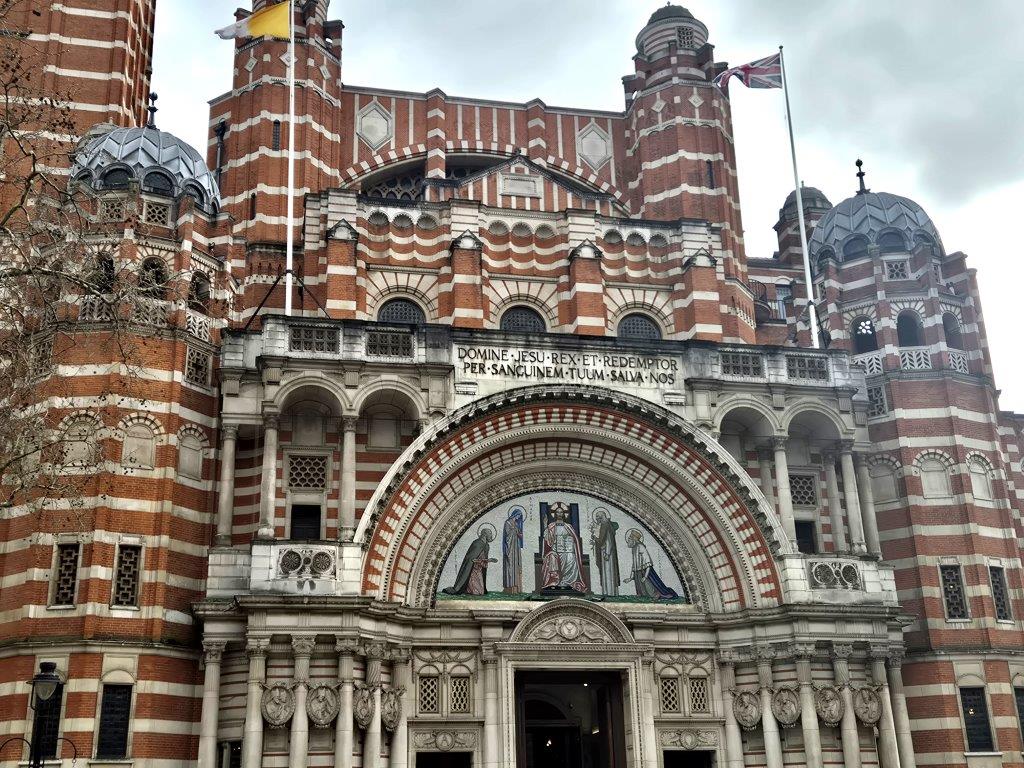
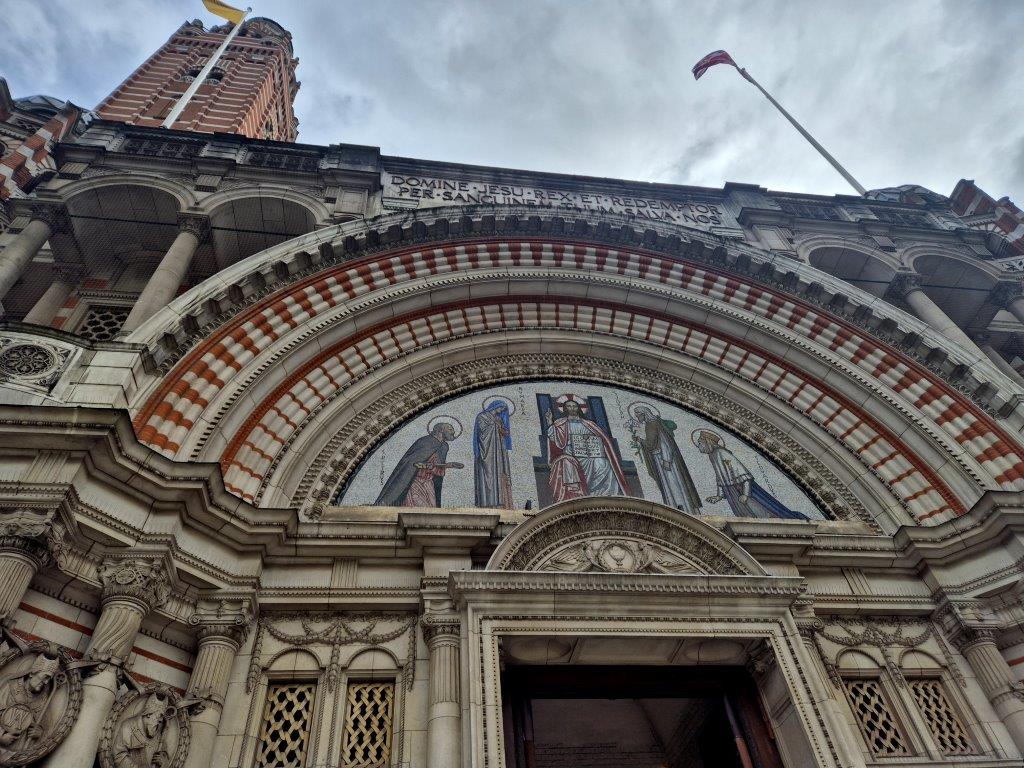
Whereas the Abbey is a typical, old, 13th Century Gothic one, the Cathedral is more modern, dating to the very end of the 19th Century. From the outside it is visually impressive with alternating strata of red brick and Portland stone, reminiscent of Italian churches we have seen in Florence and Orvieto, in a neo-Byzantine architectural style.
Inside is an oddly unsettling experience, with richly ornate side-chapels at the lower levels, but higher up what felt like a void of black (or blackened?) bricks. And the ceiling below the three vast brick domes is similarly unlit and featureless. I later read that this is typical of Byzantine building practices where the decoration is applied once the shell is complete, rather than designed into the structure, so its interior could be considered ‘work in progress’. Together it constitutes the 50th largest church in the world, in terms of its interior area.
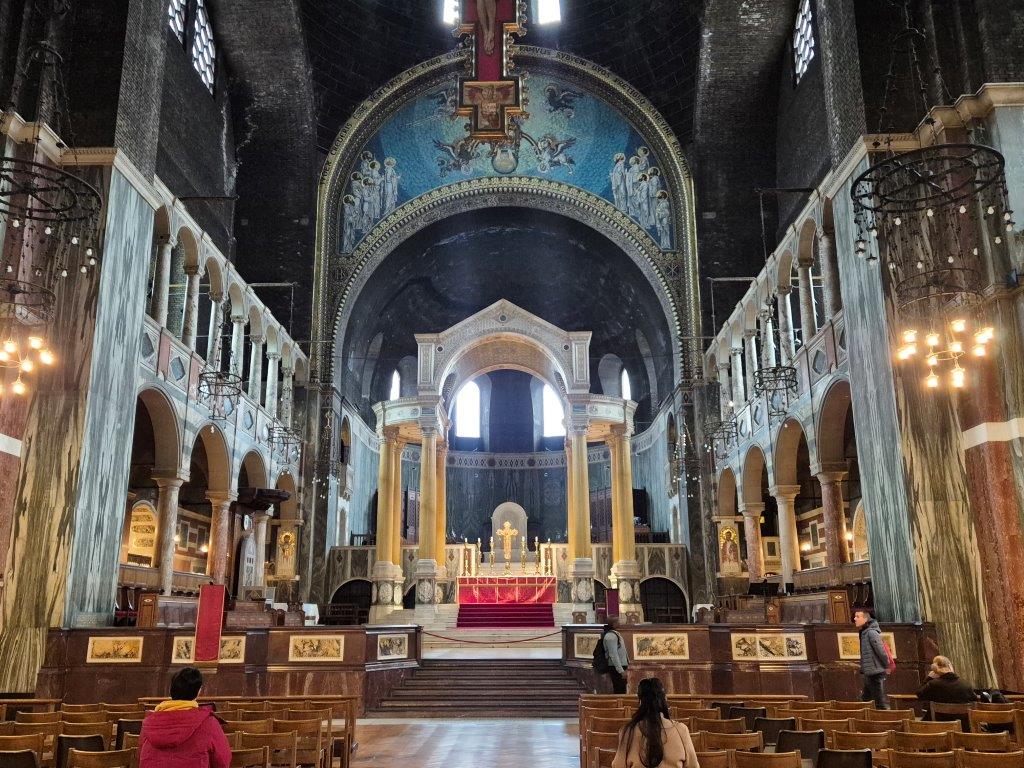
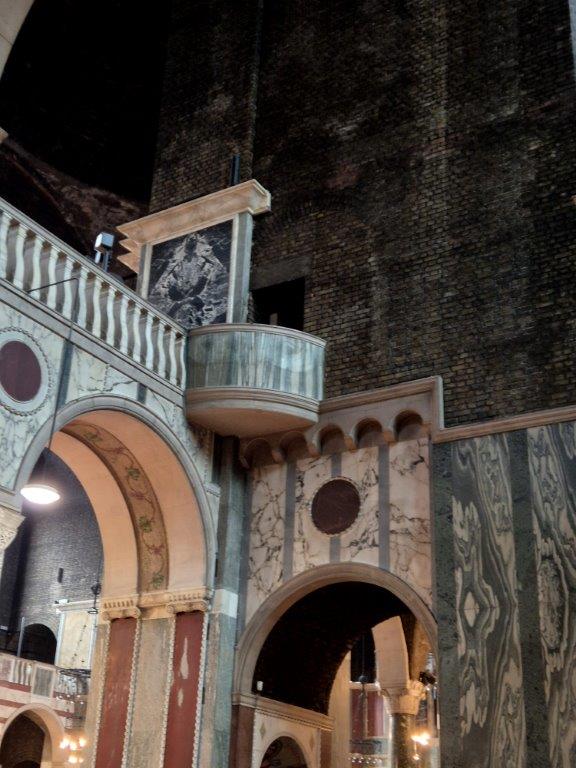
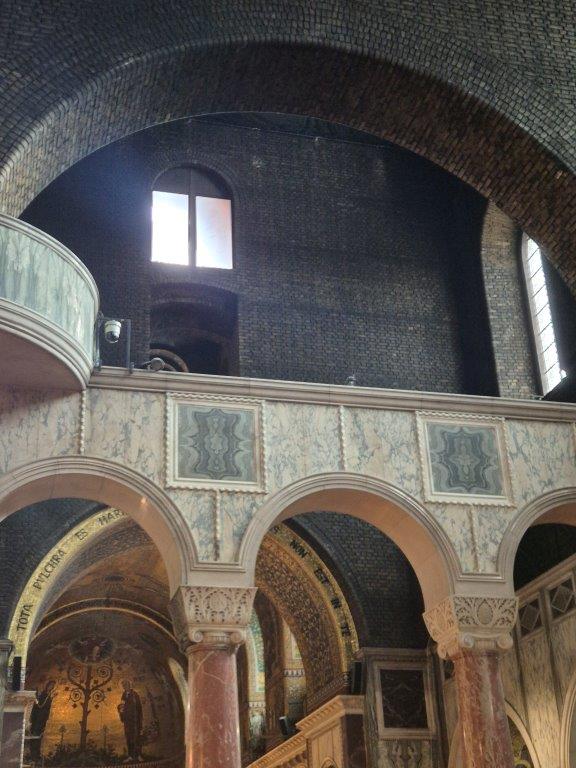
The decorated areas are many and varied:
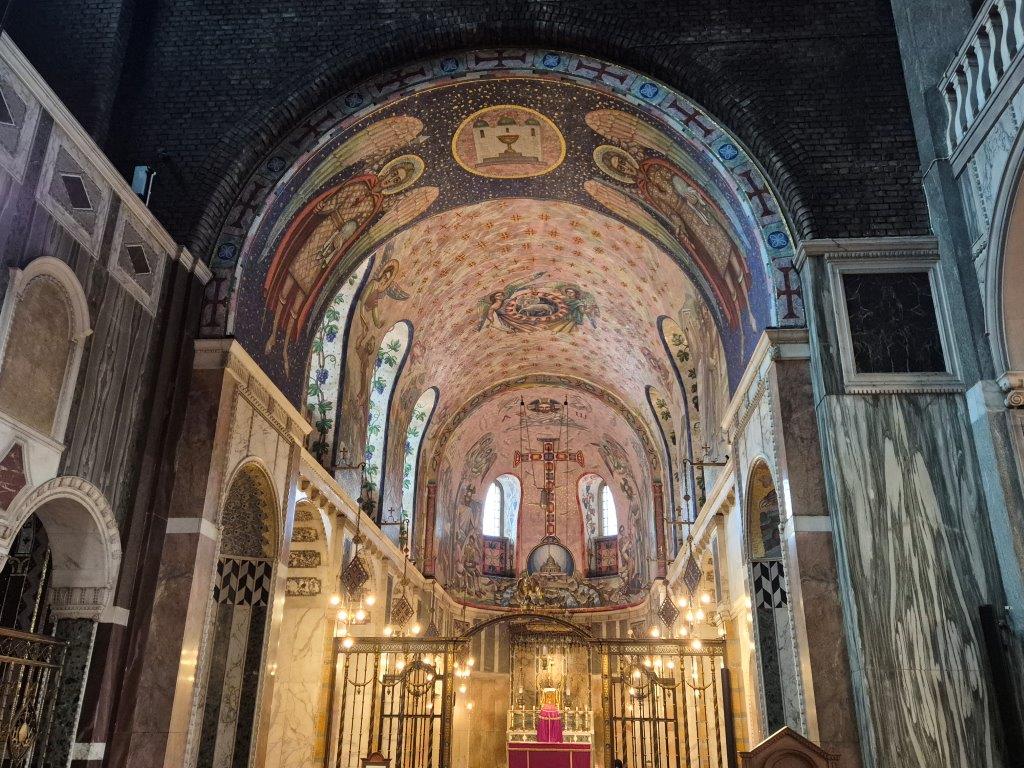
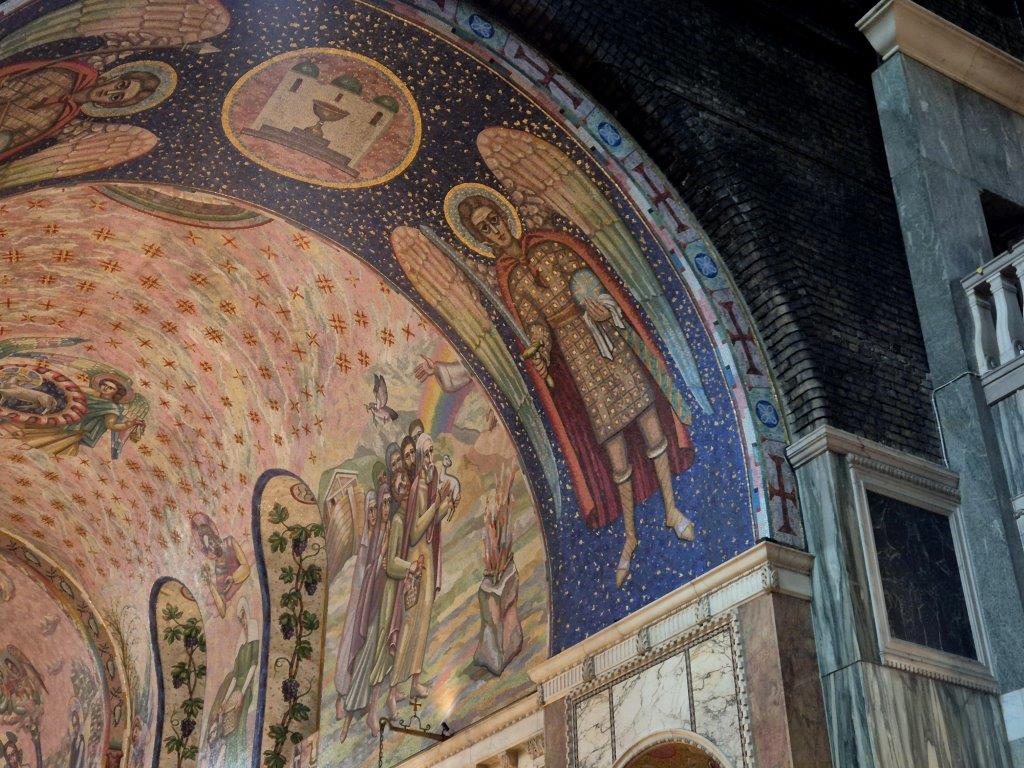
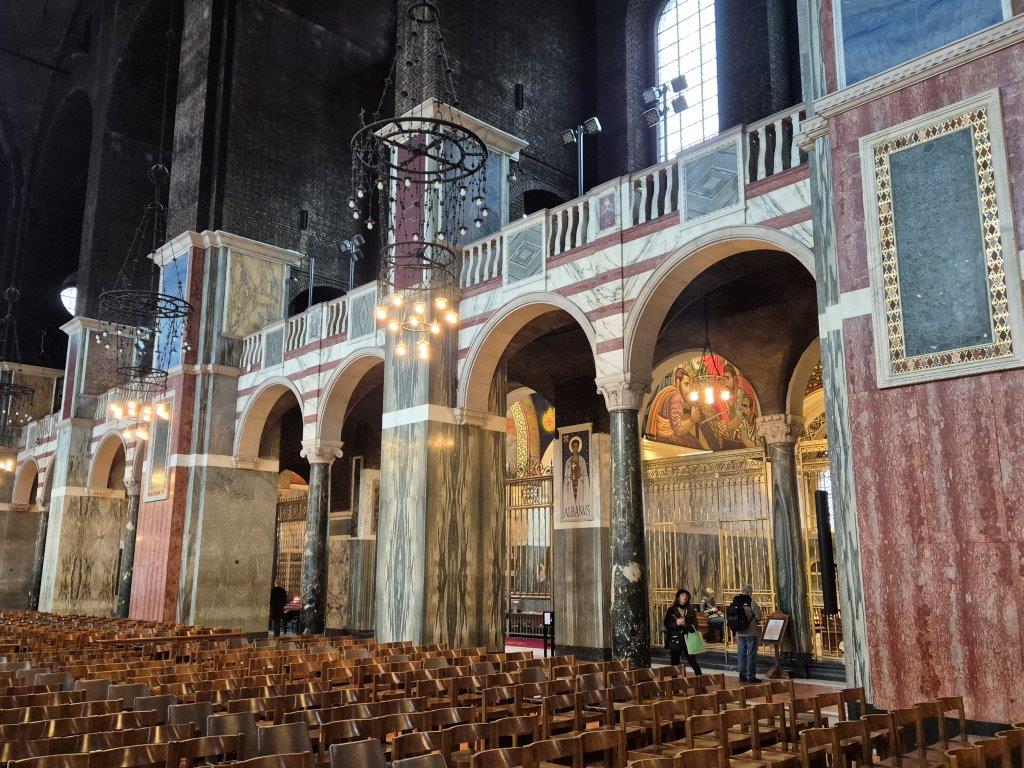
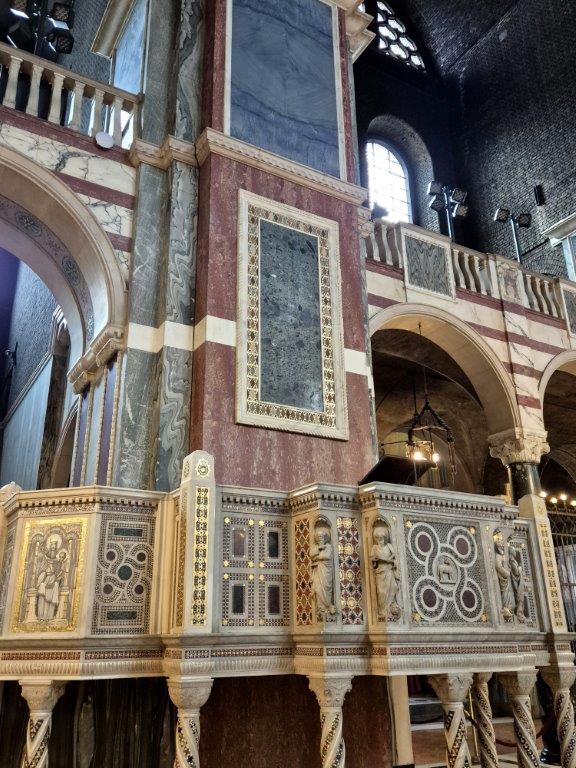
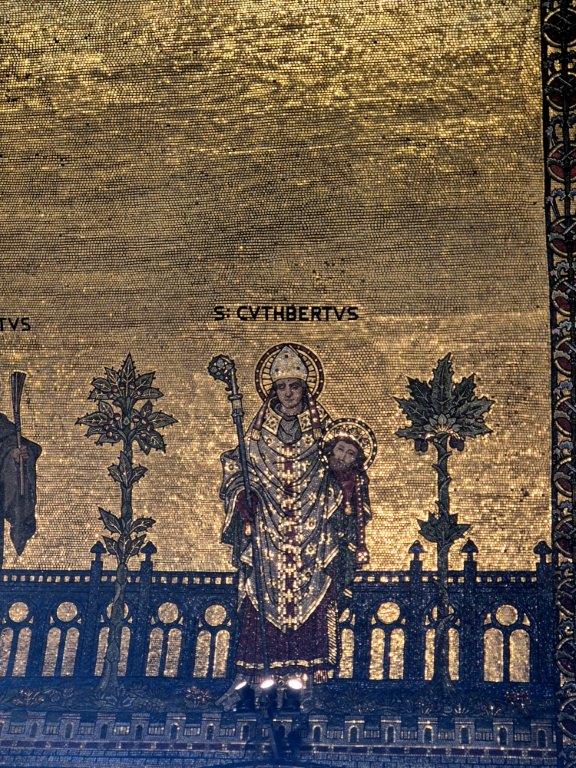
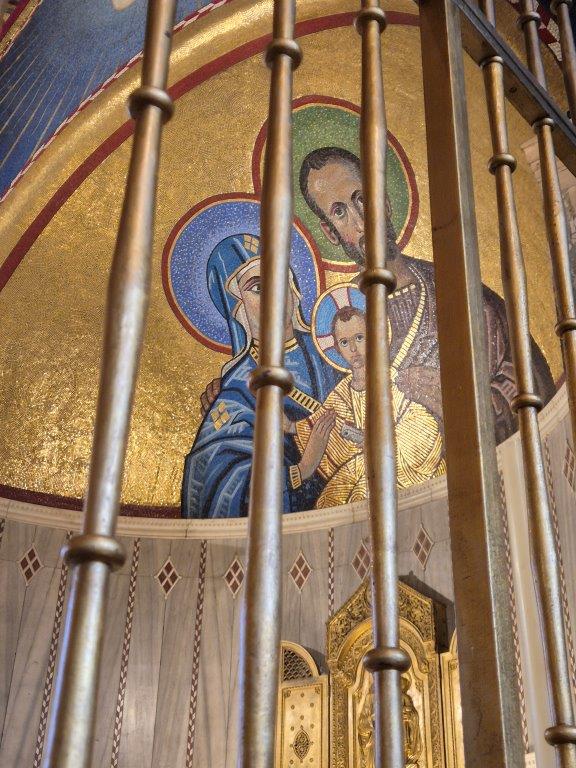
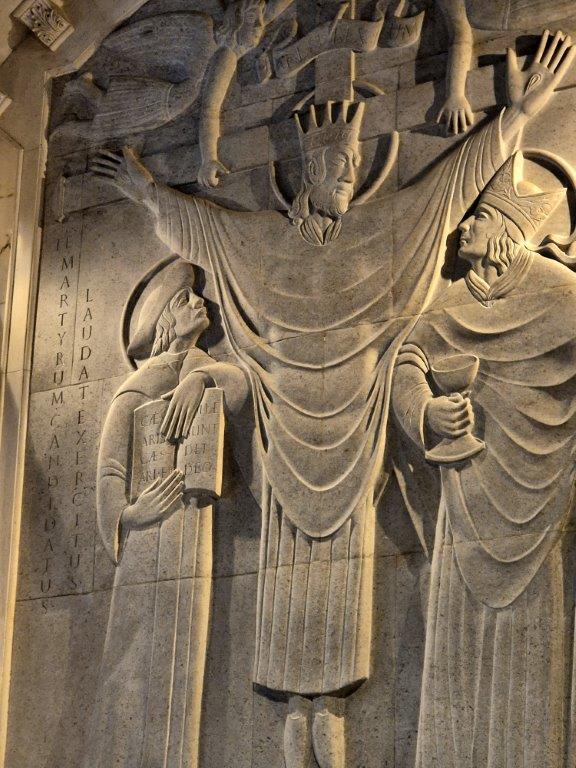
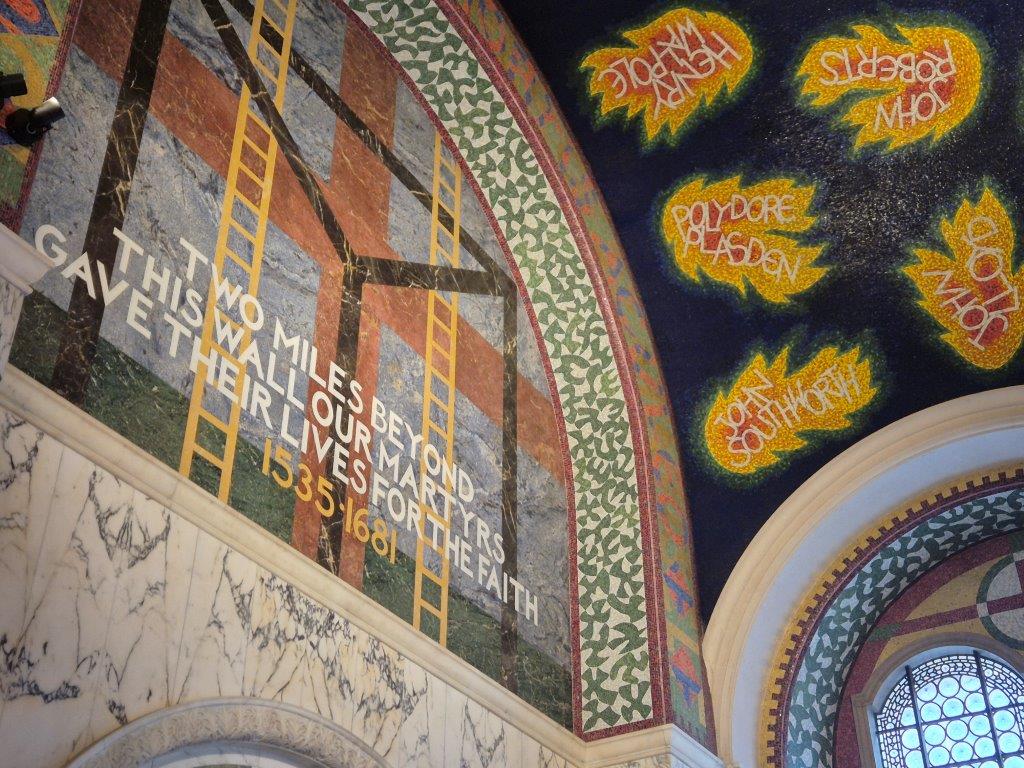
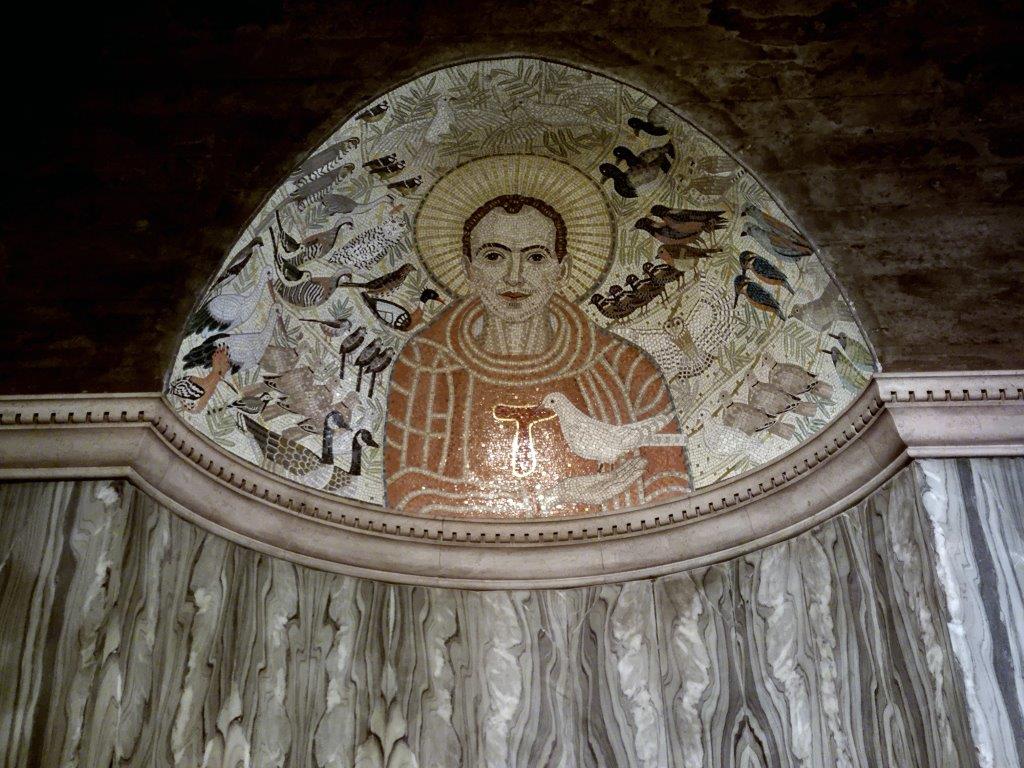
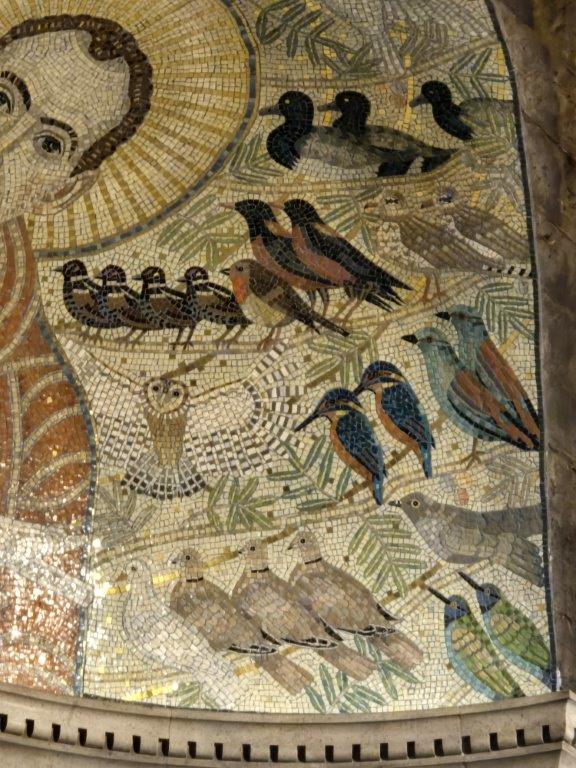
But for me, most interesting were the introduced aspects of the natural world, especially the mosaic of St Francis surrounded by an array of very recognisable European birds…
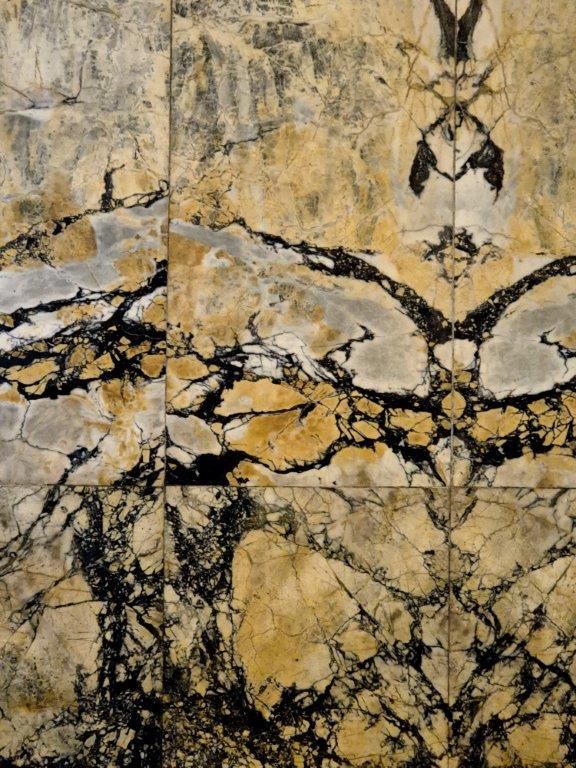
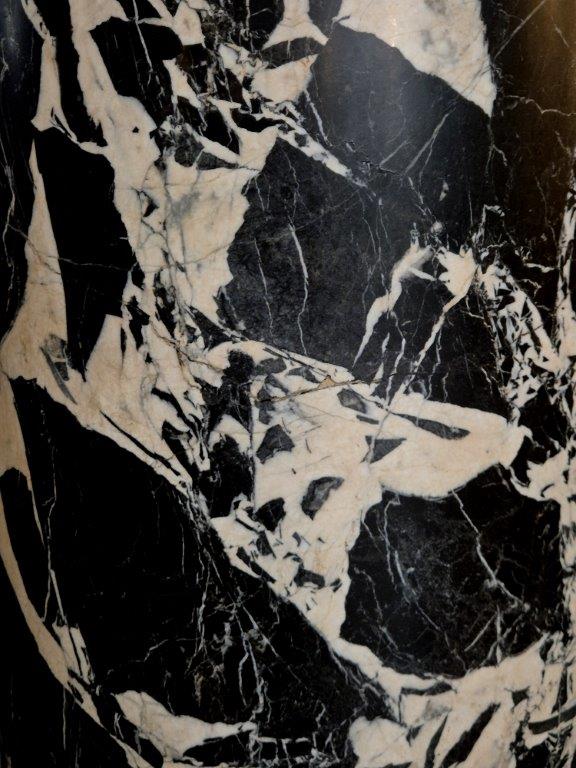
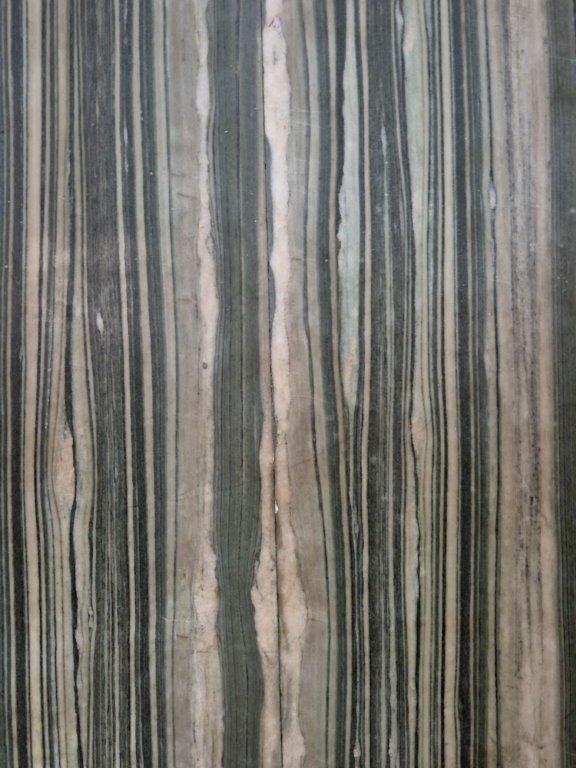
… and the magnificent naturally ornate marble columns and cladding, in all manner of shapes and patterns.
We were heading to the Royal Albert Hall and decided to walk, through impressive streetscapes new to us, although few photos as I was wanting to conserve my phone battery for the trip home.
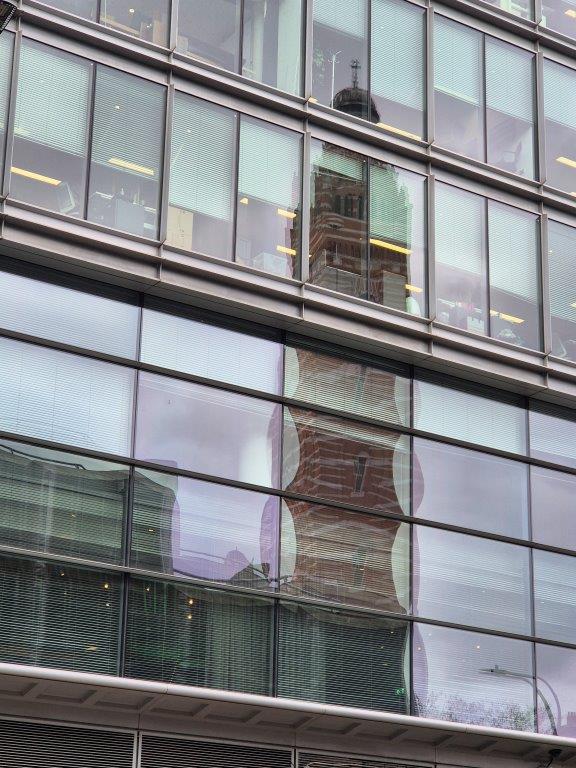
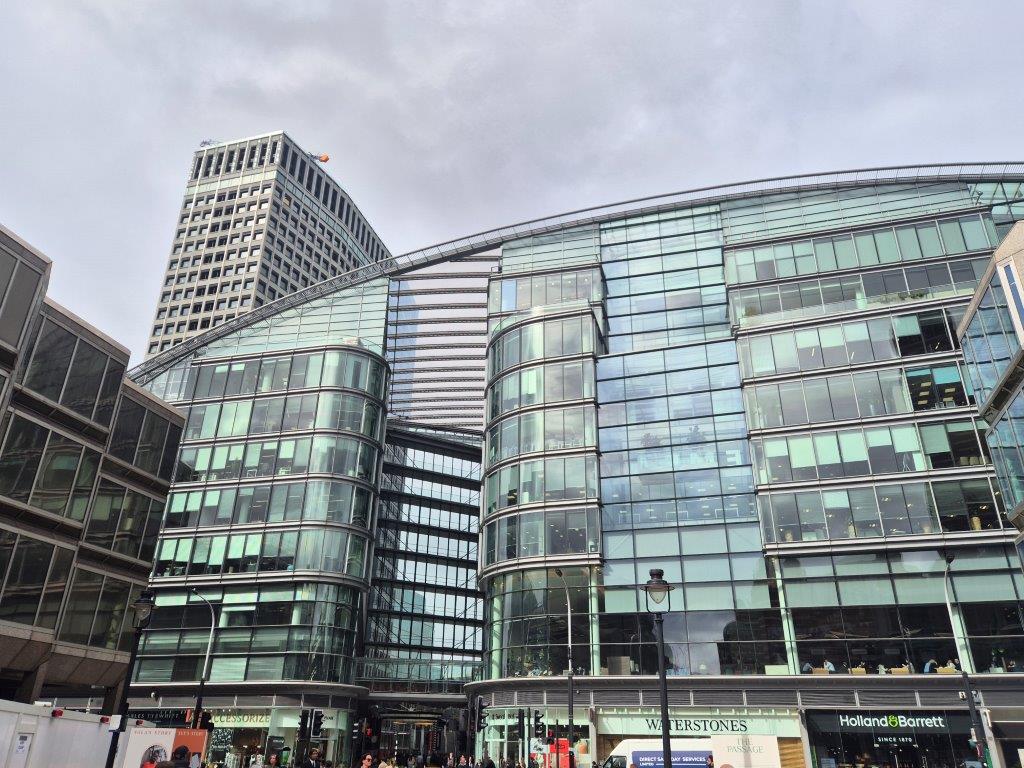
But then we came across St Columba’s church, the absolute antithesis of the cathedral. Whereas the Catholic cathedral is busy, both with people and visually, the Church of Scotland church was as calm and undemanding as a still, summer lochside (minus the midges!). After the former, rather ordinary looking Victorian church was destroyed in the Blitz, the new church rose distinctively with bell-topped tower from the ashes in plain Portland stone.
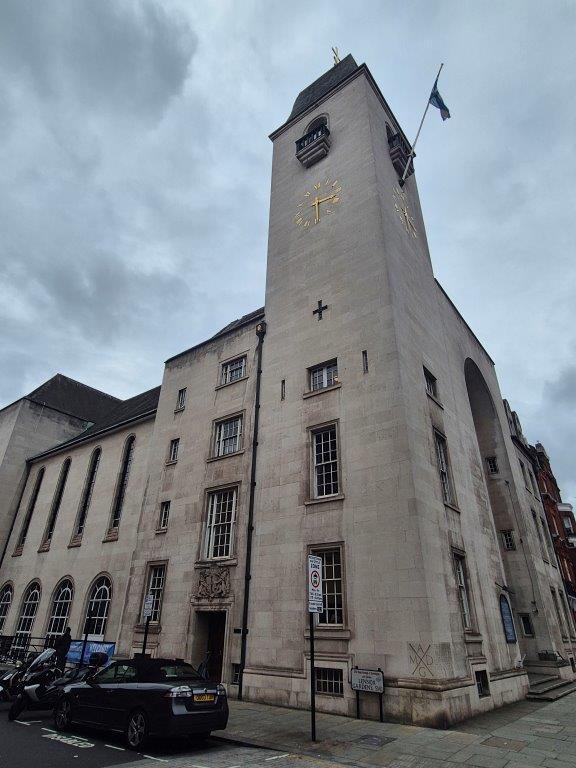
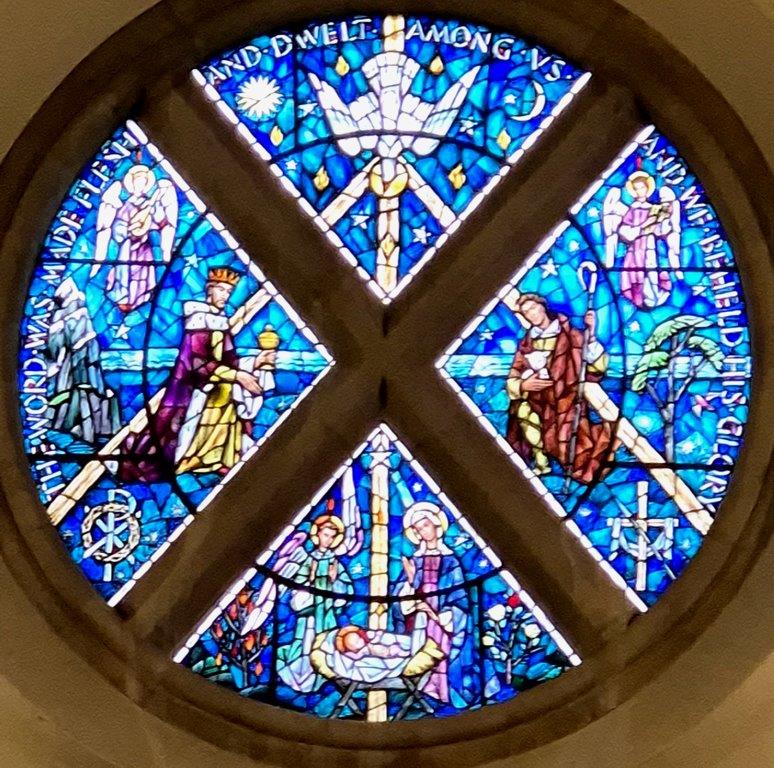
Inside was such a feeling of peace and tranquillity we just had to sit down and let it wash over us. Plain stone, the only real colour coming from the stained glass arranged as a saltire.
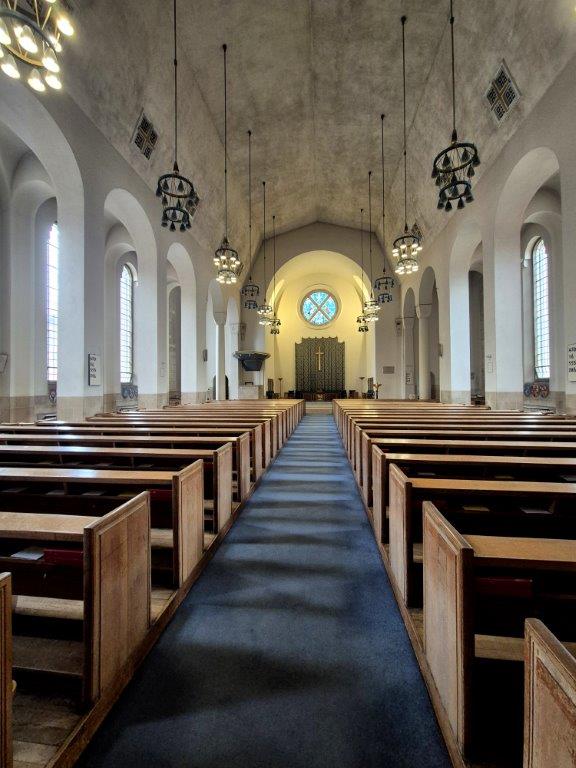
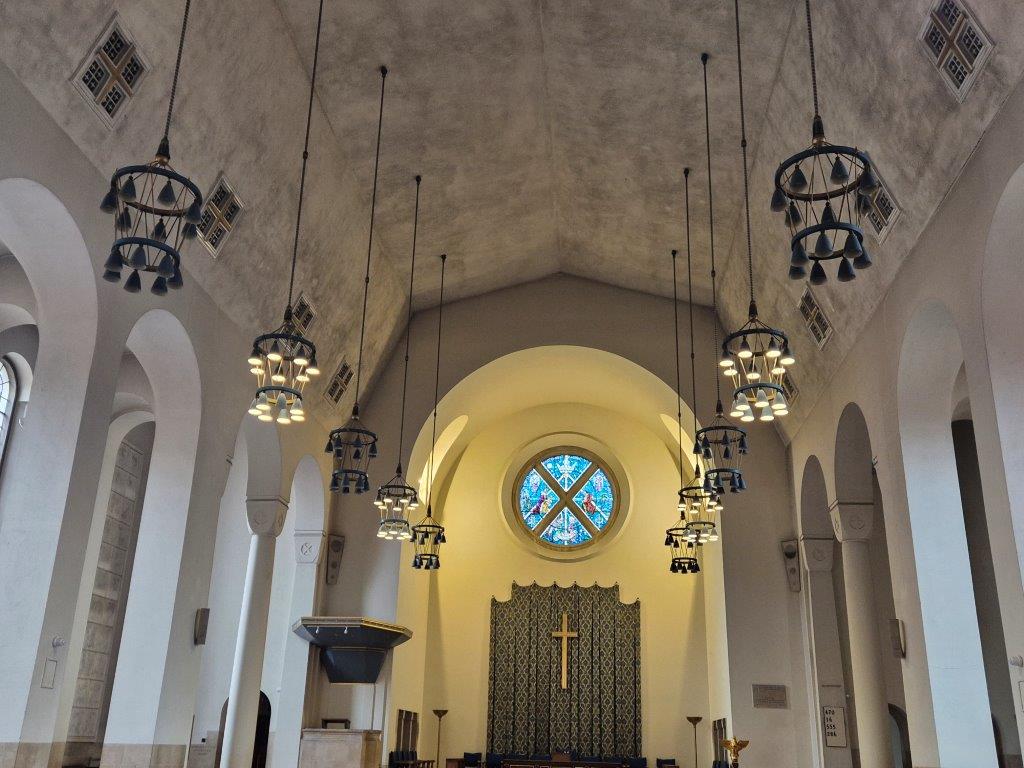
It all felt strangely familiar, especially when we discovered the soaring heights in the wings of the church. Only later did we find out why: it was designed by Sir Edward Maufe, whose masterwork of Guildford Cathedral we had some admired only just over a year ago.
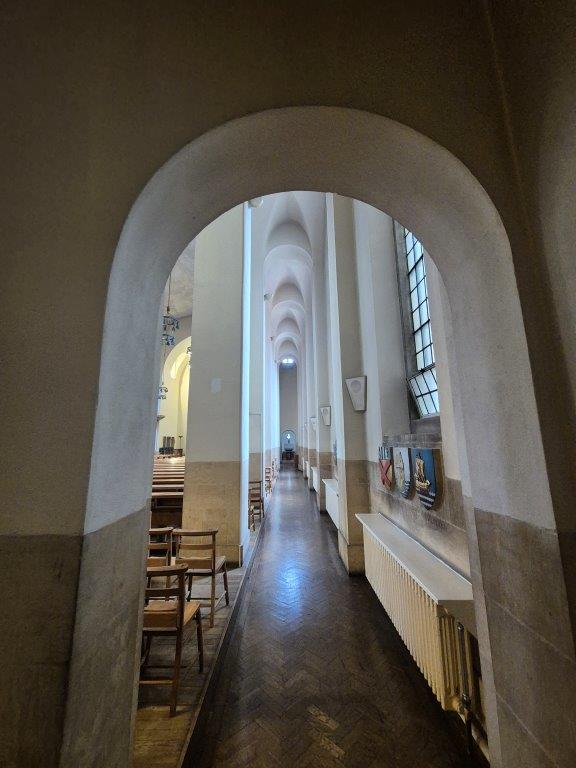
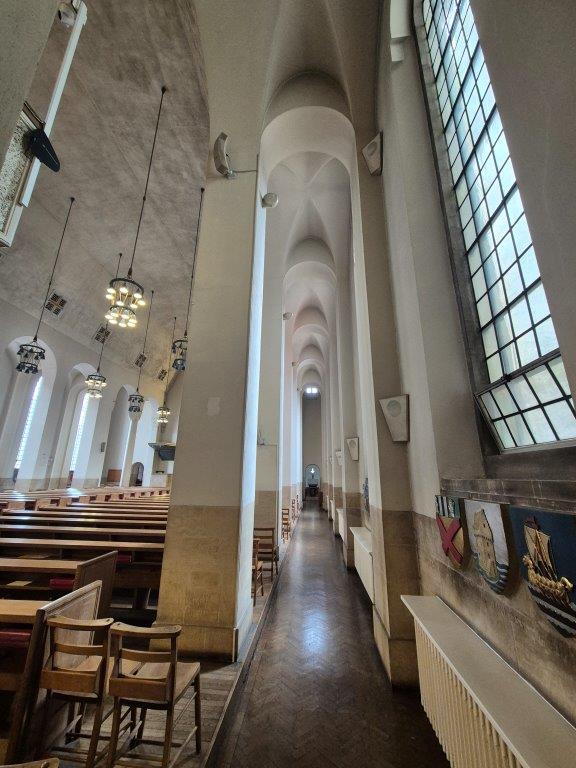
The contrast between these churches could not have been greater. Both were remarkable in their own way. Such differences in ways of worshipping the same God, and a rich store of imagery and experience for those of us with no religious persuasion at all!
We have never really visited this part of the London before, apart from the great museums, but certainly we will be back: the big houses, the mews, monumental buildings like Brompton Oratory, and of course the pubs – our meal in the Queen’s Arms was excellent despite the raucous atmosphere!