Working with the Beth Chatto team gives me all sorts of opportunities to explore the wildlife of gardens, not only the actual Beth Chatto Gardens, but also other gardens in which we have an interest. Below are two blogs I wrote for the Beth Chatto website in January 2026 relating to survey work I have undertaken at Colchester’s Meanwhile Garden and Chattowood, respectively.
Wildlife at the heart of the City: the Beth Chatto Meanwhile Garden
Original post: Wildlife at the heart of the City: Colchester’s Meanwhile Garden

The county of Essex, much maligned, has a rich diversity of wildlife and wild places, with its coastlines and ancient woodlands widely recognised as of the greatest priority and value. But a close third to these are its brownfield sites, a legacy of the proximity to London and a gentle topography, ripe for development.
‘Brownfield’ or ‘previously developed’, call them what you will except ‘wasteland’. These places are anything but wasteland, full of wildlife, and bringing the benefits and joys of green into the lives of anyone who lives nearby, especially important to those of limited mobility.
Brownfield sites come and go with the ebb and flow of development, abandonment and redevelopment. Each is unique as a response to its history and locality. Each contains a unique mix of plants species, a multicultural mix of plants from around the world, that generally arrive under their own steam (eg members of the daisy family and willowherbs with long-distance wind-dispersal) or emerge spontaneously from a long-buried seed bank.
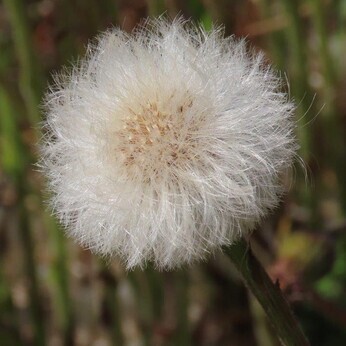
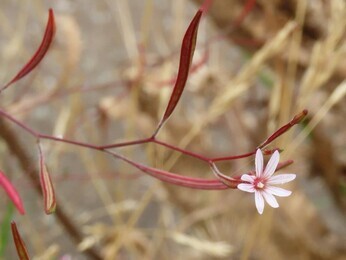
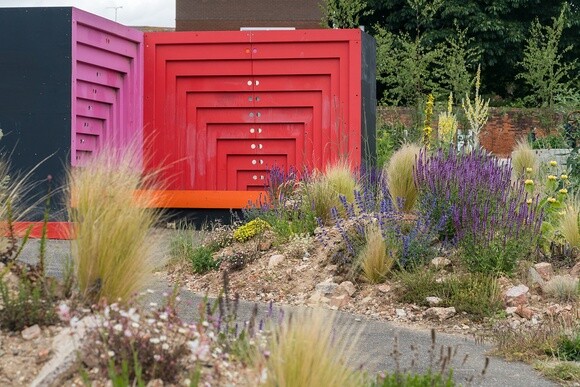
The latest addition to the ranks of Essex brownfields is the Beth Chatto Meanwhile Garden in Colchester. For many years a bus station, when demolished it became an area of urban rewilding. But then a partnership between Colchester City Council and Beth Chatto Gardens saw the arrival of the gardening influence, to enrich it botanically for human and insect visitors alike, and to hold back the march of monoculture (especially buddleja and ailanthus) which would overwhelm its open sunny biodiversity in a matter of years if left unchecked.
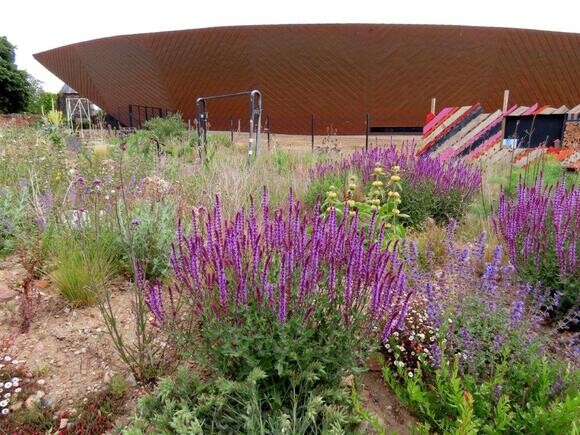
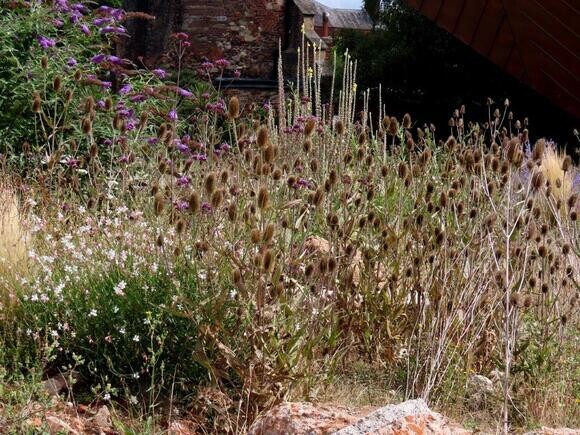
To some eyes it may not look much like a garden: bare ground, rubble, twisted and rusting metal, a mix of planted specimens and things that have just moved themselves in. But that’s Nature for you, and why should the ‘trimmed and tidied, primped and preened’ look be seen as desirable compared with this unplanned urban jungle full of life?
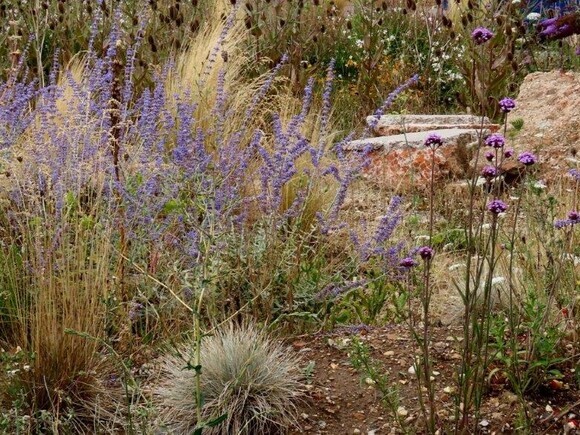
The summer of 2025 represented the first full summer of the Meanwhile Garden since its creation in 2024. We followed its colonisation by insect and invertebrate life with monthly visits from April to September in fine weather. Each visit was only an hour long so this must be regarded as only scratching the surface of its biodiversity, a series of spot-surveys that nevertheless revealed lots of interest.
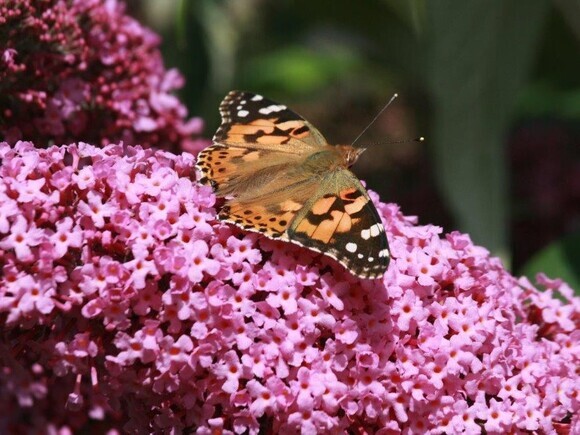
Any new habitat has to be colonised, and unless it is right next door to an existing habitat, insects are more likely to find it if they are powerful fliers. Many butterflies and moths are therefore good colonisers, and included Painted Lady among the array of summer butterflies, attracted especially to Buddleja davidii, often known as Butterfly-bush.
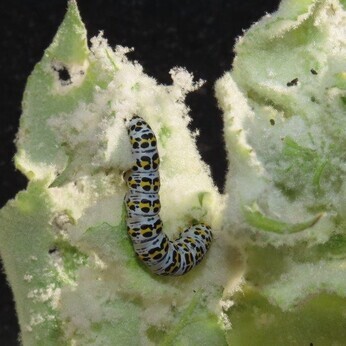
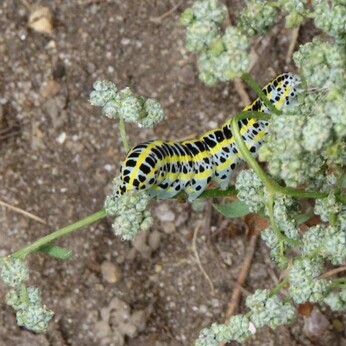
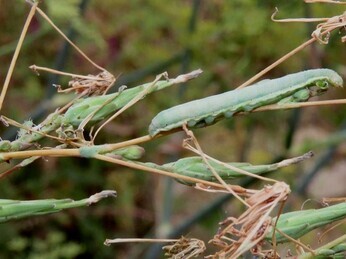
Moth colonists included three species with very distinctive caterpillars. The black-and-yellow-spotted Mullein Moth is common everywhere, while the Toadflax Brocade, more stripy but a similar colour pattern, is a relatively recent recolonist of the UK, and a specialist of brownfield sites and gardens in the south-east. Similarly the green Small Ranunculus, wonderfully camouflaged among the dead flowers of its foodplant prickly lettuce: extinct in the middle of the 20th century but now on brownfield sites across southern Britain.
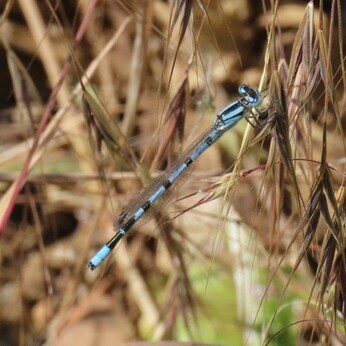
Given the lack of water in the Meanwhile Garden, all damselflies must have come some distance from their breeding ponds and rivers. We found two species, the Common Blue Damselfly (below) and Azure Damselfly.
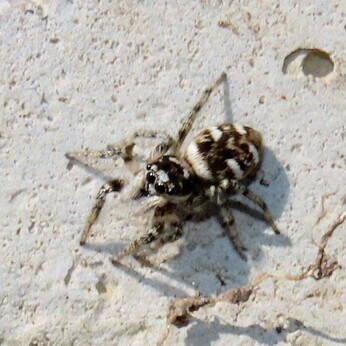
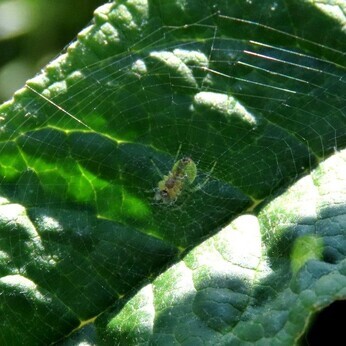
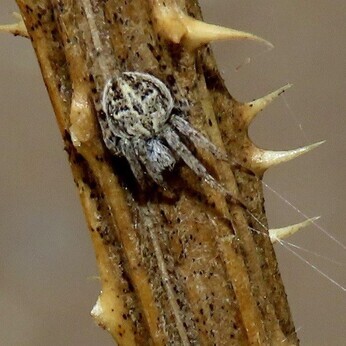
But not everything flies so well. Take spiders: they have no wings. But there were plenty around the garden in the first summer, presumably having arrived on the wind as spiderlings, ballooning on silken strands. Three of the species we found were the Zebra Jumping-spider, Cucumber Spider and Gorse Orbweaver, the latter more typically associated with heathlands.
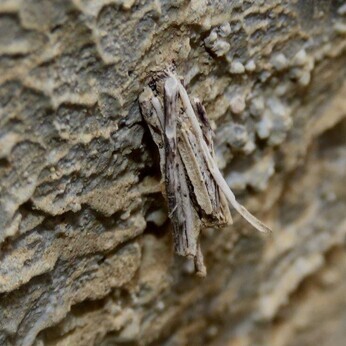
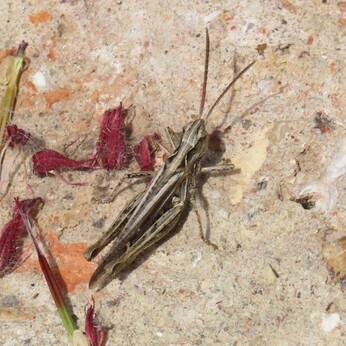
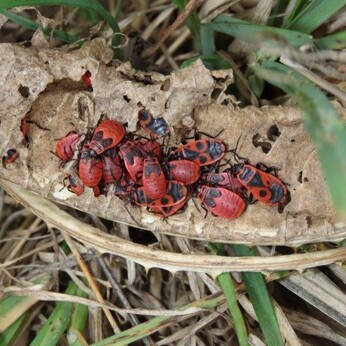
Bagworms are moths that spend most of their lives in a silk bag adorned with bits of their environment. Indeed females spend all their life in the bag. So they don’t fly. Grasshoppers can fly but not far, so to find three species suggests they have come from a nearby grassland. And Firebugs, another new arrival in the UK, are generally wingless. So how did these get to this brand-new site? Of course, there are lots of people passing by and through the garden, so it may be that the visitors inadvertently bring hitchhikers on their footwear or clothing.
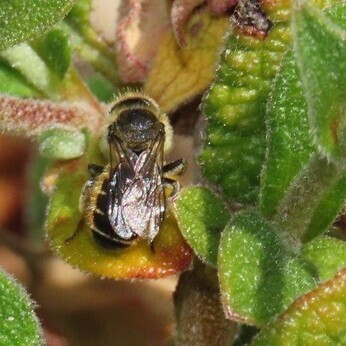
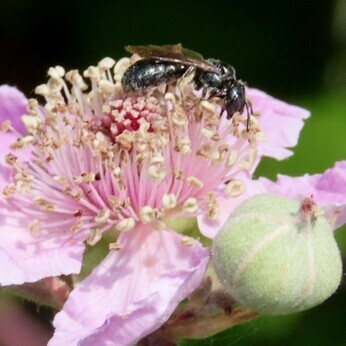
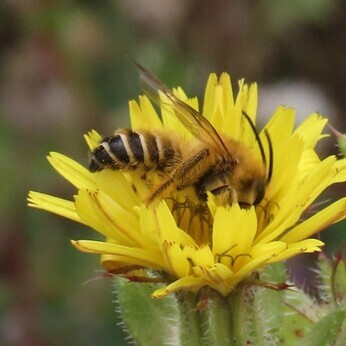
Visiting the flowers throughout the summer were many bees and wasps, attracted especially to the plants introduced by the Beth Chatto team. The selection below includes rare species, some brownfield specialists, and all are pollinators: particular note should be made of the Spined Mason Bee, Little Blue Carpenter Bee, and Pantaloon Bee, all of which are very scarce in the county, found mainly in the Thames-side brownfields. Bee Wolf was similarly rare until its recent explosive spread northwards, fuelled by climate change. All could well be breeding around the site, but one we know certainly is, the also-scarce Four-banded Flower-bee, taking advantage of the bee-hotel.
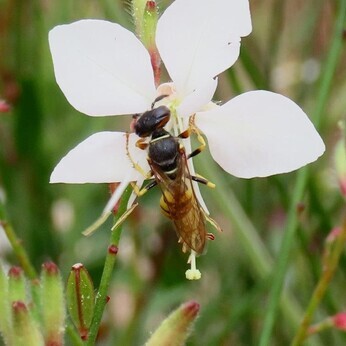
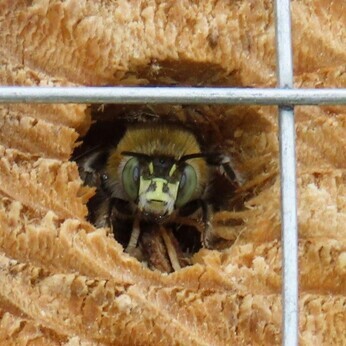
I could go on through all other taxonomic groups – flies, beetles, bugs and the rest – and pick out special features of the garden in the same detail as the above. But suffice to say that in its first summer, Colchester’s Meanwhile Garden was packed with biodiversity, species both common and rare, many specialists of brownfield habitats and many that have benefited from climate change and are spreading northwards using these stepping stones in the landscape. The insects are using all members of the brownfield plant community, the showy garden plants especially for nectar and pollen and the spontaneous flora as larval food plants.
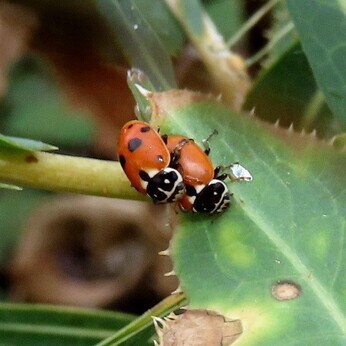
Our final sighting to mention is one of the most surprising to us. July 2025 will be long remembered for the almost unprecedented influx of ladybirds and hoverflies to coastal Essex, probably from the continent. Sadly, the influx which lasted about a week didn’t coincide with one of our surveys. But two weeks later we could still see its remnants, with Seven-spot and Harlequin Ladybirds in abundance (although the latter seemed not to feature among the hordes of incomers).
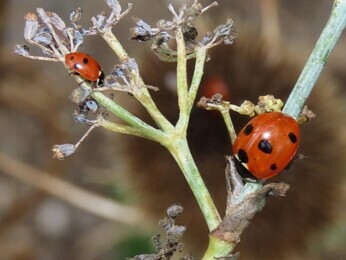
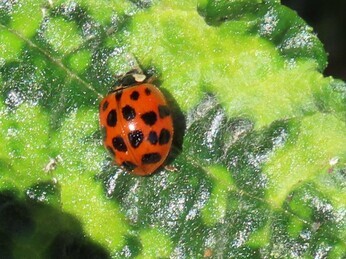
But what attracted our attention was the number of a much smaller beastie, Adonis’ Ladybird. This is another scarce species in Essex, and one that seems to be concentrated close to the Thames, on brownfield sites and arable margins. Prior to this visit we had seen only a bare handful ever in Essex, and the first record from Beth Chatto Gardens was during the influx two weeks earlier. But in the Meanwhile Garden we found dozens, in the July and two subsequent surveys. Most were found on Fennel and Teasel, conveniently at eye-level, but they were everywhere. Will this be carried over to the second full summer? We hope to find out, continuing these surveys for the whole of the coming summer. And we do expect to see changes, some species lost, others appearing: the dynamic lifeblood at the heart of brownfield biodiversity.
The Beth Chatto Meanwhile Garden is a brownfield site like no other, at the interface between natural urban habitat development and gardening. We have no idea how long it will last: the idea of a Meanwhile Garden is that it represents a productive use of an area of land that may ultimately be destined for development. If it ends up being lost, that would be a sad loss for the city centre, but we can at least be happy that the site has pulled its weight for the natural world in the interregnum, and formed an inviting, attractive talking point about the way we want our urban surroundings to look.
Chris & Jude Gibson (with thanks to other occasional surveyors – David Gates, Eleanor Mucklow and Angie Reid)
Chattowood and its insects: the first four years
Original post: Chattowood and its insects: the first four years

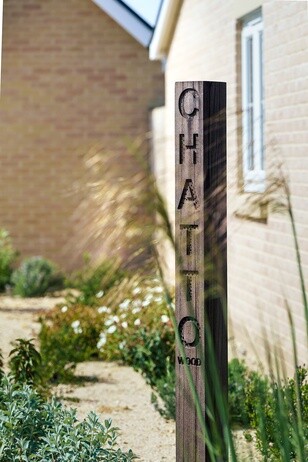
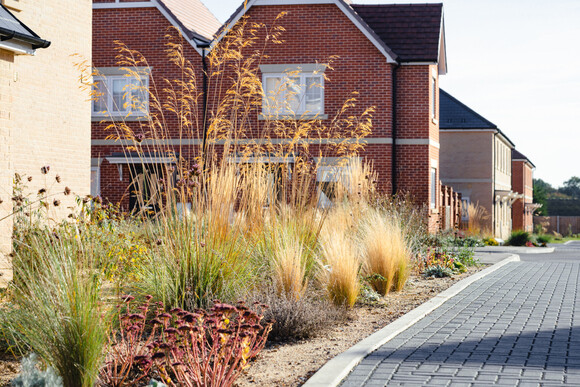
Some of our readers may have seen the Beth Chatto Gardens outreach site Chattowood recently on BBC Gardeners’ World (catch up here). When, some five years ago, a neighbouring developer wanted to use the name ‘Chattowood’ for a new housing estate, Julia (Beth’s granddaughter) agreed on condition that they worked with us on the landscaping for the estate.
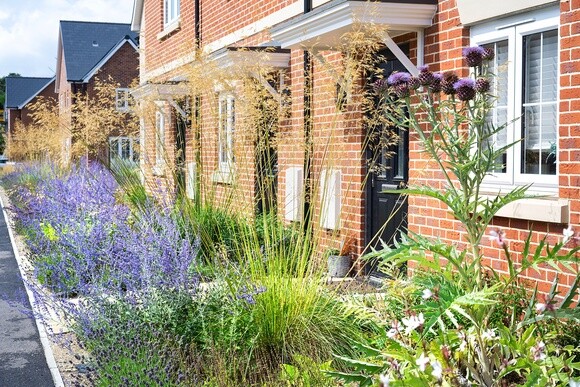
Chattowood sits atop the same ridge of low hills as our garden, so we had a useful model to work towards. In our garden, Beth and Andrew came up with the concept of ‘Right Plant, Right Place’, using plants suited to the soil and climate conditions to minimise the need for further intervention, especially here in the arid south-east the need to avoid having to waste water on droughty soils.
Unfortunately, although lying on the same underlying geology, London Clay with a capping of Thames gravels, the recent agricultural history of the Chattowood site meant it was covered in a veneer of excessively fertile topsoil, really out of character if what you are seeking to something akin to Beth’s revolutionary Gravel Garden.
So the first thing was to lose the topsoil, stripping off some 30cm, and replace the same depth with locally quarried sharp sand and gravel, effectively making the place ‘right’ so that the ‘right plants’ could be brought in, based upon a palette of those in our Gravel Garden. One key requirement was drought-tolerance, another was attractiveness (to us – these are in effect front gardens) and the final one, benefits to wildlife, especially attractiveness to pollinators and other insects.
All that was needed then was for the garden management to be taken out of the hands and vagaries of individual householders, and Chattowood was born. As the Gardeners’ World piece showed, this is turning out to be broadly popular among the owners, some having even taken to try and replicate this in the back gardens they still control! The gardens look good with flowers throughout the year (see plant list), without any need for watering, even in drought conditions, and so resting lightly on the world in respect of its ecological footprint.
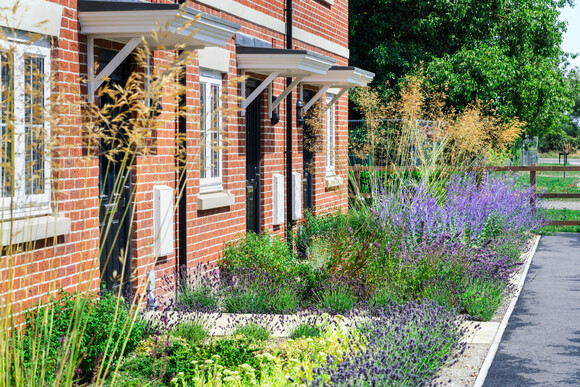
At the outset we realised this could be an important template for future development, at least in similar climate zones, so we set about trying to evaluate the importance of these gardens for wildlife. It just happens that immediately adjacent is a ‘traditional’ estate, all mown grass and lollipop trees, an ideal comparison against which to judge the success (or otherwise) of the Chattowood approach.
Since the first planting I have been monitoring the use of the Chattowood gardens by insects in side-by-side comparison with the next door estate. I spend the same time in each estate, logging everything larger than a ladybird, and identifying it where possible without interrupting the flow of the survey, trying to do each estate in 20 minutes to reduce the degree of double-counting of often very mobile insects.
This is not so much a biodiversity survey (which would have taken much more time to ensure correct identifications) but a bioabundance survey. While everyone is, or should be, concerned about biodiversity loss (ie extinctions), the lower abundance of life we are seeing is just as concerning. Remember that your average Blue Tit won’t mind if it eats one or ten species of aphid, so long as it gets enough to eat! Arguably, it is bioabundance, not biodiversity, that underpins all food chains, including those that support our own species.
A high level overview of the surveys shows most importantly a constant, significant imbalance between the Chatto-style gardens and the adjacent traditional front gardens. It would appear that there are typically ten times as many macroinvertebrates (mostly pollinators) on our side of the divide. I think it may be best not to pay too much heed to the data from 2022 which indicated an even greater imbalance as surveys were undertaken that year only after midsummer.
| year | surveys | total number of larger insects in Chattowood | total number on the other side, the traditional estate | ratio Chattowood: traditional |
| 2022 | 6 (19 Aug-22 Sept) | 120 | 6 | 20:1 |
| 2023 | 6 (17 Apr – 4 Sept) | 233 | 28 | 8.3:1 |
| 2024 | 7 (7 Apr – 17 Sept) | 240 | 25 | 9.6:1 |
| 2025 | 6 (24 Apr – 19 Sept) | 426 | 39 | 10.9:1 |
The message is clear: plant the right plant in the right place and it will reward not just us but also the natural world. And what are the right plants in this context? Clearly this will vary across the country, but here in Essex, salvia, oenothera, verbena, lavandula, buddleja and santolina seem favoured and these should be suitable in most areas provided that free draining ground has been created to avoid the roots becoming waterlogged.
The broad data also show clearly how much better 2025 was across the board than either of the two previous years. On the Chatto side, there were some 75% more, while on the other side of the great divide there were around 50% more, although it must be recognised that sampling effort was not exactly consistent between years. This pattern was widely repeated everywhere, so we cannot claim it as one of the successes of Chattowood!
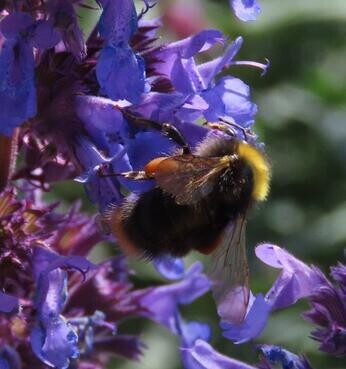
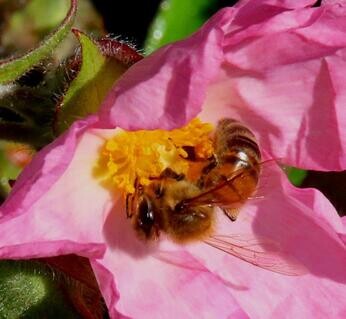
The vast majority of the larger insects attracted to Chattowood were pollinators, species that habitually trawl around the landscape to find flowers with appropriate nectar and/or pollen resources. Just over a half of the thousand or so counted in my surveys were bumblebees, of at least five species. Another 15% were honeybees, with 5% solitary bees.
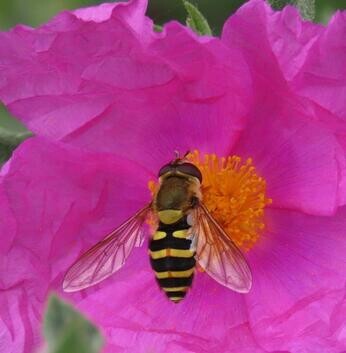
Flies made up about one-tenth of all observations, half of which were hoverflies with the remainder from a range of families.

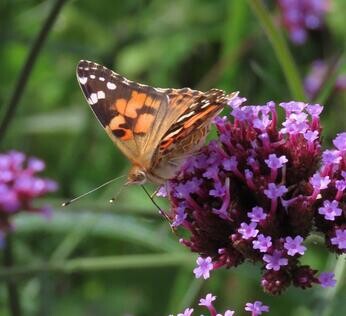
Of course many of the most showy insects are butterflies and moths, whose numbers together made up just 5% of all observations. A total of nine species of butterfly were observed, together with two noticeable day flying moths, hummingbird hawk-moth and mint moth.
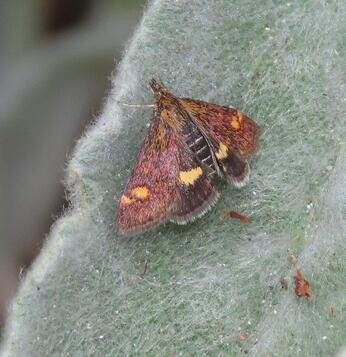
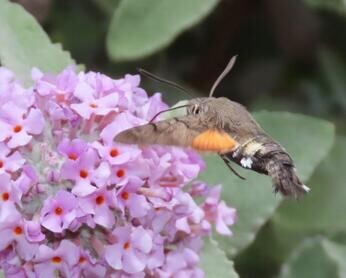
With the passage of time it has been noticeable that the number of ground nesting insects has increased in the older Chattowood plantings: I suspect that as a crust has developed on the surface of the sand nest holes don’t collapse. Three species at least colonized from 2024 onwards: bee-wolf, ivy bee and sand wasp. The first two are not too surprising given that they have undergone significant spread from southern regions in recent decades due to climate change, but the sand wasp is different. It has always been found in appropriately sandy areas, for example along the Suffolk coast and around Tiptree Heath, but is not known in the Beth Chatto Gardens nor anywhere nearer than maybe five kilometres’ radius from Elmstead Market. It just goes to show that these habitat-specific creatures are moving around our landscape, often much more than we imagine, and that if we provide the right habitat, so they will find it.

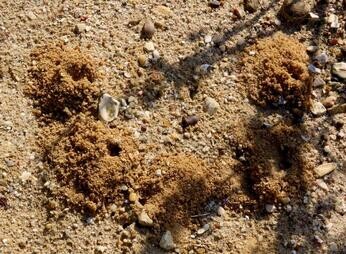
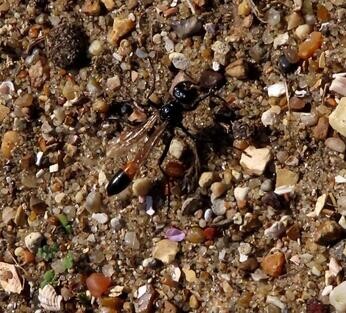
Our garden staff also reported finding earthworm casts on the pure sand in autumn 2025, and fungi growing out of it. Both are significant, indicating that organic matter is collecting in the upper layers, perhaps related to the crust that allows bees and wasps to nest. The bare sand is developing an ecology: what lies beneath the surface is adding complexity and life. The gardens are still changing, and changing for the better for wildlife, and as long as there is something to learn I shall be out there counting!
Chattowood is a tribute to Julia’s vision and persuasiveness, the hard work of the Beth Chatto and Lanswood teams and the forbearance of the householders, and provides a vision of a sustainable future for gardens and housing developments, especially living in the global greenhouse. What an antidote to the sterile, ecopathic trend for ‘plastic grass’ and the like!
Dr Chris Gibson, Beth Chatto Gardens’ Wildlife Advocate