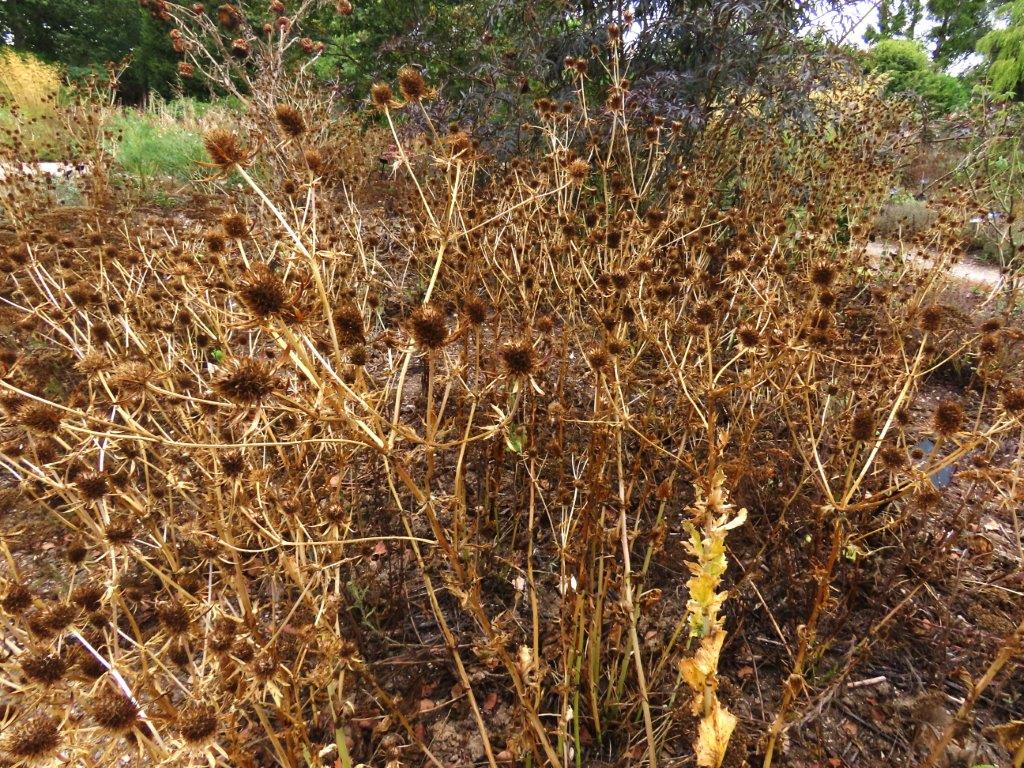
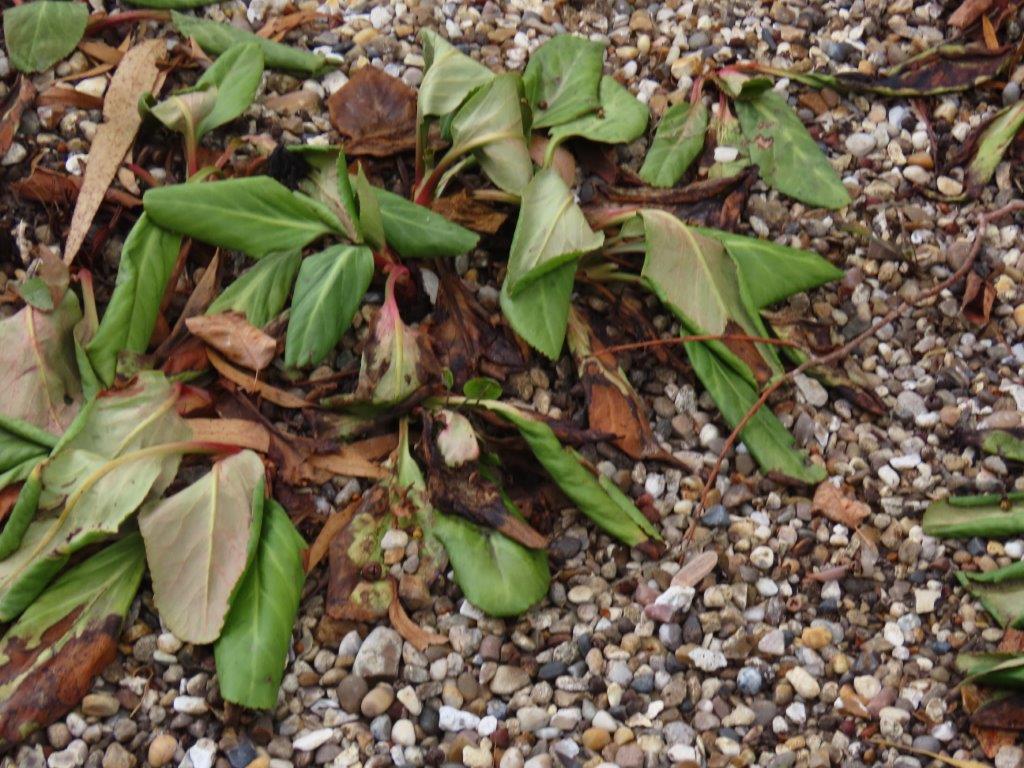
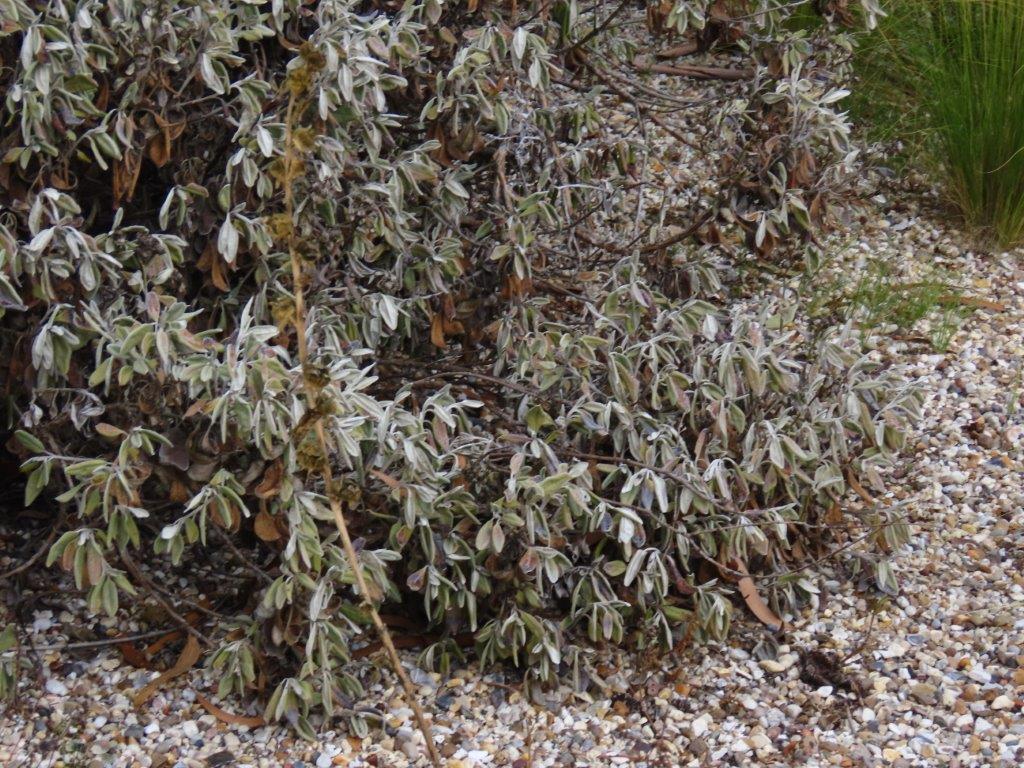
After our ferocious summer, late August and early September produced some very welcome rain. Not enough to replenish the drought of the past few months, but our plants started to respond immediately. Having said that, the highest, driest parts of the garden on sand are still pretty bleak, with widespread wilting, some senescence and little of the late summer flush of nectar-bearing flowers to support our insects.
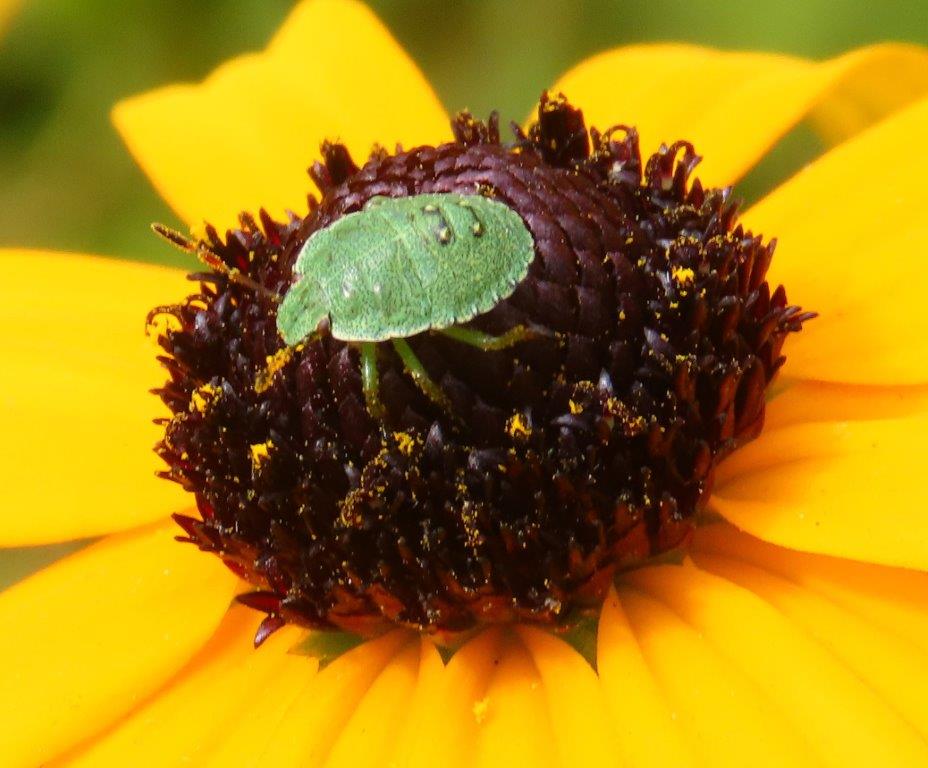
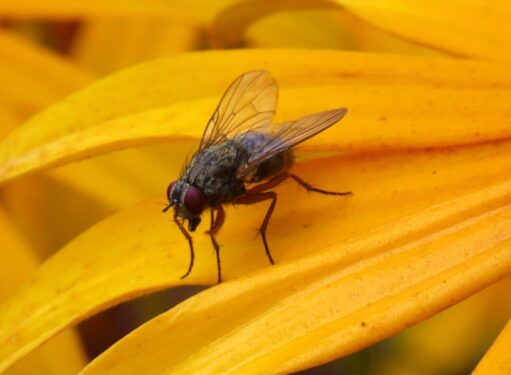
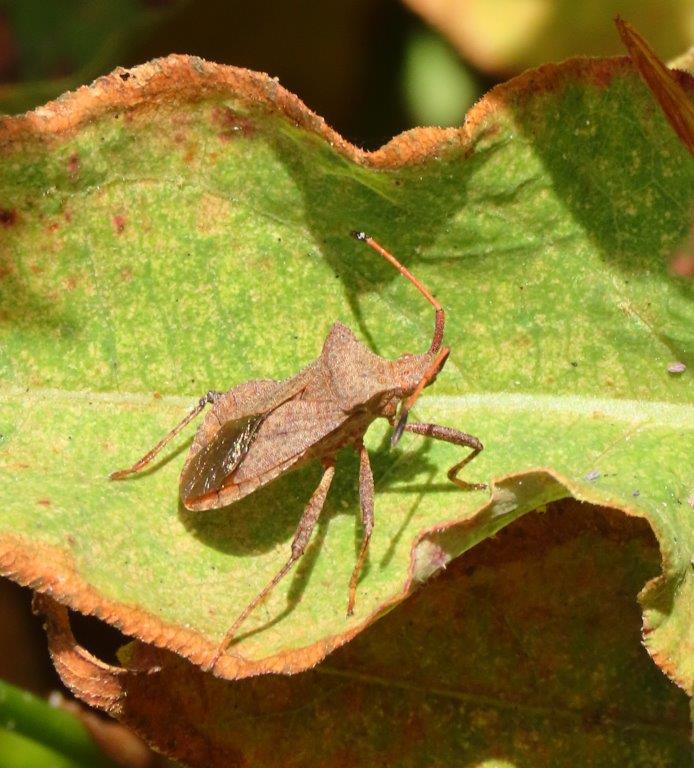
So for the first two weeks of the month, pollinator populations decamped largely to the Water Garden on moisture-retentive clay soils, where the massed floral riches of August remained, particularly the swathe of Rudbeckia. Here in sunlight at least, it seemed that every flowerhead had its visitors. There were true bugs, including Green, Hairy and Red-legged Shieldbugs together with Stictopleurus abutilon, a beastie that in Essex is found particularly along the Thames Corridor…
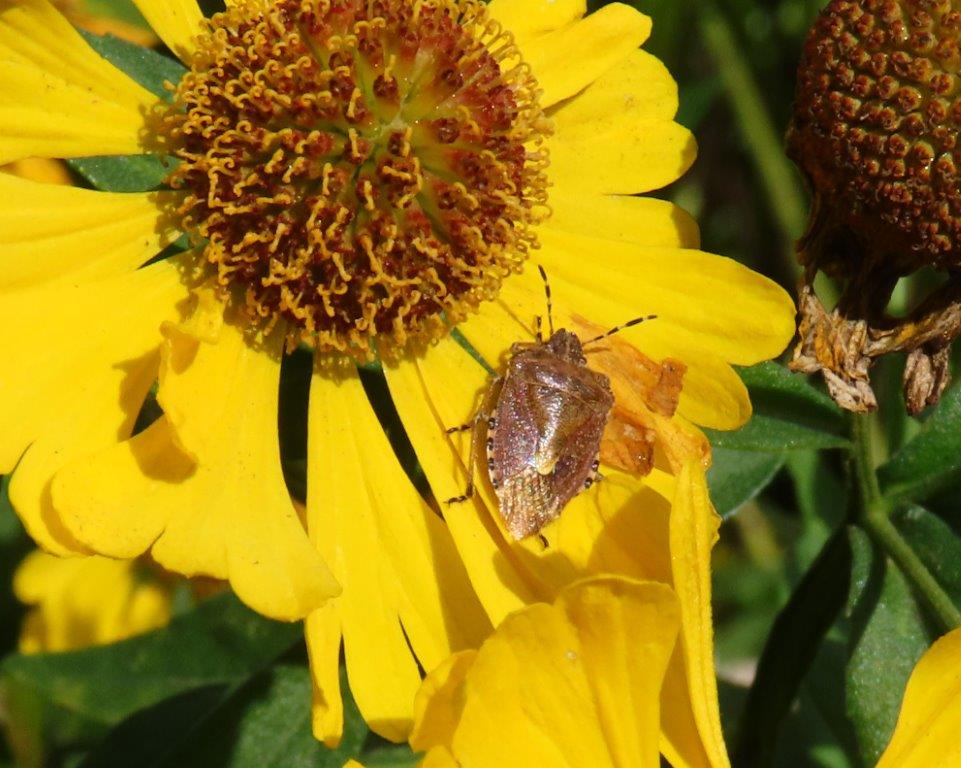
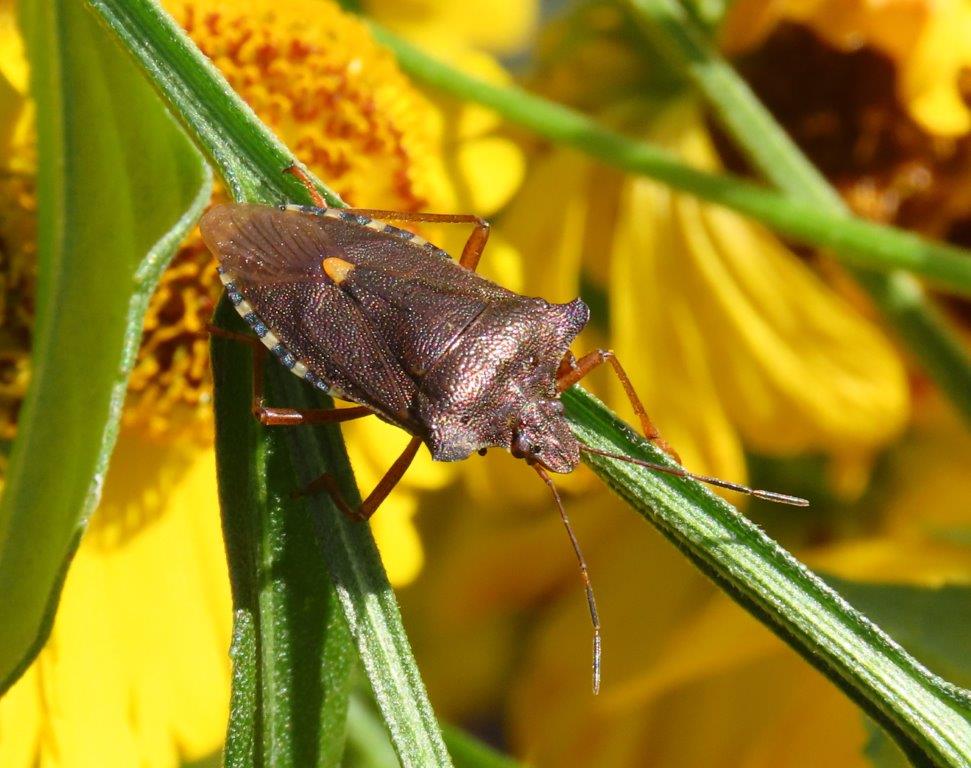
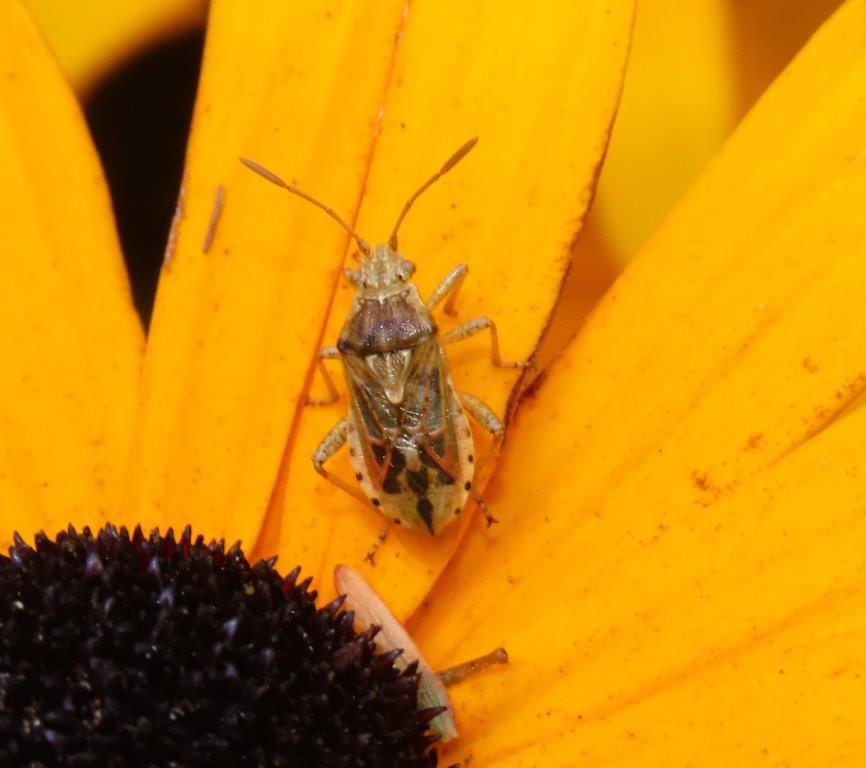
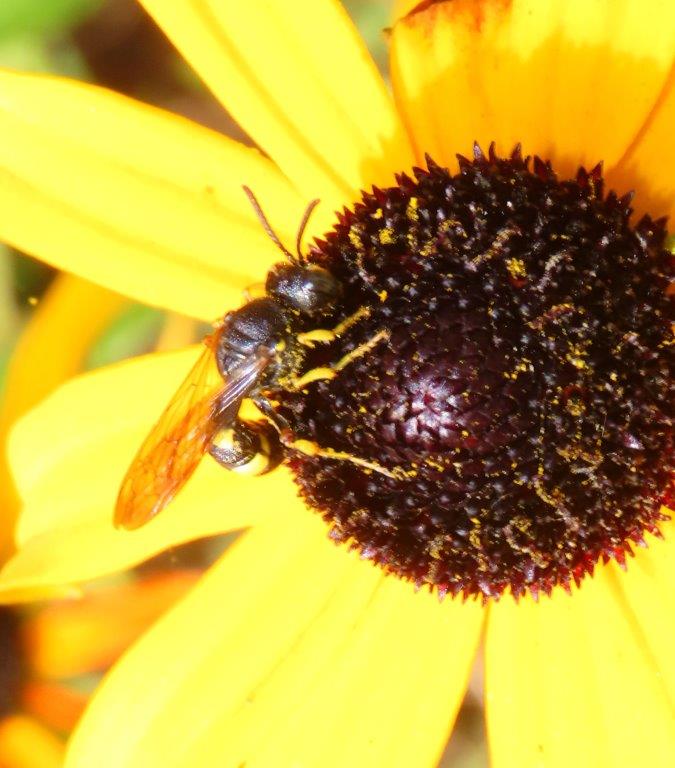
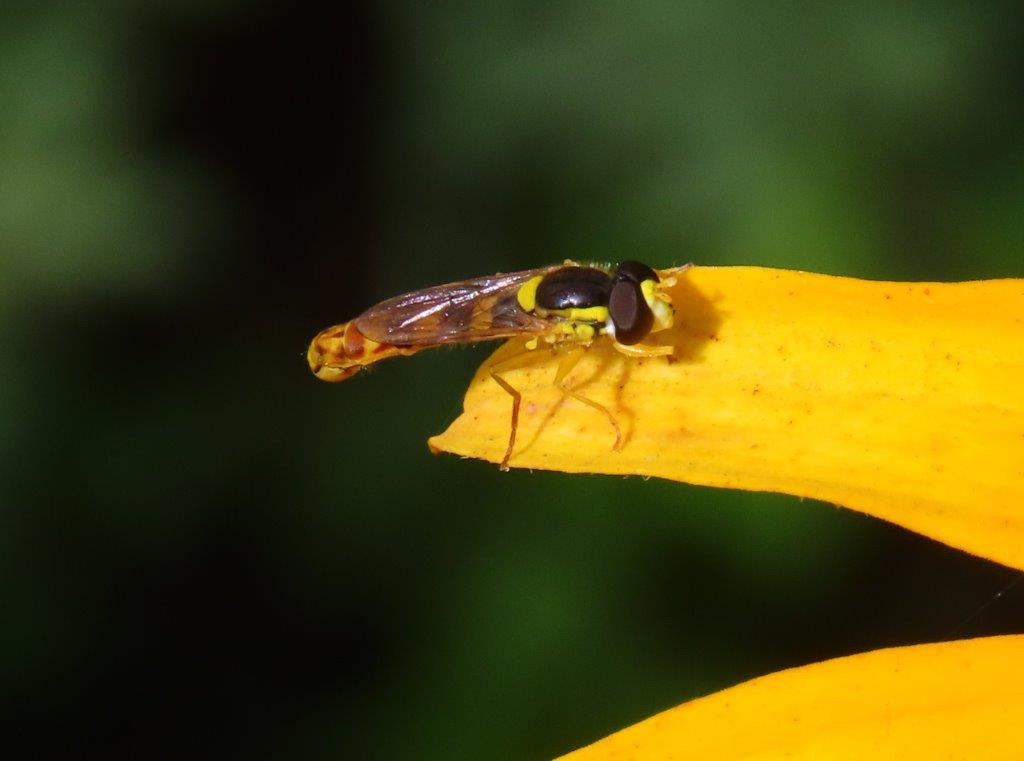
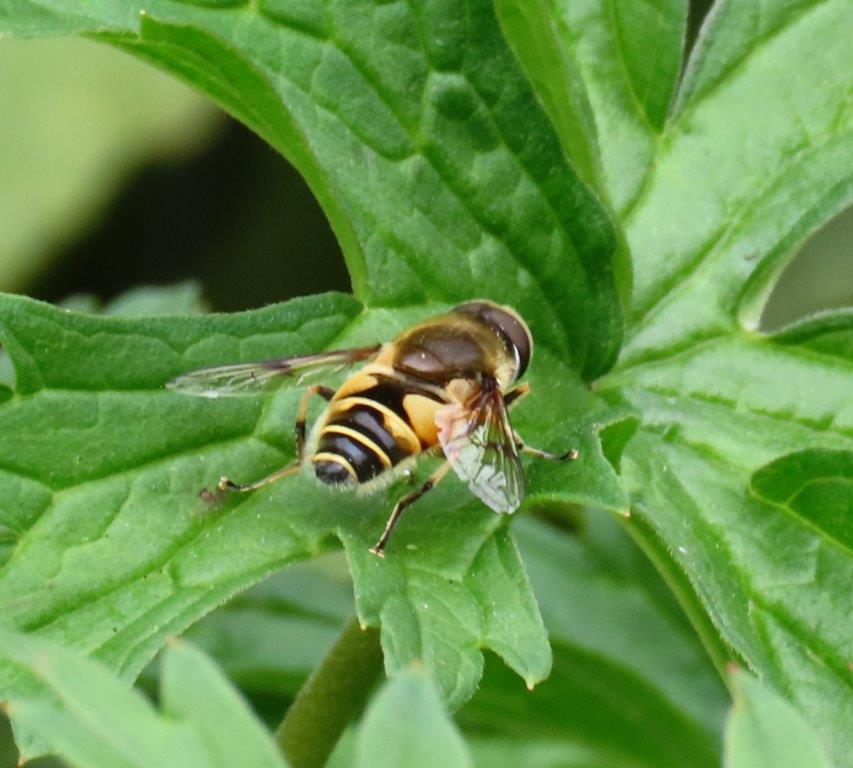
… and wasps and flies included Ornate-tailed Digger-wasp, parasite-flies (especially Tachina fera, or just possibly Tachina magnicornis, a southern European species that seems to have invaded Britain in a big way this year. I will have to work further on my images!), hoverflies such as Common Globetail, and many others that are less amendable to identification from photos.
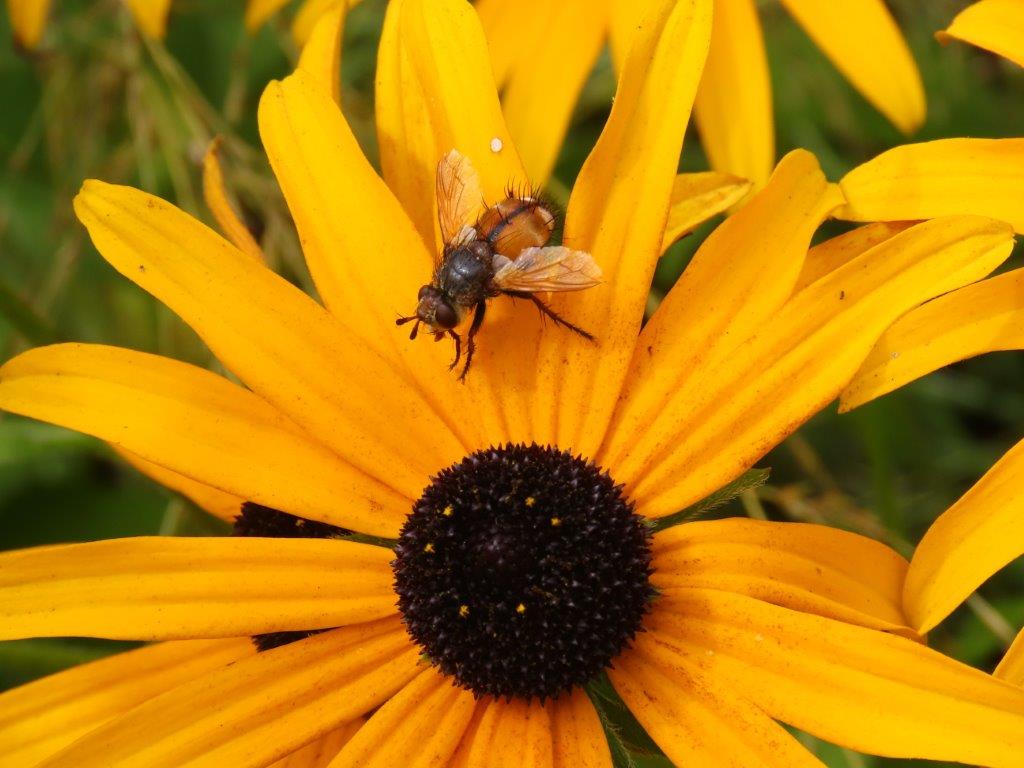
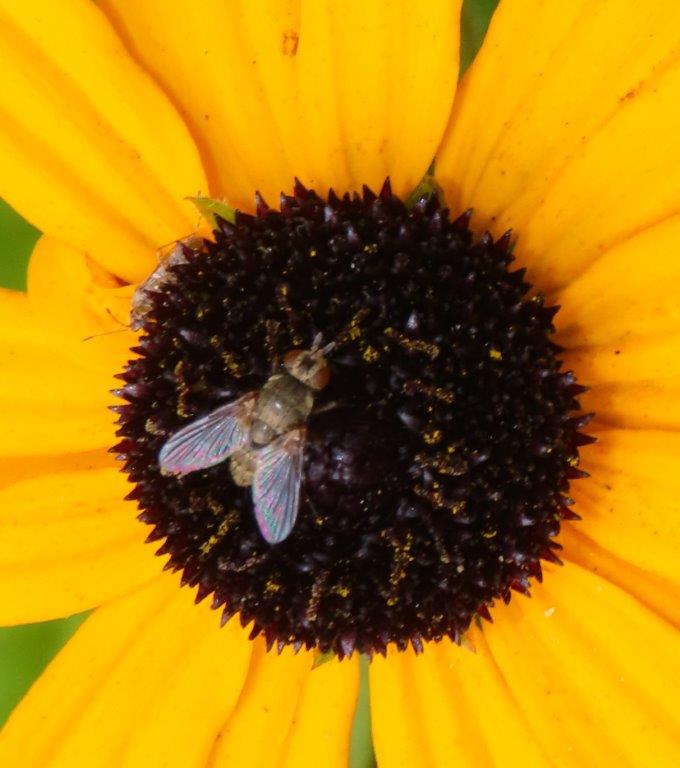
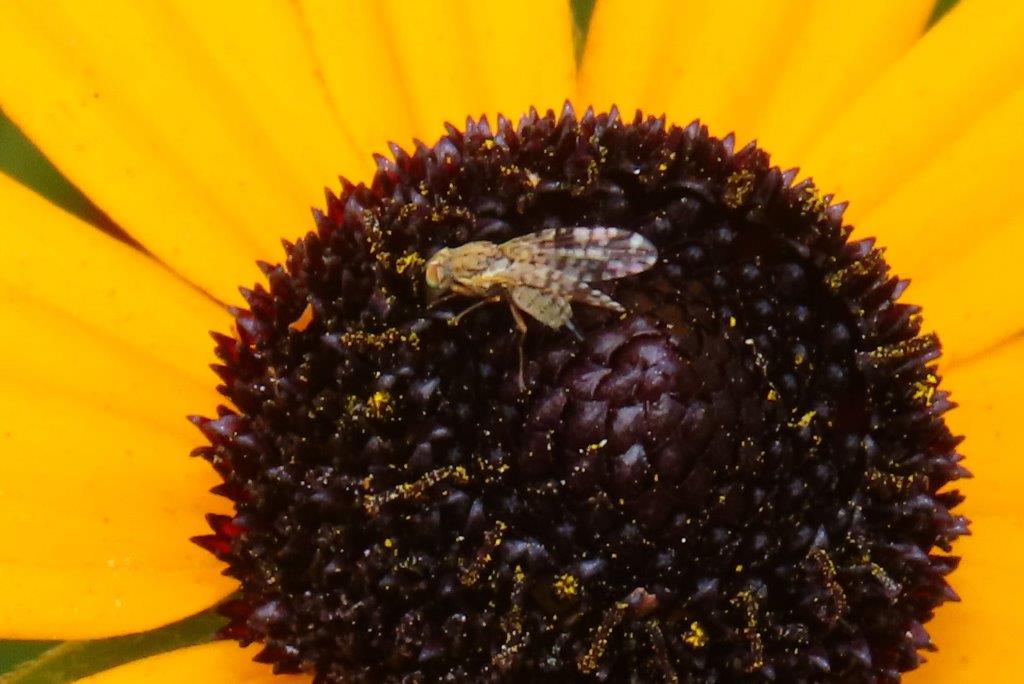
The most exciting fly however was one of the picture-winged species Dioxyna bidentis. This fly is new to our garden list; although not uncommon in England, there are just a couple of other records from the Tendring Peninsula. It is stated as being dependent upon bur-marigolds Bidens spp., but I suspect here it is using the related Rudbeckia as a surrogate.
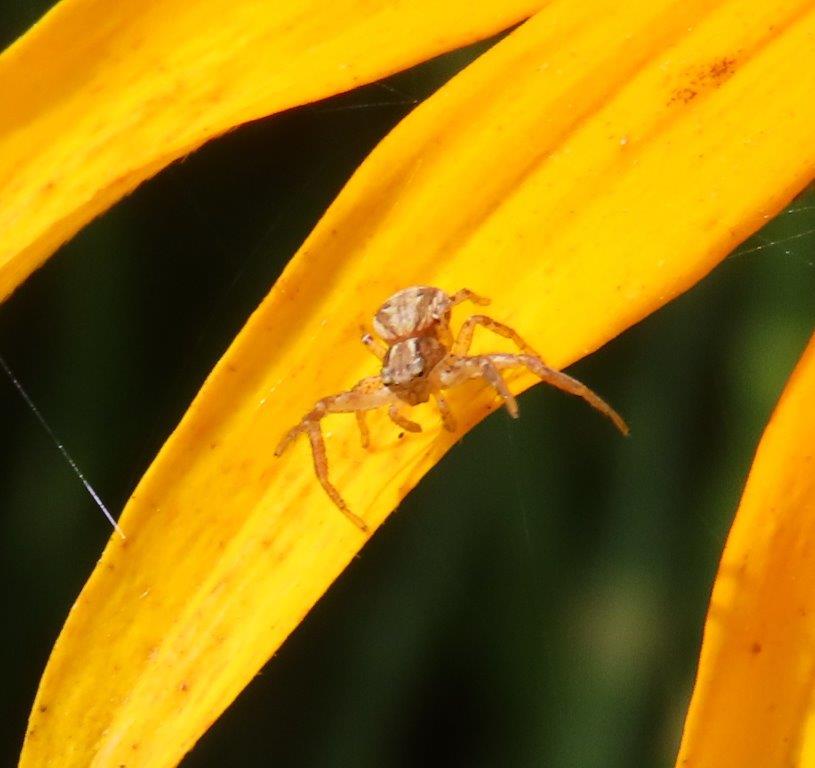
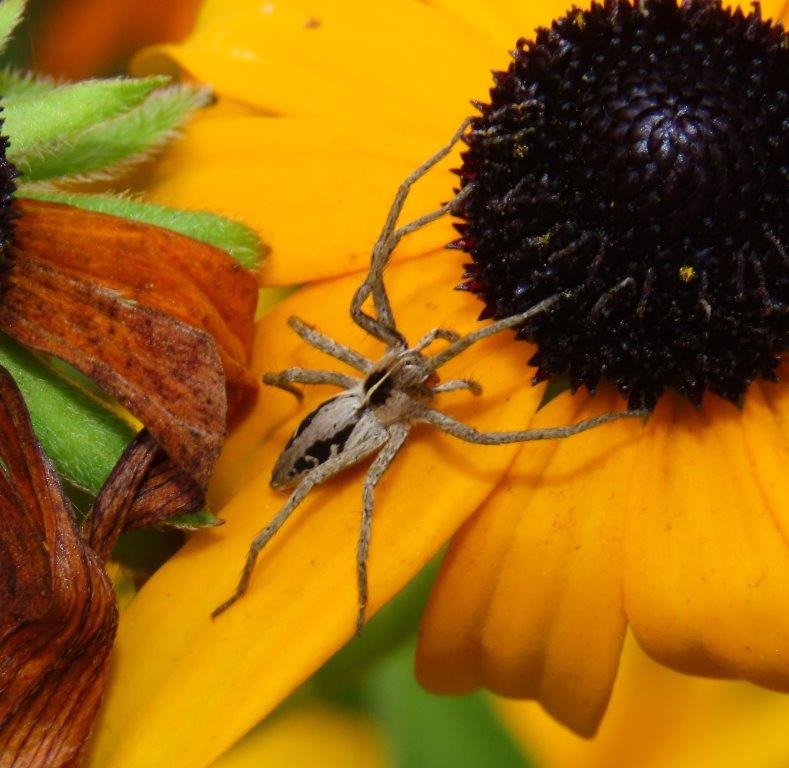
And as always danger lurks in every flowerhead, with crab-spiders and Nursery-web Spiders hoping to be the nemesis of an unfortunate pollinator. But we don’t mind: our garden ethos is ‘live and let live, and let nature look after itself’. Predation and parasitism are two of the key processes helping to deliver ecological balance.
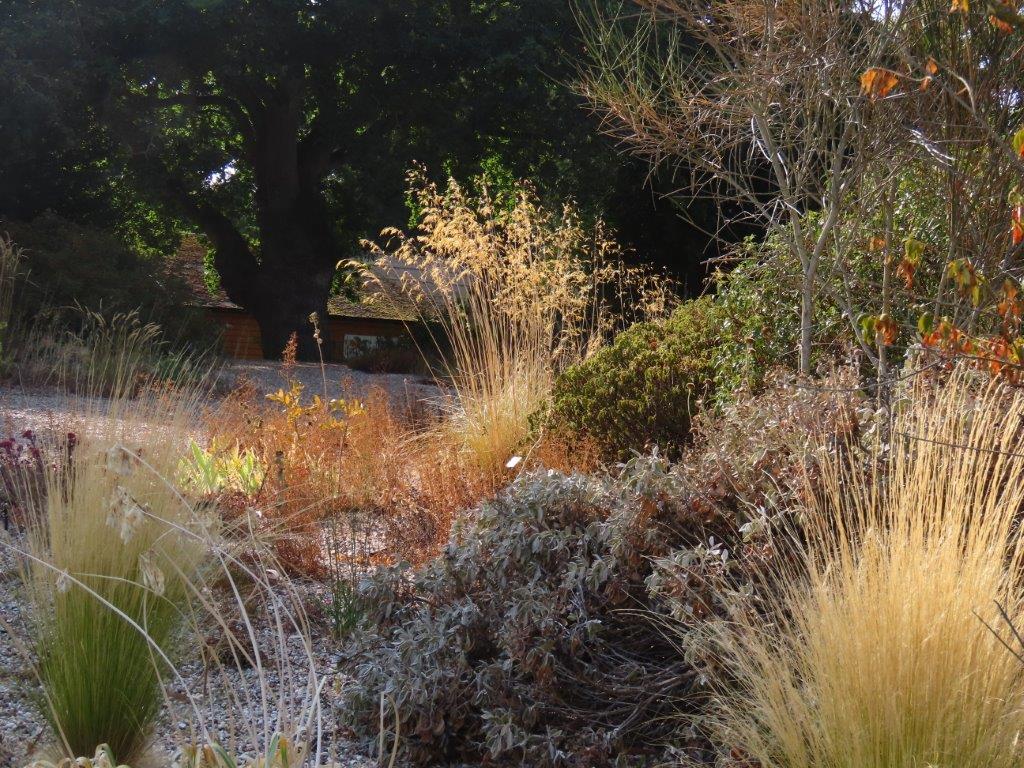
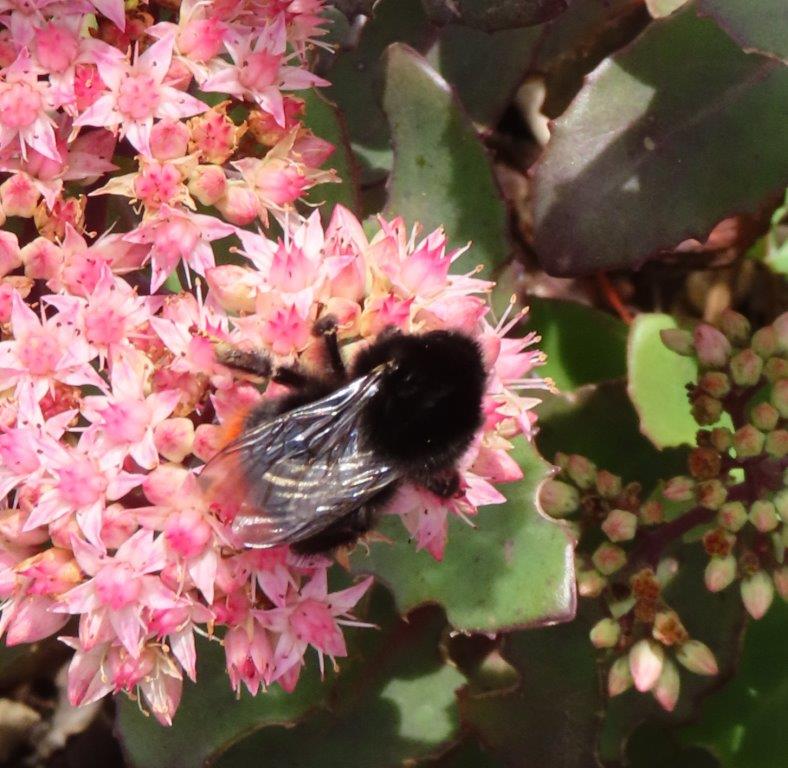
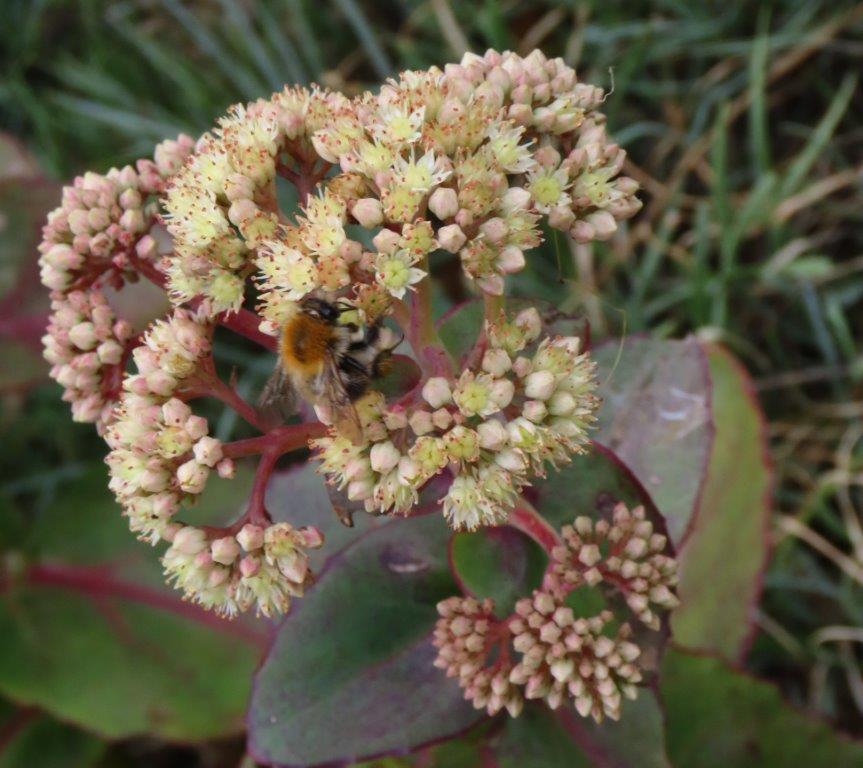
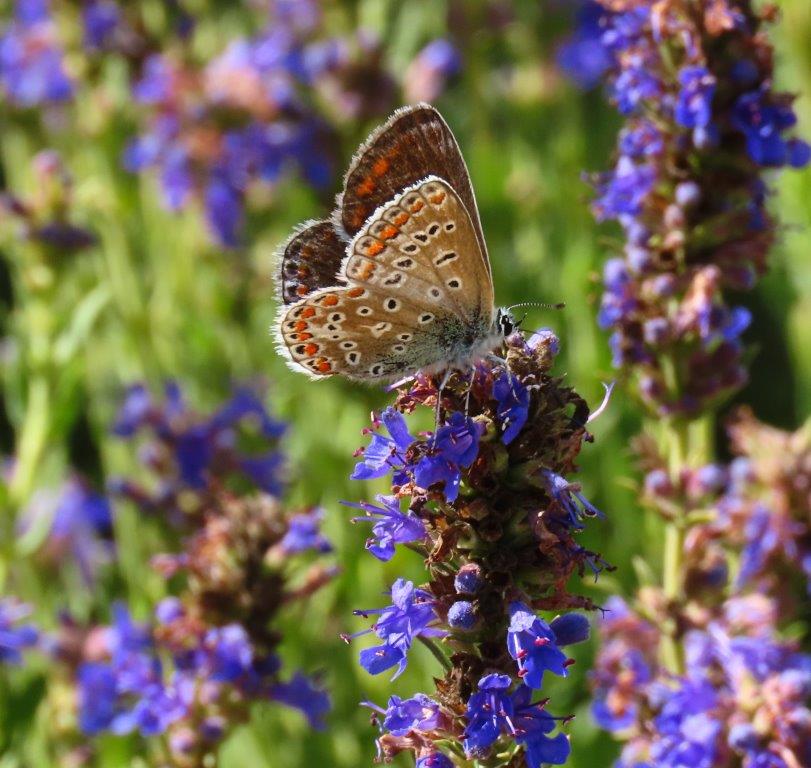
But back in the Gravel Garden, new flowers are now stirring, encouraged by the drops of rain. The iceplants Hylotelephium of all flavours seem to be a particular magnet for generalist bumblebees, including Red-tailed and Common Carder Bumblebees, and Common Blue butterflies seems to love the Hyssop.
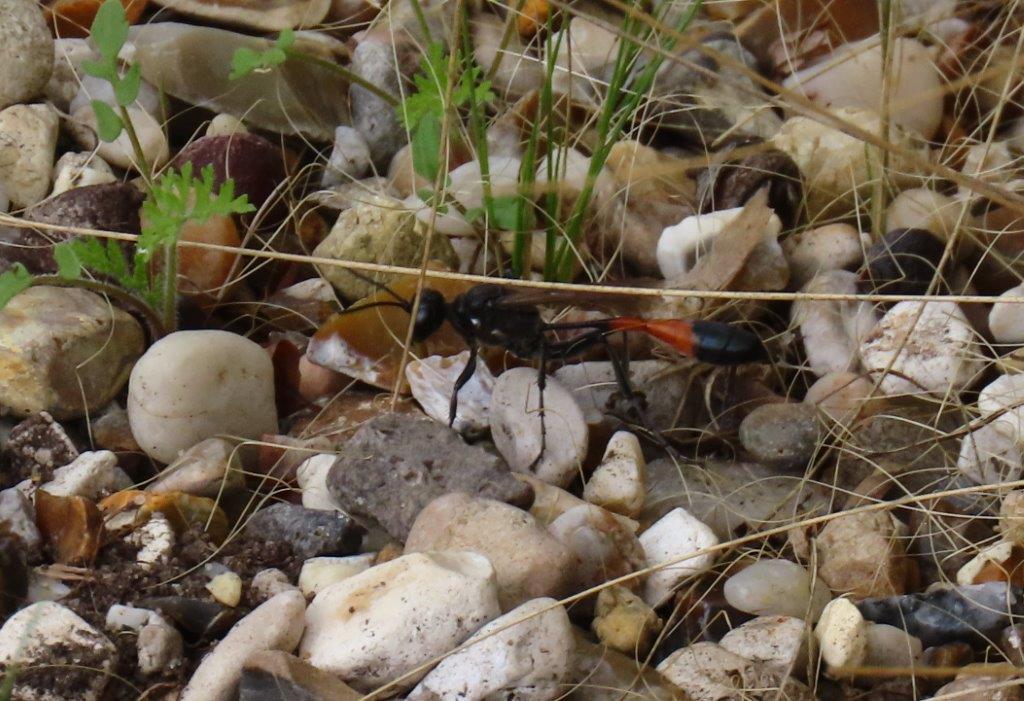
Another establishing feature of the garden seems to be the Sand Wasp Ammophila sabulosa. I first recorded this here on the bee-bank last month (see my last blog in this series), but during September’s WildSide Walks, it was not only exploring potential nesting territory in several places in the Gravel Garden but also nectaring as far afield as the Water Garden. If droughty conditions persist into future years, this might be a species to watch, in a good way: it is no harm to the wider garden, as its only impact will be to feed its grubs on caterpillars, and its mammoth efforts in hauling prey back to its nest are one of the many marvels of nature!
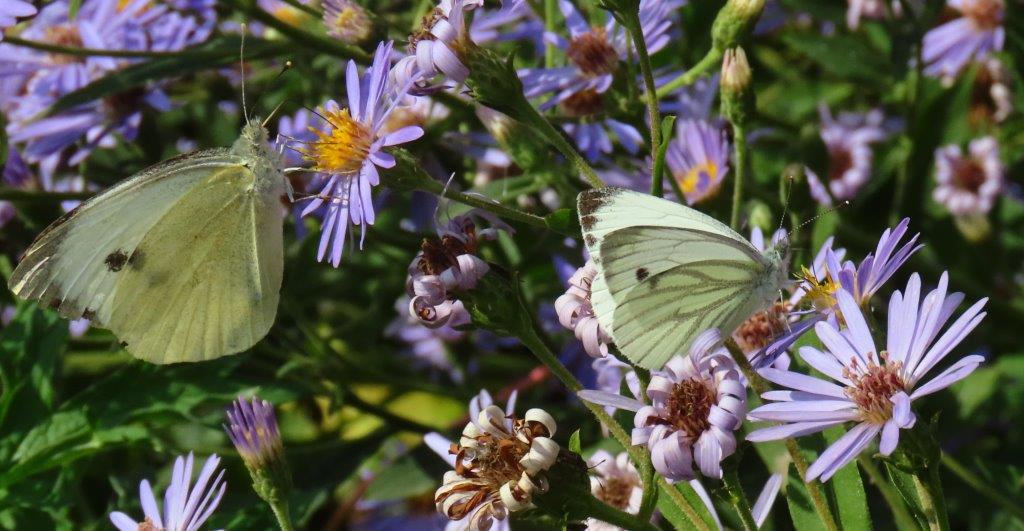
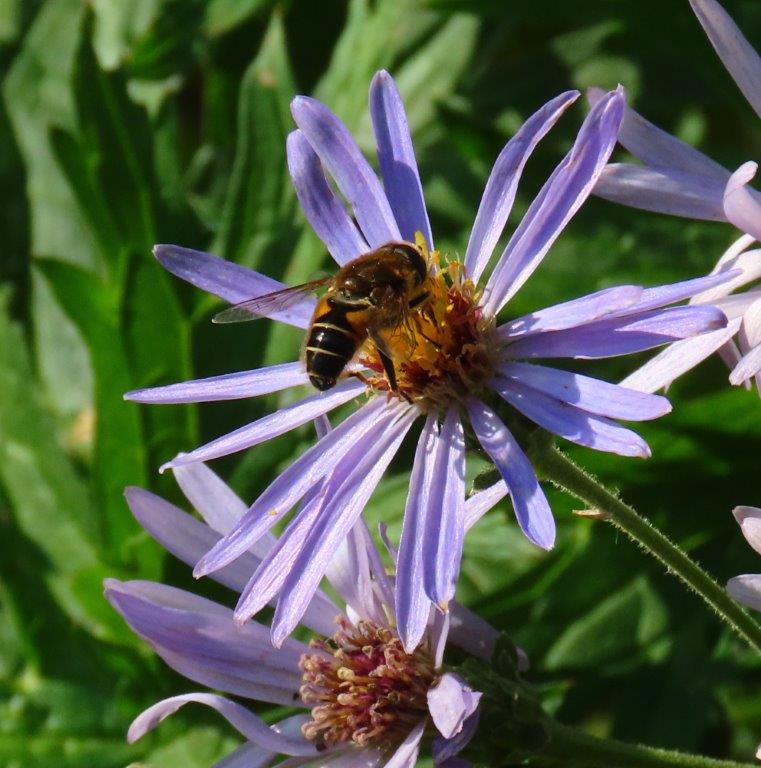
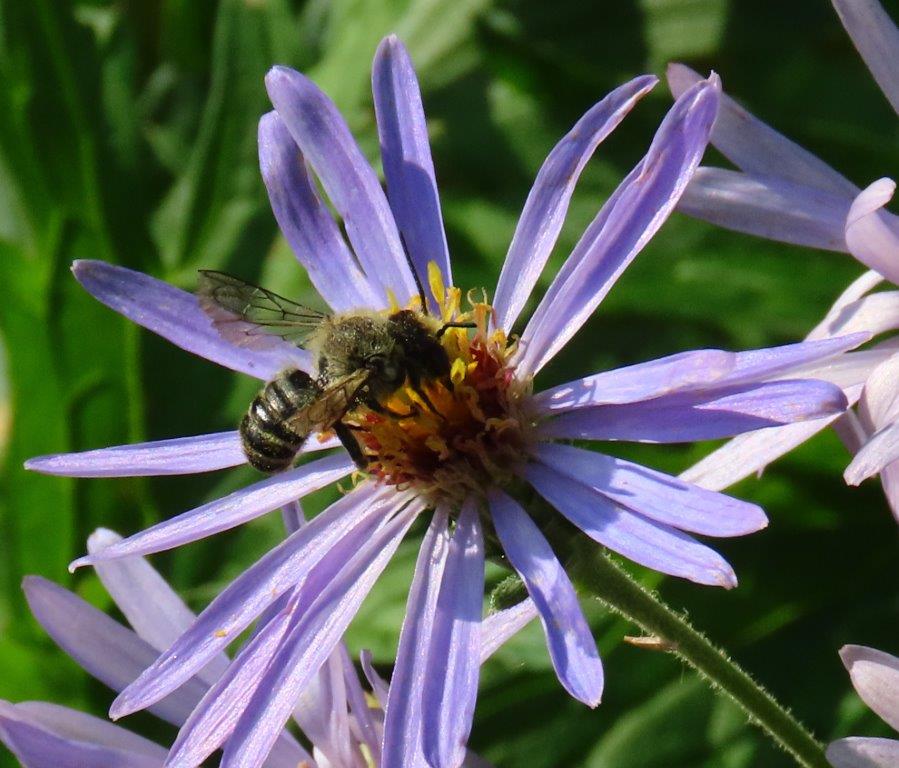
Elsewhere in the garden, the traditional late summer blooms are also attracting their range of insects. Michaelmas-daisies Symphyotrichum spp. are well-known for attracting butterflies, here Large and Green-veined White side-by-side. But flies too, including the Stripe-faced Dronefly Eristalis nemorum, along with one of the leaf-cutter bees Megachile sp.
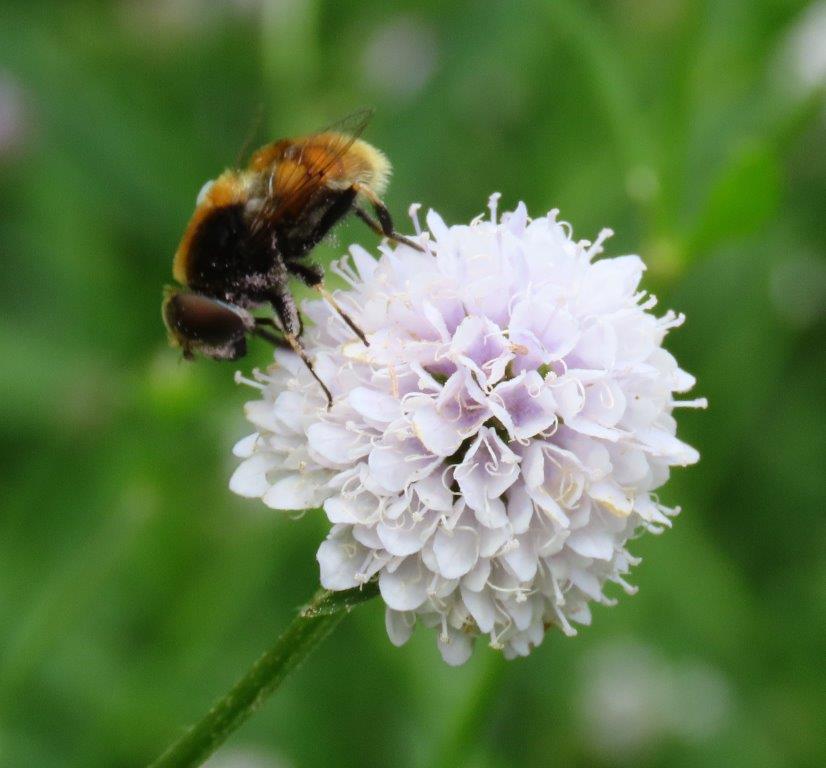
Succisella is now also pulling in insects in the borders, including white butterflies, Commas, Large Pied and Hornet Hoverflies and the always scarce Furry Droneflies Eristalis intricarius.
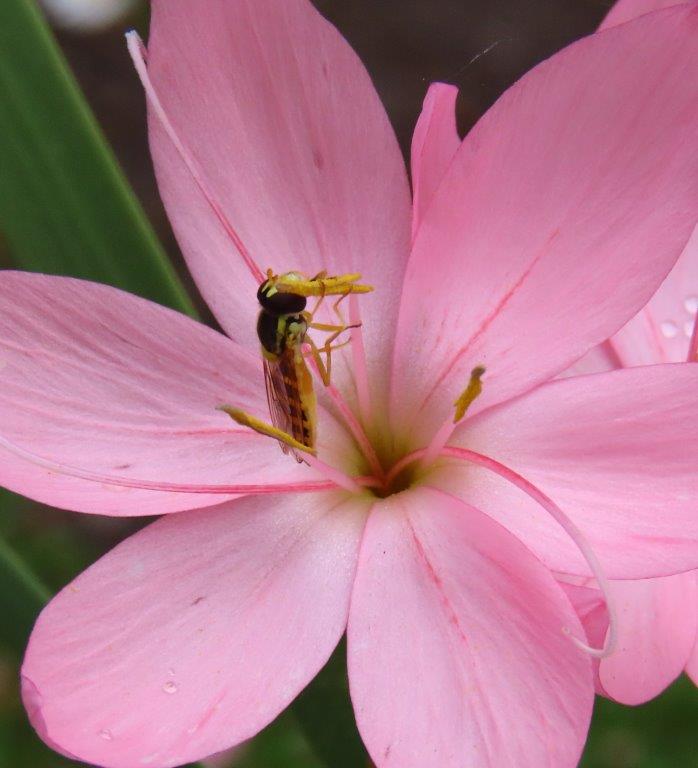
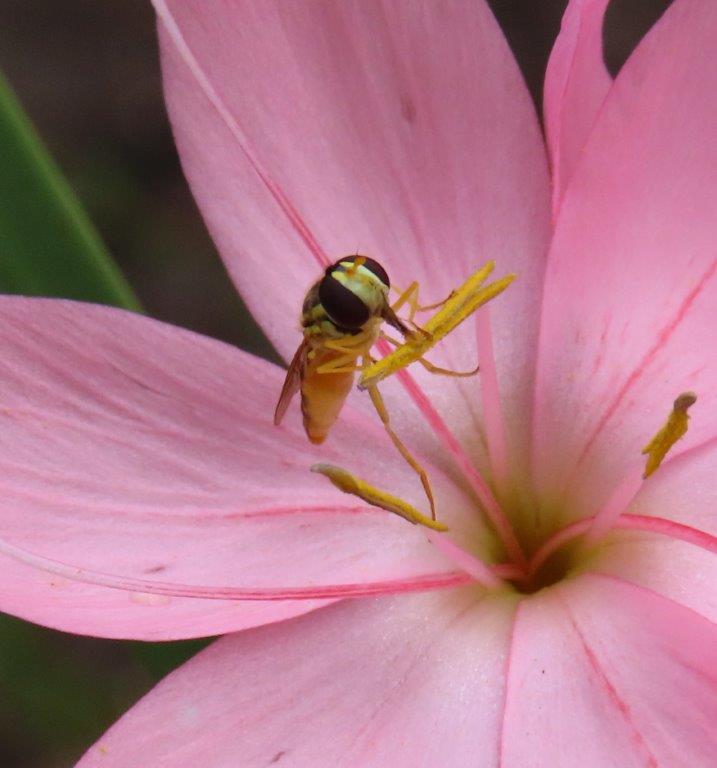
With a more restricted pollinator range, even the showy flowers of bulbous species like Hesperantha provide for something. Most flies are liquid-feeders, but hoverflies do different: they can munch upon the protein-rich pollen of large, exposed anthers of plants like this.
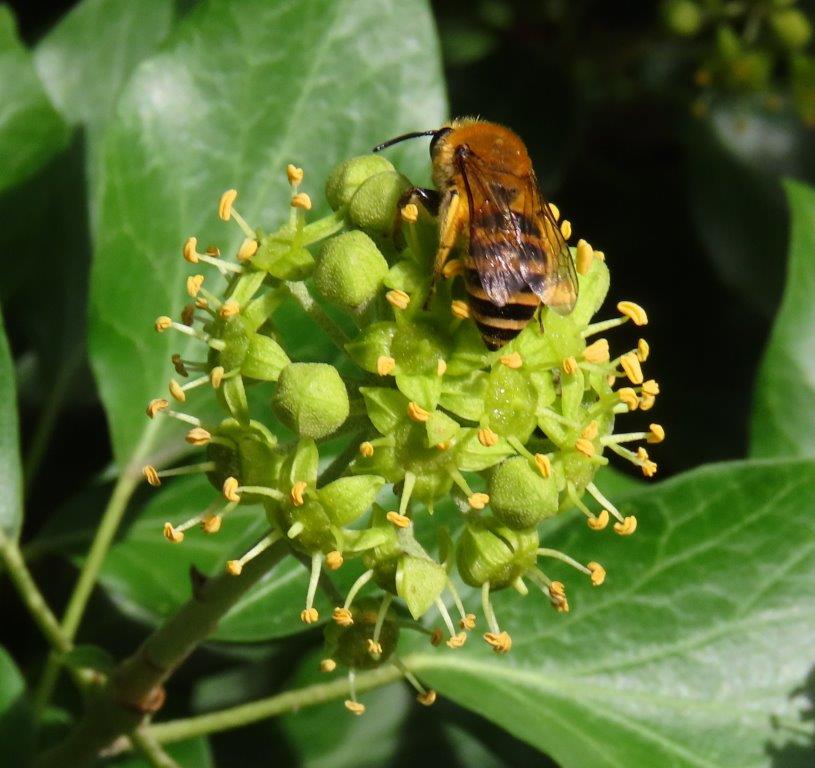
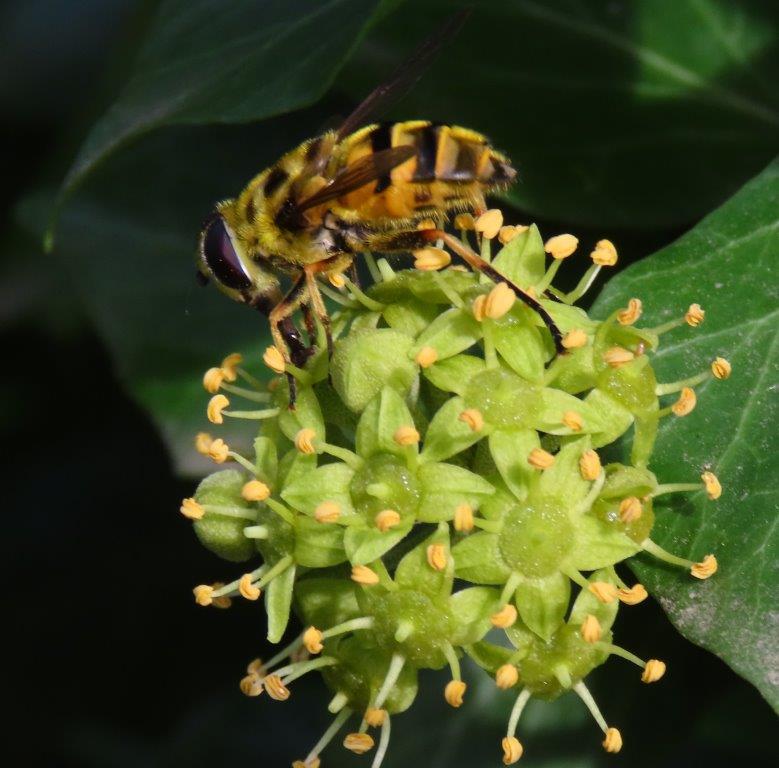
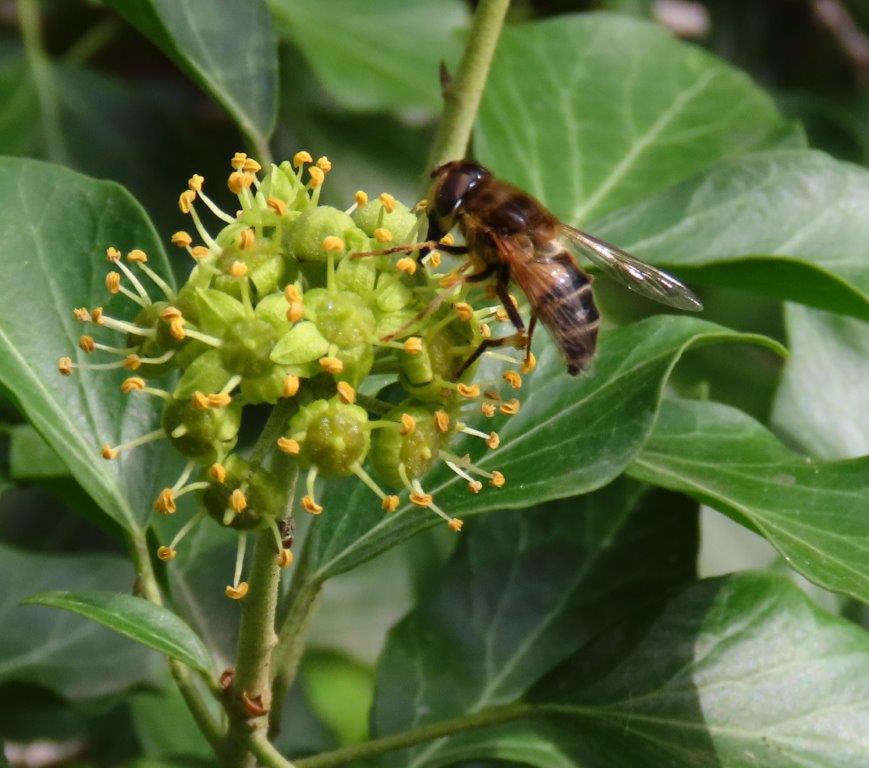
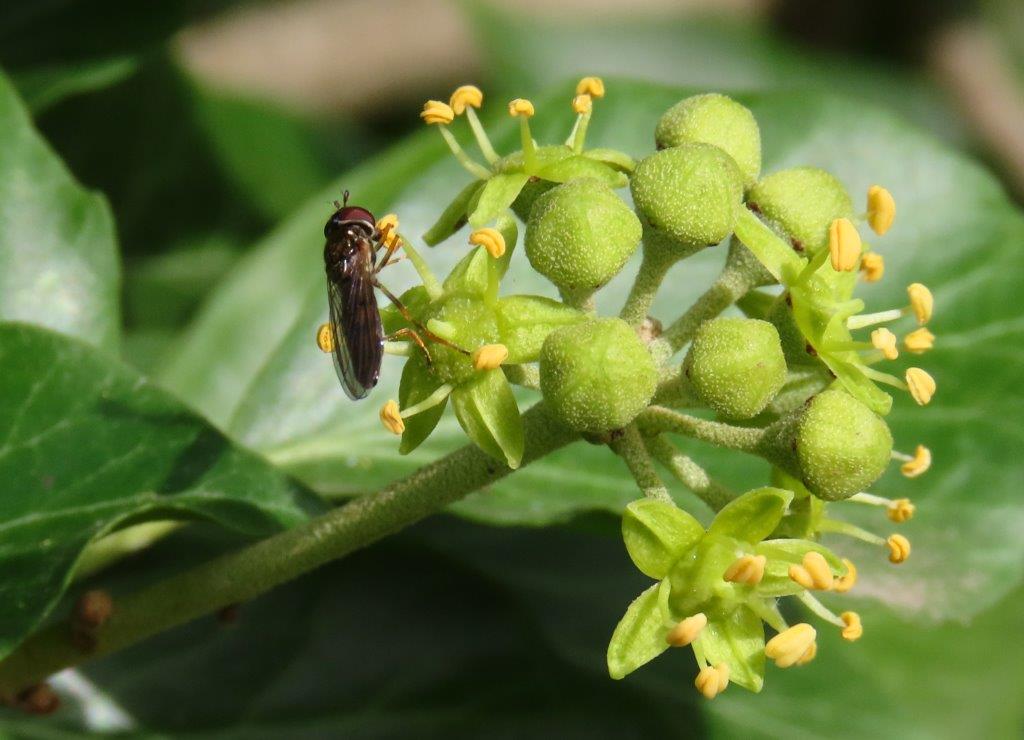
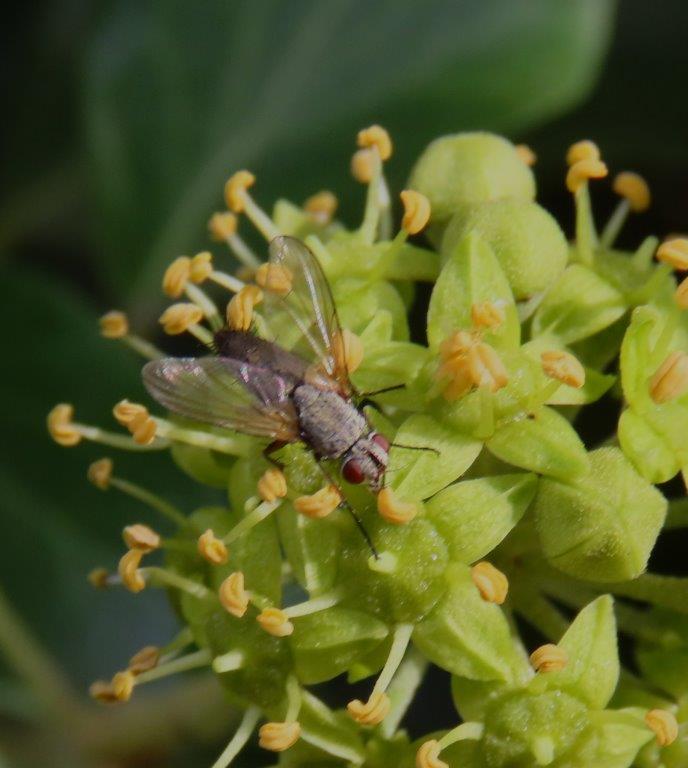
One plant not to be missed in September is Ivy, now just coming into flower. You can detect one in bloom with your eyes shut at a range of several metres by its musky, almost sensuous, scent and the buzz of the bees and other insects. One bush in the Silent Space was teeming with Ivy Bees, alongside several hoverflies, including Batman Hoverfly, Tapered Drone Fly and Melanstoma mellinum, as well as Solieria pacifica, a parasite-fly new to our list, one with just a single prior record from the Tendring Peninsula.
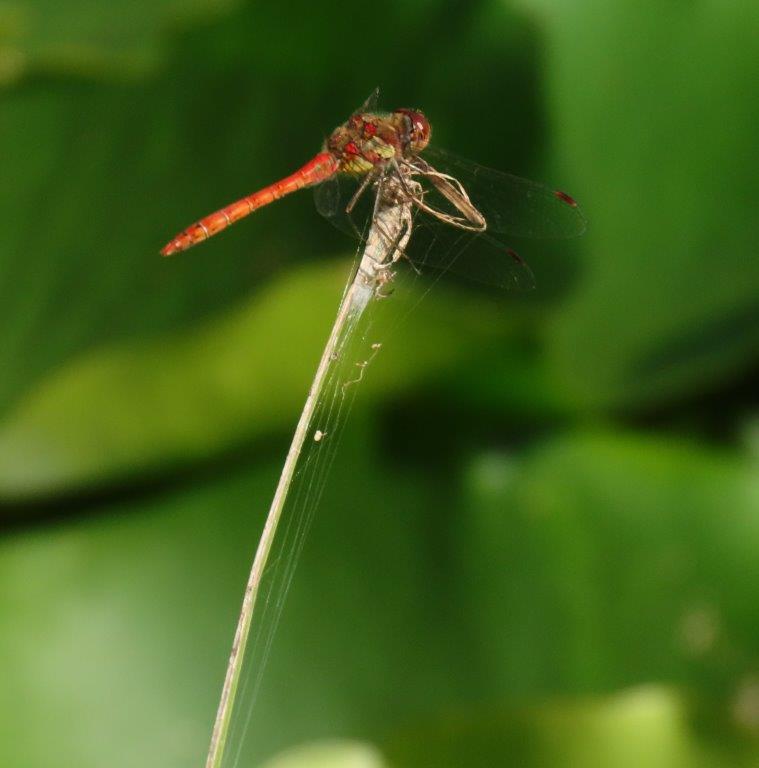
A further selection of things that appeared for my camera around the ponds includes a perched Common Darter dragonfly (other related species included Ruddy Darter, Migrant Hawker and Willow Emerald damselfly), Dock Bug and the Stripe-winged Dronefly Eristalis horticola.
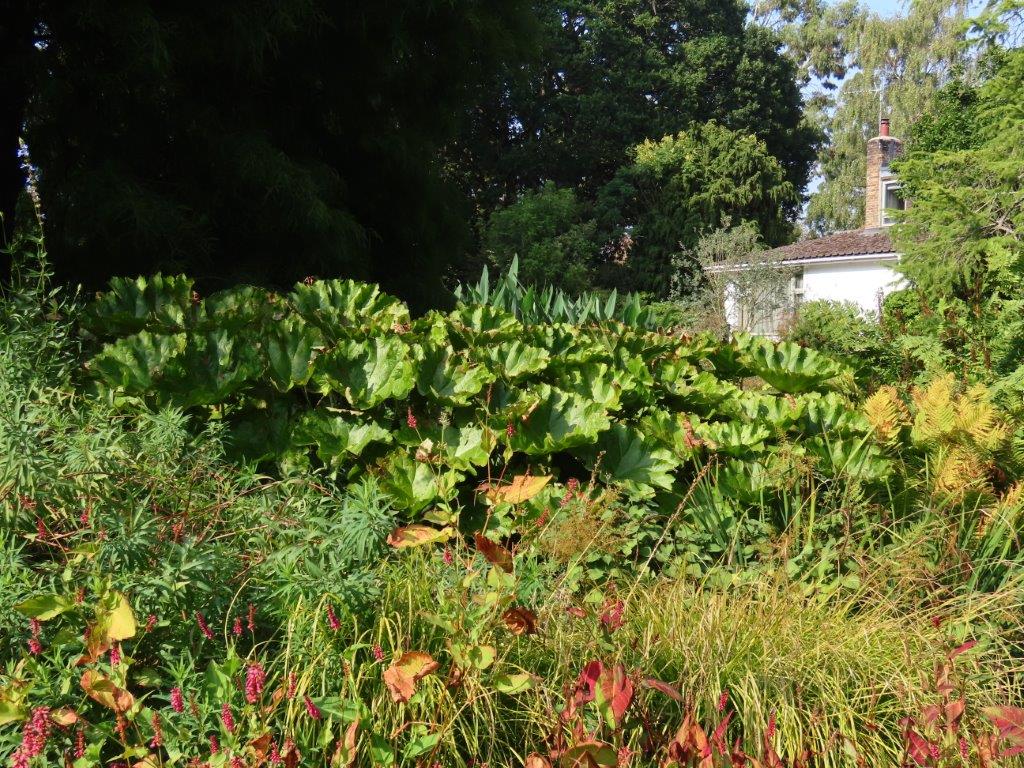
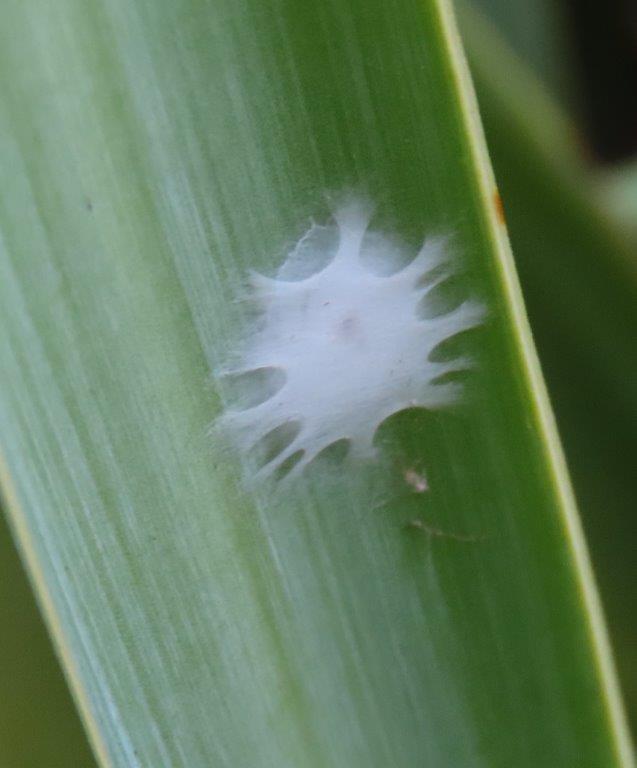
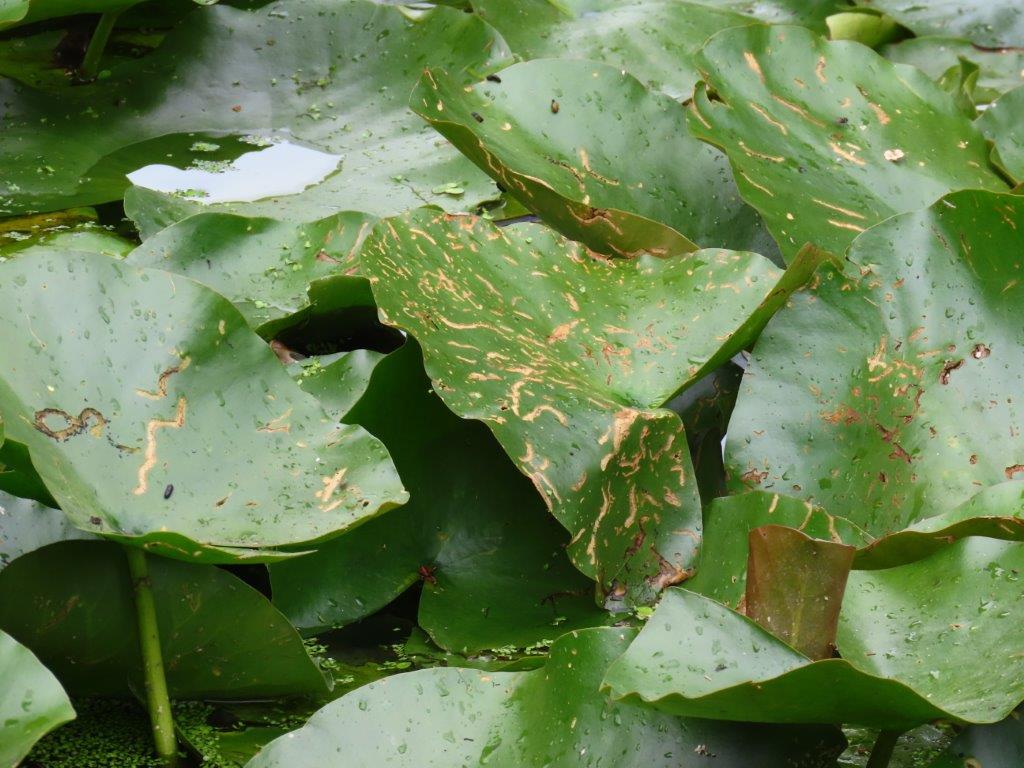
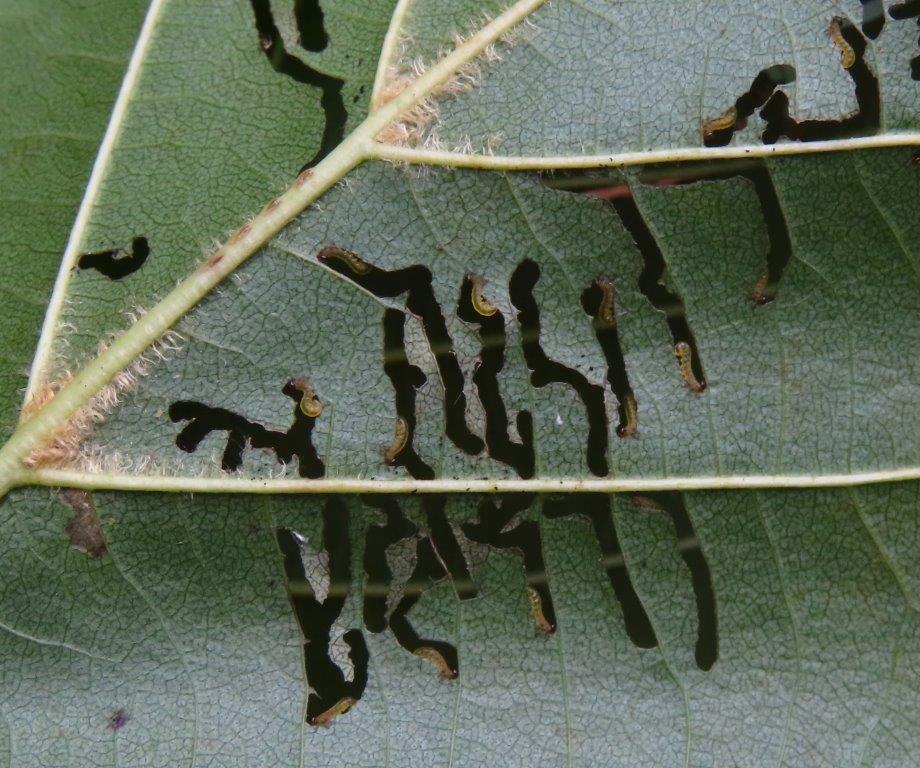
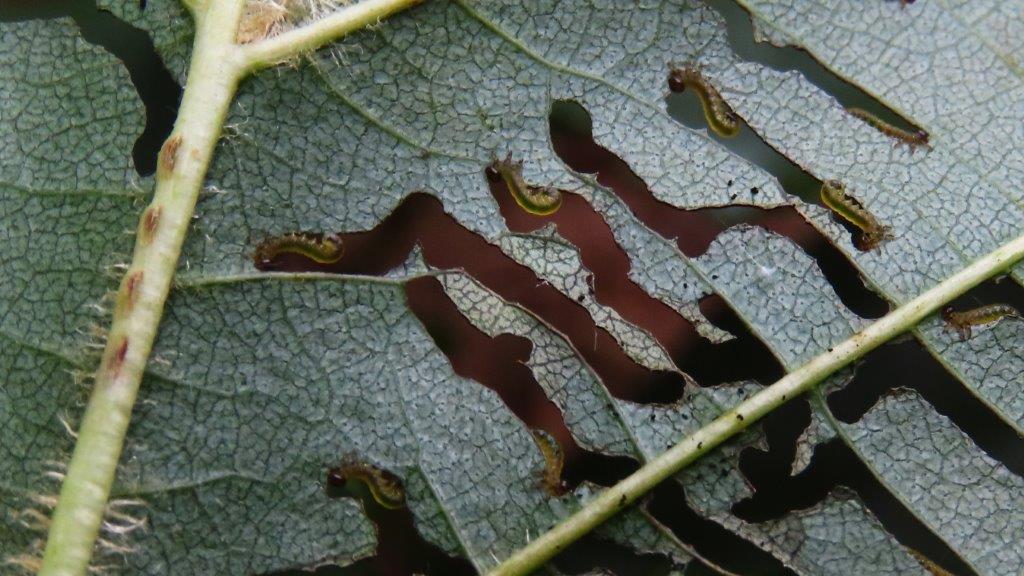
Several new species to the garden list have already been mentioned; others from this month include the distinctive webs of the spider Ballus chalybaeus, feeding signs of Water-lily Leaf-beetle Galerucella nymphaeae grubs, larvae of Hemichroa crocea, the Striped Alder Sawfly, making intricate patterns in Alder leaves and seemingly only two previous Essex records, from White Colne and Layer-de-la-Haye.
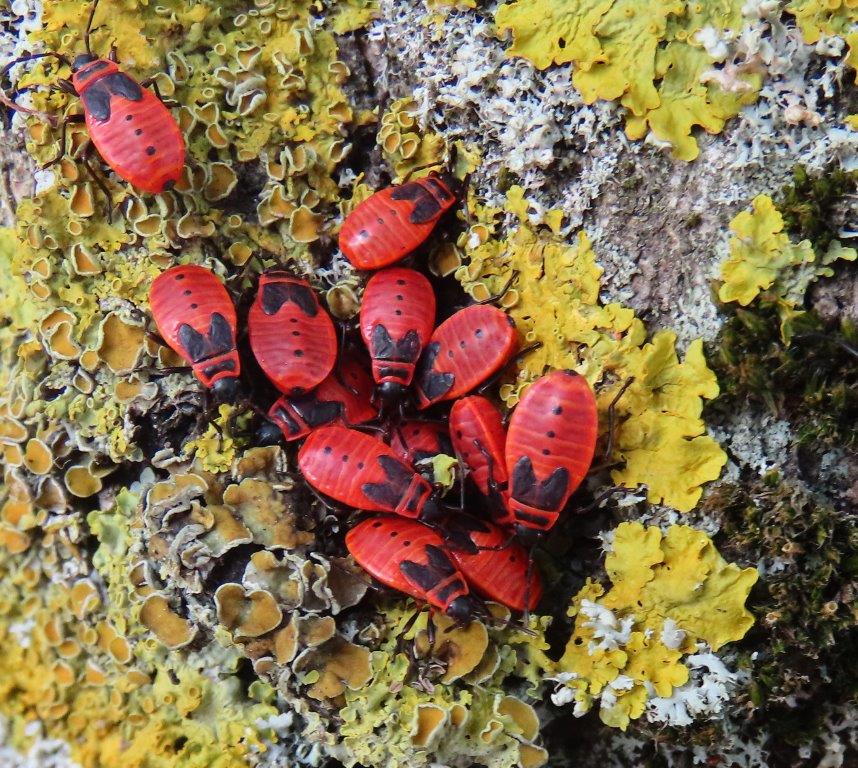
And finally, to my favourite Firebugs. A new arrival in the UK, the first garden record was in April, but in July they colonised much more widely, feeding upon the seeds of Hollyhocks, Althaea cannabina and other mallows. Then in early September it was clear they had also discovered their other foodplant, Lime trees growing in the car park and moved in in a very big way. The aggregations there are now huge and may well stay all winter, and already have shown me that an individual that has just moulted into its adult form may lack black markings completely. Learning every day!
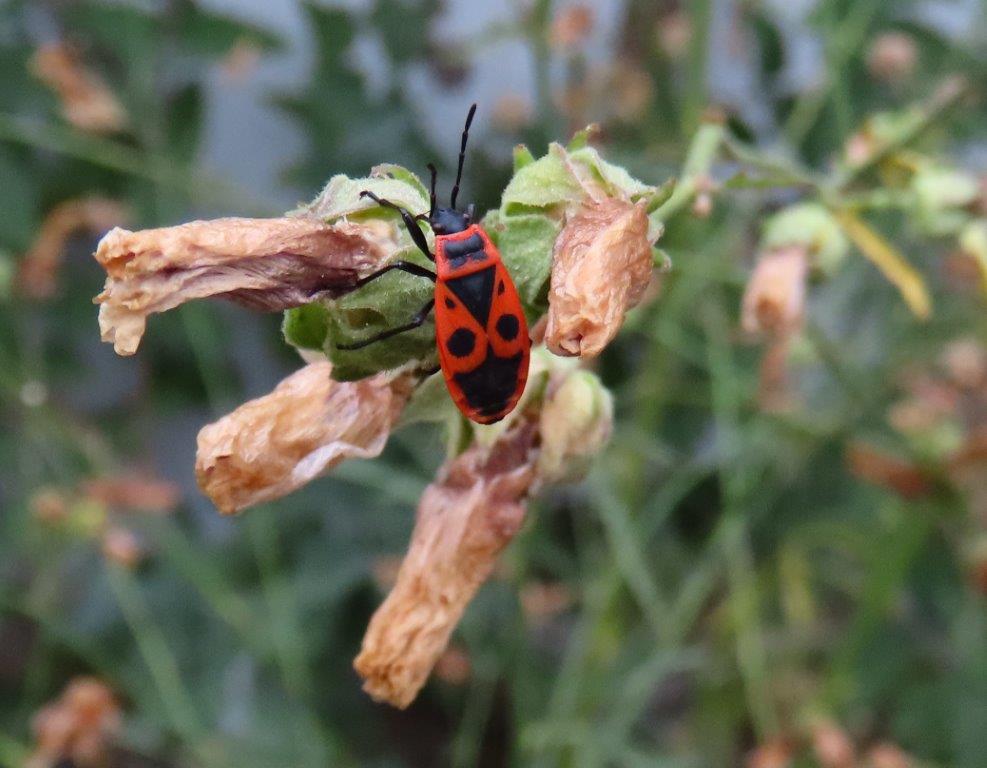
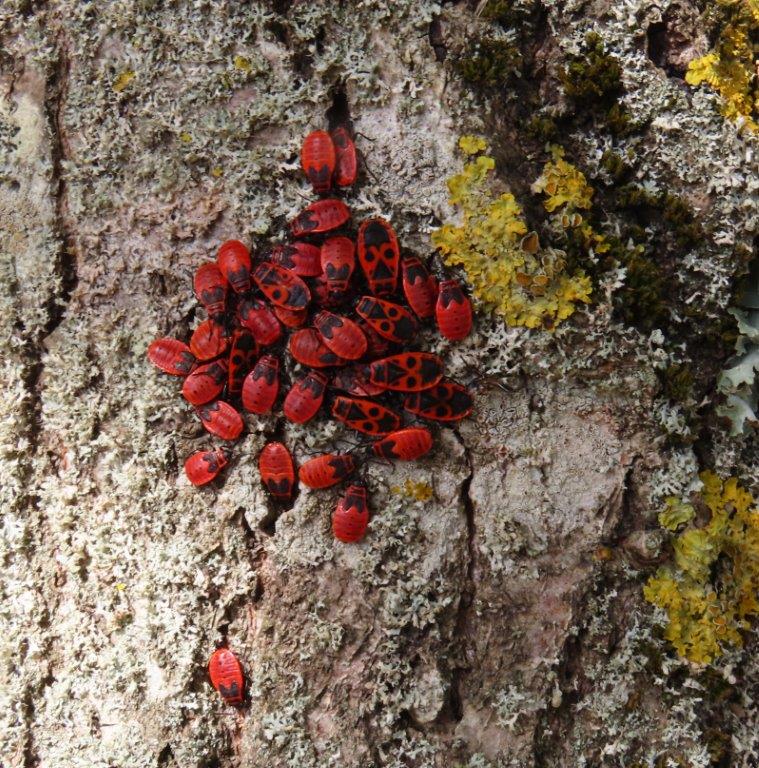
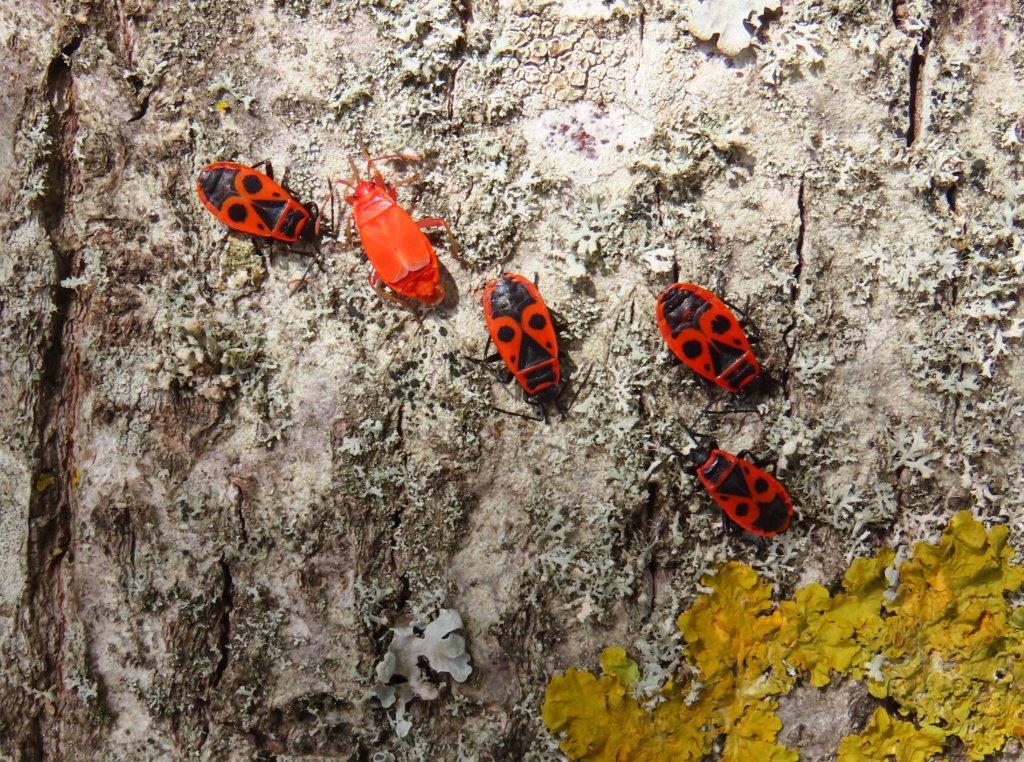
But maybe things are changing, maybe the books incorrectly state they feed only on Mallow and Lime seeds. Certainly one feeding on the seeds of Hyssop, from an entirely different plant family, might suggest this to be the case: such expansions of dietary range are certainly not unknown when the climatic favourability of a region increases, allowing species to adopt suboptimal food sources. More learning, and long may that continue!
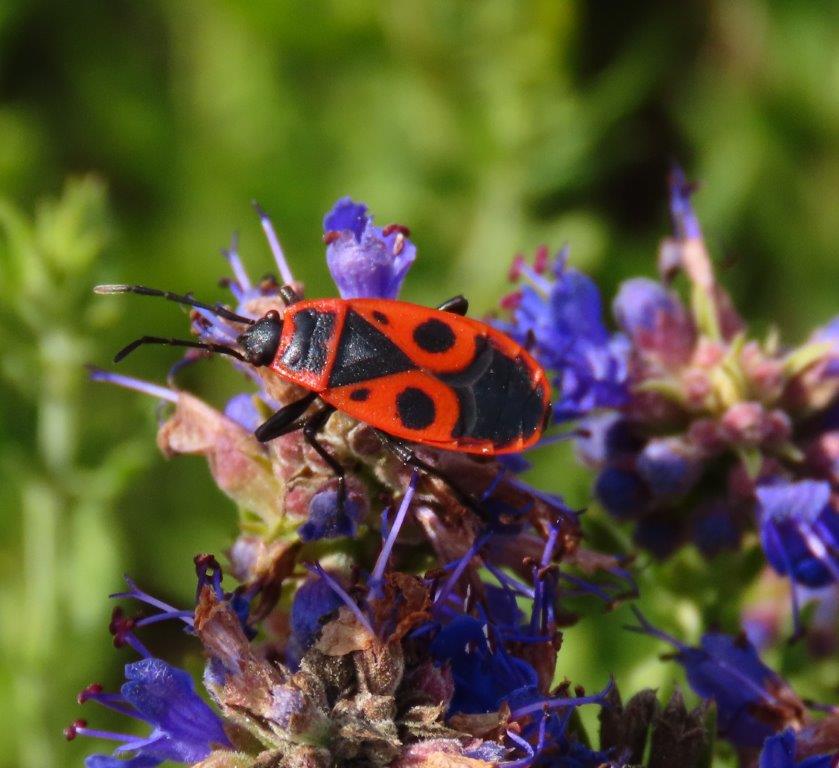
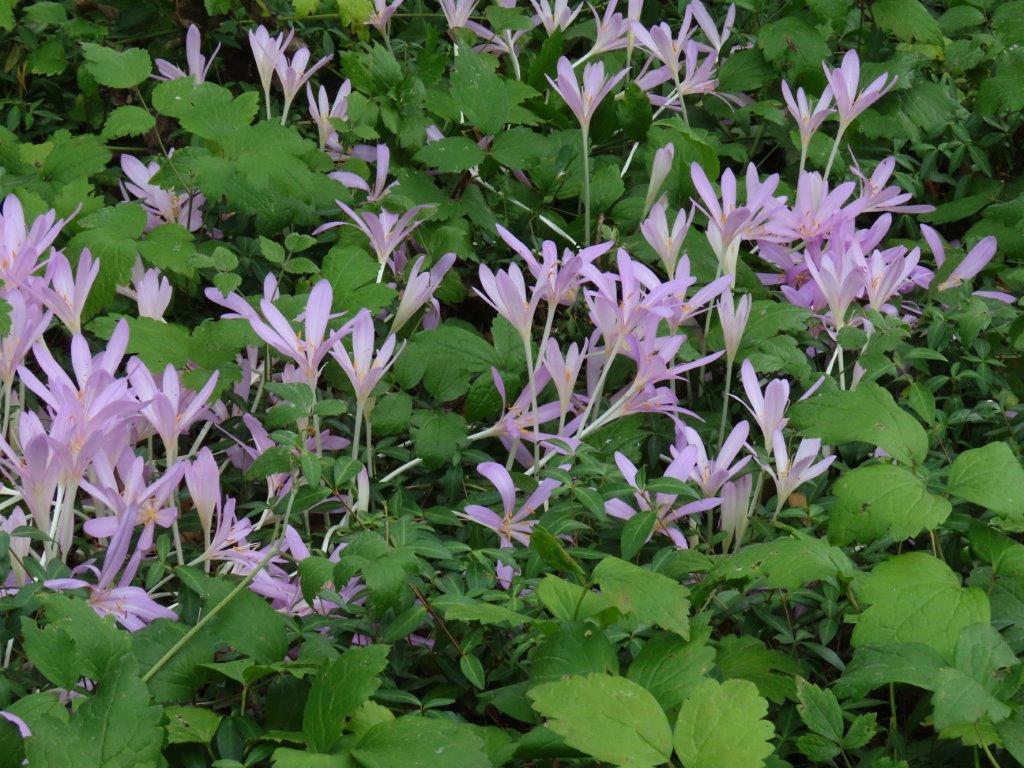
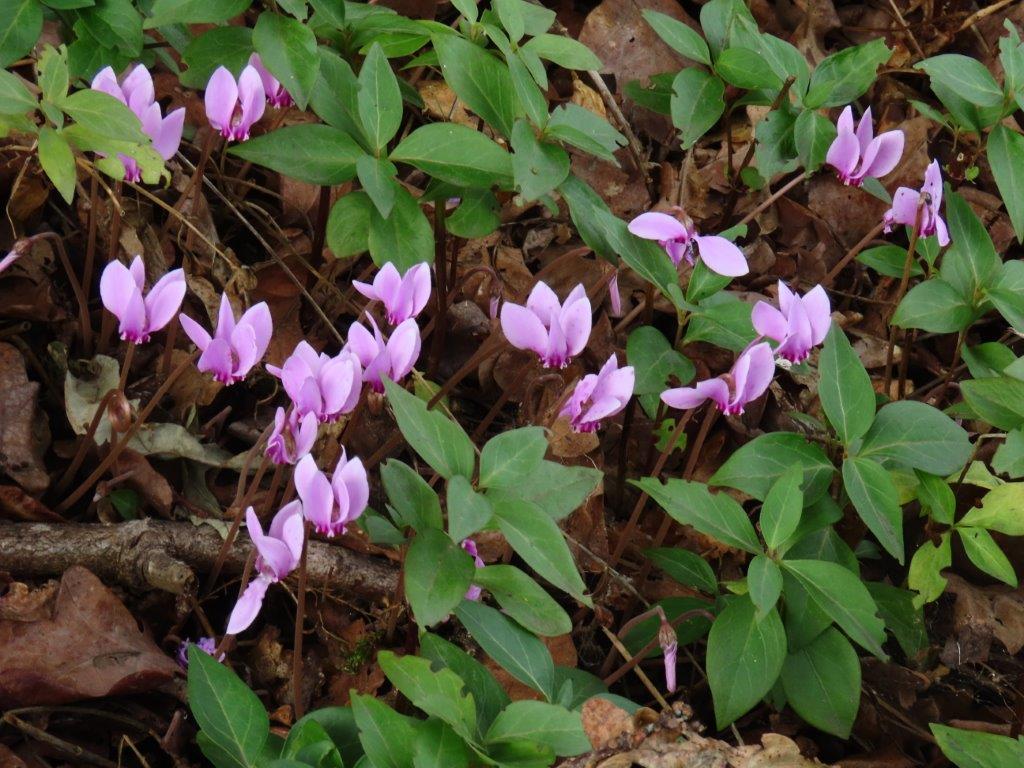
So we are now firmly into autumn. Colchicum and Cyclamen are spearing their way through the rock-hard ground, just as they do in their Mediterranean heartlands. It will not be long before the seasonal tints change to russet and gold, so please still keep visiting – and there will of course be wildlife on show as well. My WildSide Walks have now finished for the summer but, all being well, we will start again in April and run through the summer next year. All will be advertised at Courses & Workshops – Beth Chatto’s Plants & Gardens; do come along and look beyond the plants to the fantastic array of creatures that choose to make their homes in our gardens.