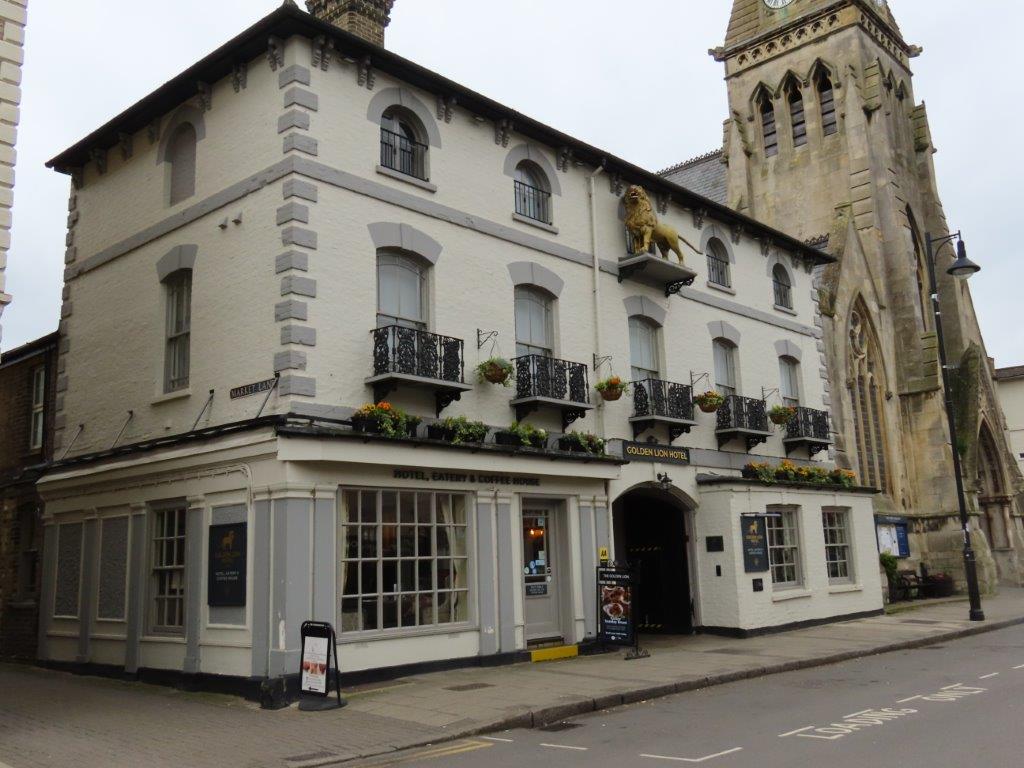
Sadly it was a bit of a return to winter for our March short break in St Ives (the Cambridgeshire one!), staying at the very comfortable and warm coaching inn, the Golden Lion. Very comfortably priced as well: taking advantage of a Black Friday deal last November, we got two nights’ for the two of us B&B for the princely sum of just £107.50! We do like the Coaching Inn group of hotels, and especially when you can get deals like that…
The wind may have been spearing like darts of ice across the Fens, but the trip got off to a good start with our first experience of the Cambridge Guided Busway. Yes it’s a bus, which means it is free for us, but it runs to time on dedicated routes, including a former railway line that runs through the wetland complex of Fen Drayton Lakes.
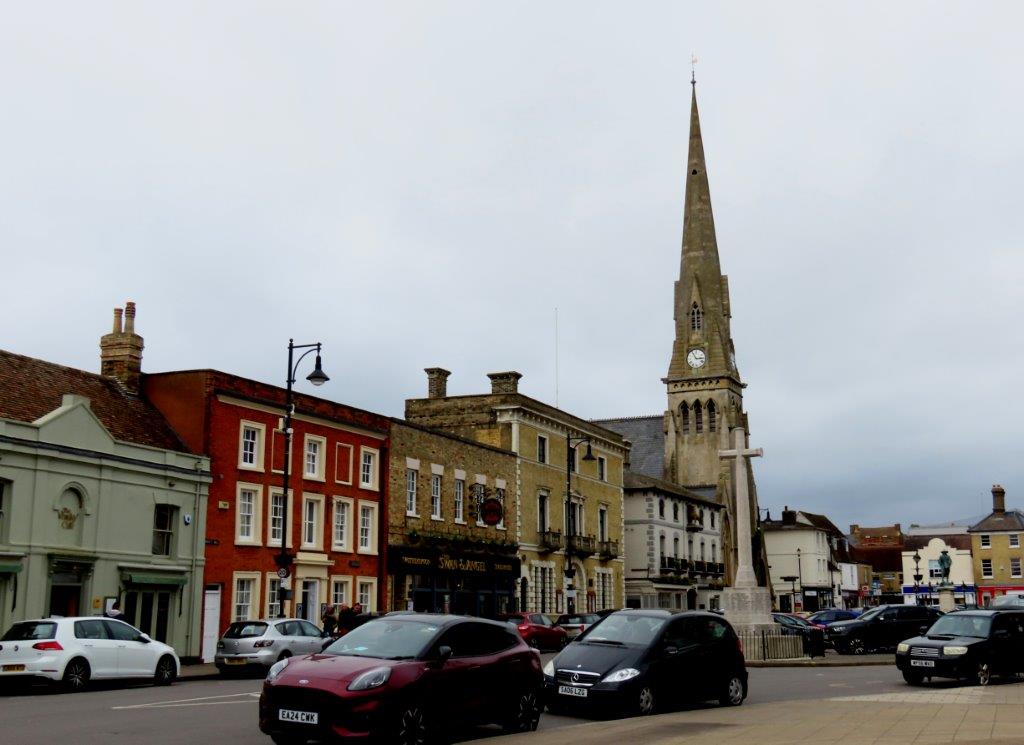
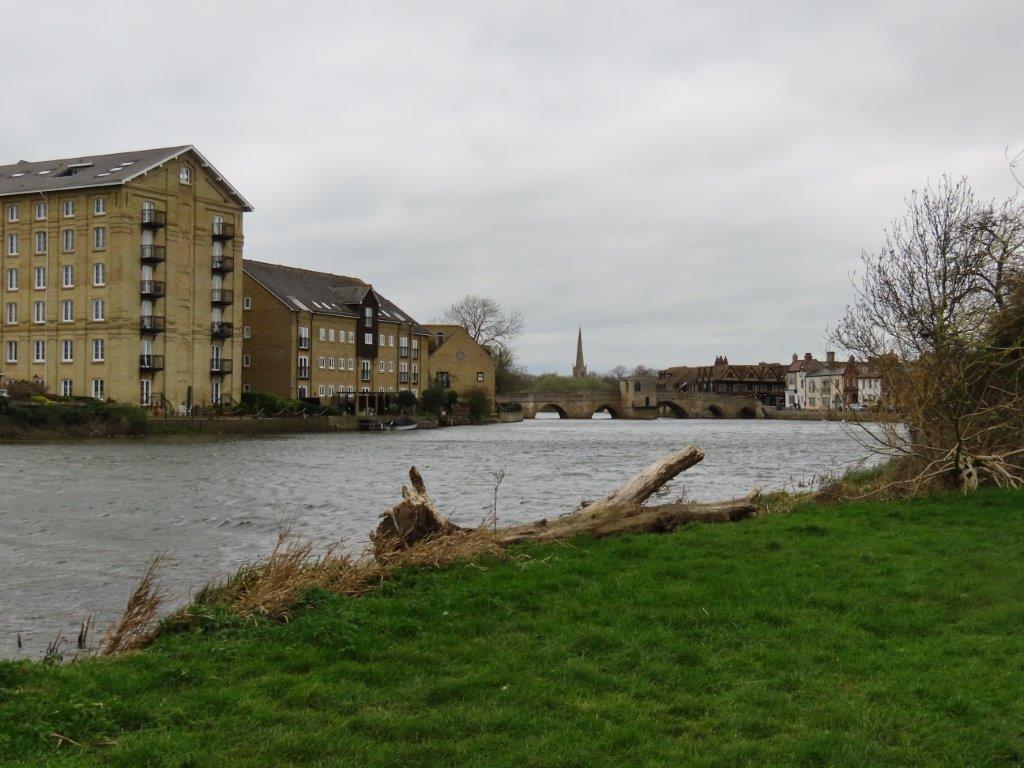
A pretty small settlement, St Ives felt very different to what we had expected, more affluent than the insular caricature of so many places in the Fens. Flowing round the town is the Great Ouse, a river we last saw at King’s Lynn, some 80km downstream, in December 2025. And the similarities between the two towns were marked, in terms of the riverfront architecture influenced by that of the near-continent. Although now above the tidal limit, St Ives was also an important port in historic times.
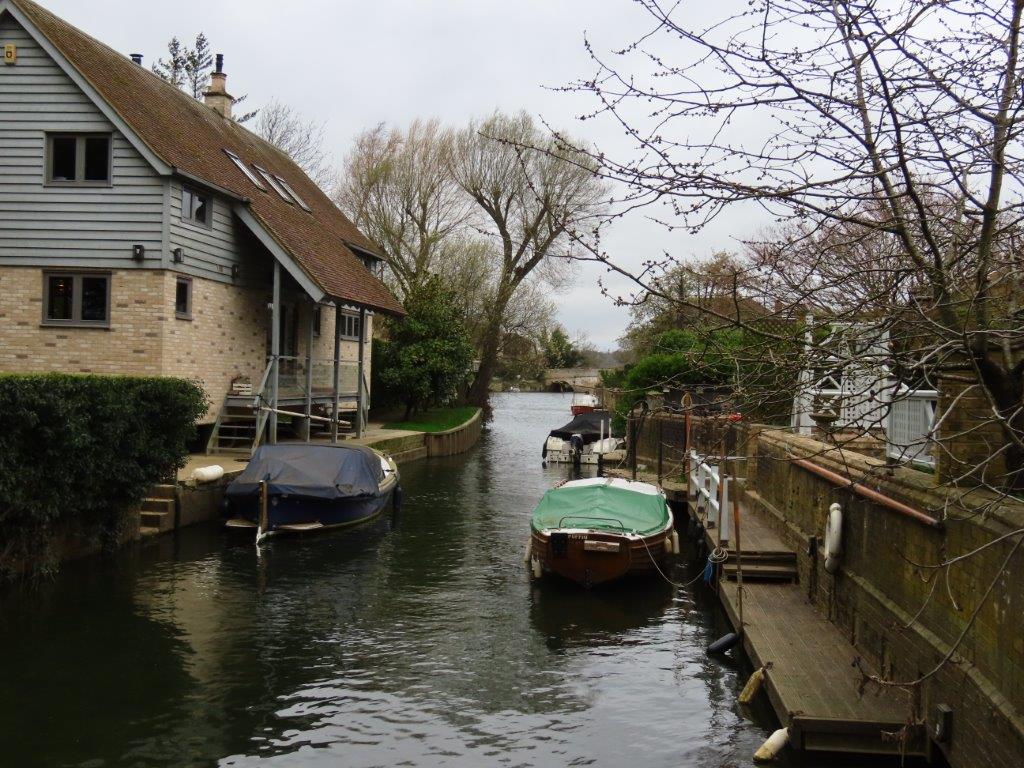
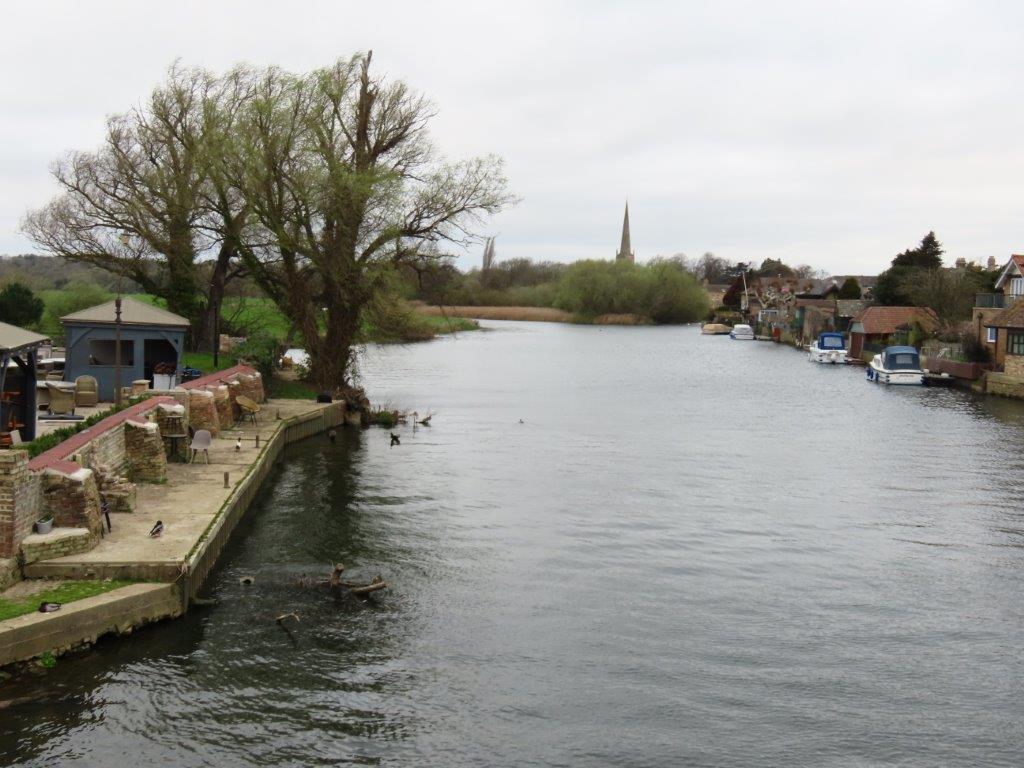
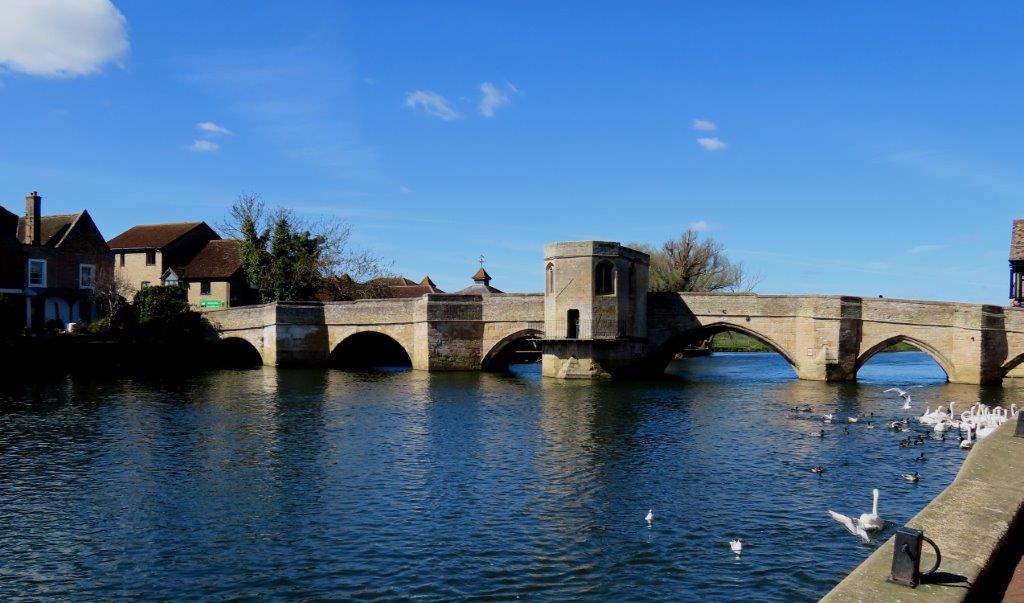
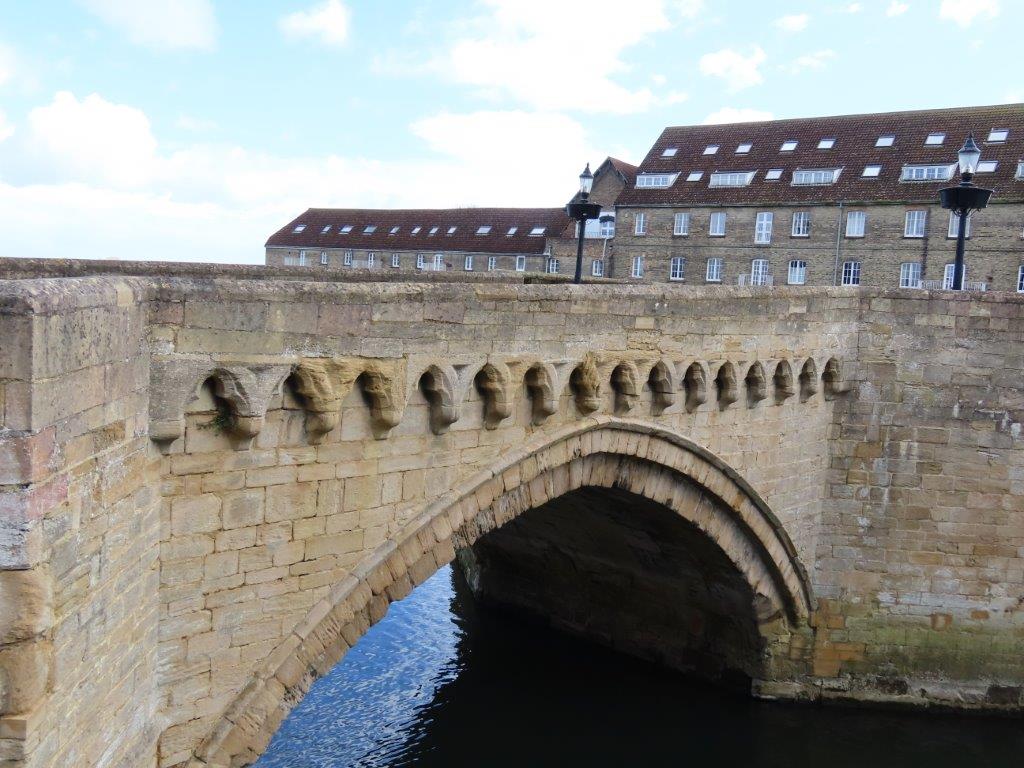
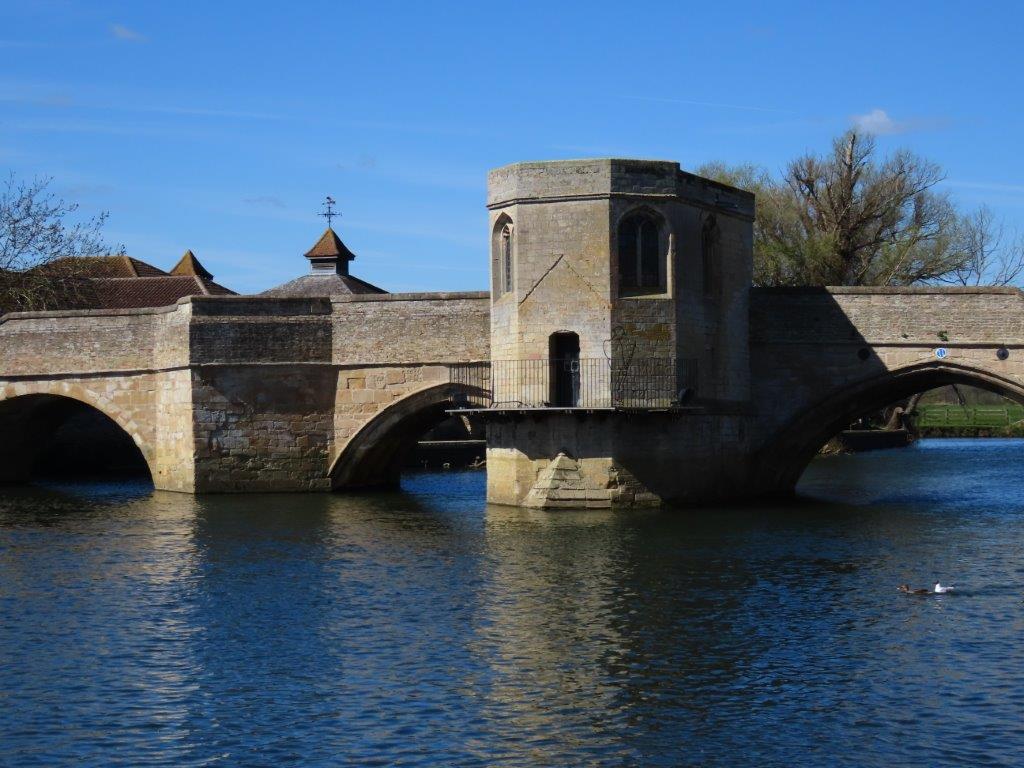
A centrepiece feature is the ancient stone bridge, dating to about 1420, with a chapel incorporated mid-span. The chapel now seems a bit bare and forlorn, especially given some of its other former uses as a private dwelling and a hostelry.
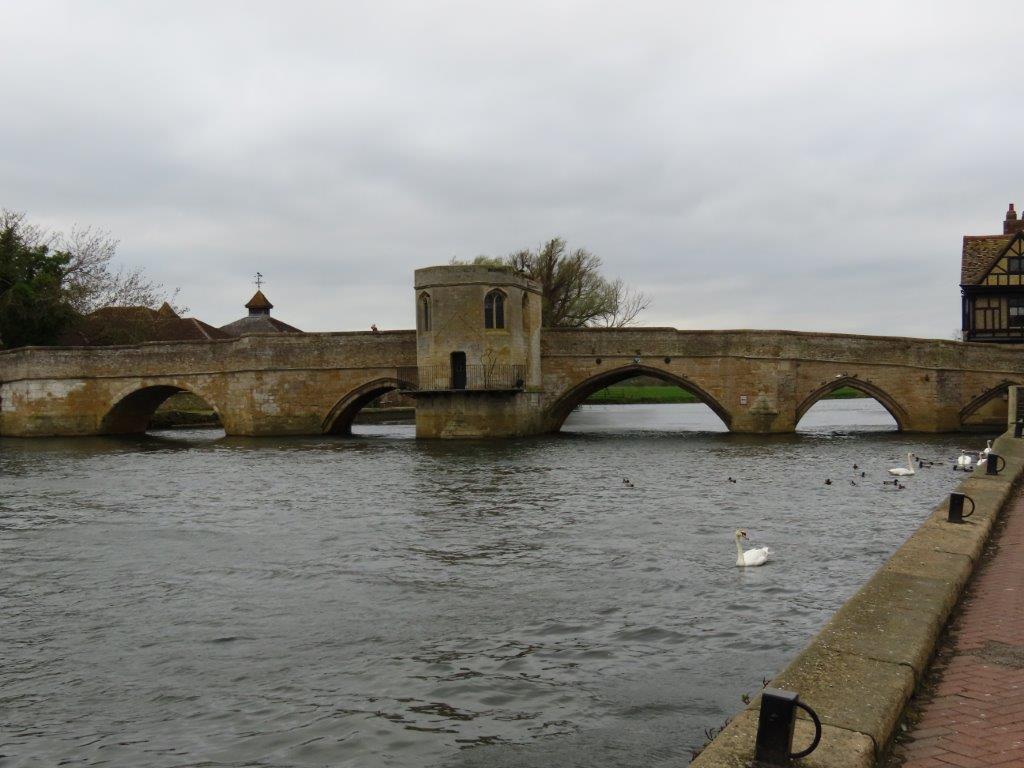
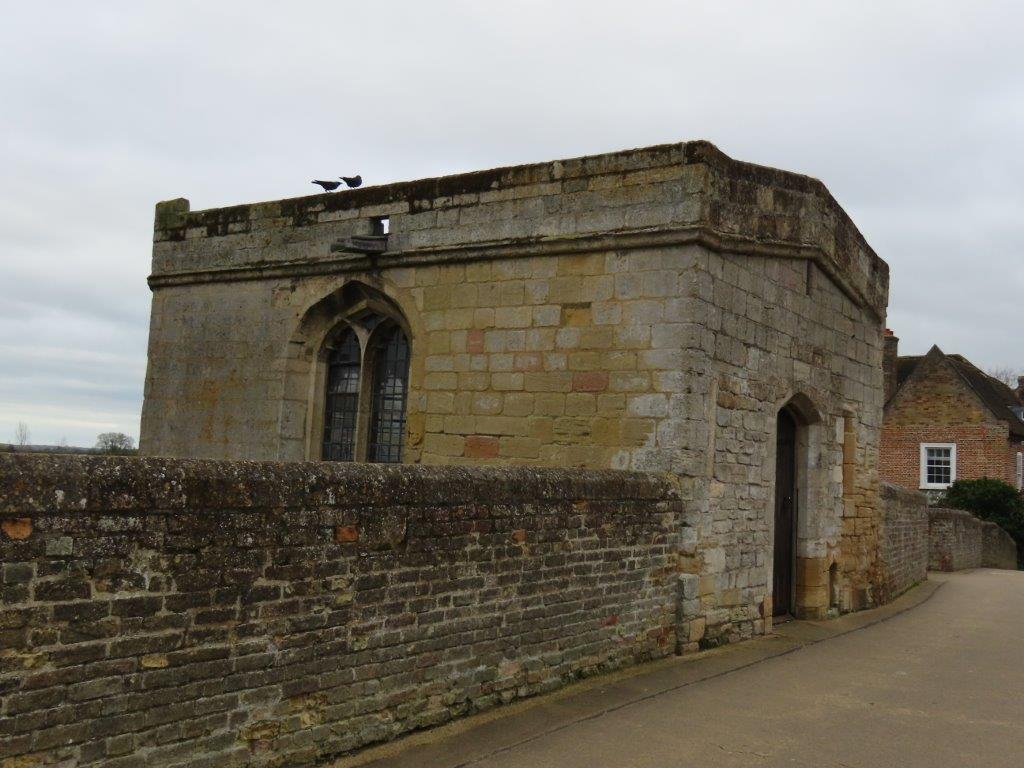
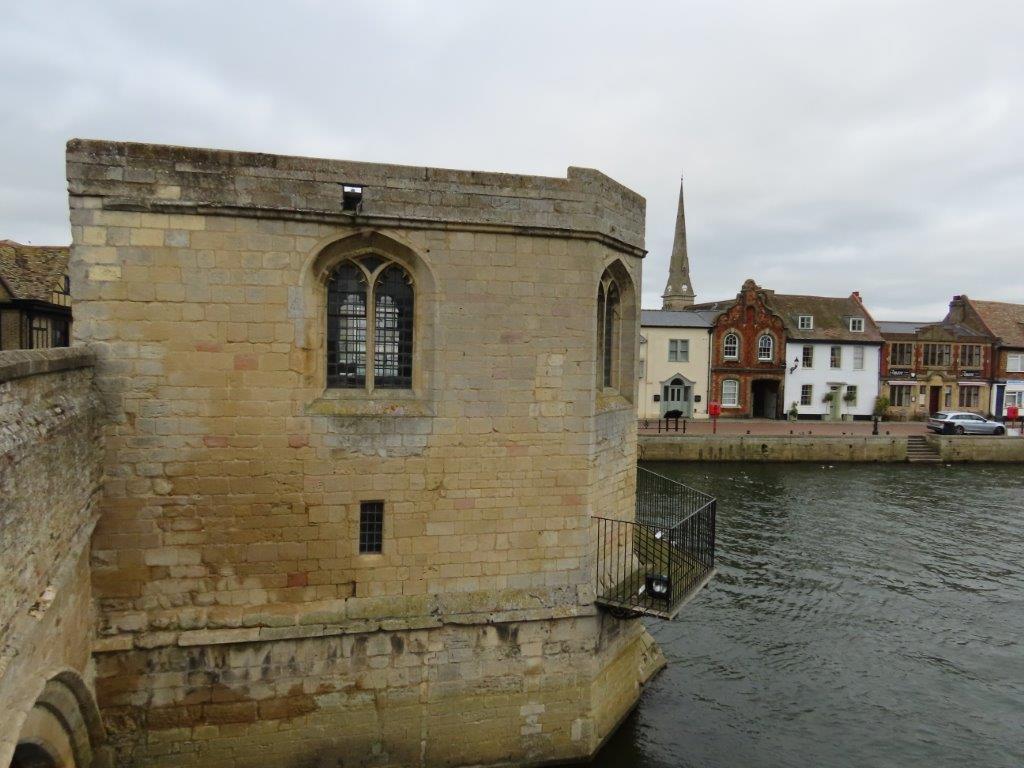
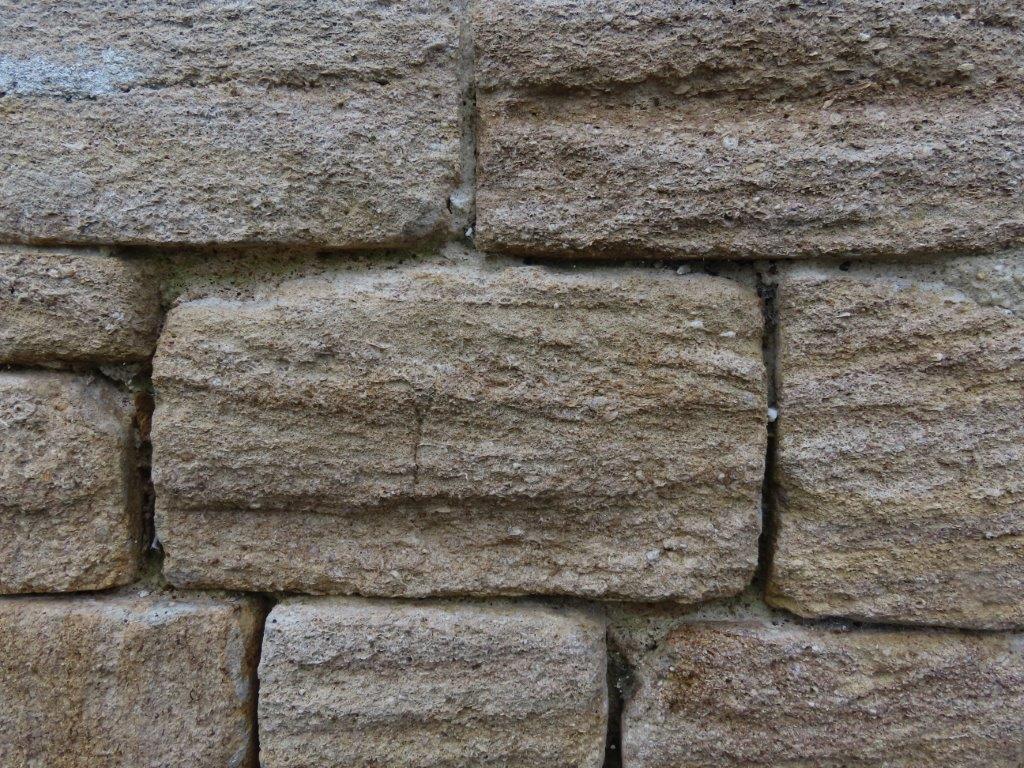
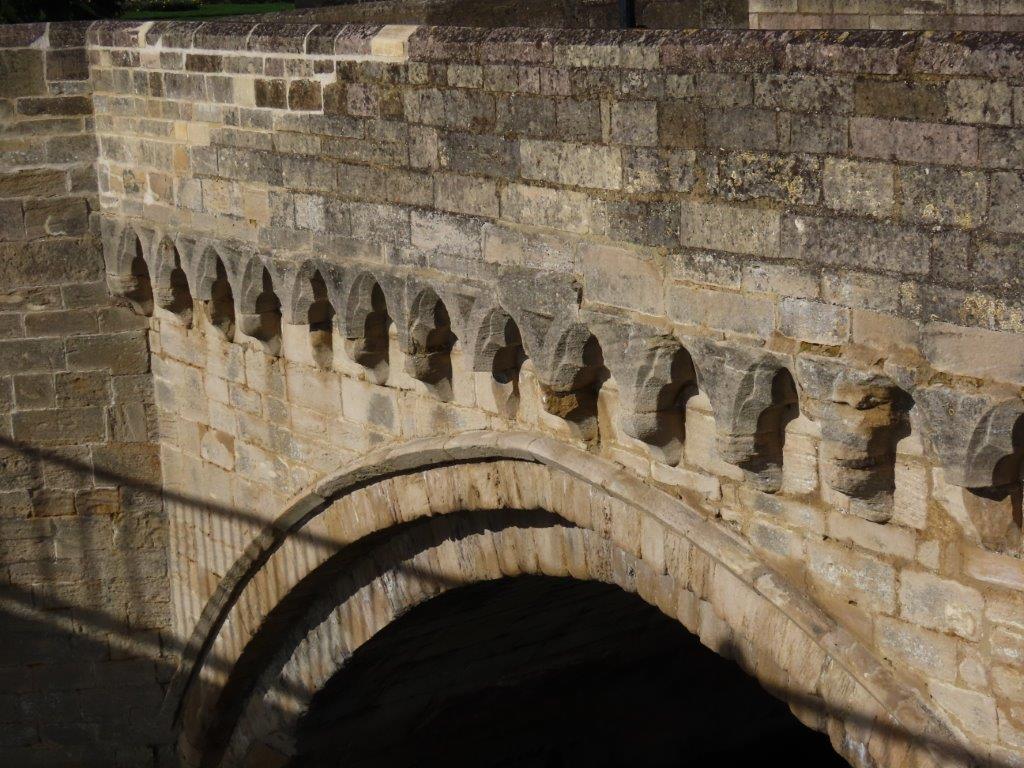
The bridge and the adjacent wharfside are made of lovely honey-coloured oolitic limestone, just about as local a building stone as is possible here in the Fens: it was quarried from Barnack, just north of Peterborough, about 40km away and presumably transported overland as the Middle Level Navigation that links the Nene and Great Ouse had not then been created.
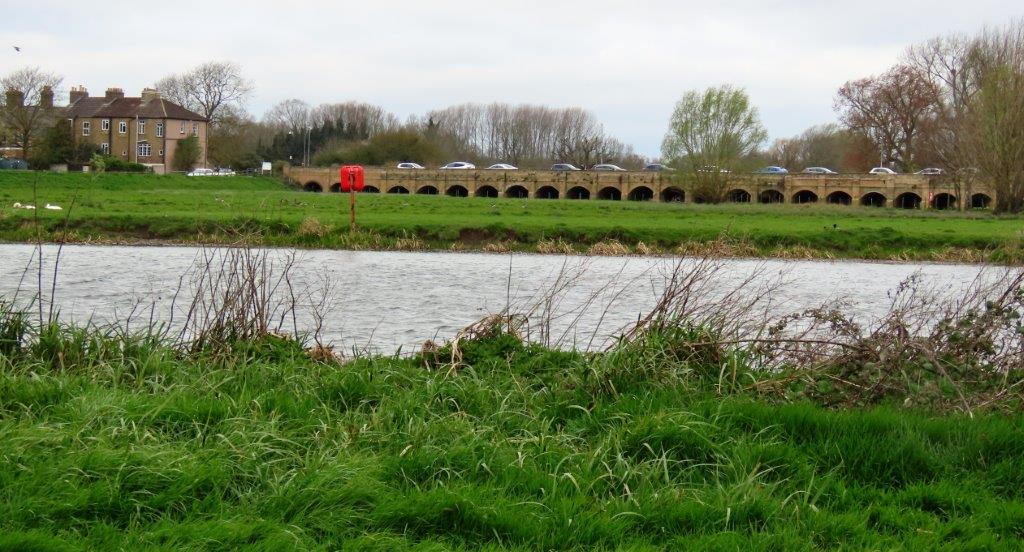
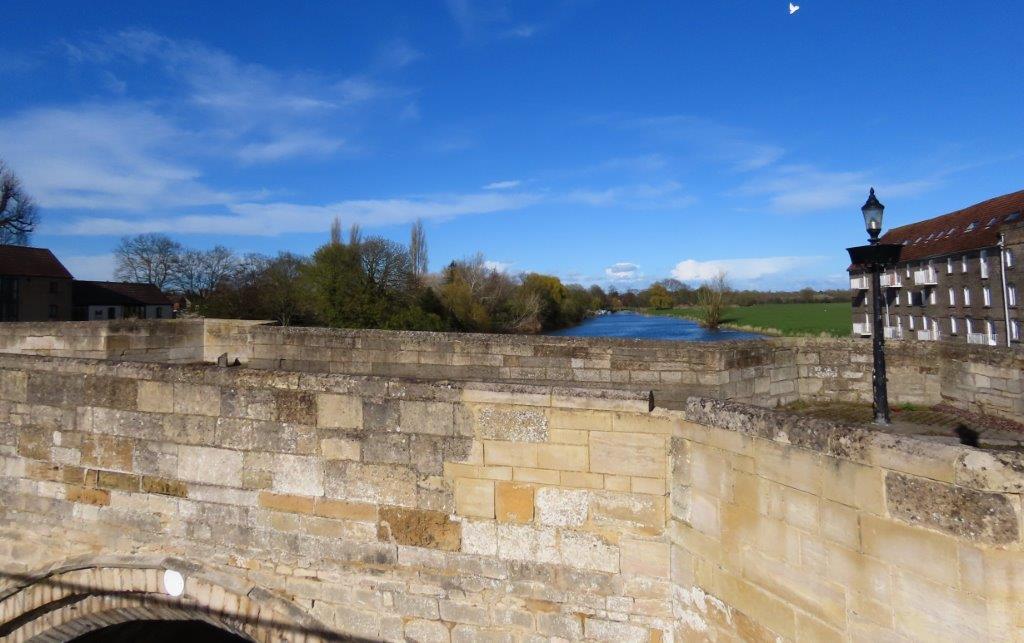
The bridge was partially destroyed for defensive reasons during the Civil War by Parliamentary forces under Cromwell (someone who will feature throughout this blog), the two southern arches replaced by drawbridges. When repaired several decades later, bridge-building techniques had evolved such the the new arches were round, rather than the gently pointed original Gothic ones. Nowadays, the bridge is traffic-free and a delight to potter over, and on to the 19th century causeway on a viaduct with 55 low arches across the water meadows.
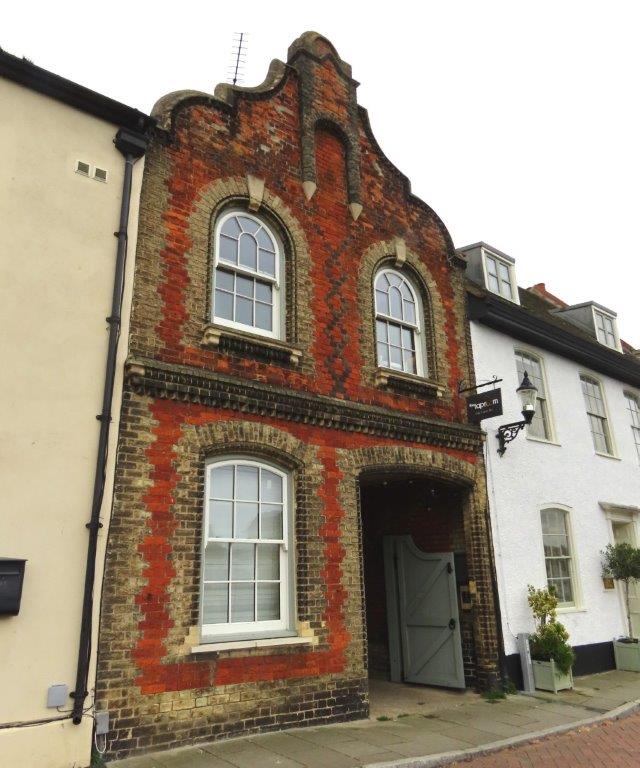
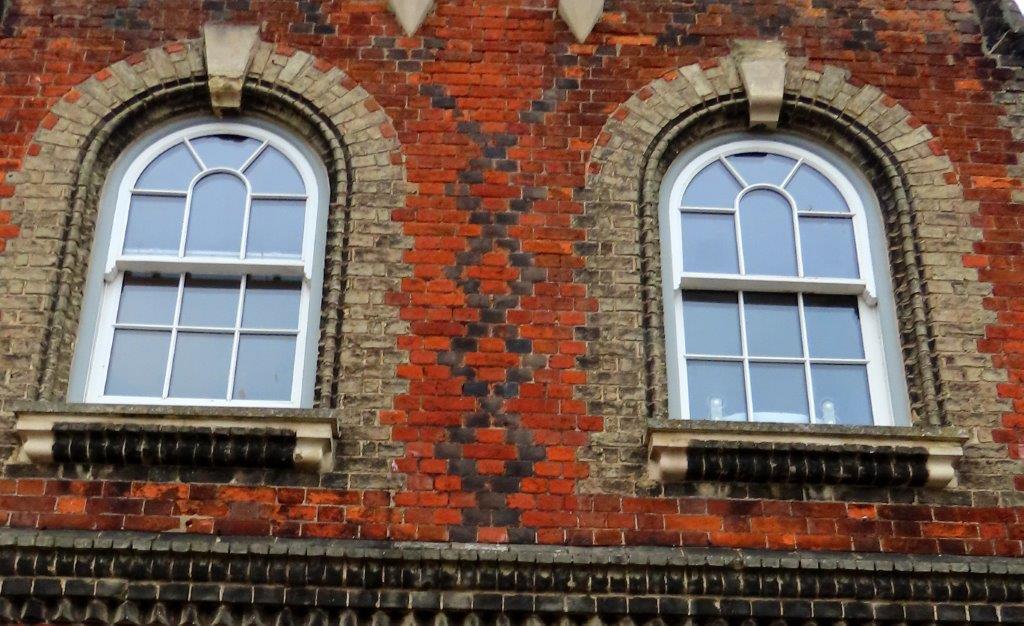
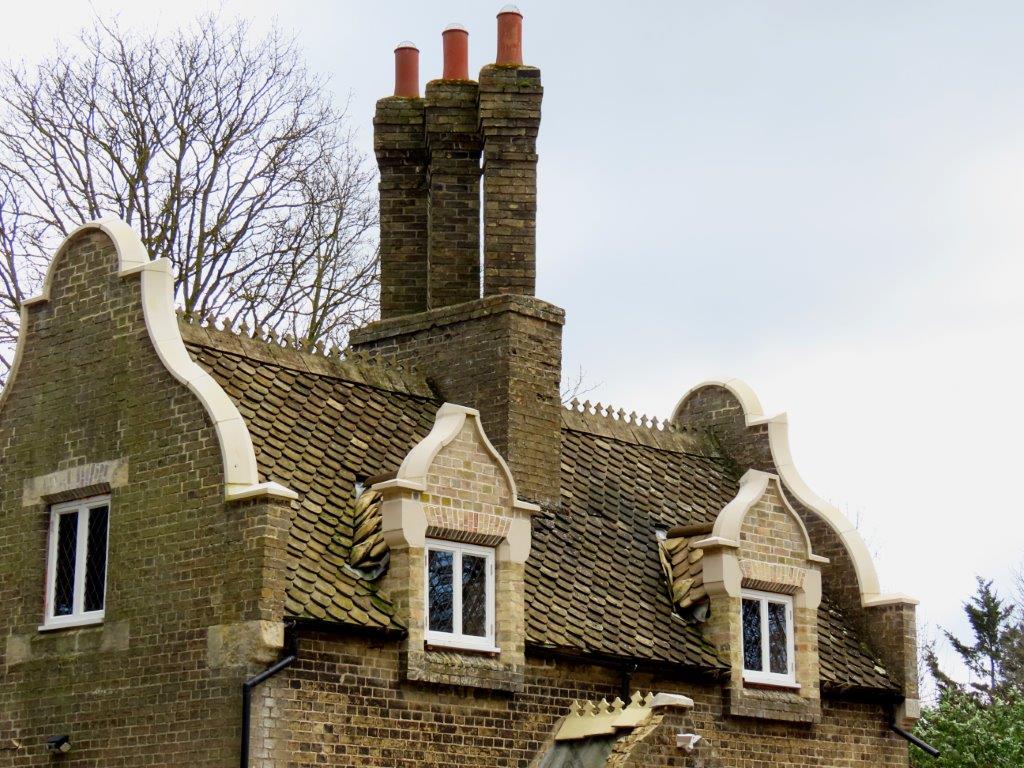
One house next to the bridge is particularly fine and caught our attention, Jacobean in style with a Dutch gable, and polychrome brick and ‘diapering’ (I have learned something!), decorative brickwork with repeated geometric patterns. But its listing makes no reference to any use than as a domestic dwelling: perhaps it was built by a brickmaker (there were many in these parts, given the lack of local building stone) as a permanent advertising hoarding?
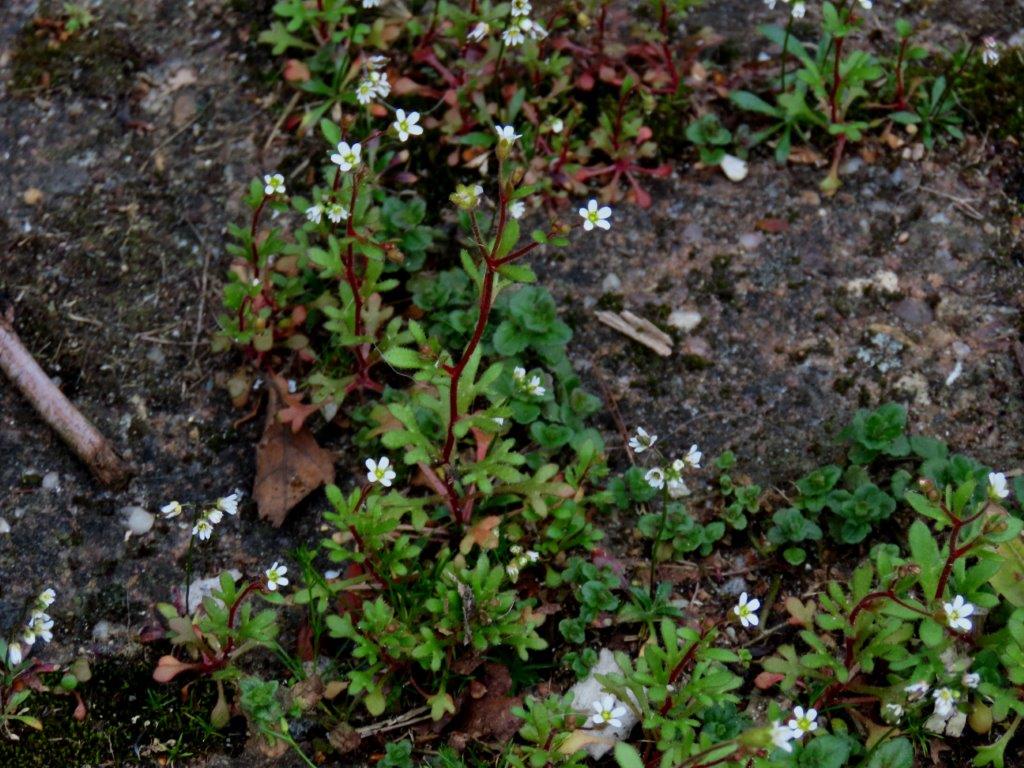
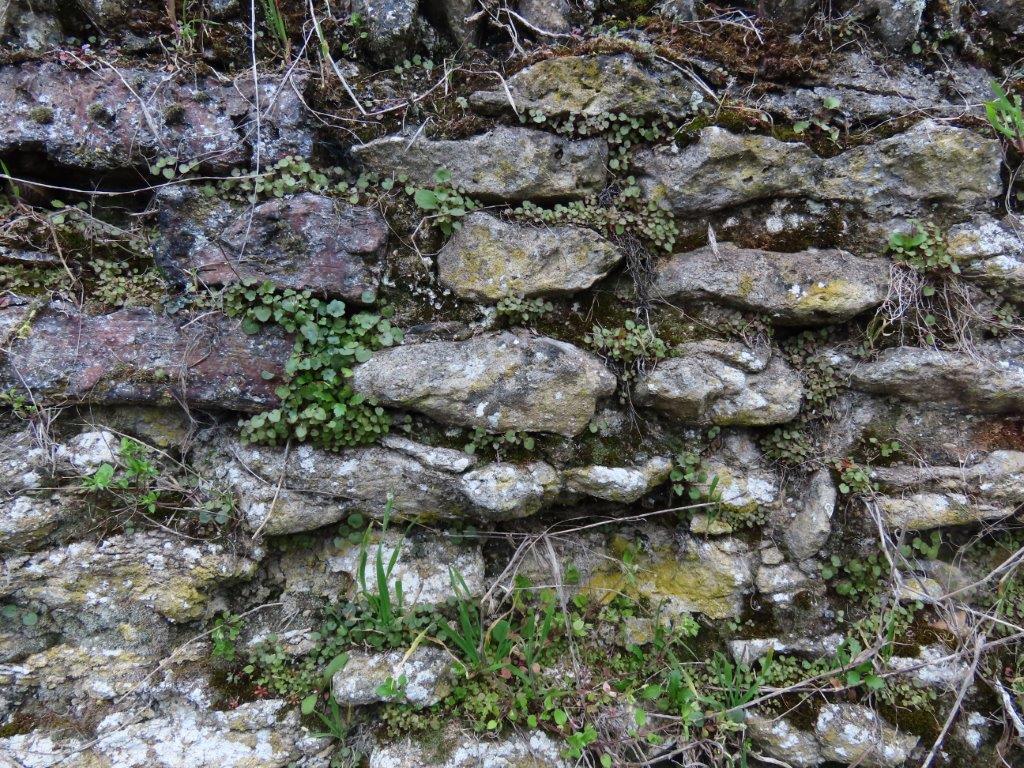
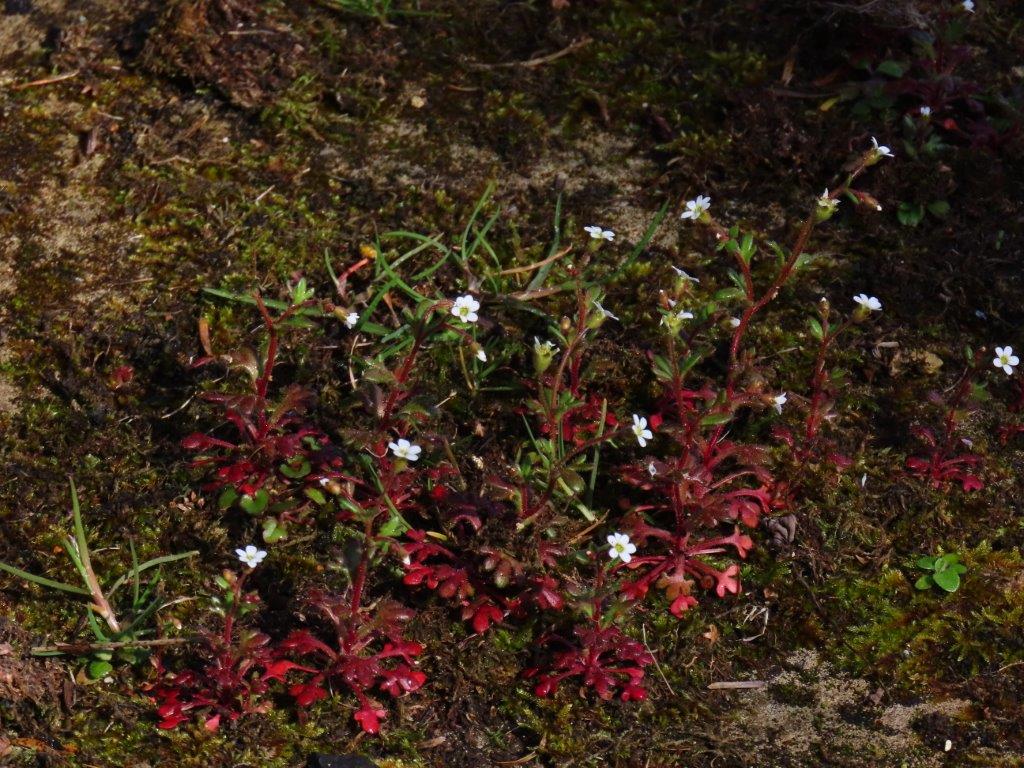
As soon as we disembarked the bus at the bus station, my eyes alit on interesting plants, Rue-leaved Saxifrage and Common Whitlow-grass in the paving cracks. Although common enough nationally, I was surprised to see them given what I assumed would be a marshland town.
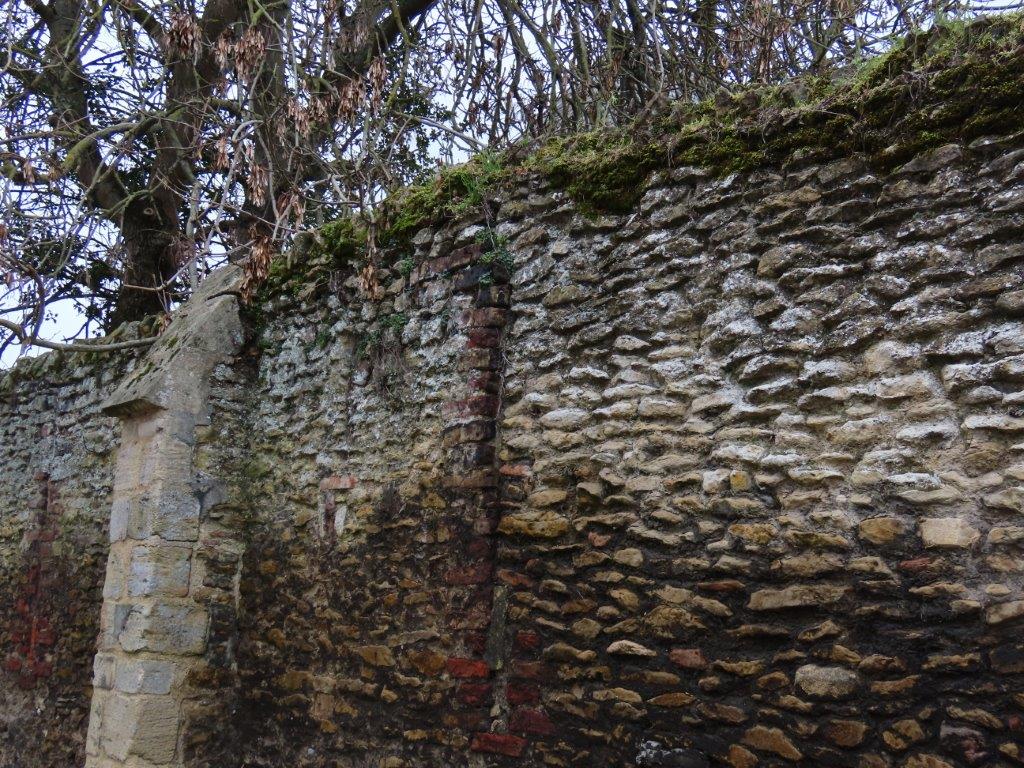
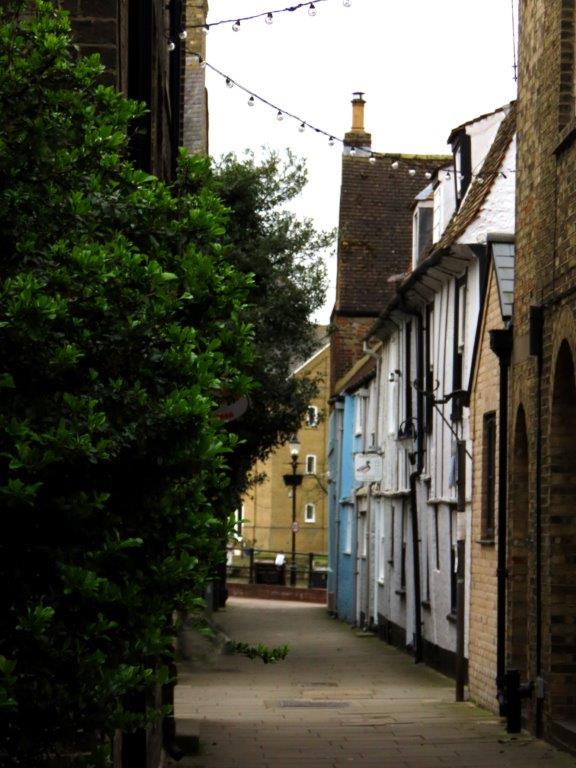
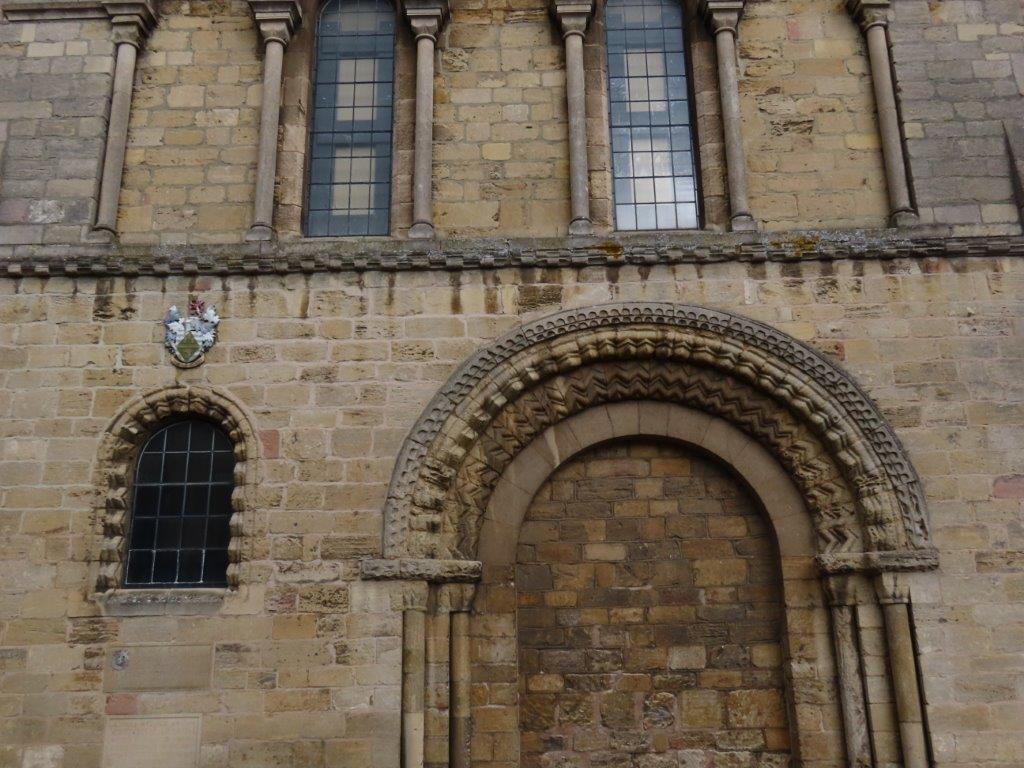
But as we walked around we came across examples of genuine old stonework, where one would expect to find such plants, particularly around the remains of the Priory founded in 1017 when the settlement was known as Slepe. These walls are made of the same limestone as the bridge, but rubble rather than dressed blocks.
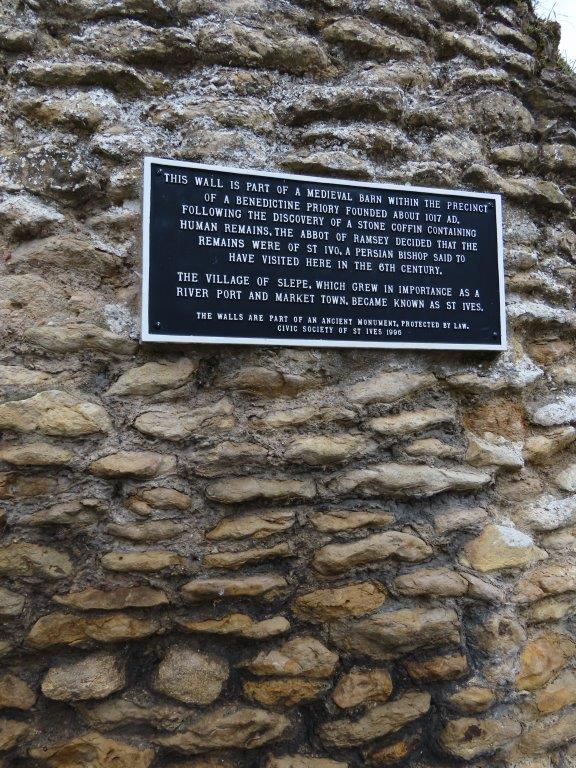
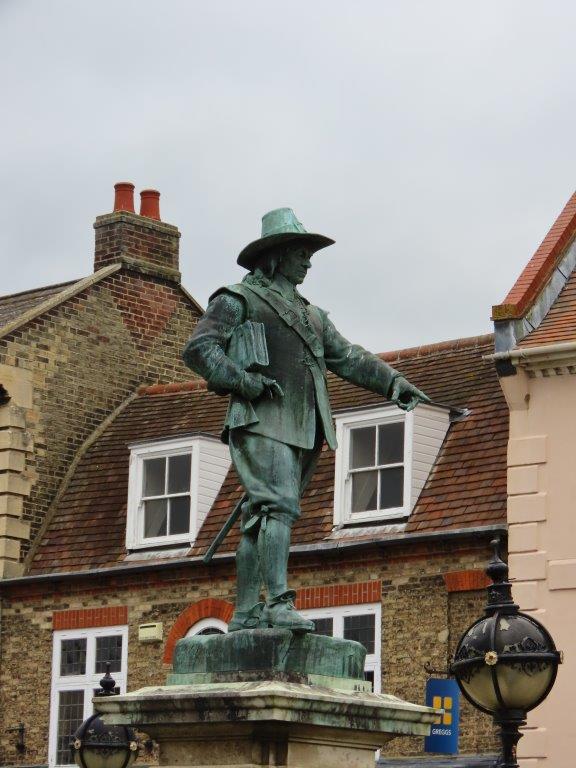
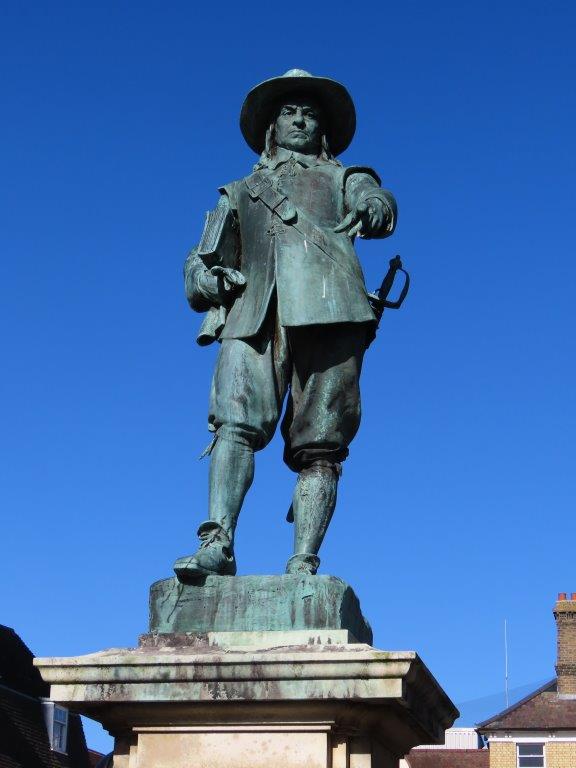
Then an amble around the rest of the old town proved that St Ives has much to offer, including a statue commemorating Oliver Cromwell:
Next day we turned our attention to Huntingdon, birthplace of Cromwell, but surprisingly seeming to lack the statuary of St Ives. It does have an interesting little museum that focuses upon his life and times, its exhibits including the recently acquired Cromwell’s watch.
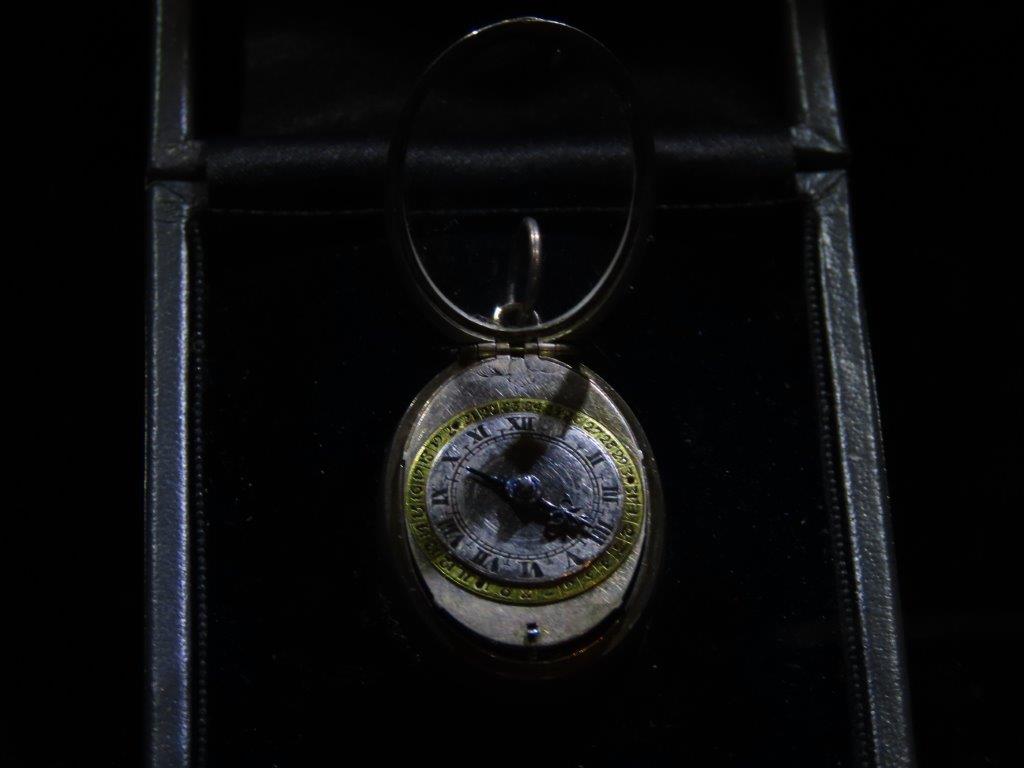
When I asked the question ‘Cromwell – hero or villain?’ the helpful museum attendant said very appositely ‘It depends whether or not you are Irish!’. Cromwell is clearly a Marmite-man, hence the fact that Huntingdon it seems didn’t want a celebratory statue, so St Ives stepped into the breach. Our monarchy has provided many reasons to justify its abolition – in more recent times one just has to consider the Royals’ flirting with fascism in the ’30s and young girls in the noughties – but only Oliver Cromwell achieved it, in response to the attempted power-grab of Charles 1, seeking a return to absolute monarchy.
But history judges those in power by their failures, not successes: just ask Tony Blair… And Cromwell’s way of dealing with the ‘Irish problem’ was nothing short of Puritanical genocide: his purported religious tolerance extended only to the tolerance of other forms of Protestantism!
And in a classic demonstration of the fact that ‘Power Corrupts’ (nothing changes!), Cromwell’s end came about in no small part from a rebellion in his own ranks, the Levellers’ concerns that the democracy they had been promised was not coming. It is a sad indictment of the hold that those who ‘have’ on society that the rebels’ demands in 1646 were pretty similar to the demands of those massacred at Peterloo in 1819, the Chartists around 1850 and those of the Suffragettes at the start of the 20th century.
But I digress! Museums should make you think (as we found at Manchester [Peterloo] and Newport [Chartists] respectively), and this one certainly did. But it also provided us with welcome shelter as the day was turning into one of very sharp showers, including some heavy hailstorms:
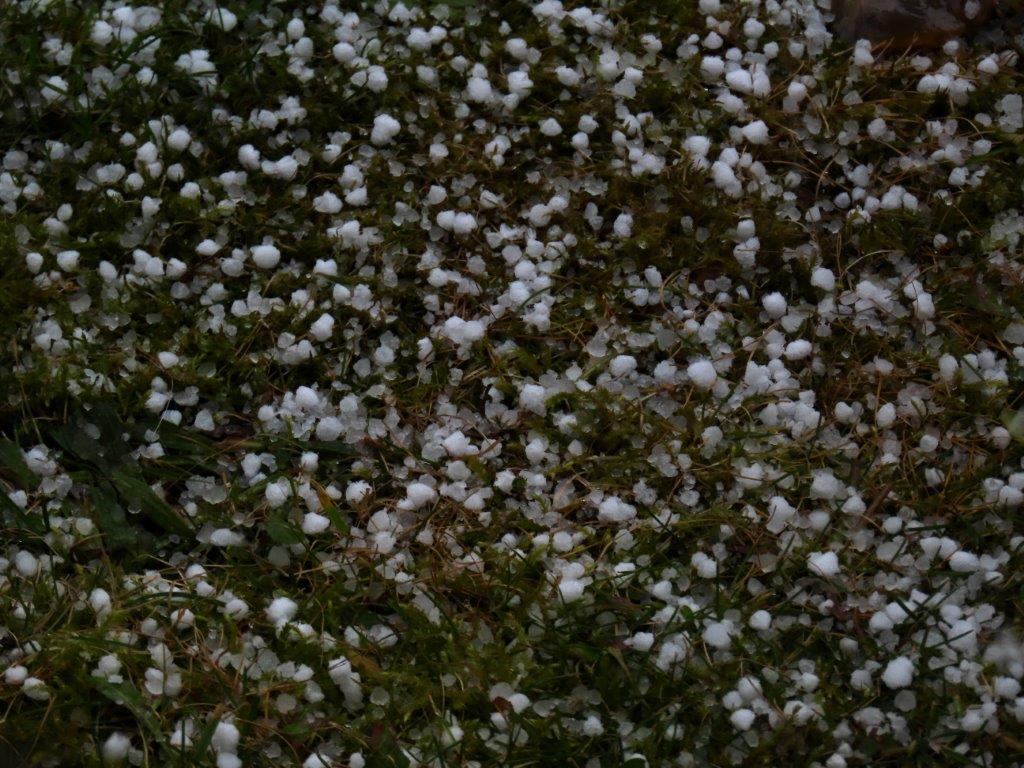
With the weather changing rapidly throughout the day as the showers sped over, it was clearly one of those days to stay within easy reach of places of shelter: museums, churches and pubs! The two churches were St Mary’s, closed, but with Rue-leaved Saxifrage on the older graves…
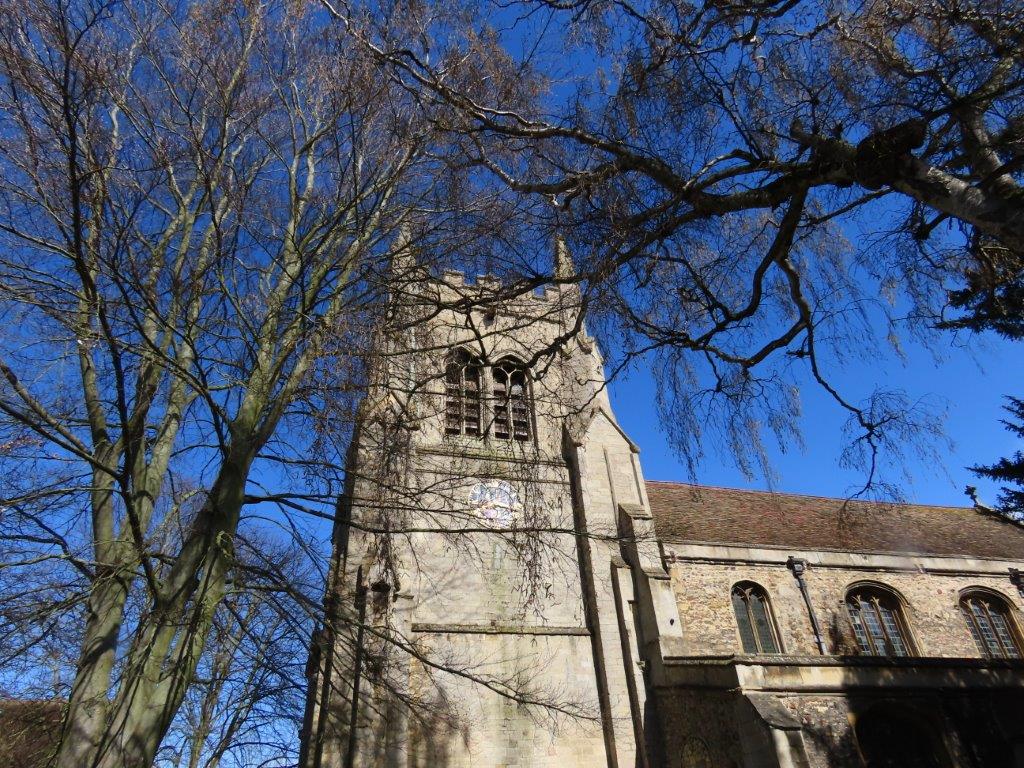
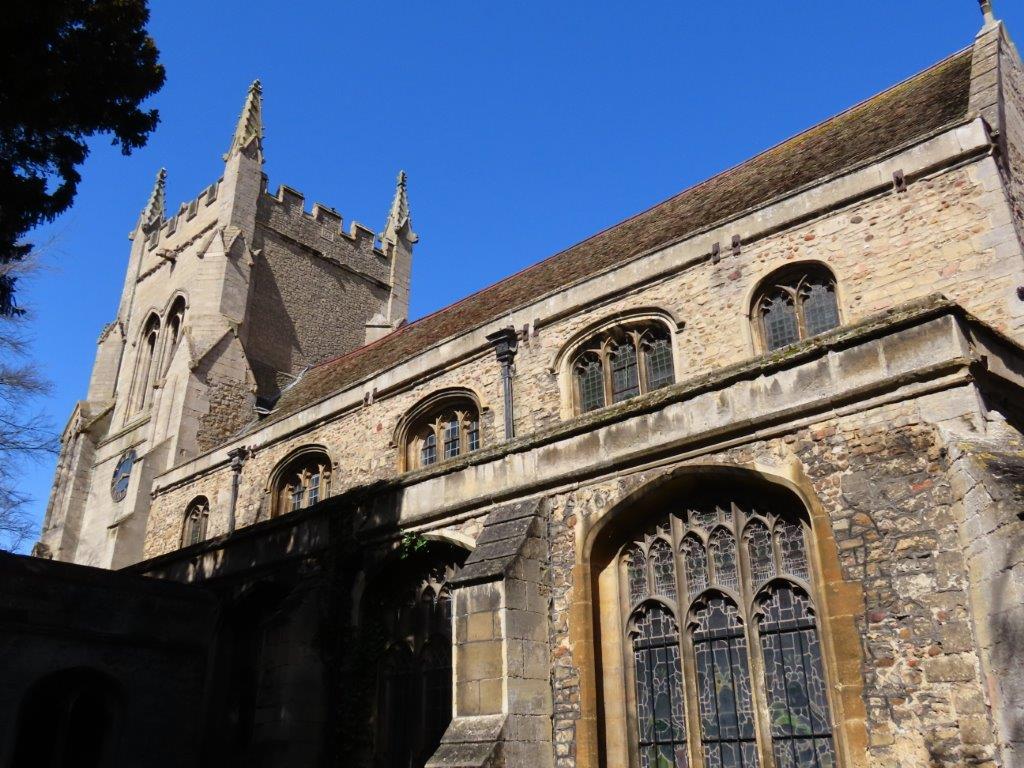
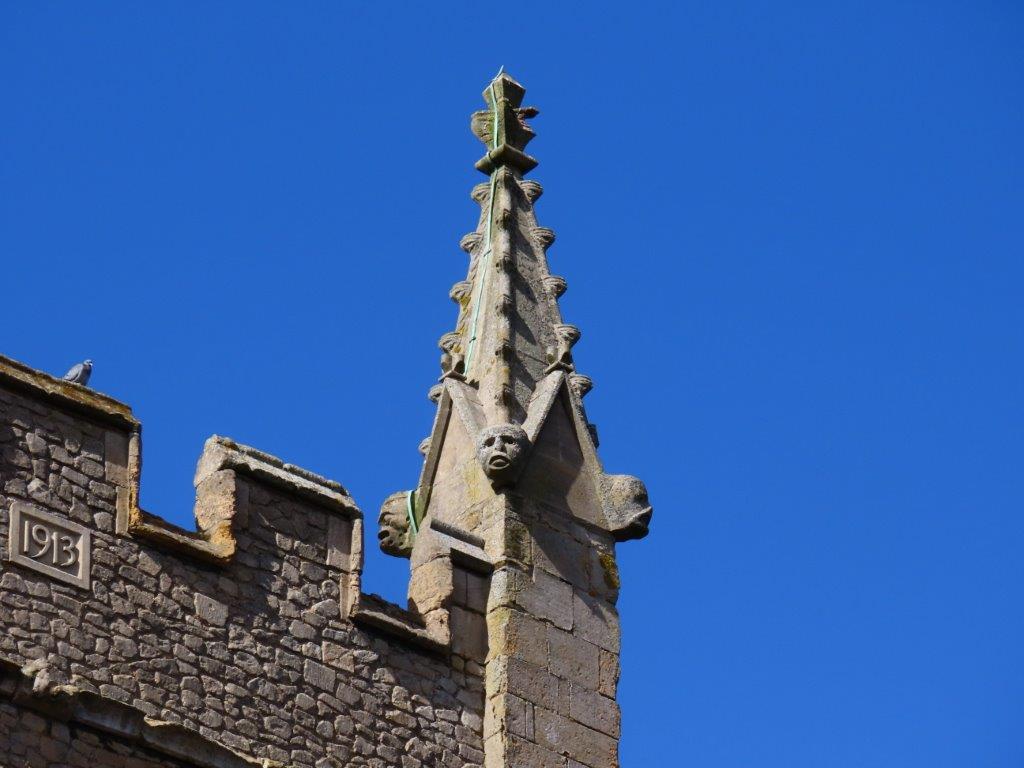
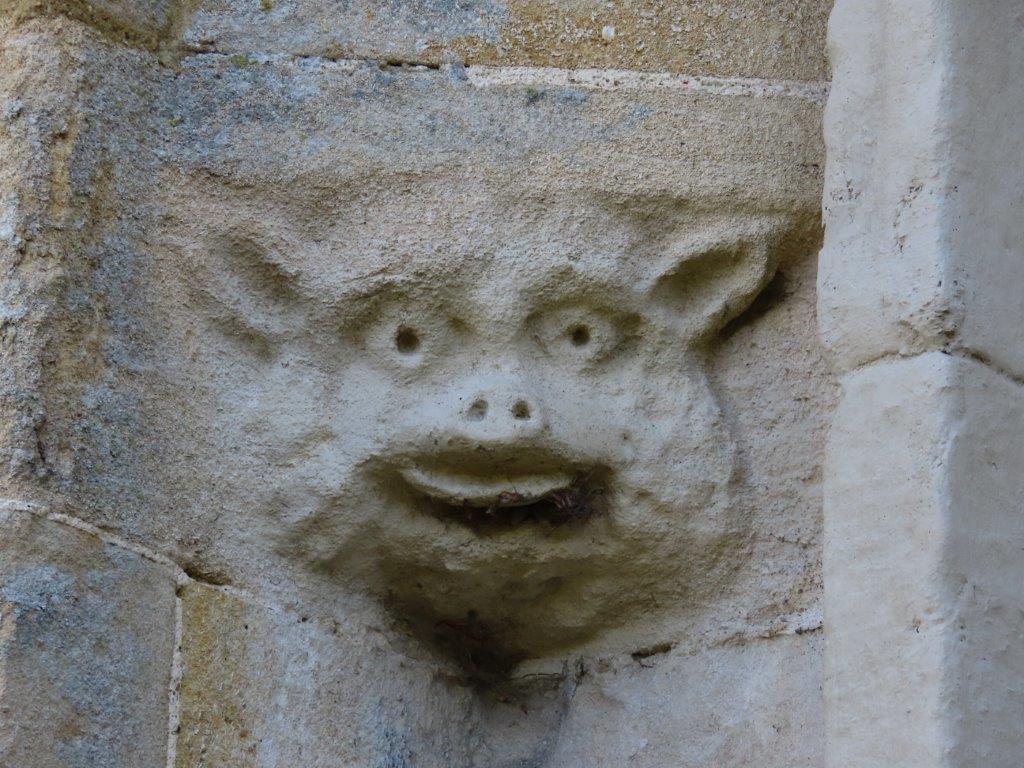
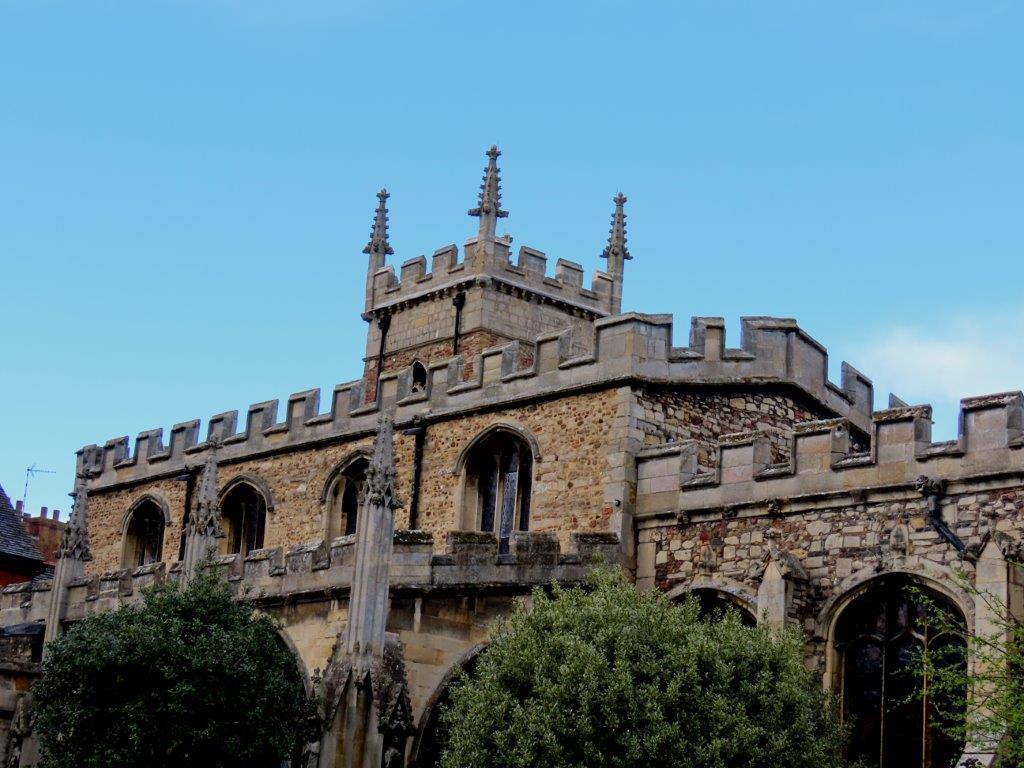
… and All Saints’, very much open to all and providing a vital town centre community function for those in need. Both churches were low-rise, at least compared with the numerous besteepled ones we saw elsewhere, but why? It may come from a residual puritanical streak, or something as prosaic as the underlying ground conditions being insufficiently stable to support a tall steeple.
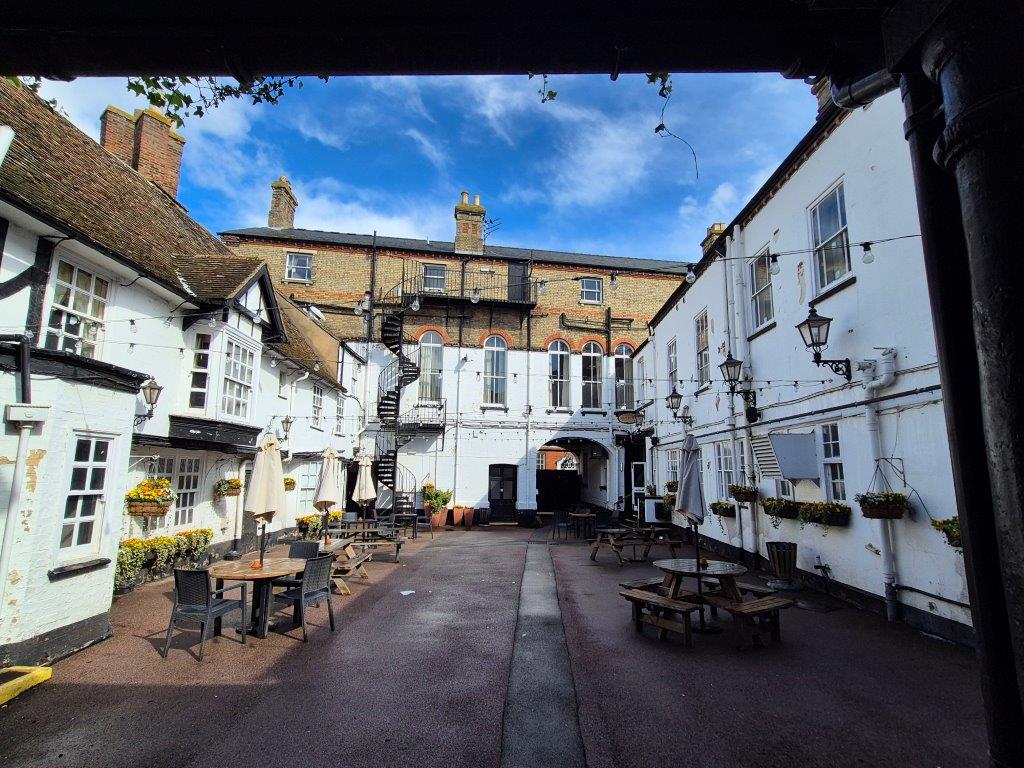
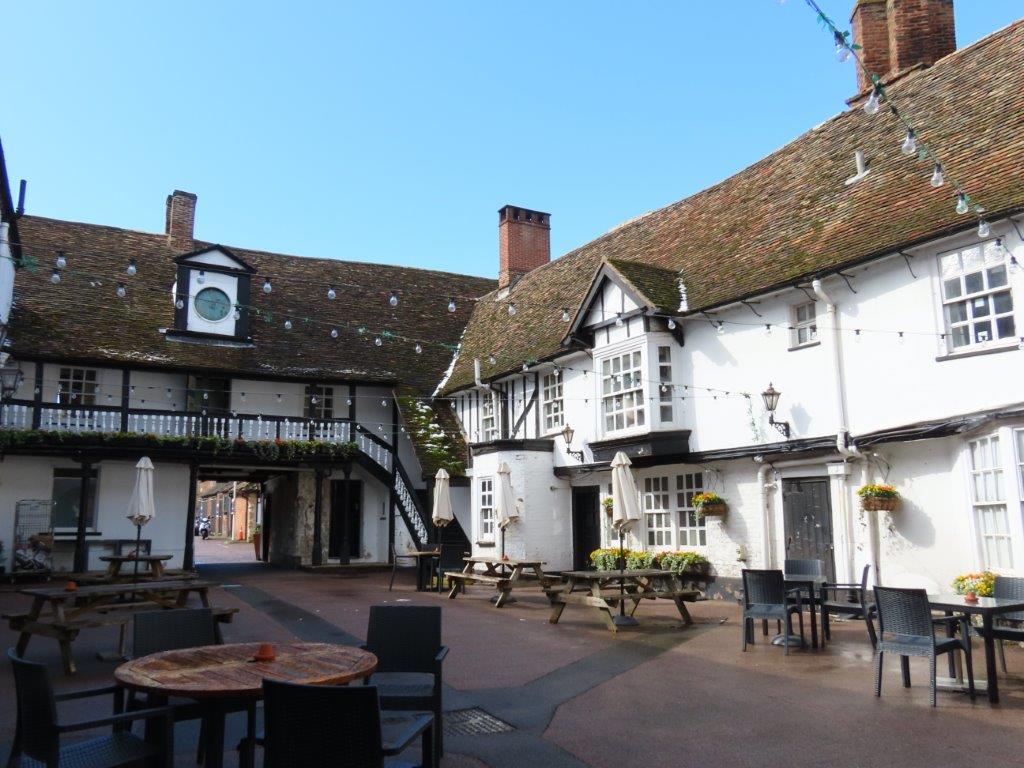
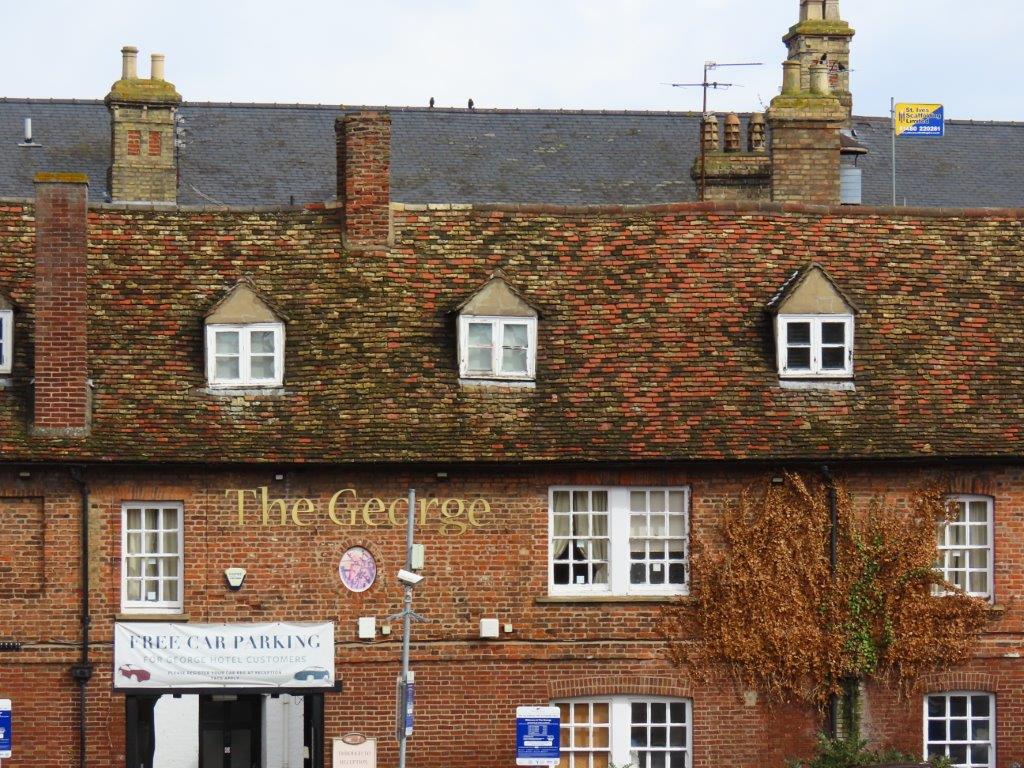
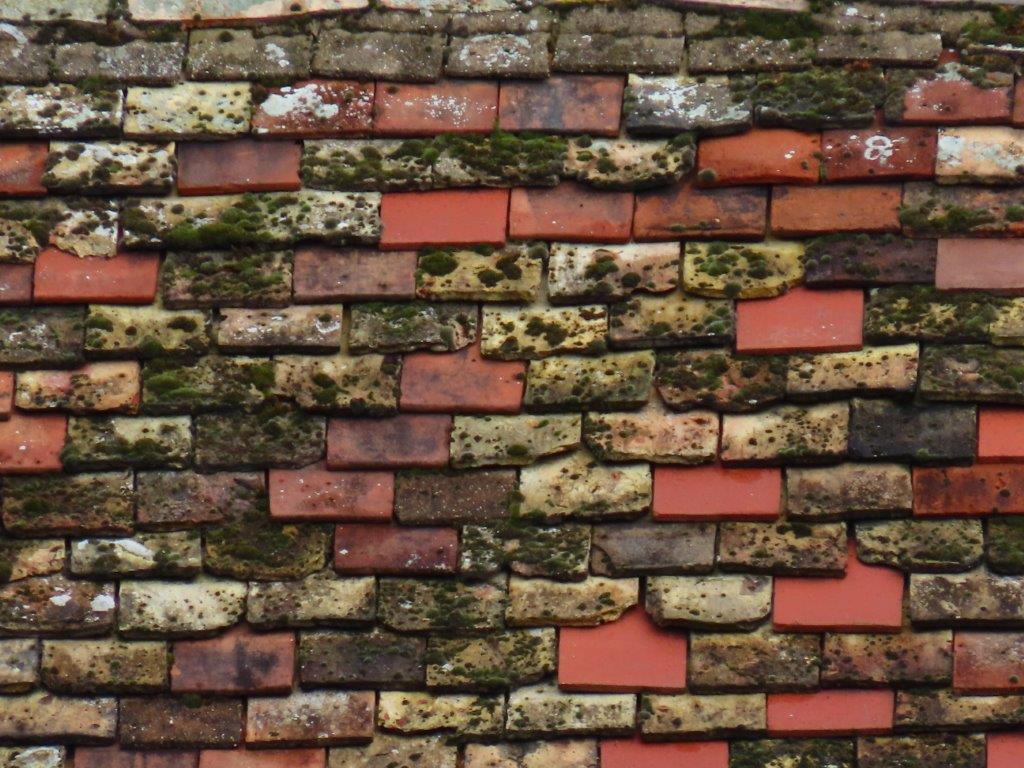
And so onto the pubs, again two in particular. We do like a galleried coaching inn (see the George in London and the New Inn in Gloucester from our previous trips), and the George in Huntingdon was in similarly pretty good condition, albeit not with an atmosphere that encouraged us to stay…
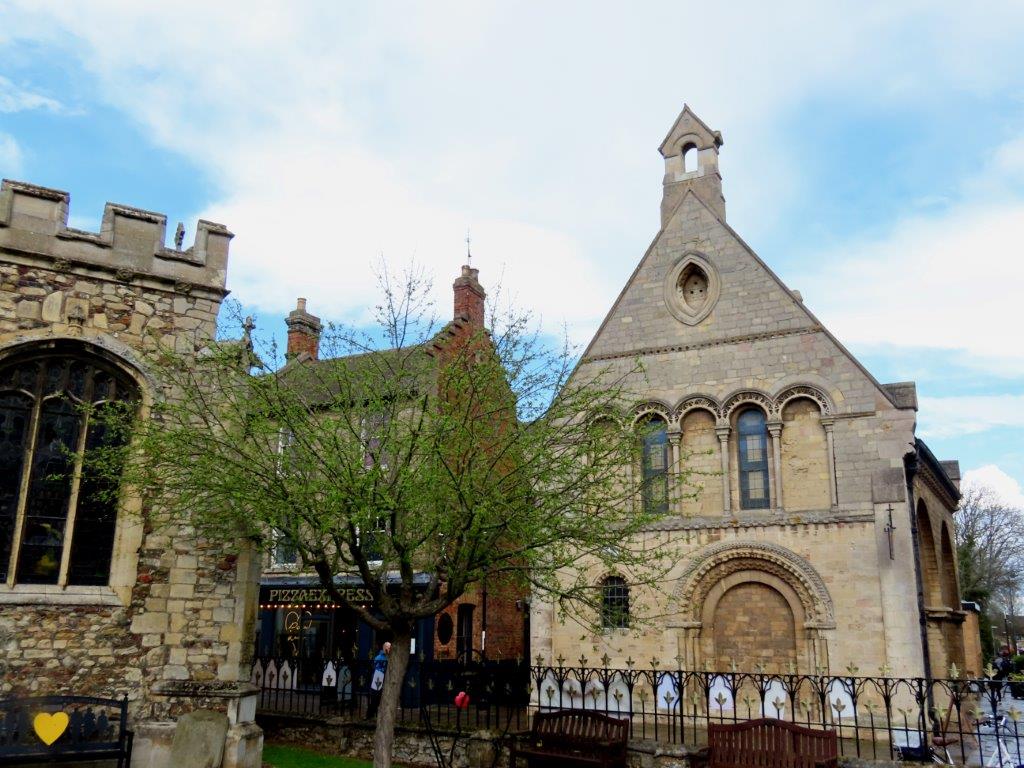
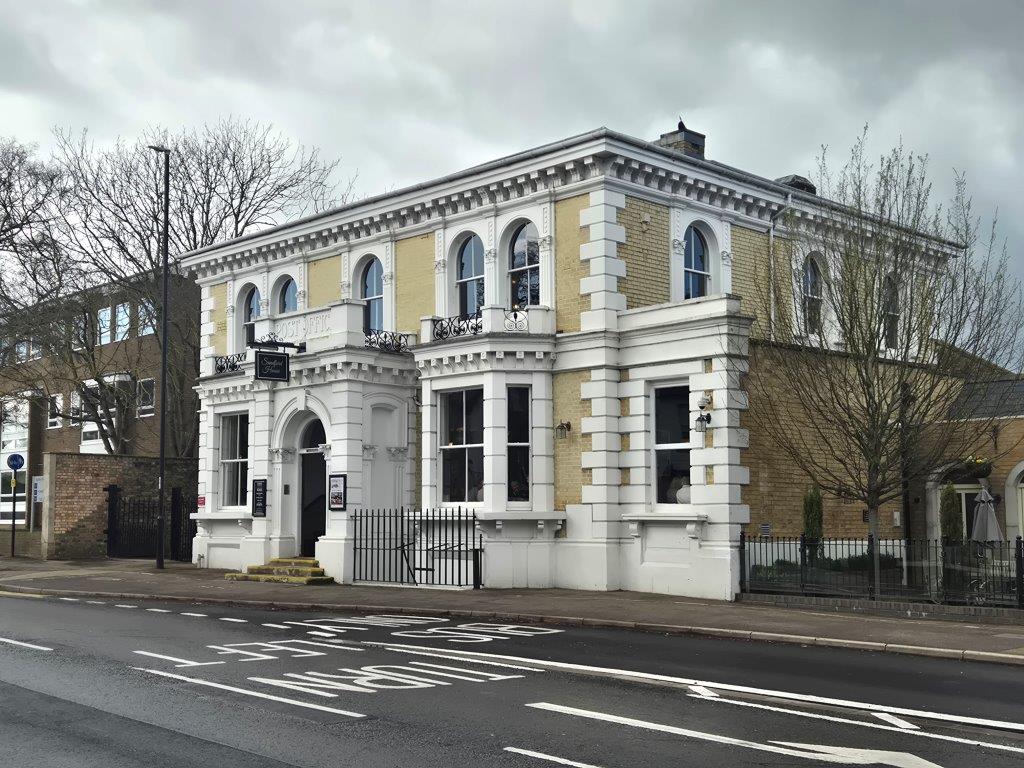
The pub we did decide to stay and enjoy was Sandford House, a fine Wetherspoons conversion of a former chapel, post office and private residence of Charles Sandford Windover, a major Victorian carriage-builder in the area. Given that Huntingdon lies on the old Great North Road, midway between York and London, it seems a very appropriate place to have both carriage builders’ and coaching inns.
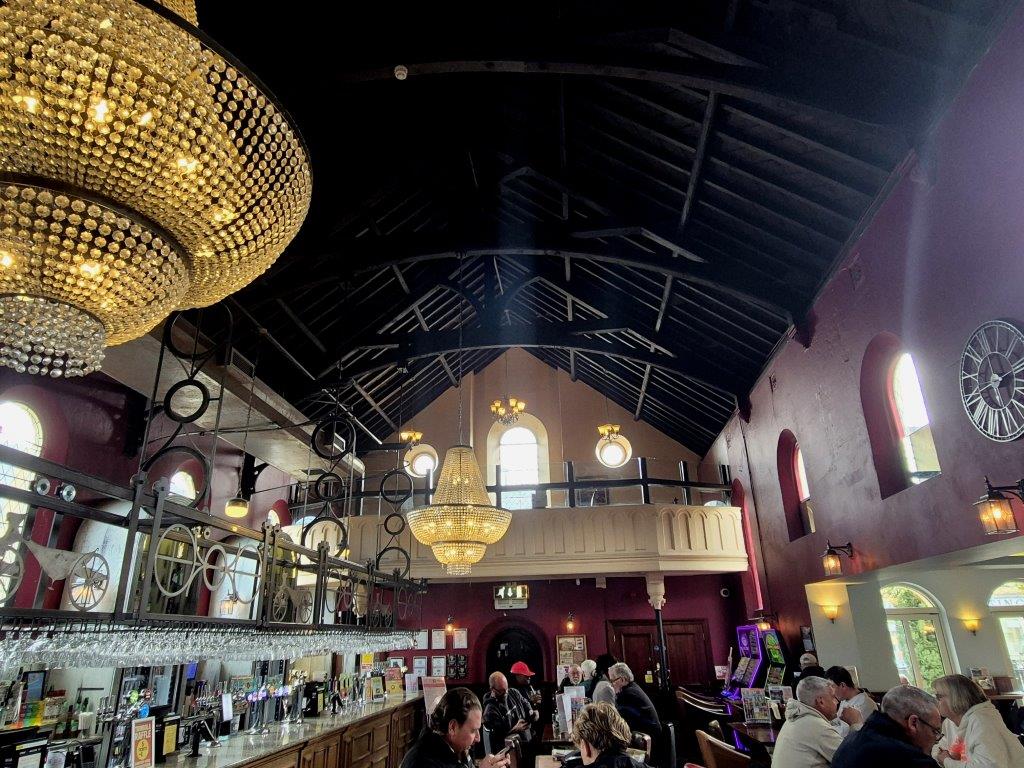
And in Sandford House, Jude was thrilled to find the luxurious opulence of the ladies’ loos!
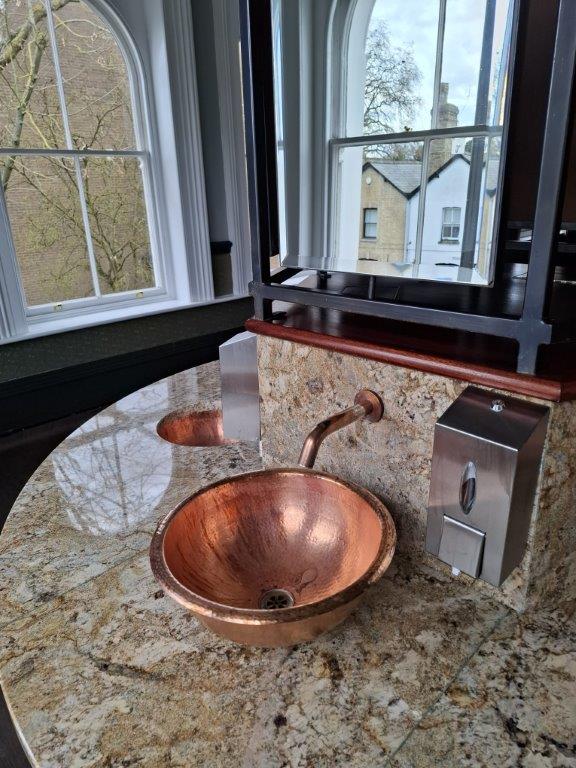
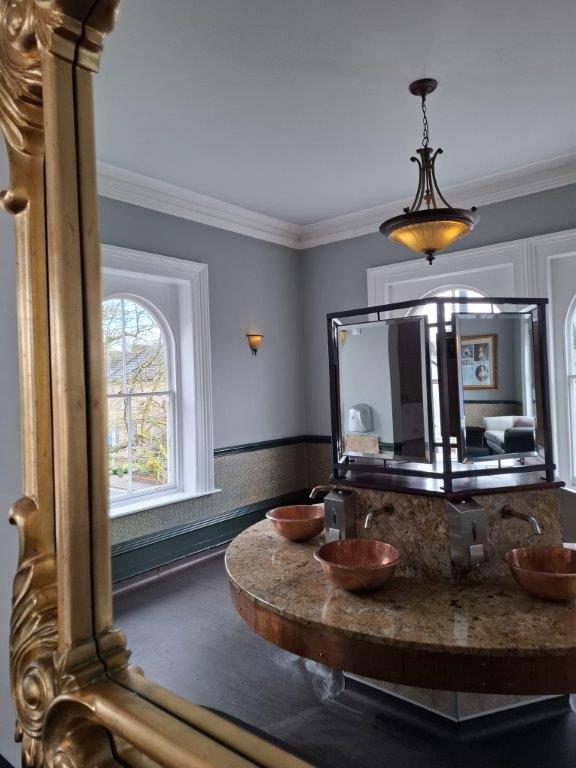
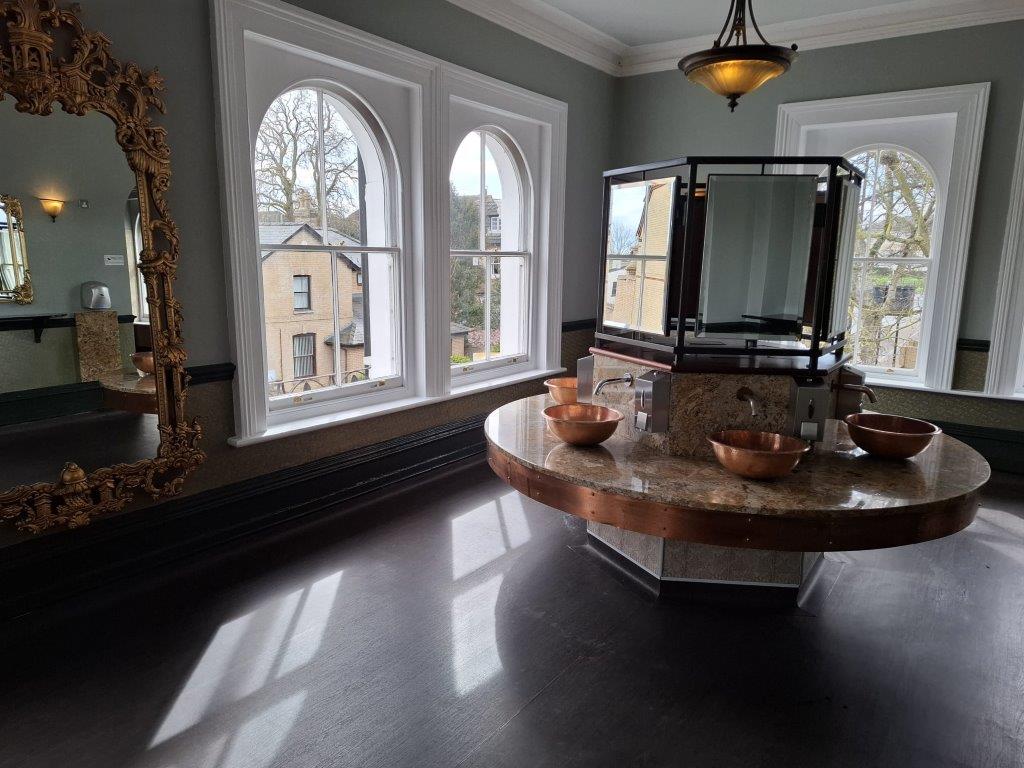
Other historic buildings abounded in the heart of the town….
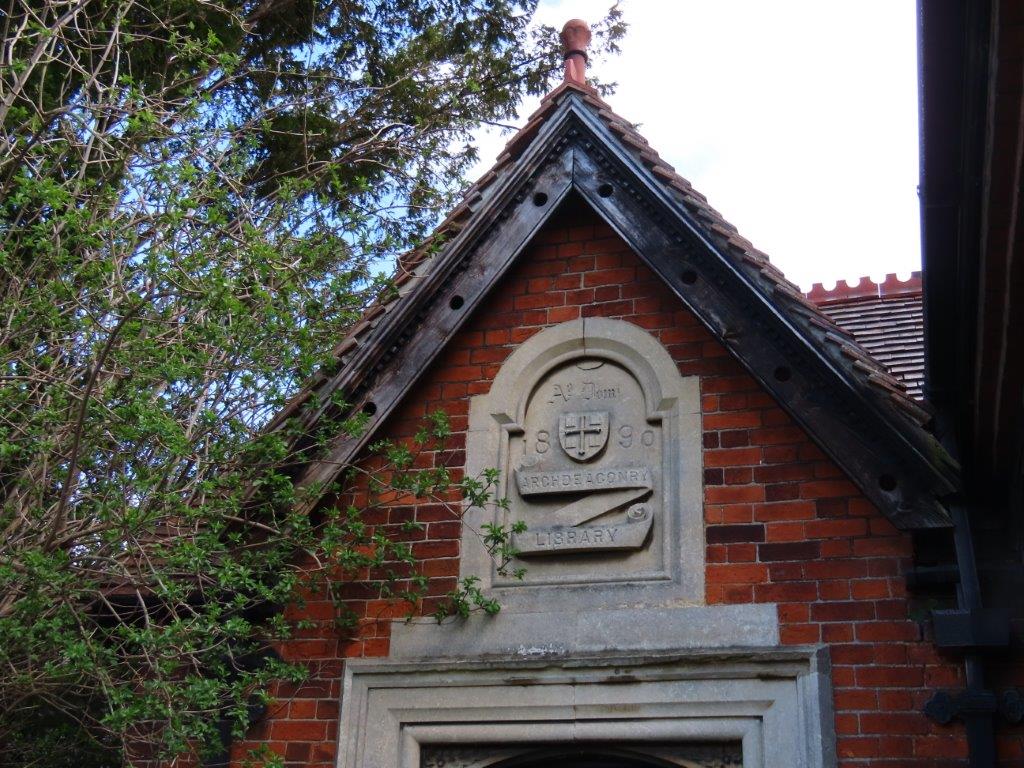
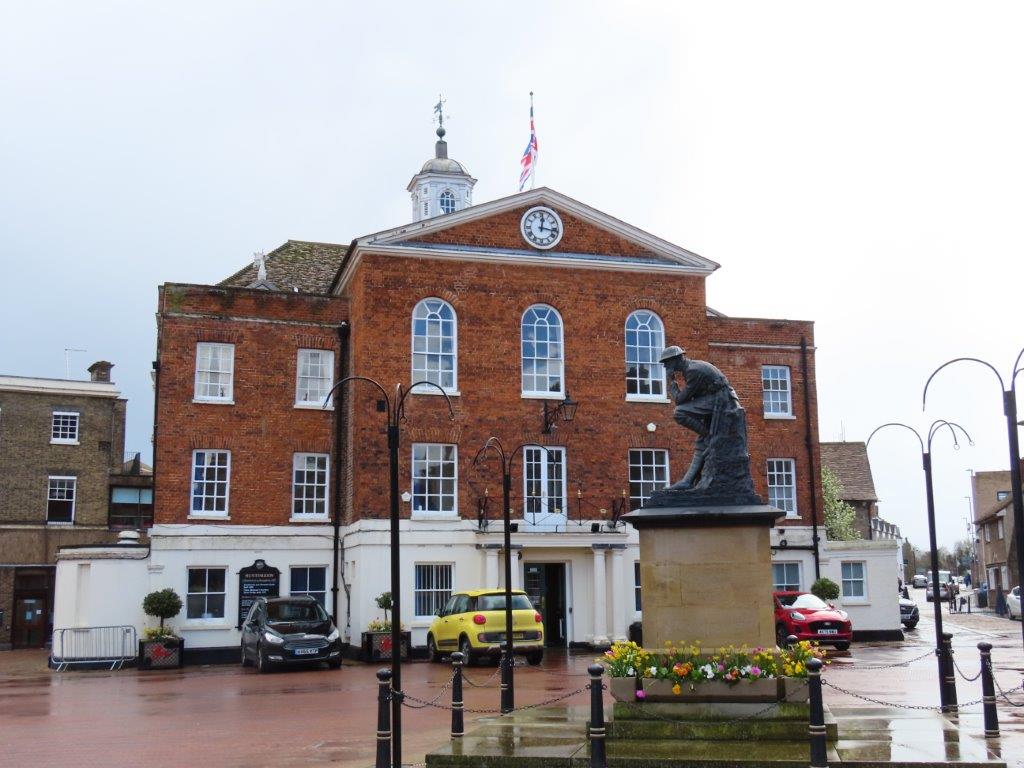
… but one in particular attracted our attention, while we were waiting at a bus stop. Thanks to the magic of Google Lens, it was identified as the home of William Cowper, which sent us down another investigative rabbit-hole over a glass or two the following evening!
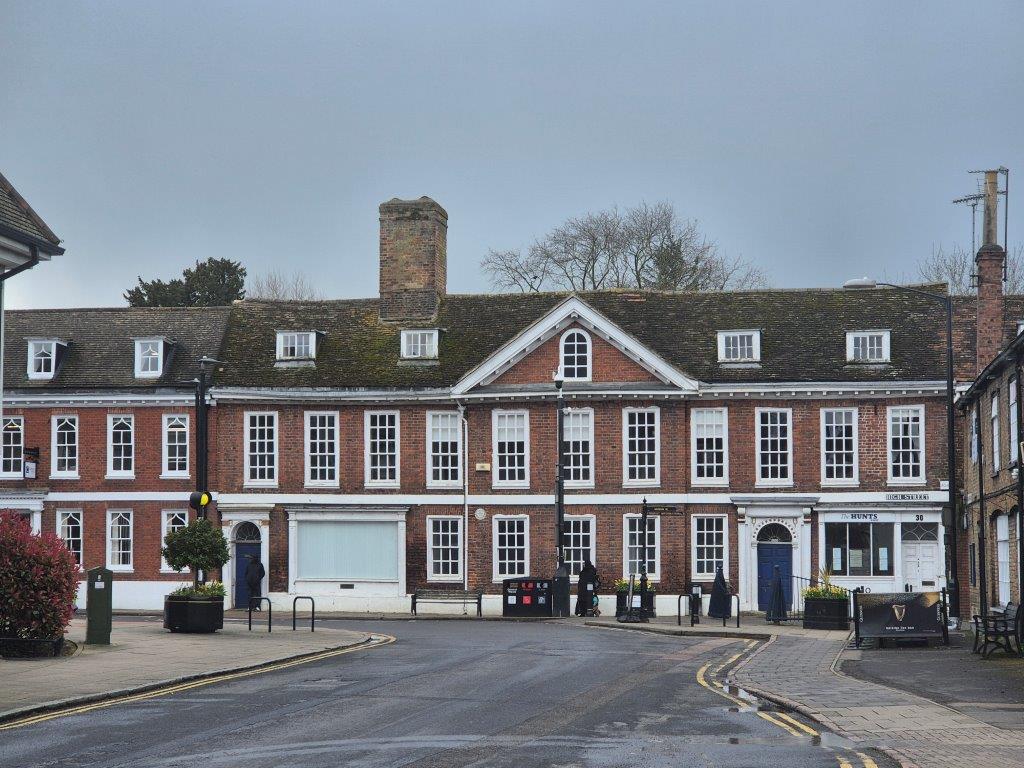
William Cowper was a troubled and, ultimately, tragic poet, hymn writer and Abolitionist in the 18th century, who was repeatedly institutionalised for ‘insanity’ through his life. Being what some might mockingly refer to as a ‘confirmed bachelor’, his rejection of both heteronormative and homonormative traits clearly created (or maybe derived from?) internal emotional tension. And his most famous legacy, the words ‘God moves in mysterious ways’ assume a tragic role as his attempt to rationalise these conflicts.
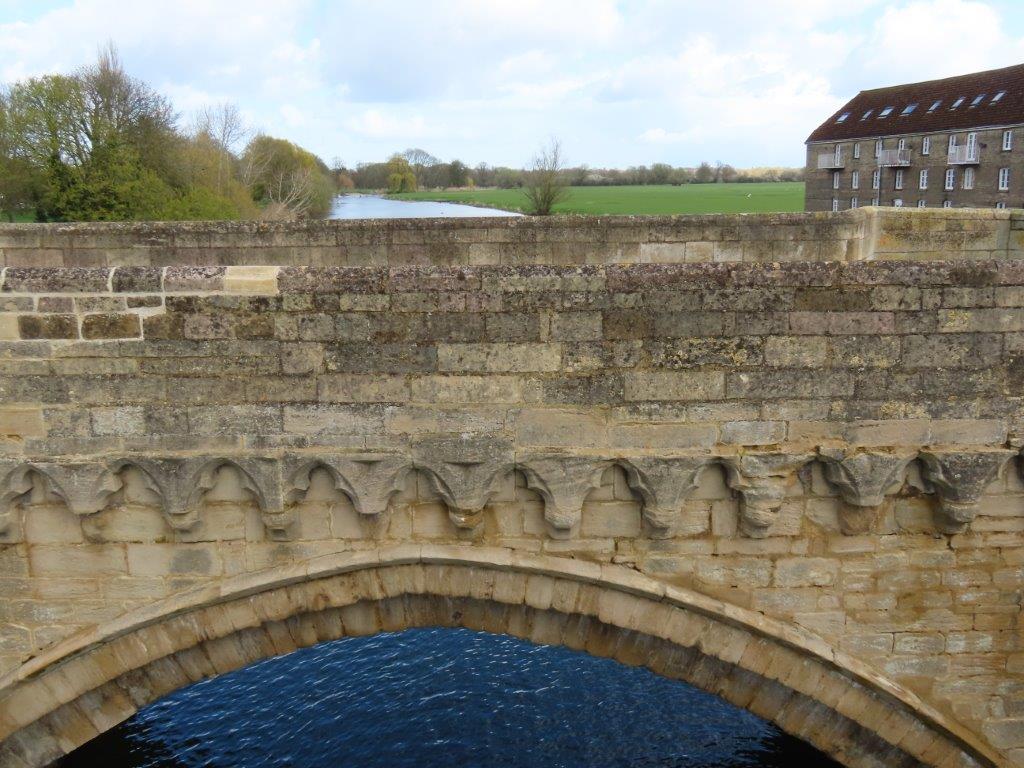
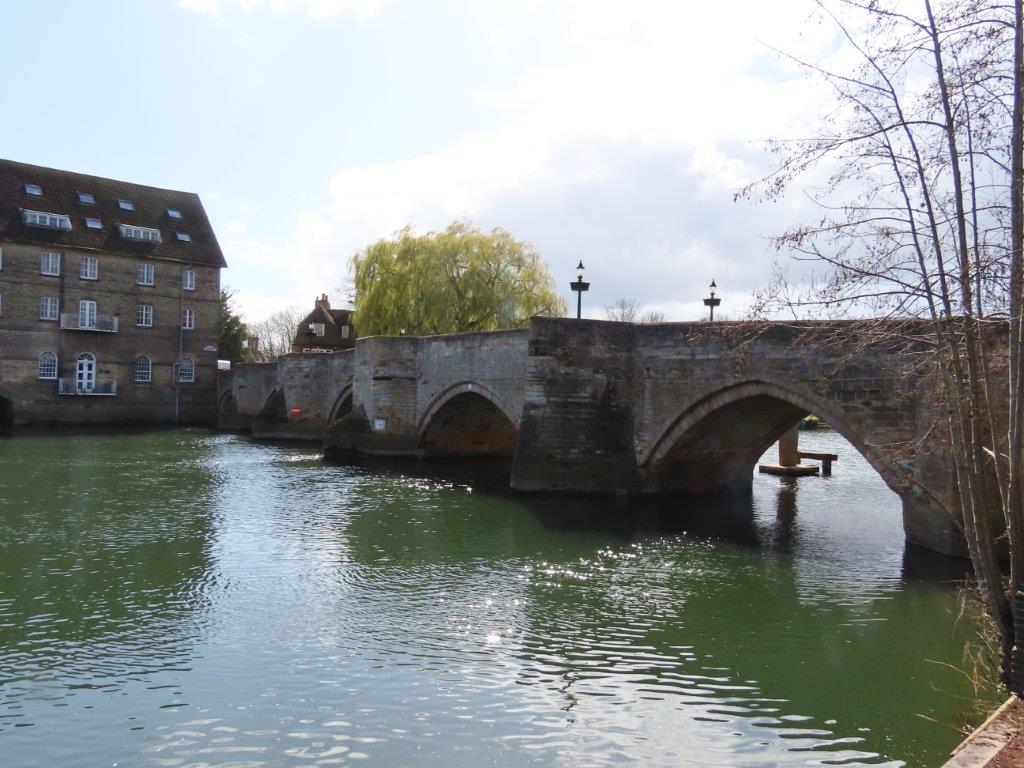
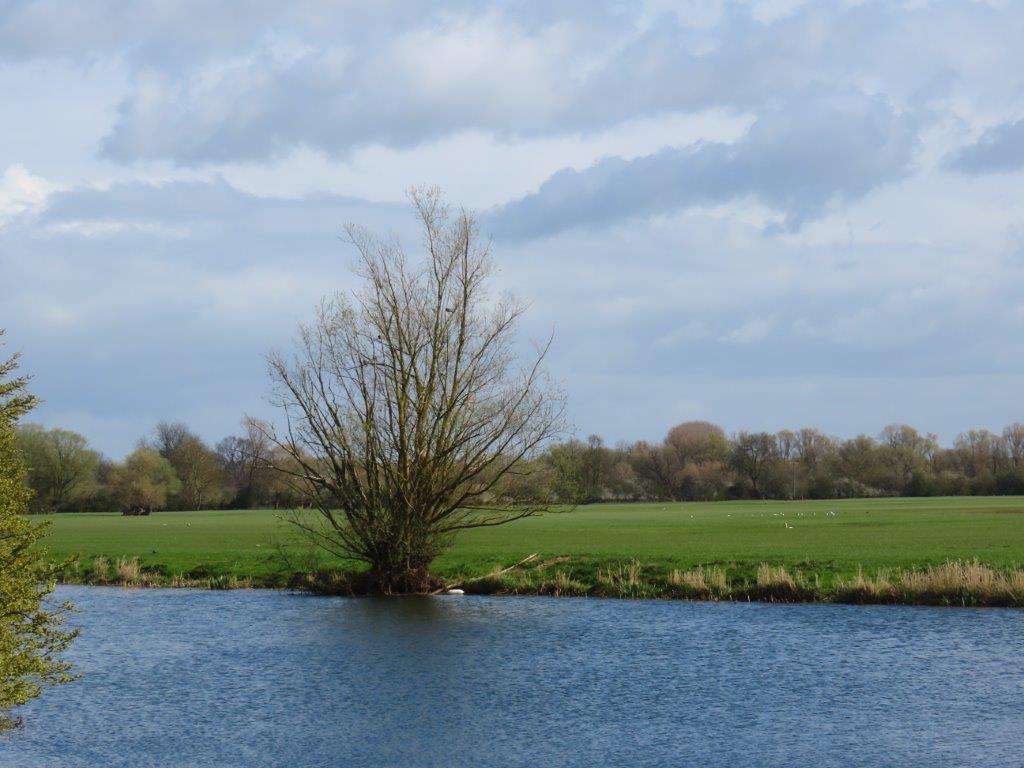
Huntingdon also has a fine stone bridge over the River Great Ouse, this one dating back to 1332, a century or so older than that at St Ives, reflecting the convergence of several historic roads and trading routes on this stretch of river.
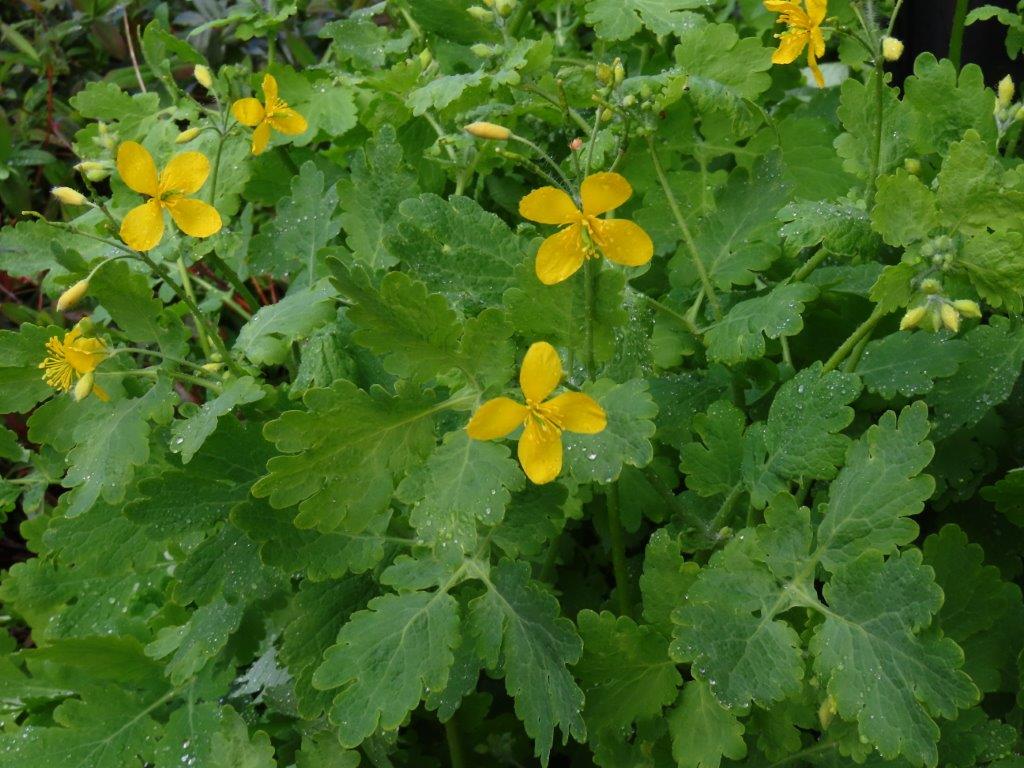
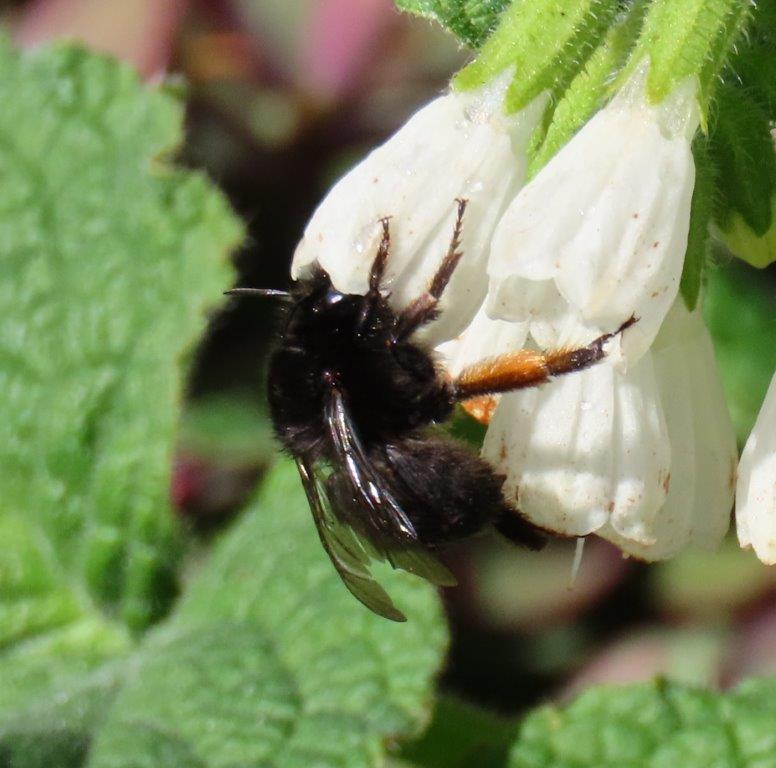
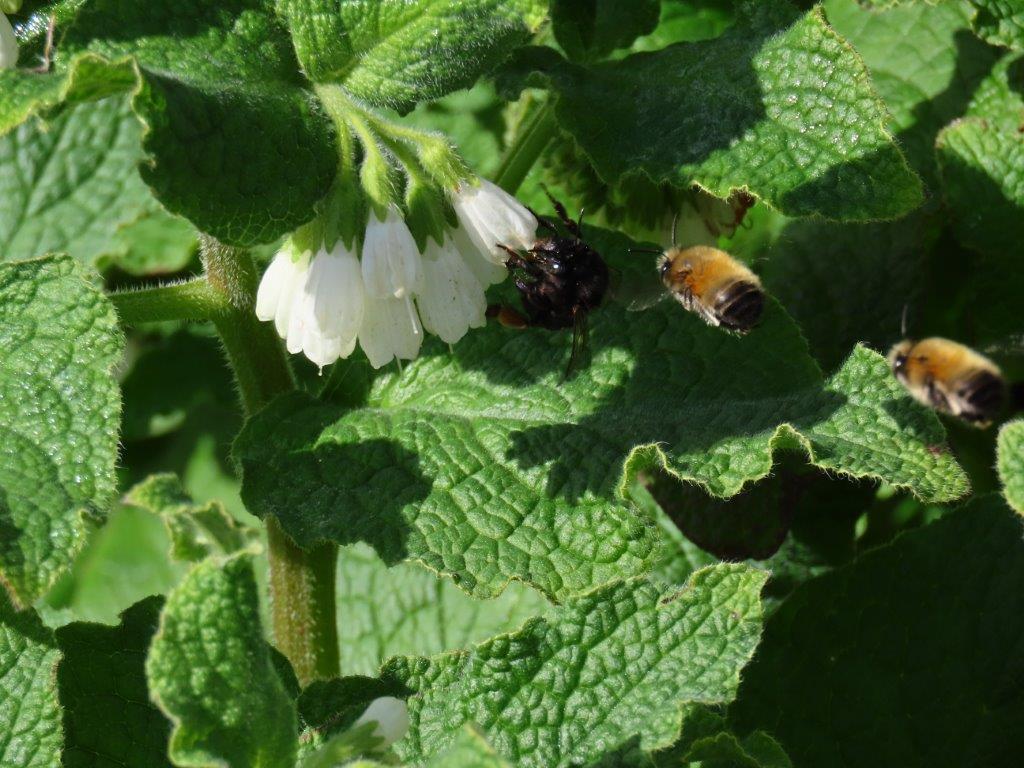
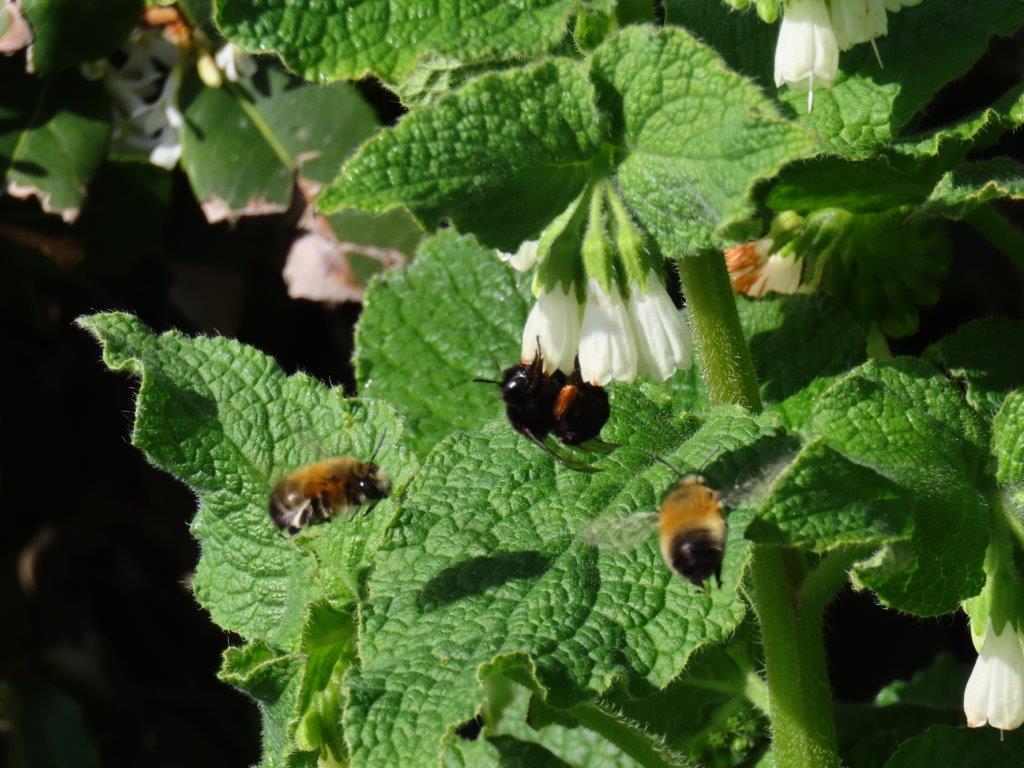
Down by the river, the sun came out warmly, illuminating some early-flowering Greater Celandine, and banks of White Comfrey, the latter being visited by an avidly feeding female Hairy-footed Flower-bee being closely attended by a couple of hopeful suitors.
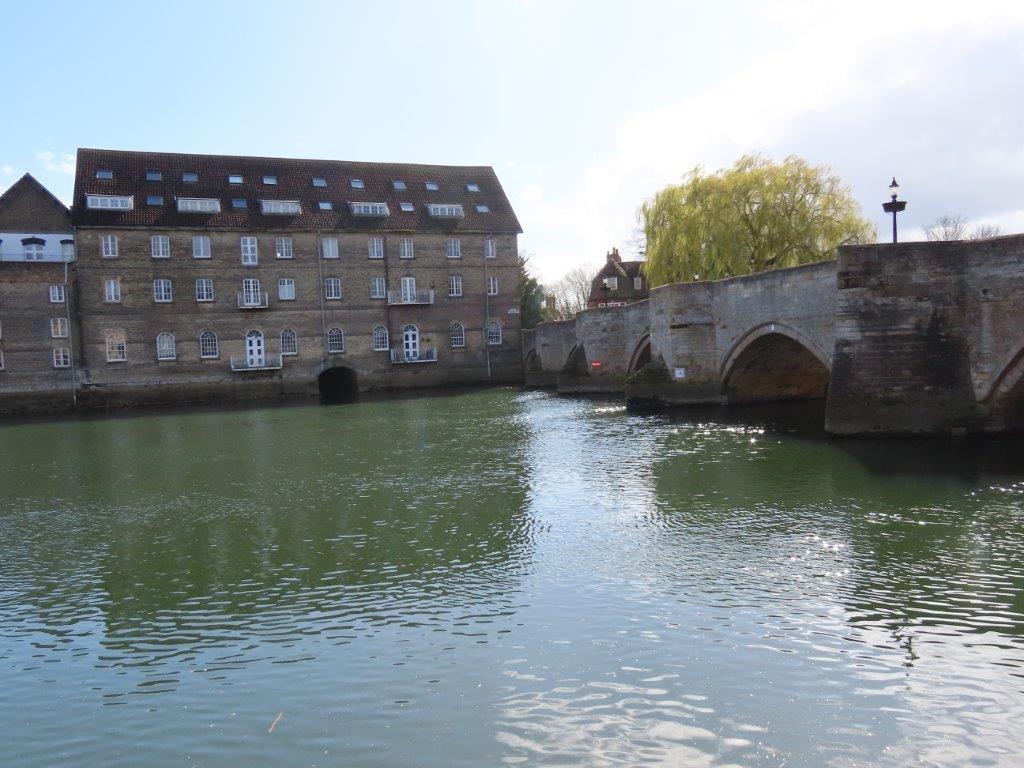
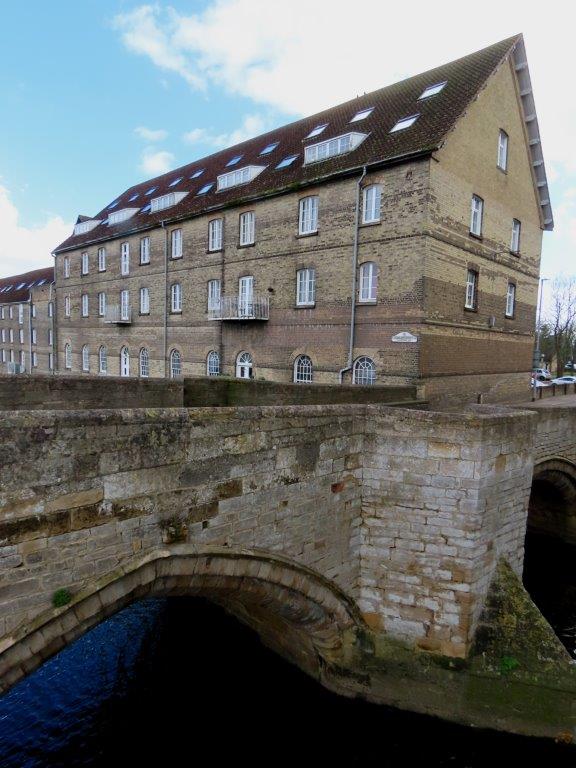
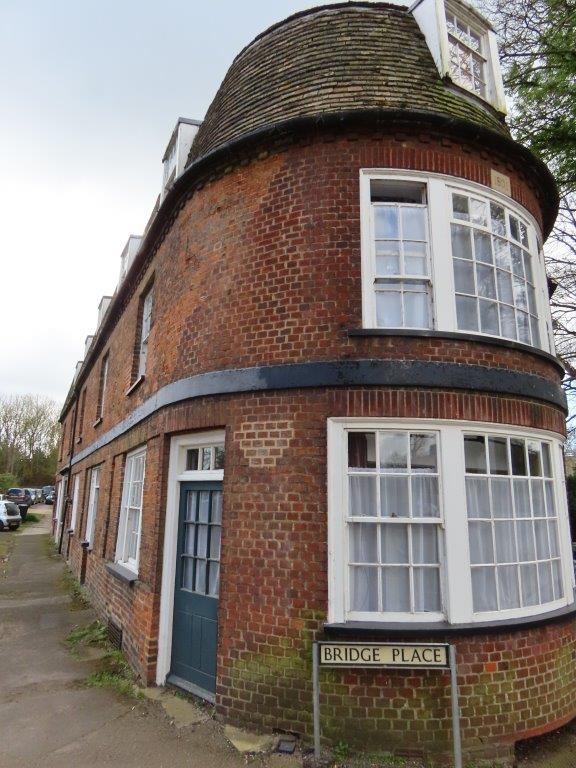
Unfortunately this bridge is not car-free, but it is bypassed by a footbridge. So across we went and found ourselves in Godmanchester (apparently still ‘Gumster’ to some older residents); on that side of the bridge lies an impressive (converted) mill building, and a small group of listed cottages around Bridge Place.
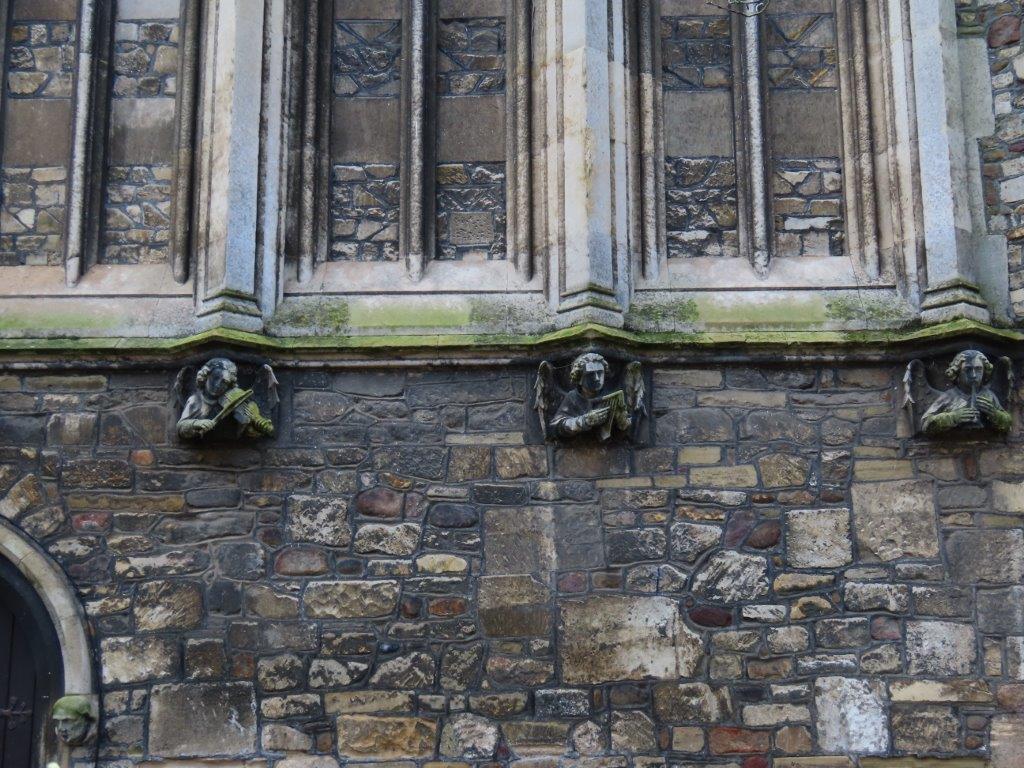
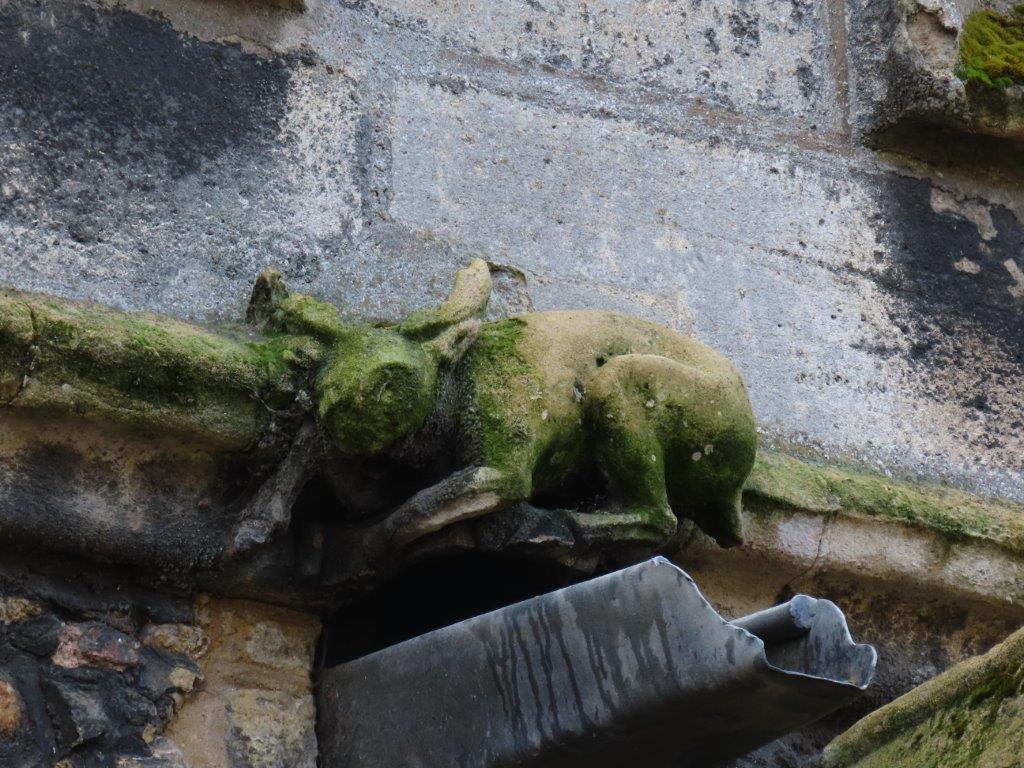
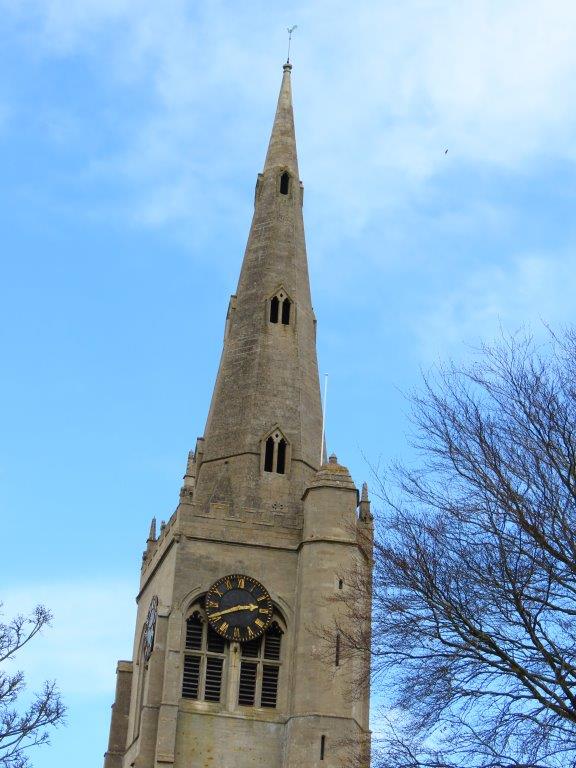
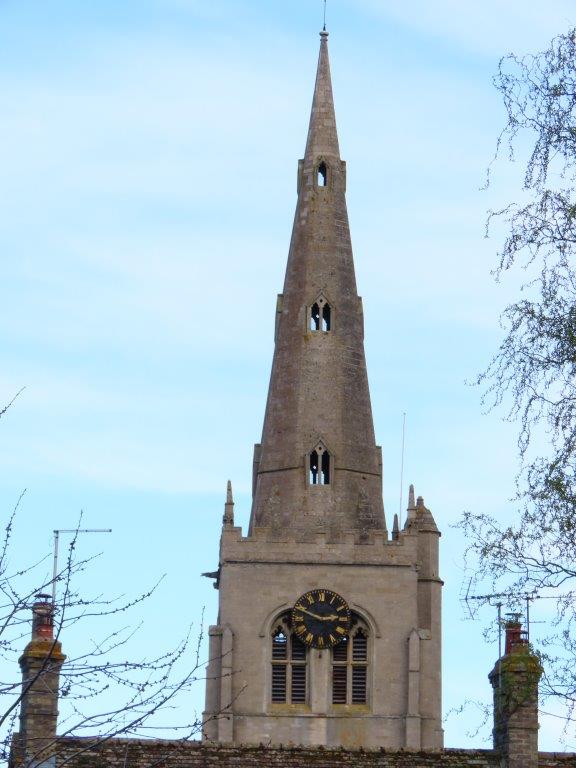
We took a bus into the town centre but walked back, accompanied by Red Kites overhead, when we realised how close the two towns are! Another church, St Mary the Virgin, this one with a spire, albeit one that is hollow and letting light through, no doubt to keep weight down. And lacking almost any trace of interior ornament, although the exterior gargoyles are fearsome!
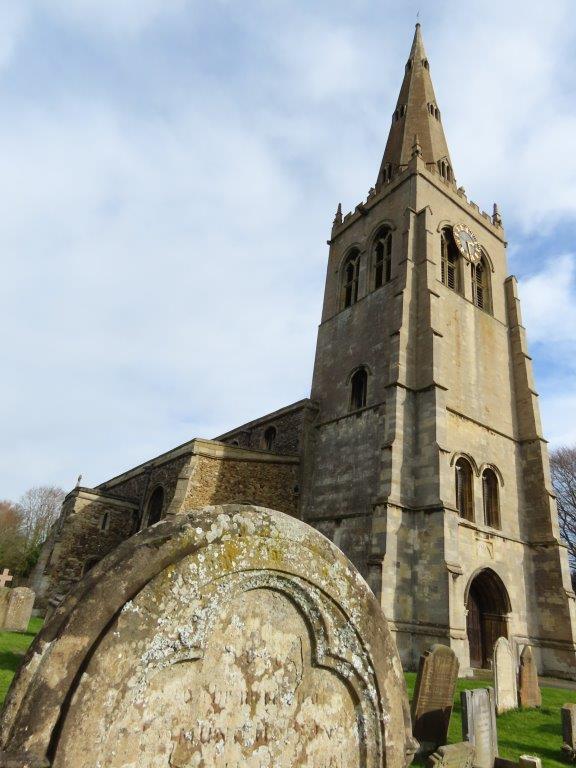
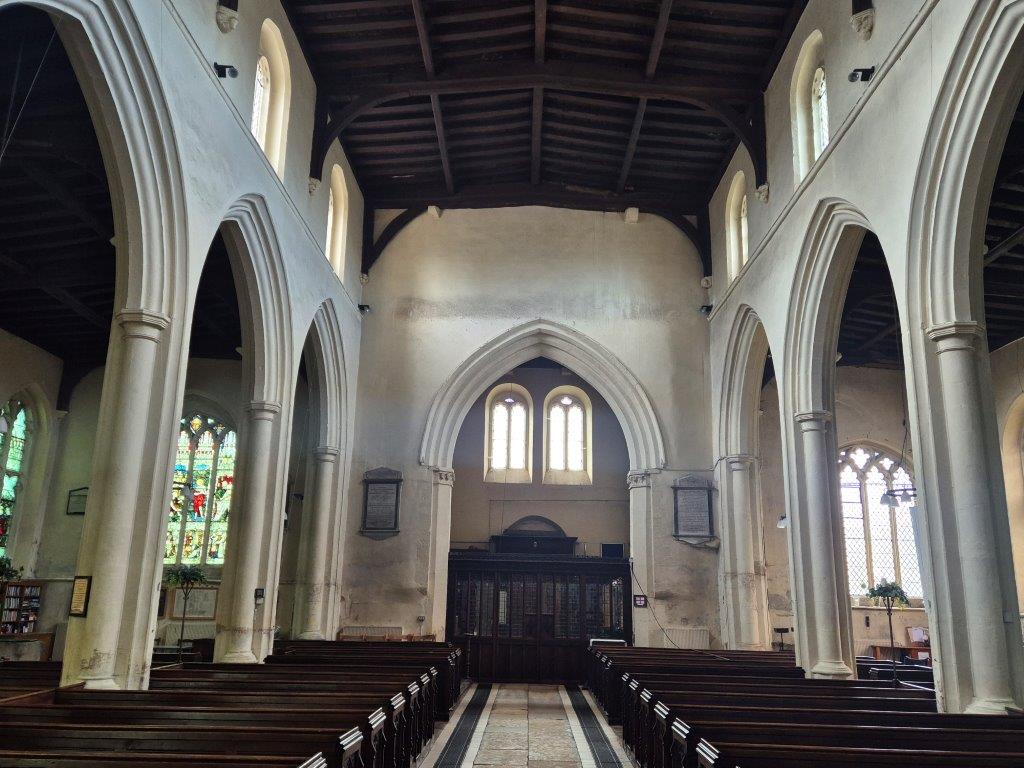
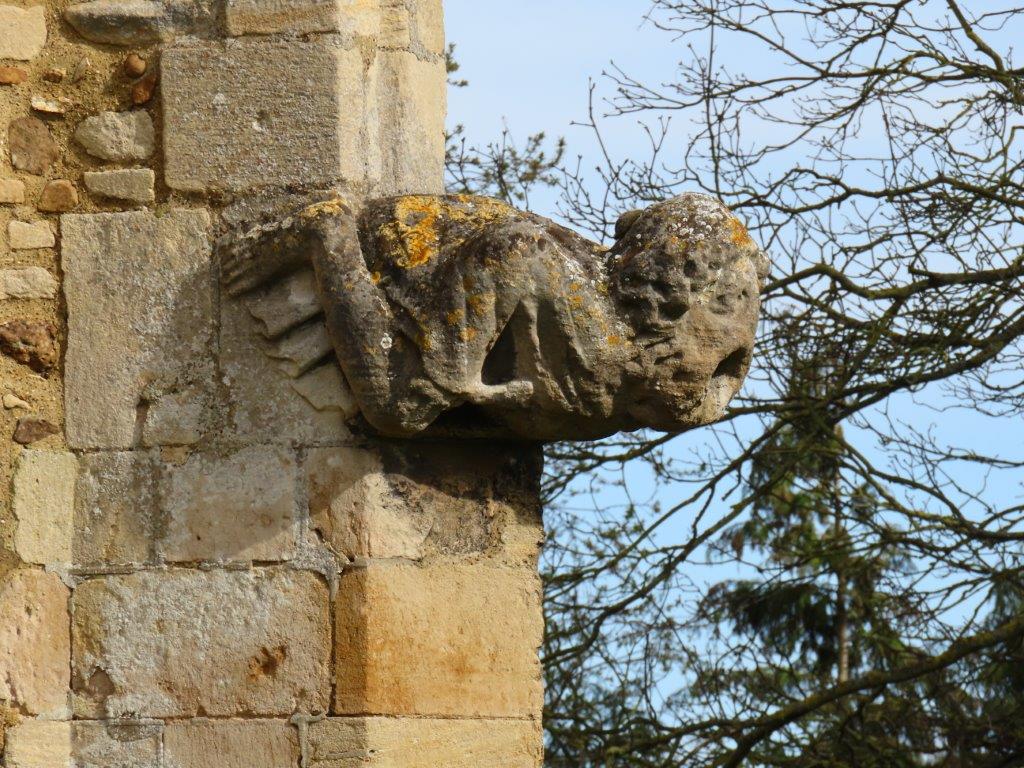
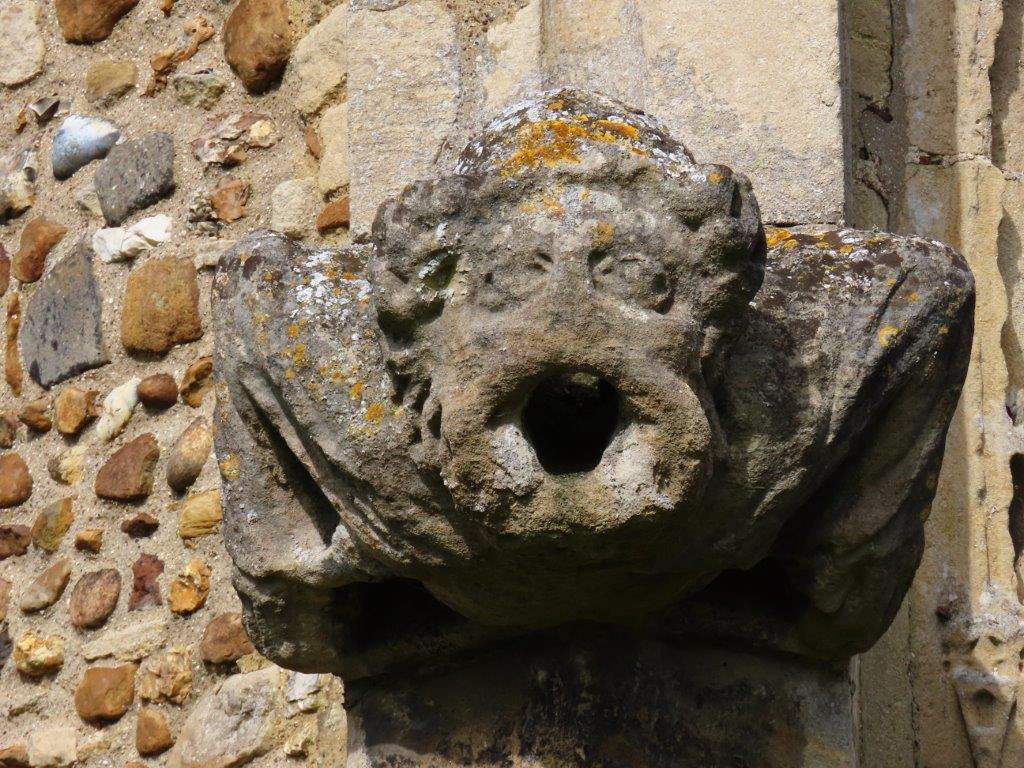
The riverside was a timeless view of middle England, complete with ‘Chinese Bridge’…
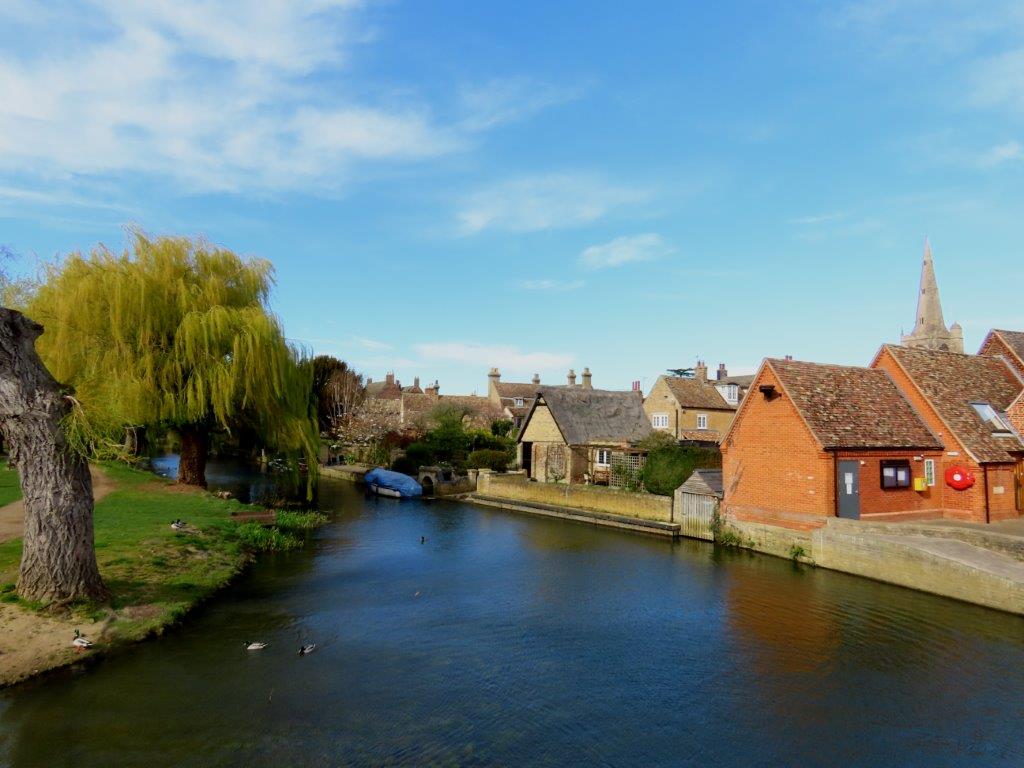
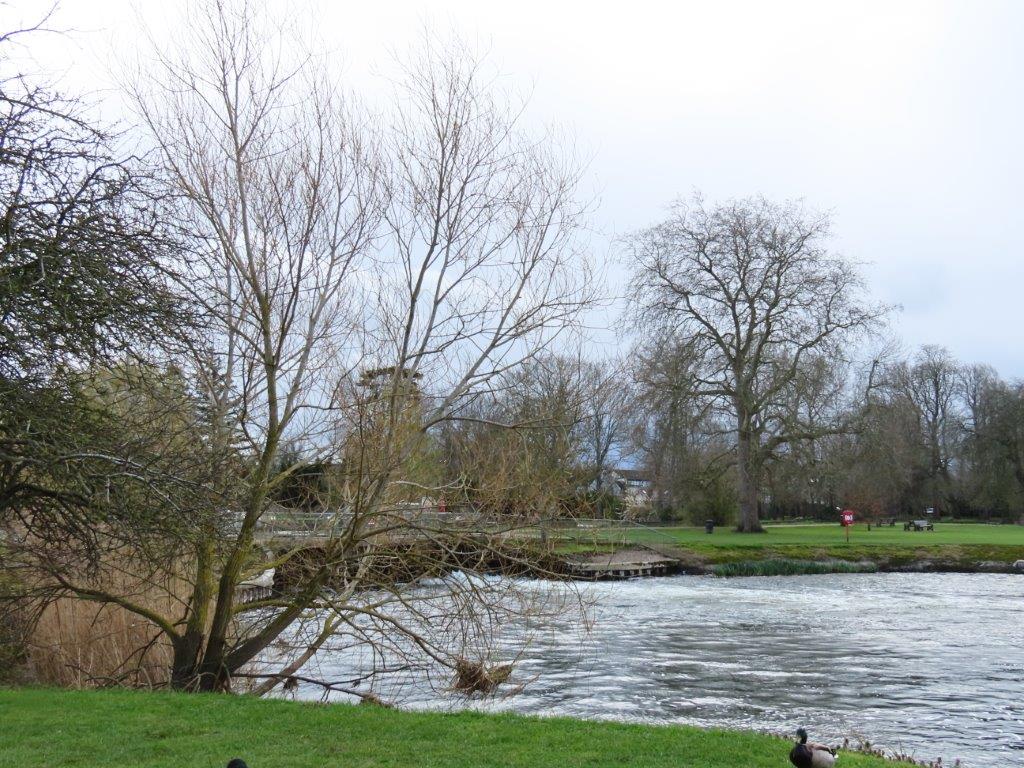
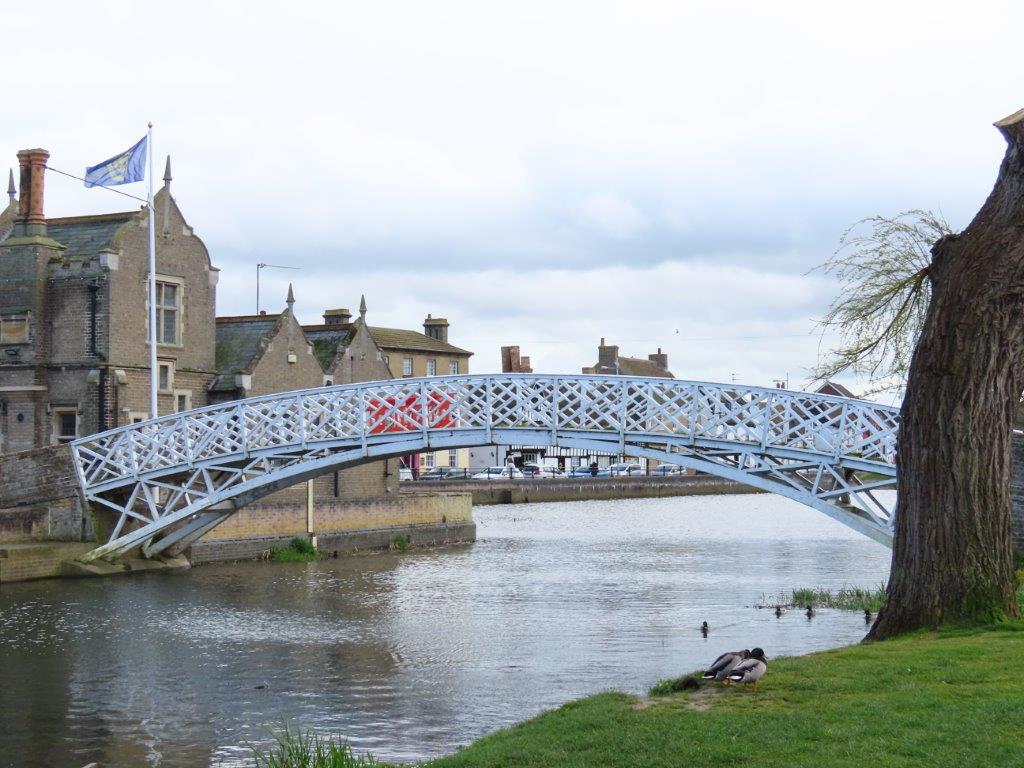
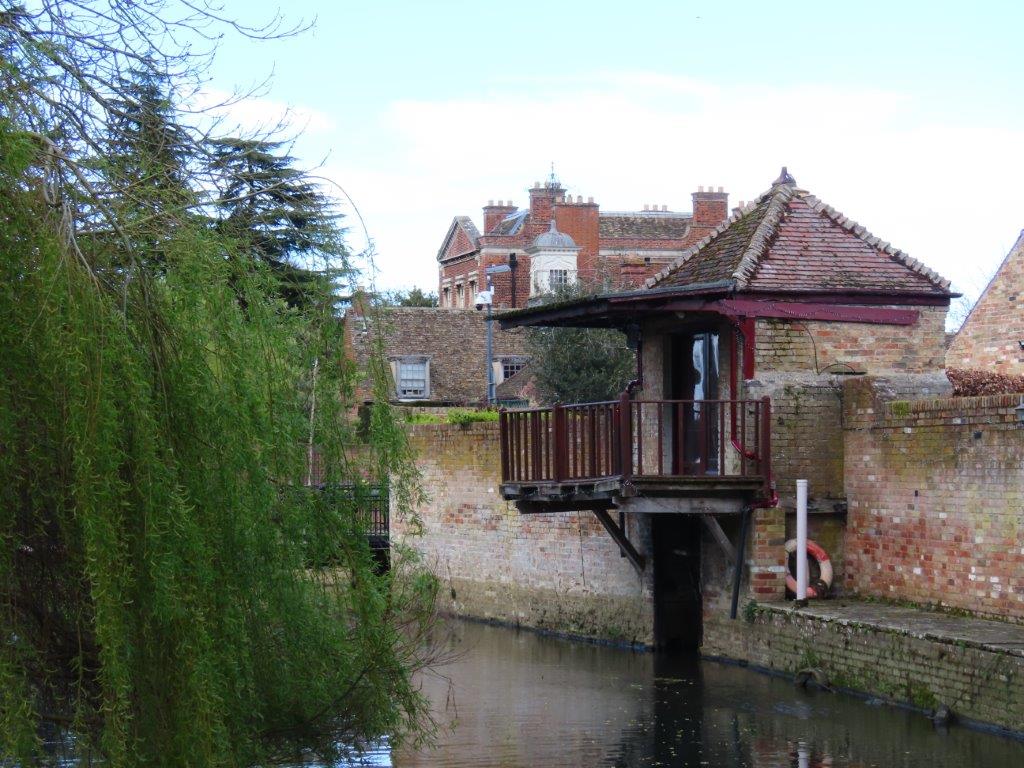
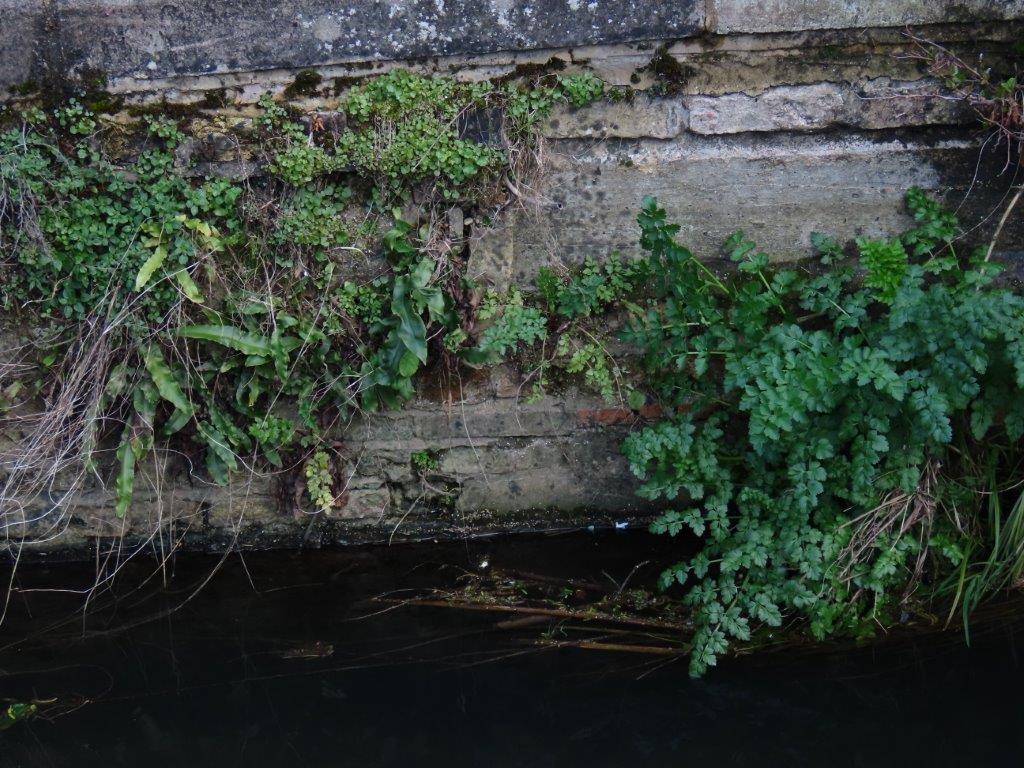
… and an eel-pass to provide Eels with a chance to surmount human obstacles in the tamed river on their return from the Sargasso Sea. The lock walls formed a natural damp garden with both Hemlock Water-dropwort and Hart’s-tongue Fern.
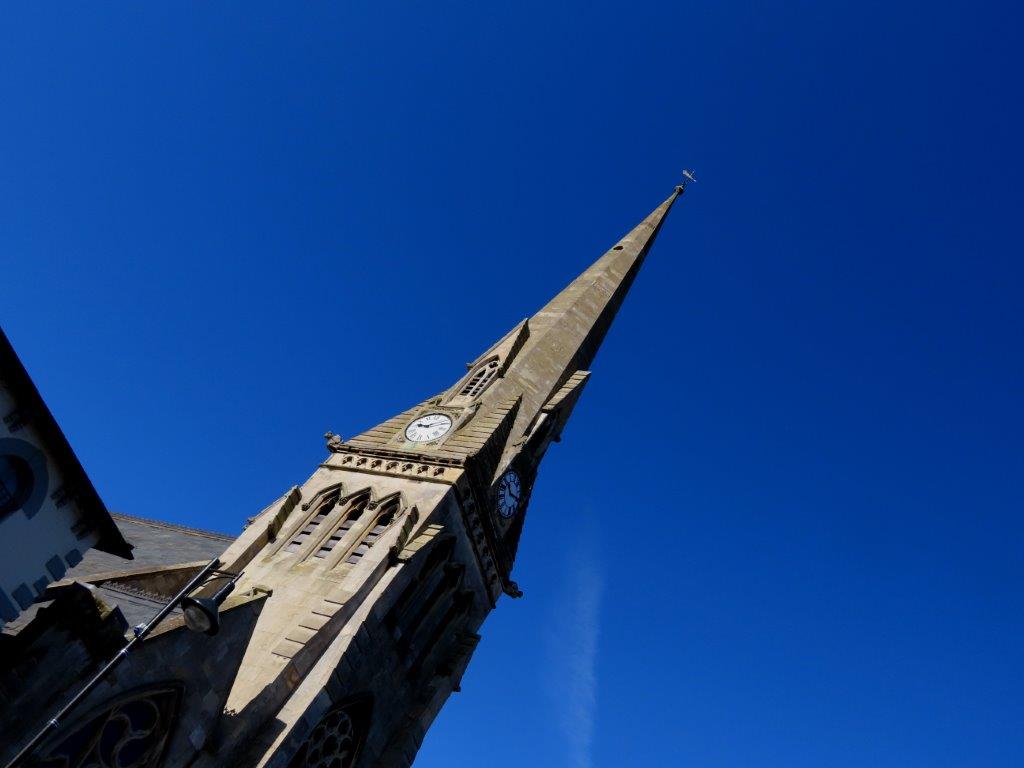
Our third and final day dawned with another about-face weatherwise. Crystal blue skies, and the wind while still with a northern chill had dropped to a gentle breeze, such that inl the slightest shelter the burgeoning spring warmth made for a very pleasant day. Even Oliver seemed very pleased with himself, as the Free Church spire speared into the blue:
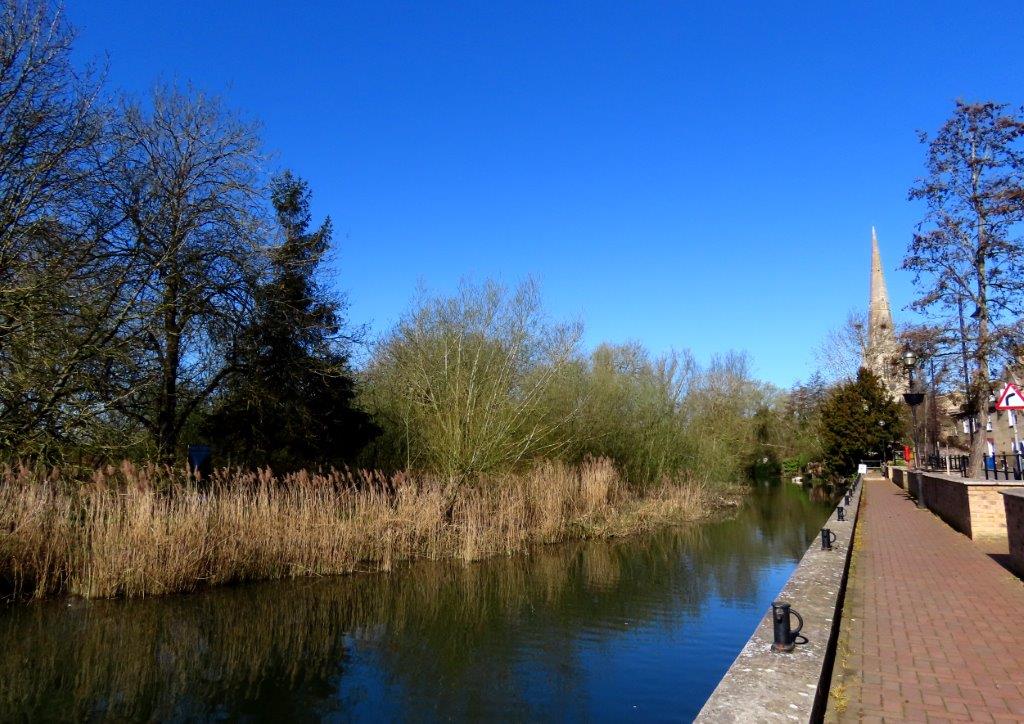
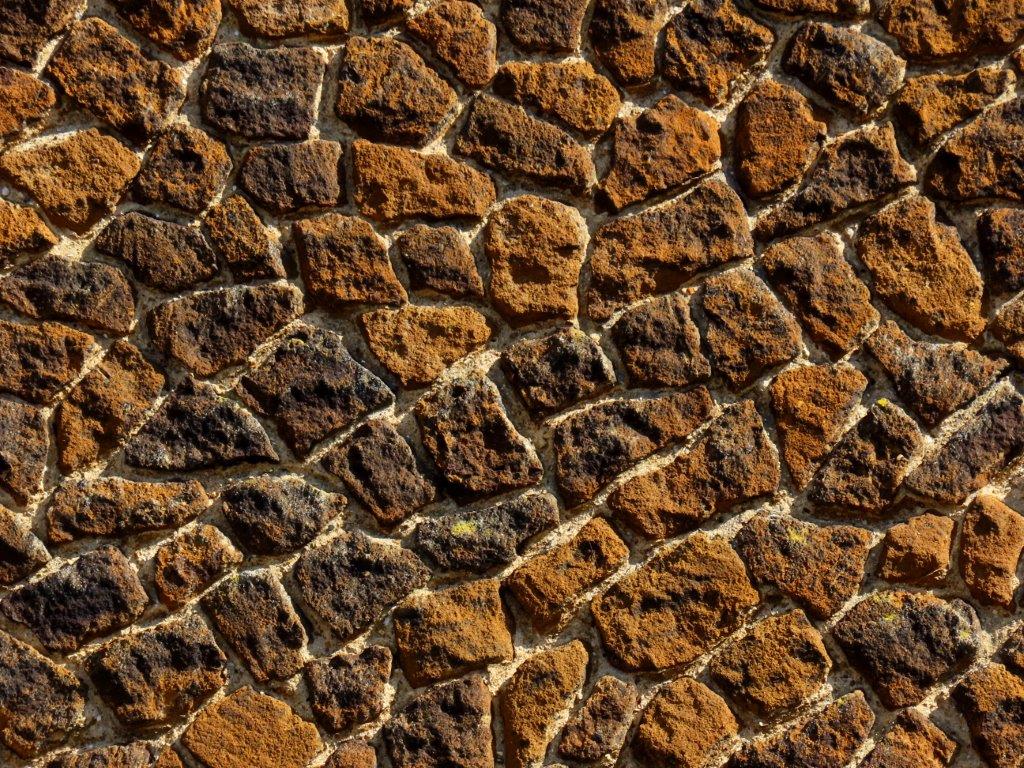
First we walked upriver, along the Waits, another former wharfage. The Norris Museum was well worth a look, and just across the road there was a very handsome building, the Methodist Hall. In sunlight, the ferruginous rocks from which it is built were particularly beautiful. These are carrstone, another fairly local stone, quarried from the King’s Lynn area; these very rocks reputedly constitute the last bargeload of rock brought to this wharf at the very start of the 20th century.
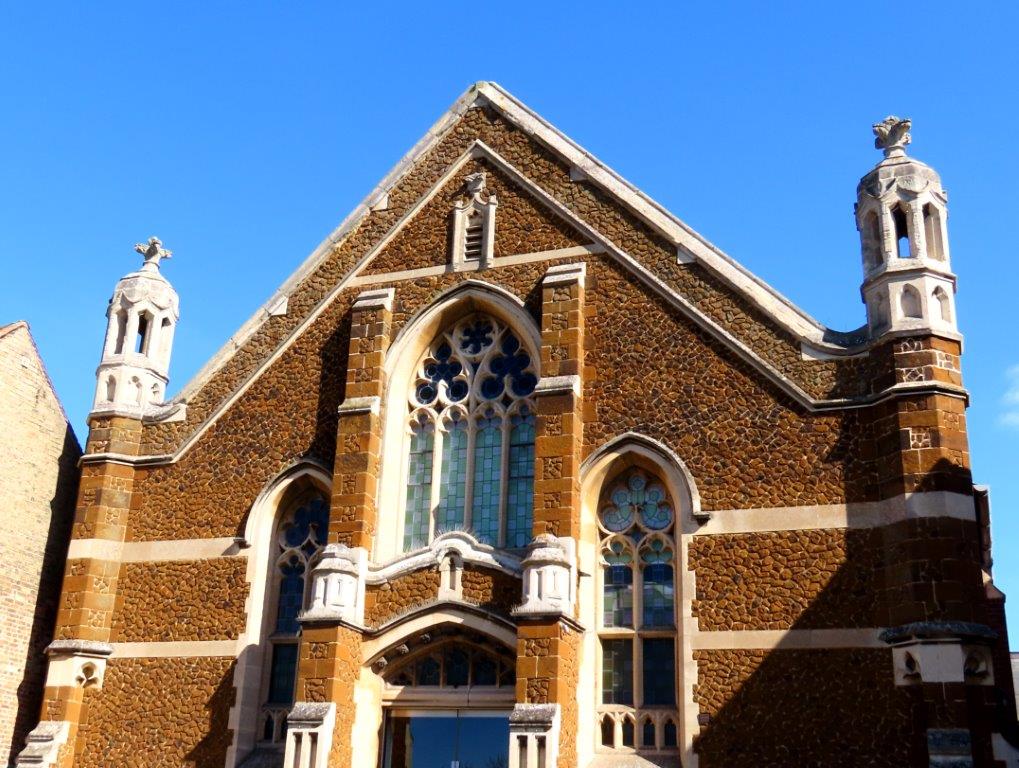
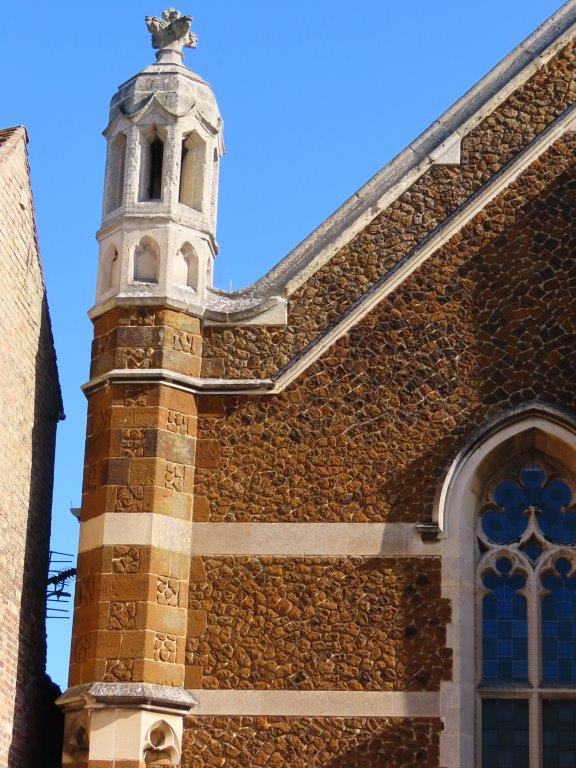
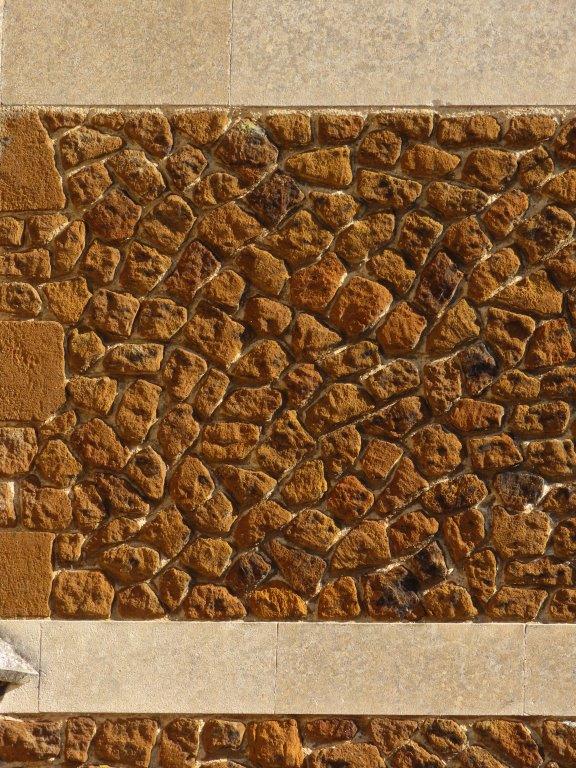
Carrstone is the basal layer of the cliffs at Hunstanton, an iron-rich sandstone dating from just before the Cretaceous chalk seas, and particularly suited for building given that its surface hardens considerably on weathering.
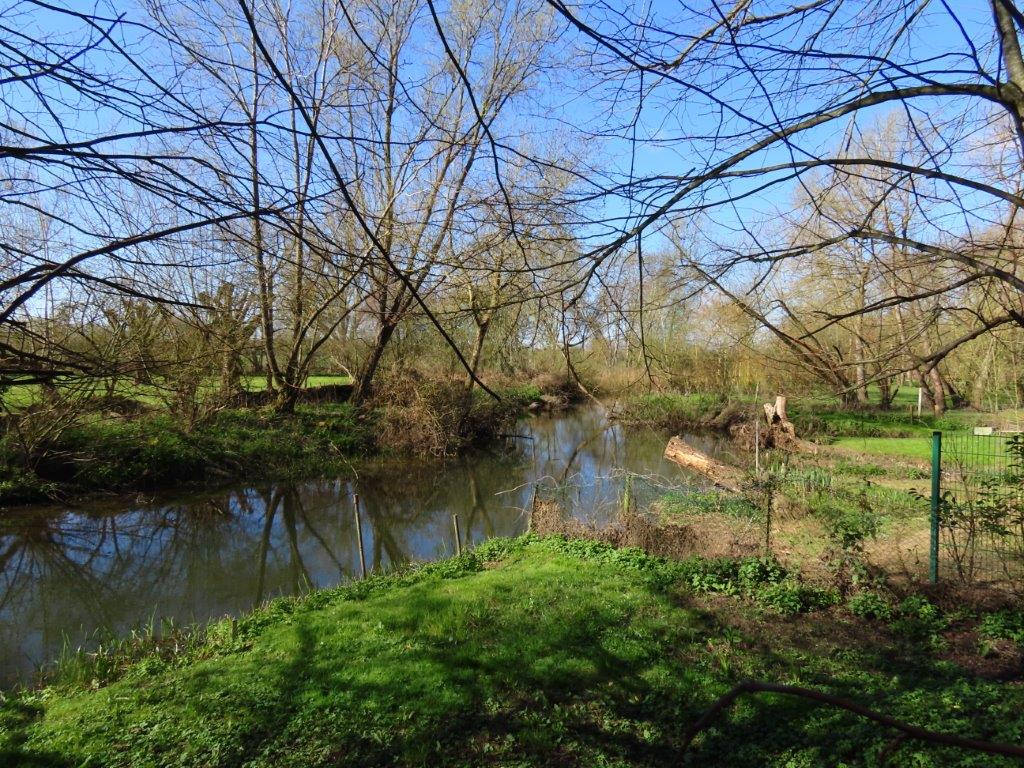
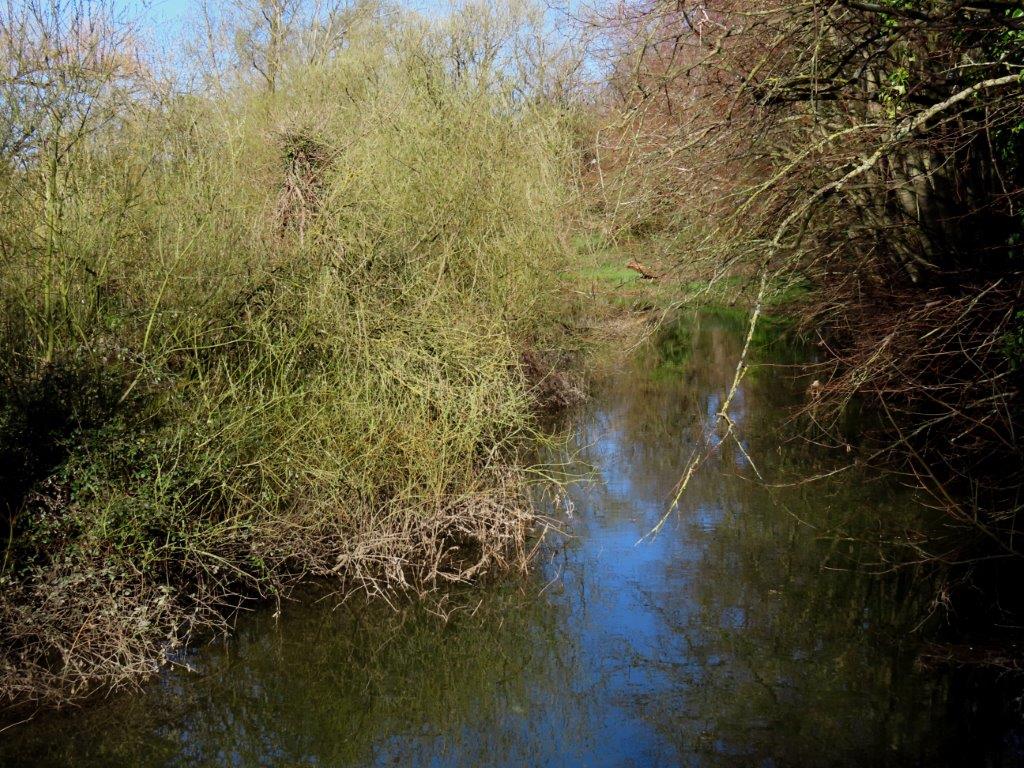
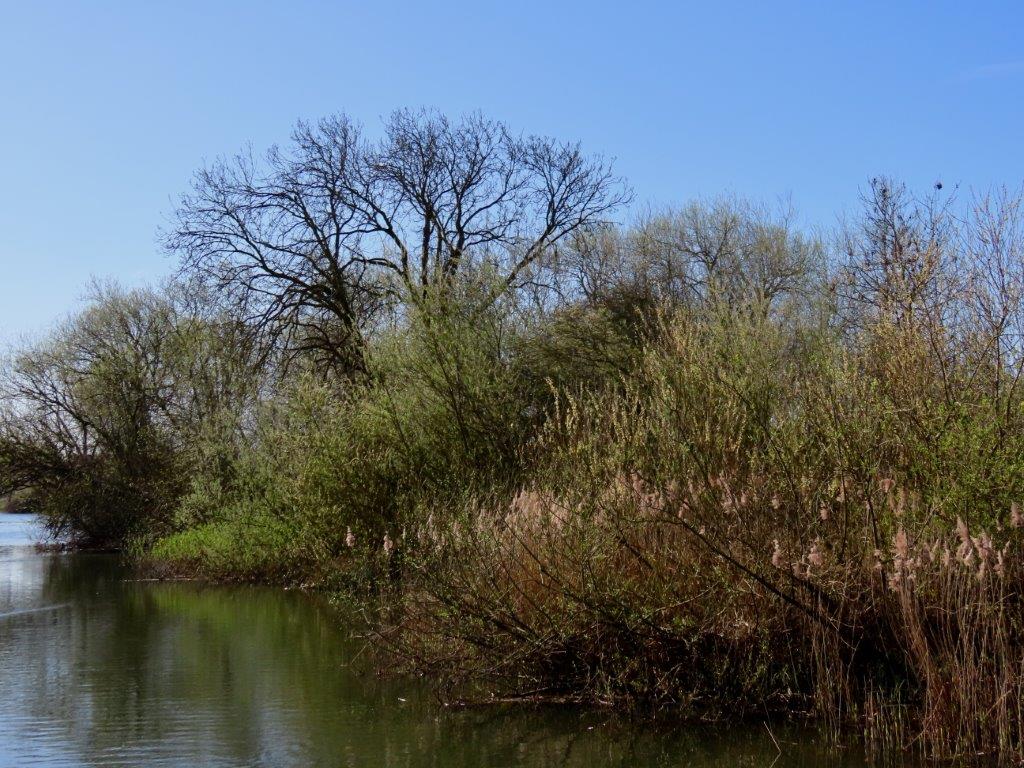
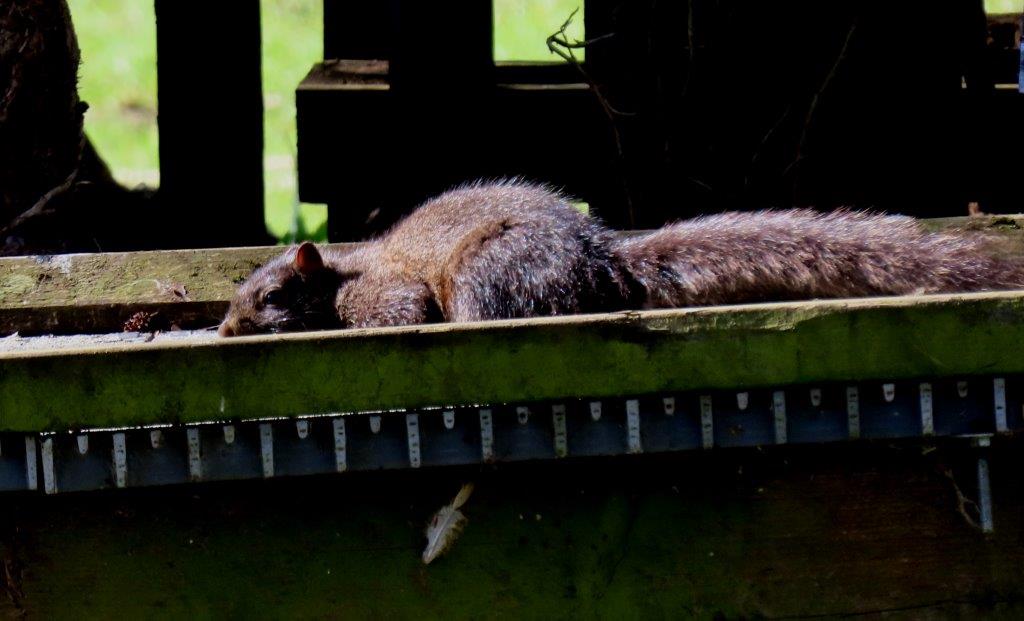
In the river at this point lies Holt Island nature reserve, although we were unable to access it due to flooding. But the song of a myriad Chiffchaffs drifted across the Backwater, over the heads of Mallards, Coots and Moorhens all in various stages of friskiness, and a melanic Grey Squirrel fed unconcernedly on the boardwalk.
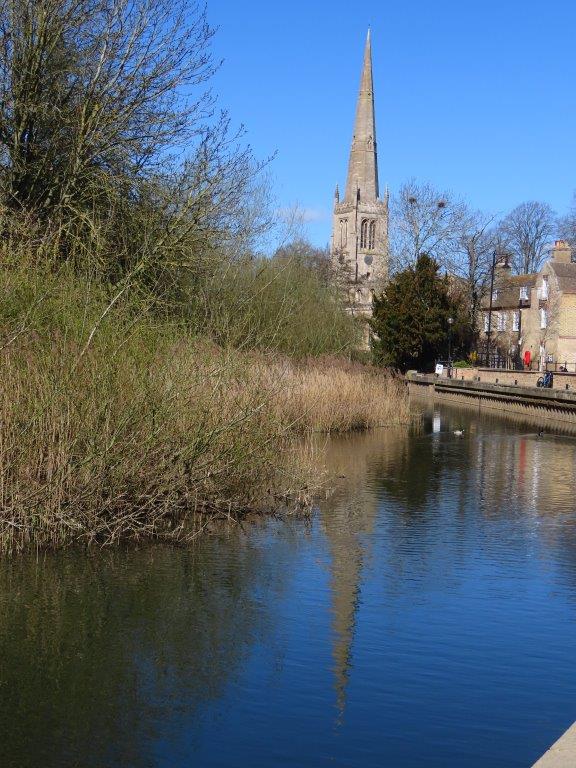
On the riverbank, All Saints Church with its imposing steeple made for very attractive views:
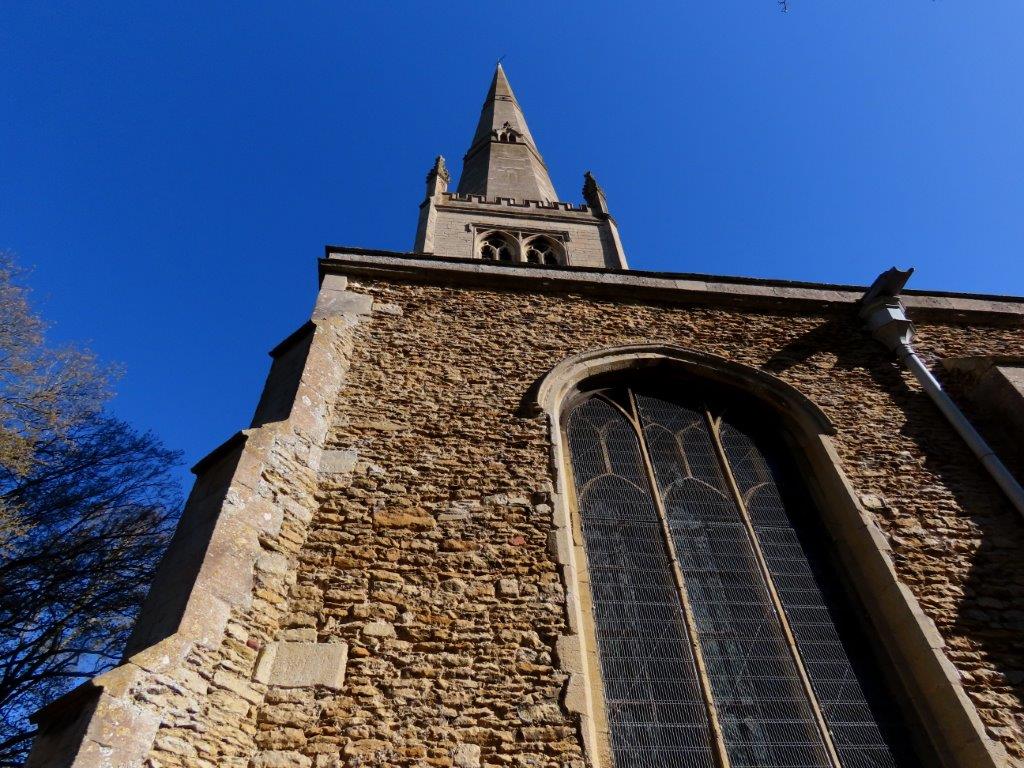
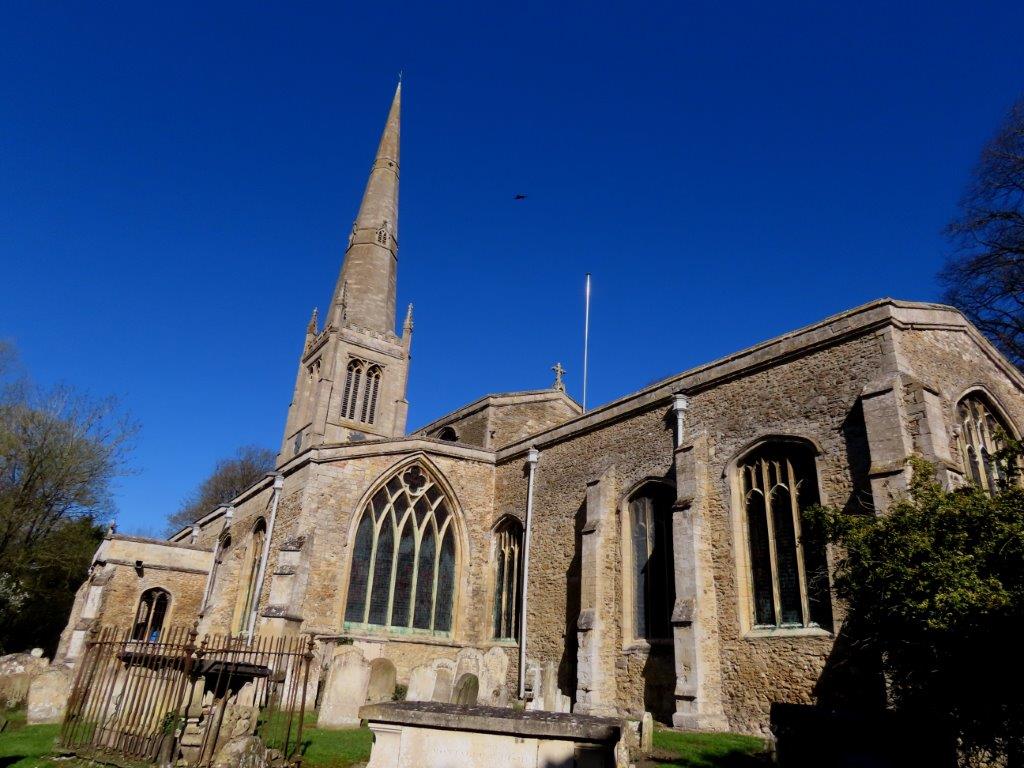
But the best sighting of our trip came from looking down into the still waters: a shoal of fishes like no other, thousands upon thousands of Roach, up to about 15cm long, weaving around like a forest of waterweed. And then erupting in huge murmurations, spooked by a couple of Mallards swimming harmlessly over, creating an audible swish and stirring up a protective shroud of bottom-silt.
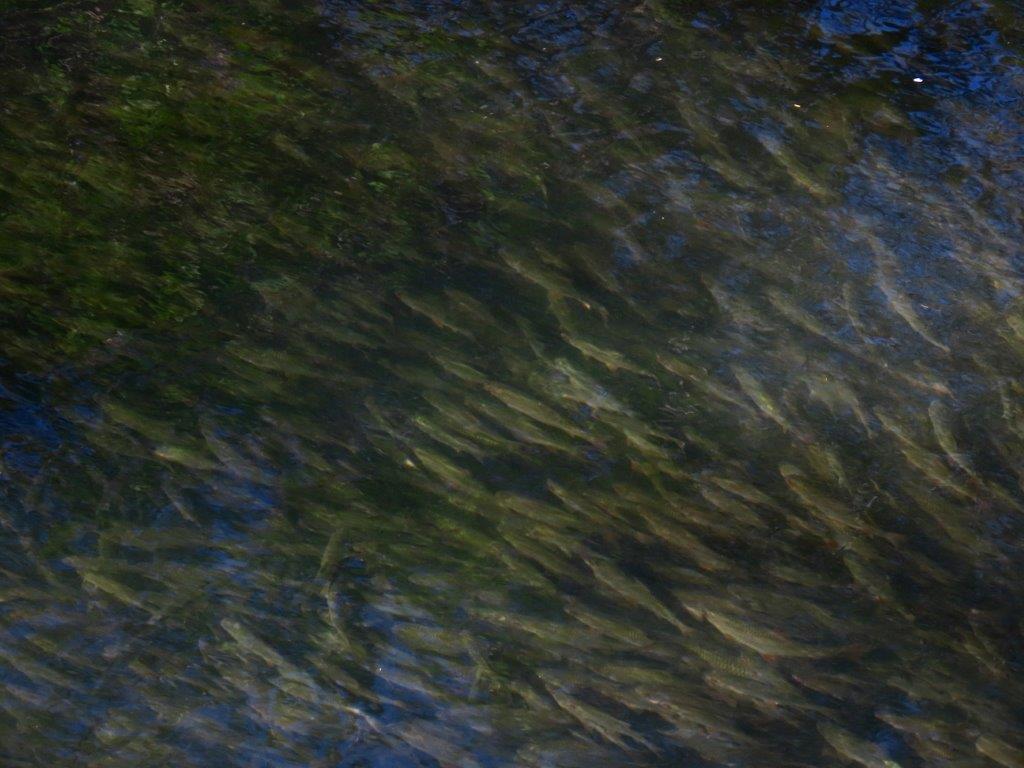
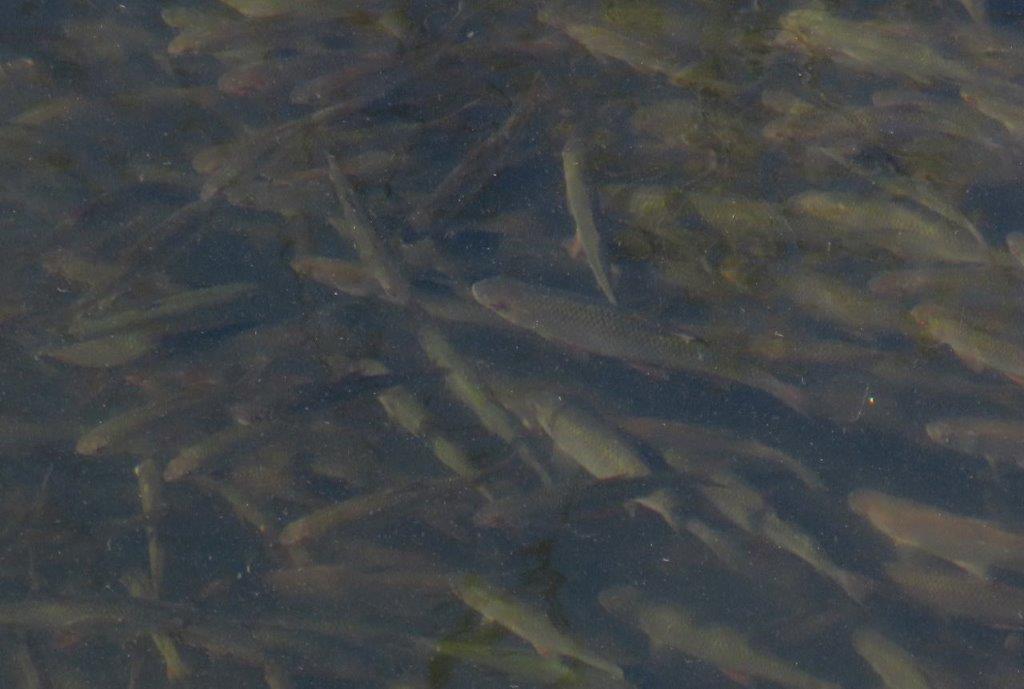
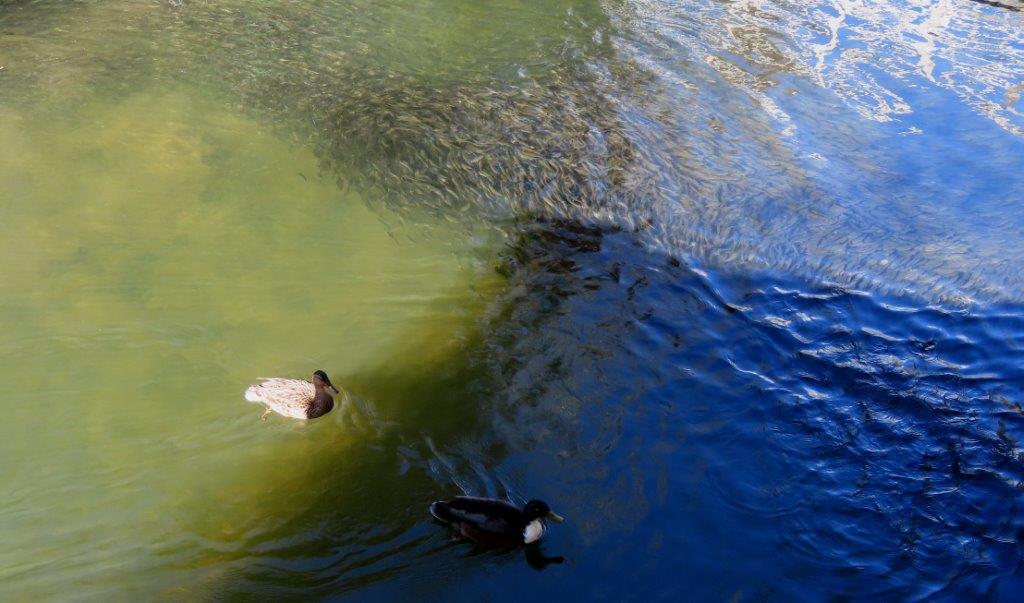
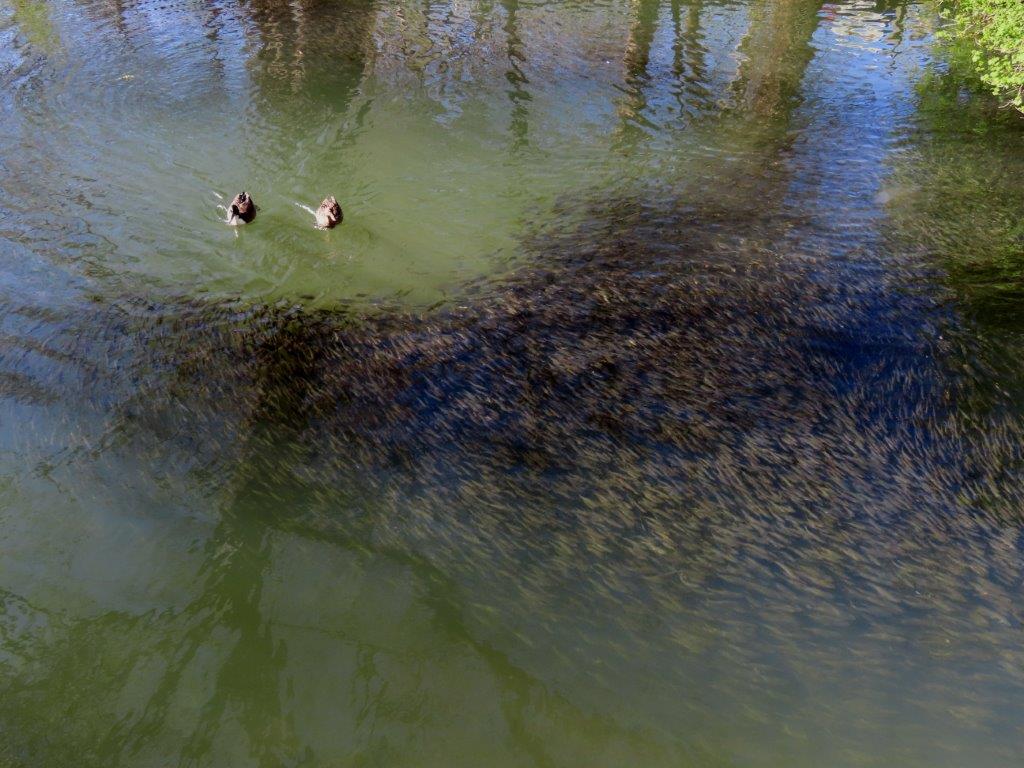
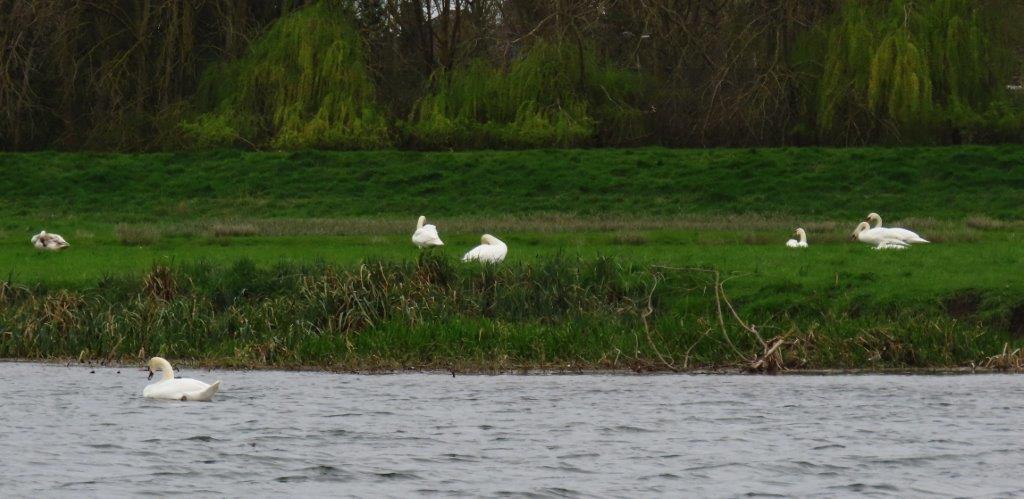
Finally it was back to see the old bridge in good light. Walking over, there were lots of swans and ducks…
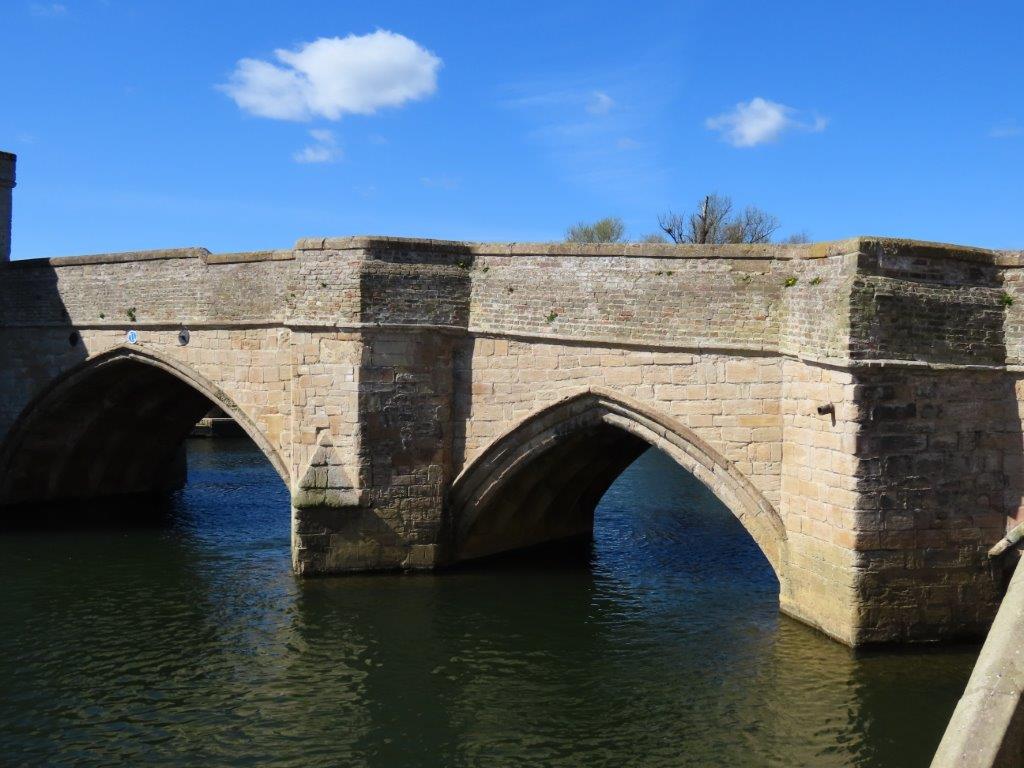
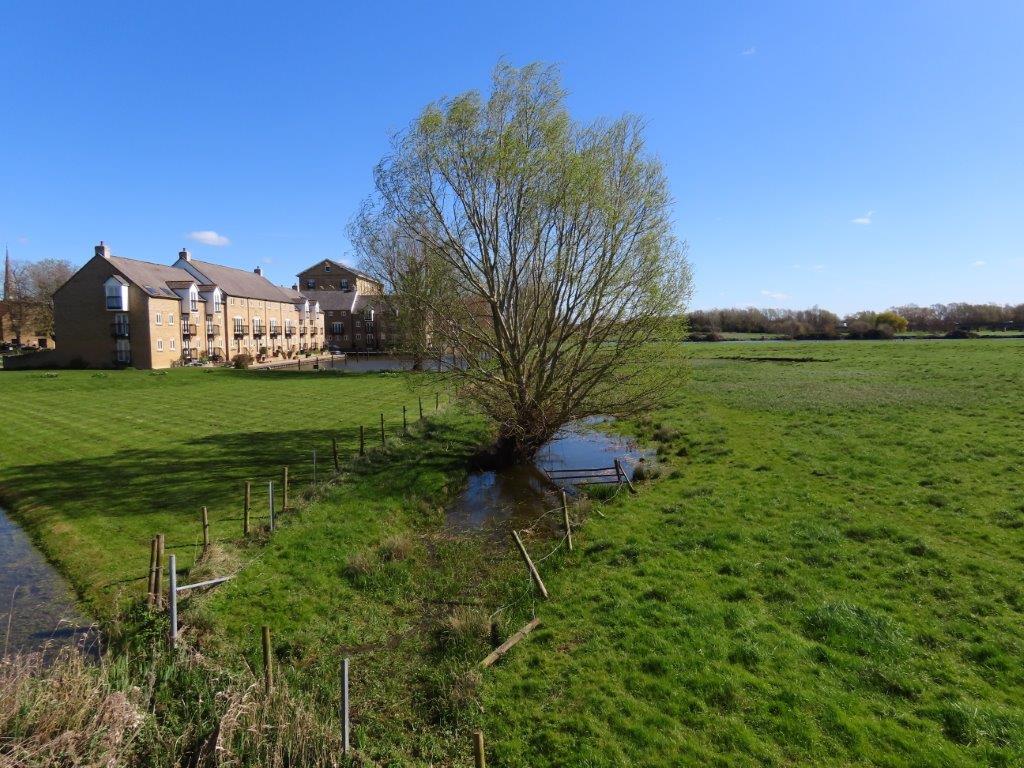
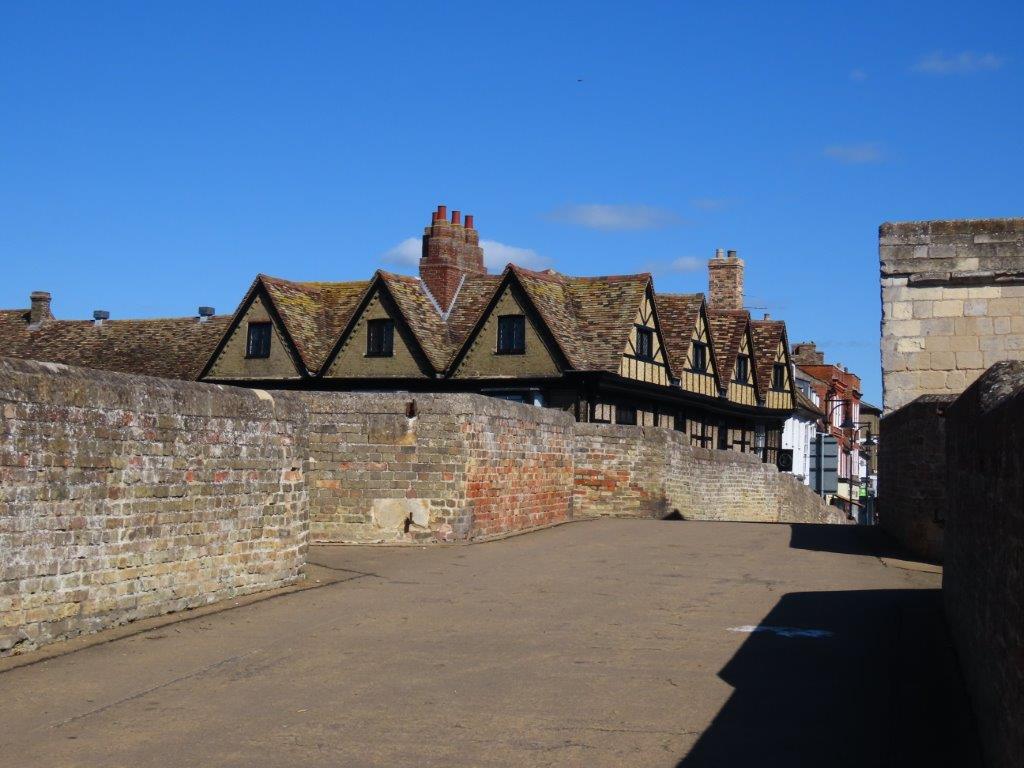
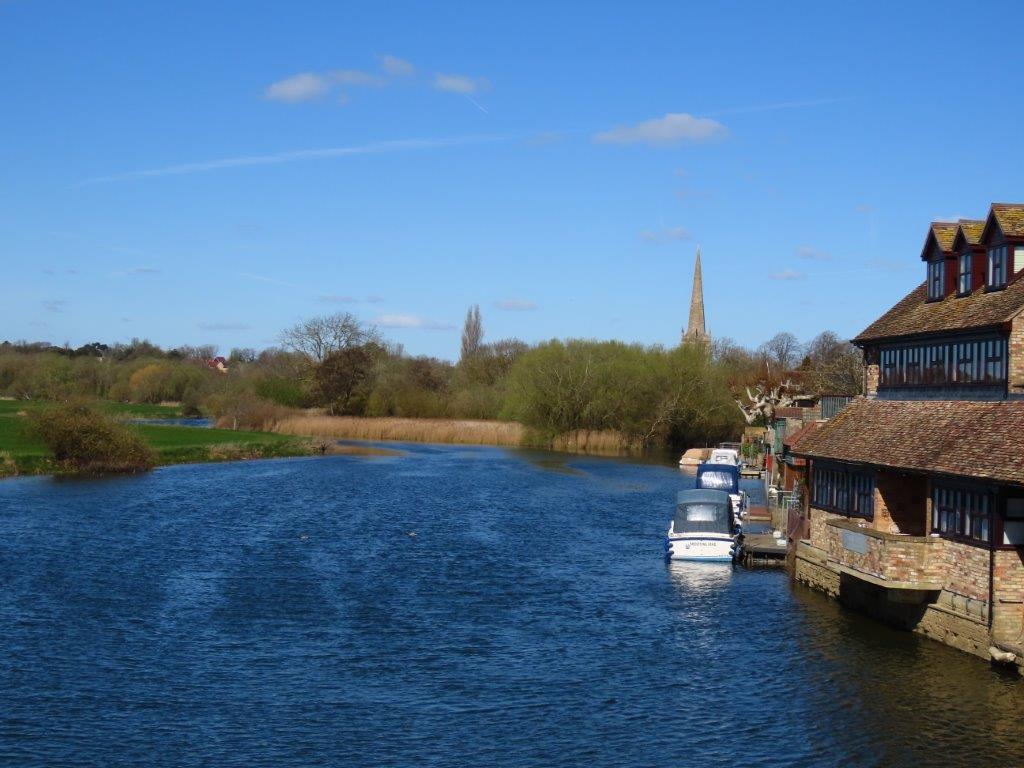
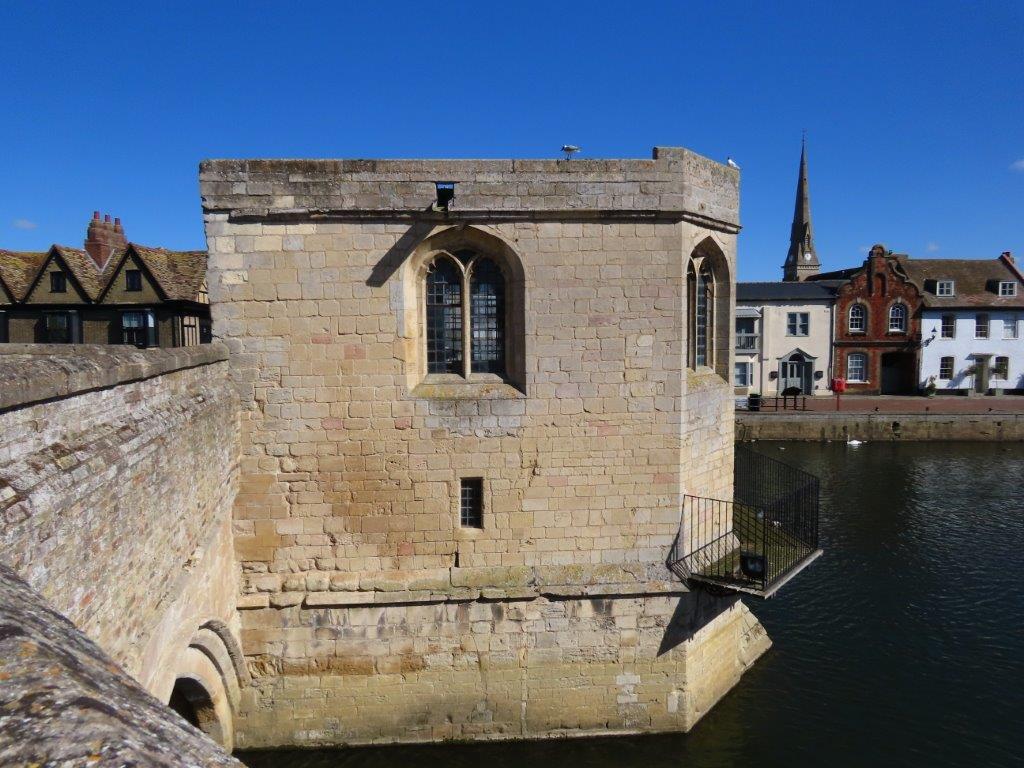
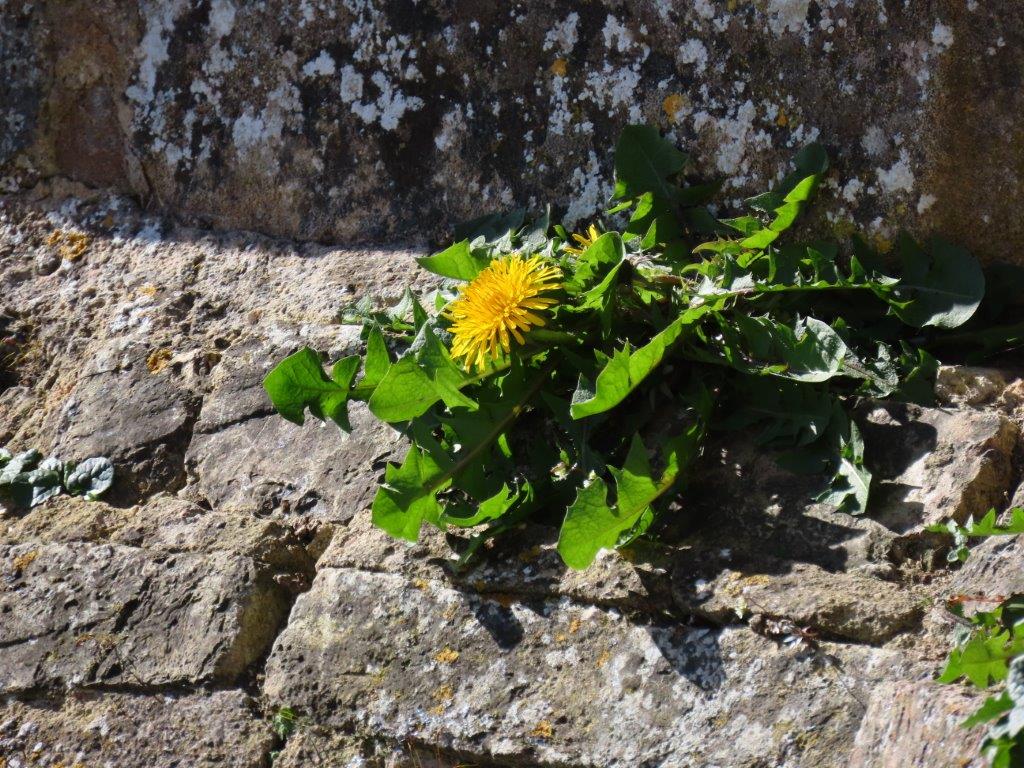
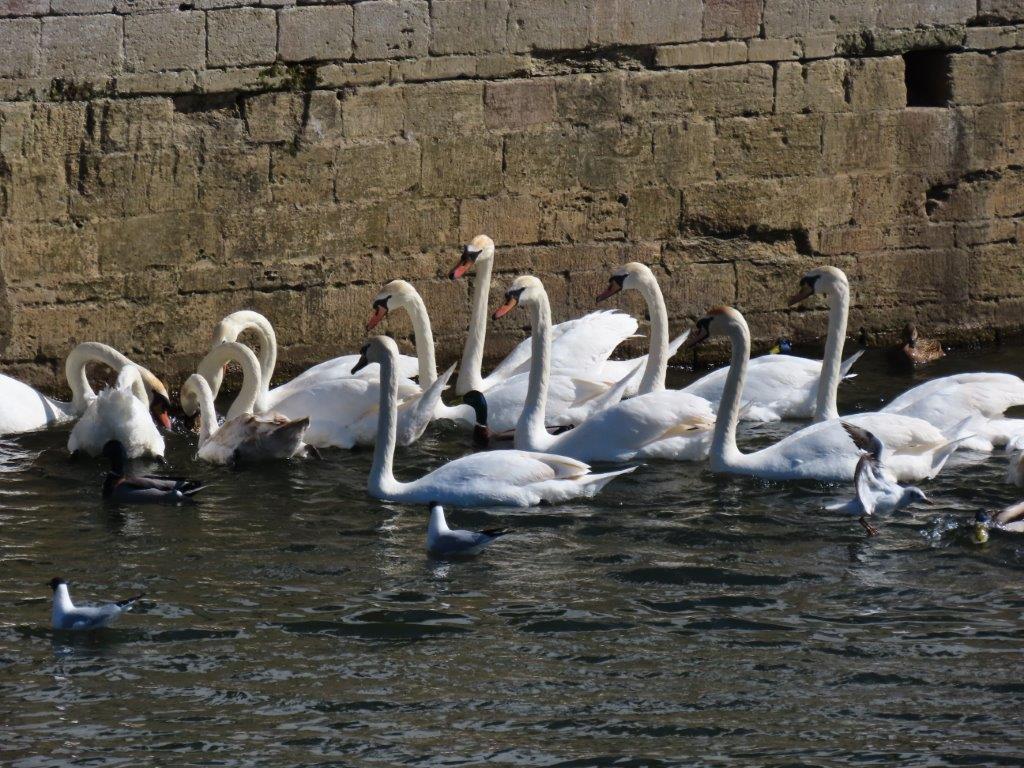
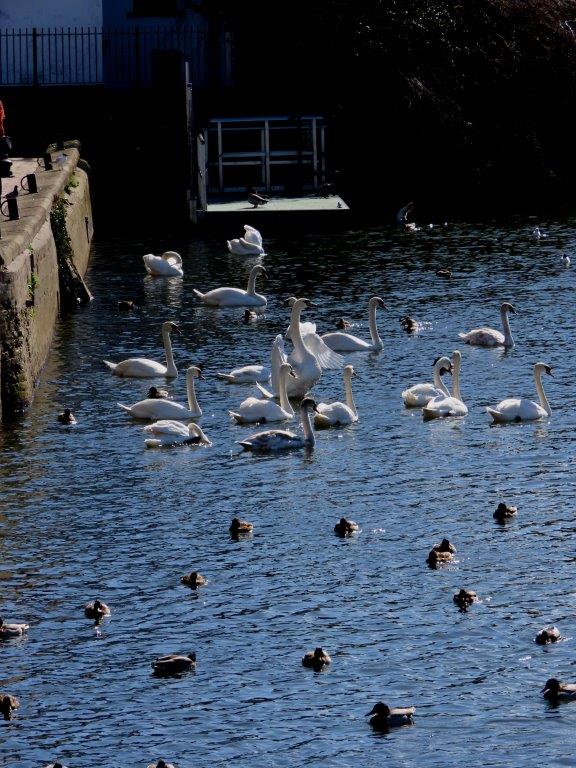
… but then walking back twenty minutes later the Sand Martins had arrived. Half-a-dozen or more, presumably just in from Africa, and within another ten minutes they were busy investigating the drainage pipes coming out of the bridge as potential nest sites.
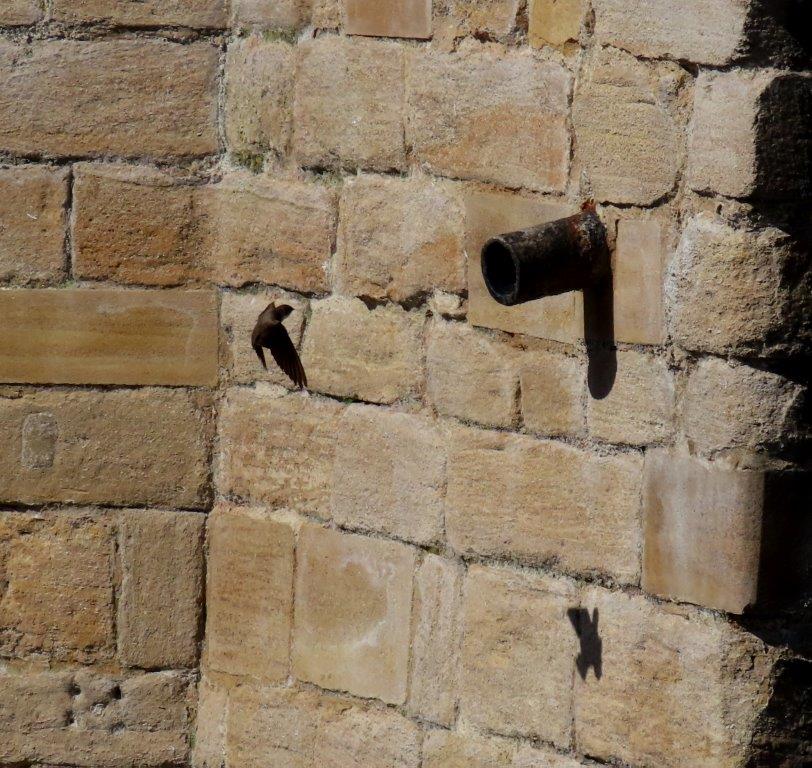
The wind had dropped, the sun was hot, and all was well with Spring!