
Two sets of guided walks around the Gardens this month were blessed with fine, sunny, calm and really quite warm weather, luckily, given that the month as a whole was very variable, with plenty of munch-needed heavy rain and some very strong winds associated with the first two named storms of the winter.
In mid-month, for the National Garden Scheme day, the beds were looking as flowery as they had for several months, the rainfall having having woken them from a scorching summer pause. But the fires of autumn were waiting in the wings and starting to lend russet hues to the vistas.


It had been a couple of weeks since my previous visit, and it was all change. Not just in the season, but in the fabric of the garden itself: the ponds had been desilted with the removal of some of the marginal and emergent plants. Yes, it looked drastic, but the staff had done a very good and very necessary job, at the optimum time of year – and already, after only four or five days, there were Common Darters indulging in late-season mating and egg-laying sprees.

Cyclamen and Crocus were two of the newly emerged flowers, probably having benefited from the summer baking.


And the Crocus was a magnet for lumbering queen bumblebees (both Buff-tailed and Red-tailed) seeking the nectar and pollinating in the process, alongside hoverflies such as Syrphus ribesii seeking out the abundant pollen.


Marmalade Hoverflies were active, visiting other sources of pollen such as poppy flowers, and the Bistorta beds by the pond were, as always, buzzing. But this time, mostly with Honeybees, rather surprising given their scarcity this summer and last, since we took away the hives. Presumably these are coming from a wild nest, not a concern for us given that the season is now over for solitary bees, which we successfully encouraged by taking away the resource pressure of Honeybees.


Otherwise it was mostly about basking: autumnal insects do need to capture the waning warmth to be able to be active. Blowflies are one of the groups often seen basking on broad leaves, but parasite-flies too, such as this Tachina fera (or T. magnicornis – they cannot really be definitively identified by sight, and the latter formerly rare species has been found over a wide swathe of England this summer).


Tachina larvae are internal parasites of moth caterpillars, but other tachinids do differently. And one of those this month was very special: Ectophasia crassipennis, an old friend of mine from jaunts to the Pyrenees and a parasite of shieldbugs, was new to the Garden in October 2025, my first British record, and with only one previous Essex record. I have heard of couple over the summer from elsewhere in Essex, but it remains a rare species, so it is great to have it again with us. Though whether the shieldbugs agree is a different matter…

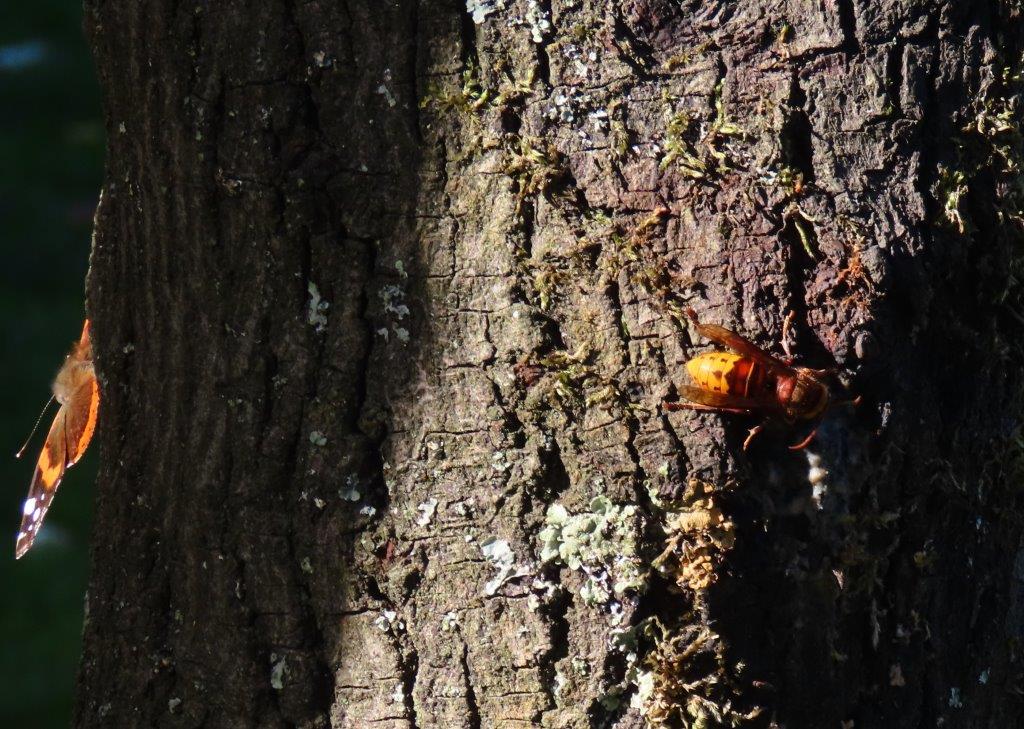
Another basker was a Red Admiral on a south-facing tree trunk, not realising a Hornet was feeding around the other side from a sap-run. And it almost came to a sticky end when the Hornet realised there was food (they are pretty omnivorous) around the corner: only the intervention of a Migrant Hawker dragonfly, also looking for a meal, allowed the butterfly to escape unscathed.
Autumn may be here but, despite the recent rains, the fungal season hadn’t really started yet. But for one, only very distantly related, group, the slime-moulds, clearly the biochemical signals had gone out, the cells had swarmed into a mating mass, and Fuligo septica was on show for a few days in the Scree Garden.

In another sign of the season, Moorhen numbers were building up on the Reservoir, Robin numbers were noticeably greater than over the summer, Skylarks and a Grey Wagtail were migrating over, and Mistle Thrushes were rattling in the treetops.

And then there was what is for me one of the most beautiful grasses in the world, Chasmanthium latifolium, flattened spikelets tinged with copper in the low-angled sunlight:

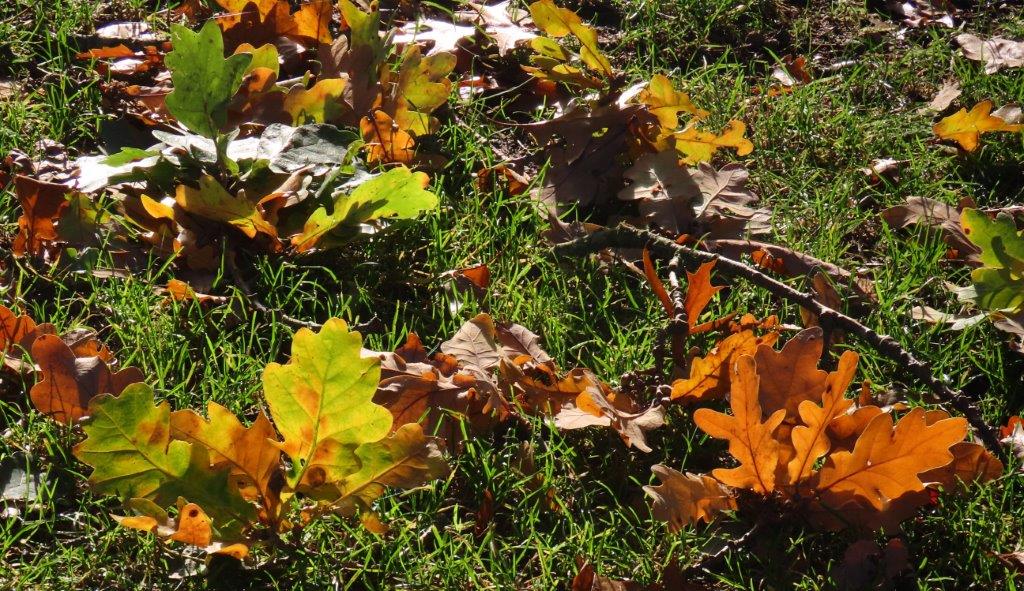
Two weeks later it was half term, and time for a kids’ bug walk. Autumn had of course advanced, but the past week had seen the passage of the first two autumnal storms, and the detritus from the second was still evident on the grass.


Fungi were just starting to sprout, with Fly Agarics in their usual place at the end of the Memorial Garden, in woodland which contains Silver Birch, the normal root associate of this fungus,.

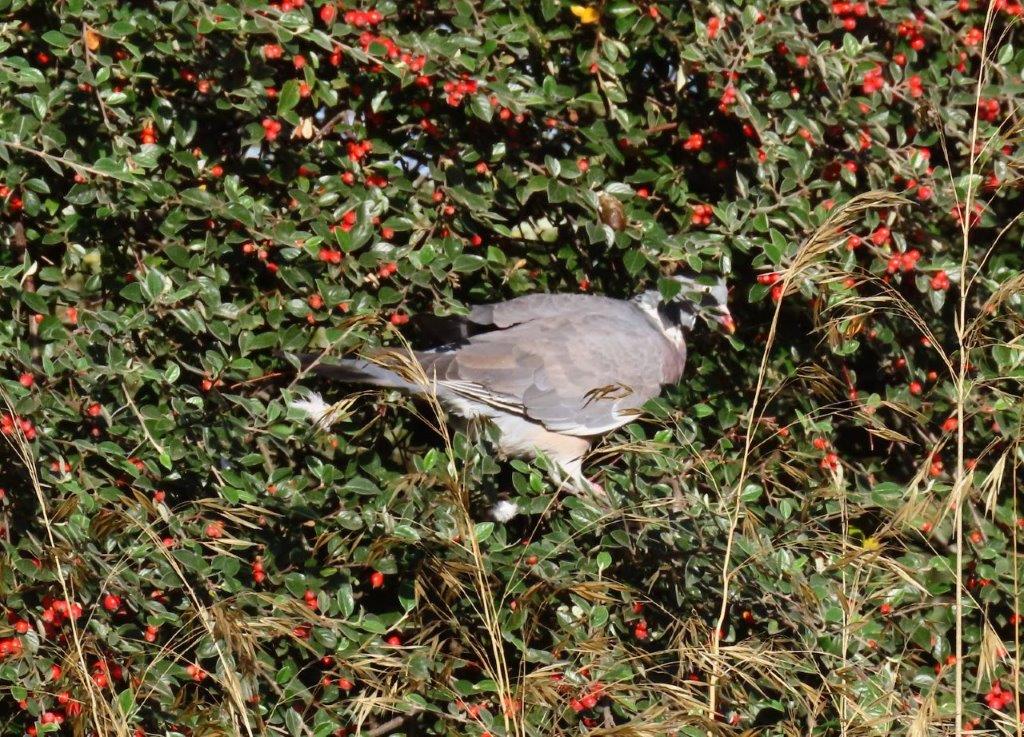
And birds too: Woodpigeons devouring Cotoneaster berries, Redwings ‘seeping’ in the treetops, and only the second garden record of Nuthatch, precisely two years after the previous record. Skylarks were joined by Meadow Pipits migrating overhead, while a separate, resident Skylark population has started to sing and establish territories in the surrounding fields.
As is very typical, Bistorta is one of the last major nectar and pollen resources in the Gardens, one that is likely to continue producing until the first sign of hard frosts. But in contrast to two weeks ago, Common Wasps have largely replaced the Honeybees, much more welcome ecologically: both are pollinators, but whereas Honeybee is a nectar- and pollen-guzzler to the detriment of other species, wasps are voracious predators of caterpillars (to feed their larvae), an essential part of maintaining natural balance the any garden.


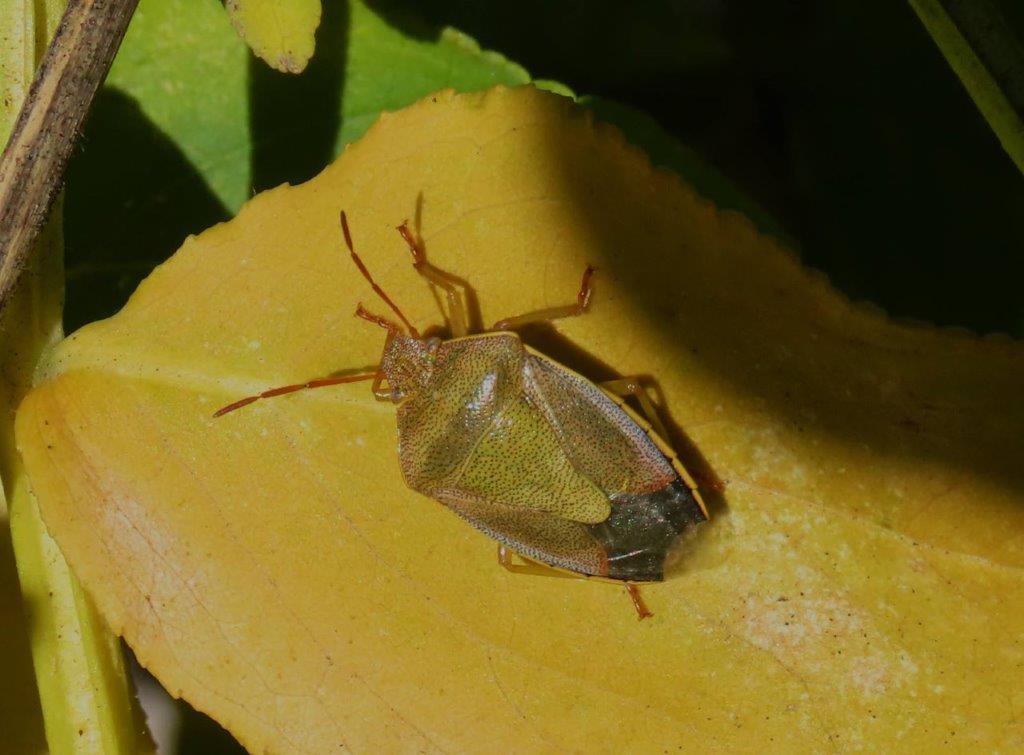
With warm sunshine driving away any vestige of morning mist, it was another great day for basking. Cinnamon Bugs were more numerous than I have ever noticed here before, and Gorse Shieldbugs seemed to be everywhere, except on Gorse! This is only the second summer we have noted multiple individuals of the latter, and the greatest numbers seem to be in October, but the move away from Gorse as a food-plant is interesting. Perhaps the warming climate is allowing them to be successful on a wider range of hosts that were previously suboptimal?

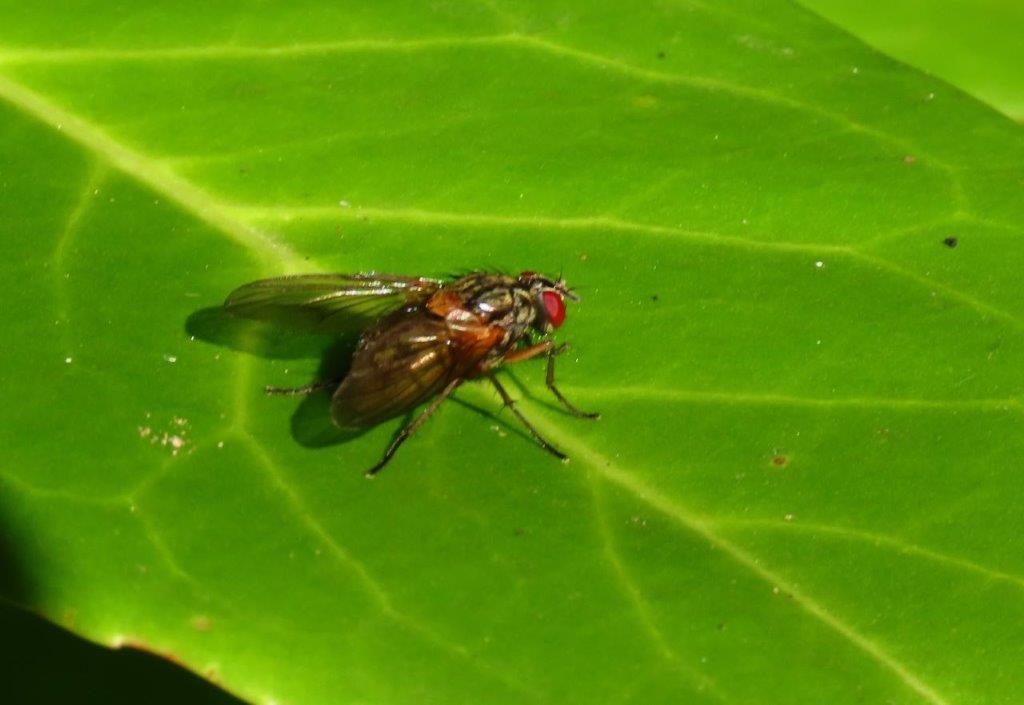
Several of the baskers were new records for Beth Chatto Gardens. Mydaea corni is a colourful relative of the House-fly, for which the maps show no sites in north or east Essex; Pseudolyciella stylata is a little more widespread, but still mainly found in the south-west of the county; and our third new fly is a Platypeza flat-footed fly species that sadly cannot be identified without dissection.


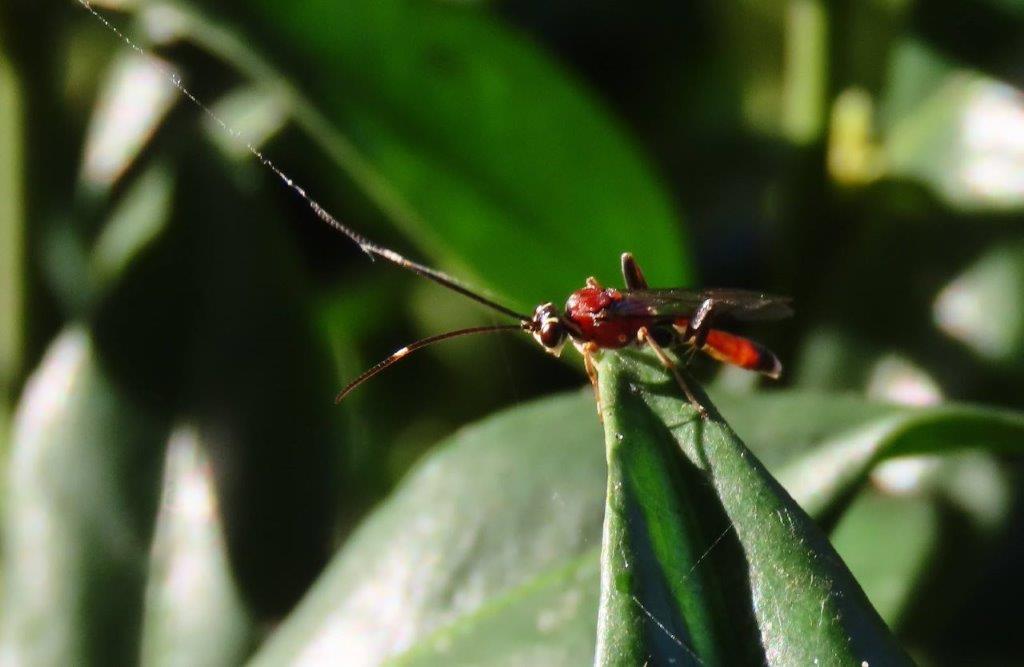
And then three other newbies were: a tiny groundbug Metapoplax ditomoides, new to Essex in 2005, but now fairly widespread (but insignificant!); the mine of a micromoth Stigmella betulicolella, recorded from only half a dozen Essex localities; and a parasitic wasp Baranisobas ridibundus, for which the maps show no Essex records. But of course for any, possibly all, of the above, ‘rarity’ may only be apparent, records being limited to the few people interested in identifying them.


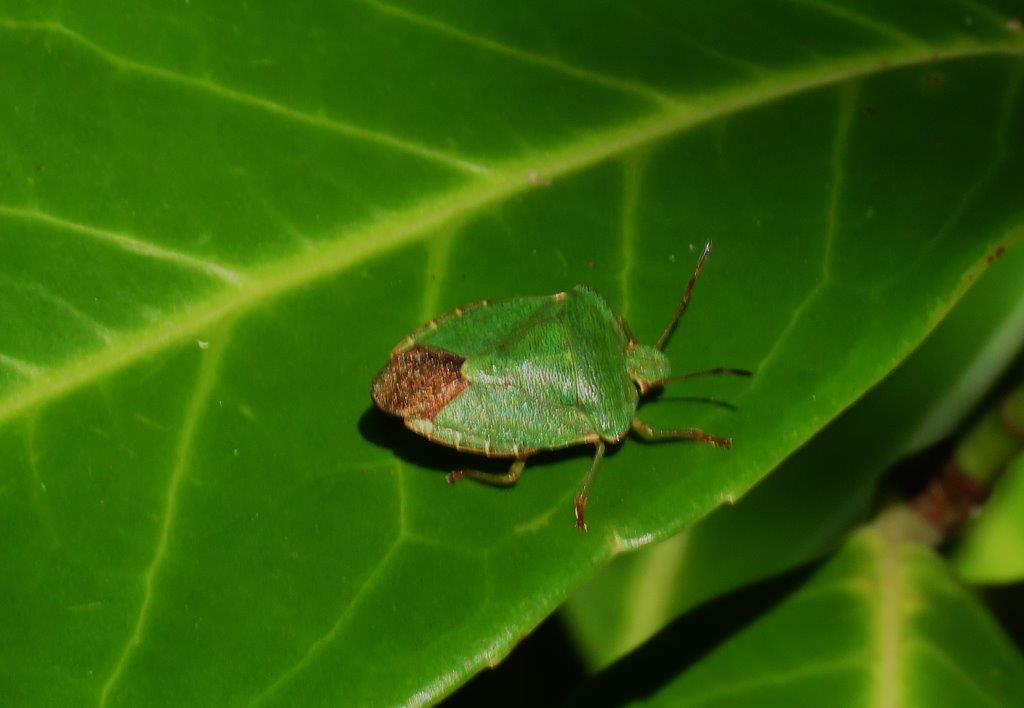
And finally, what of the kids? Well, I started with thirty, though that soon slimmed down to about ten really keen ones. They were wonderful, filled with such infectious joy at getting up close to nature, a tonic for someone like me who would have loved the opportunity to do that with a peer group when I was their age. They started with ladybirds, moved on to bumblebees, wasps, dragonflies and damselflies, and eventually revealed no fewer than four different shieldbugs: Green, Hairy, Gorse and Juniper, the latter (sadly not photgraphed) being only the fourth one I have ever recorded in the garden since it arrived in this part of Essex some five years ago.



Then as a grand finale, I blew their minds with the Firebug ‘parties’ on the car-park Lime trees.

Always something exciting, for young and old alike!
