Blog Archives: Travel by Rail

Bavaria by train: the way home – Frankfurt & Brussels

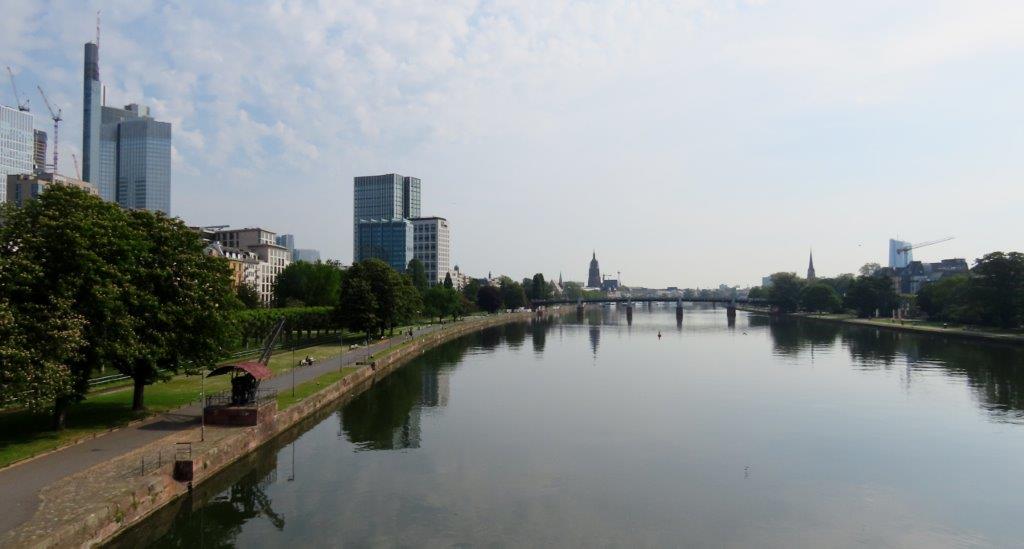
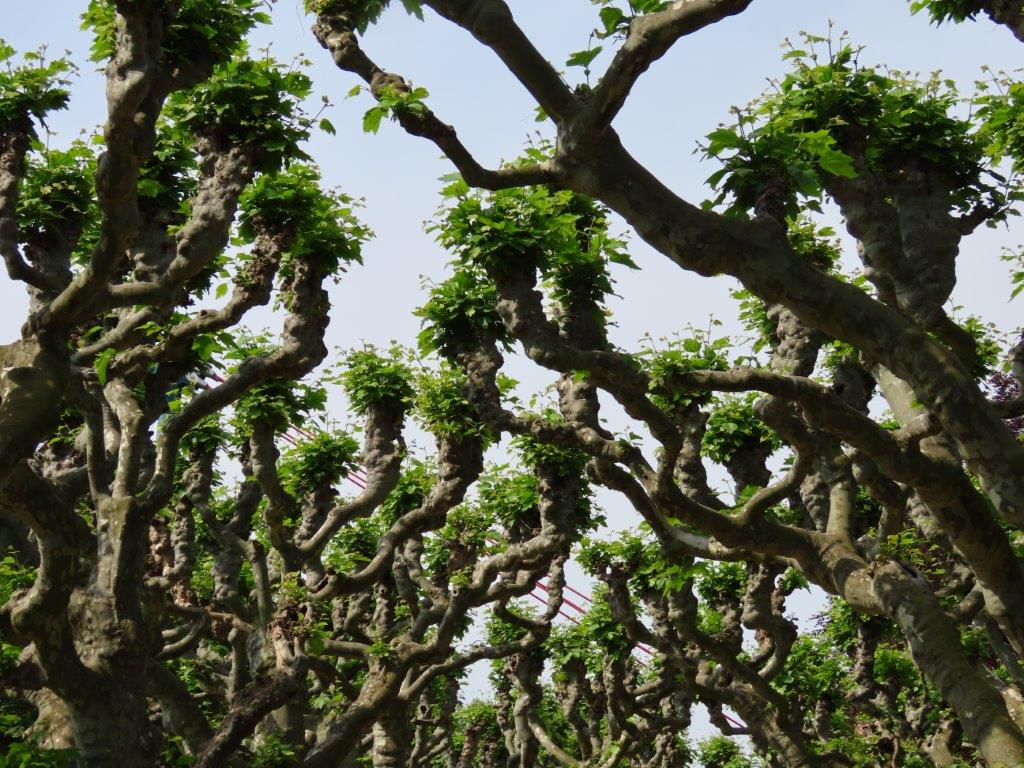
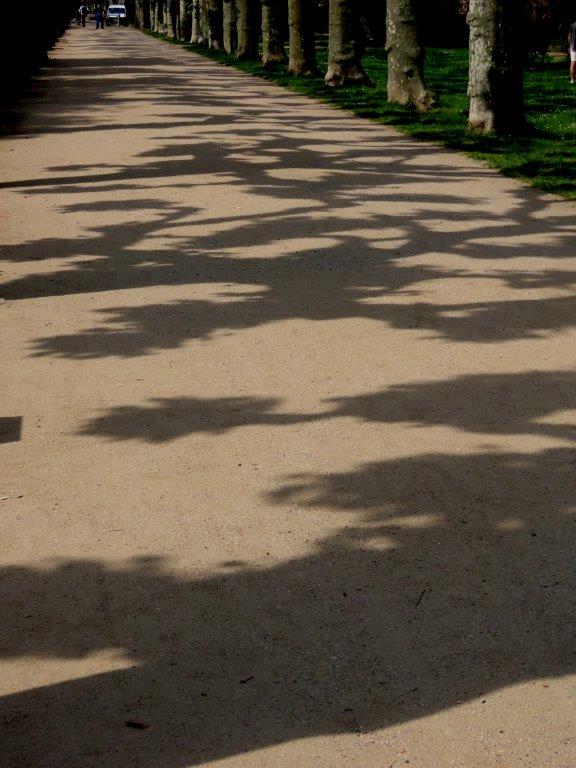
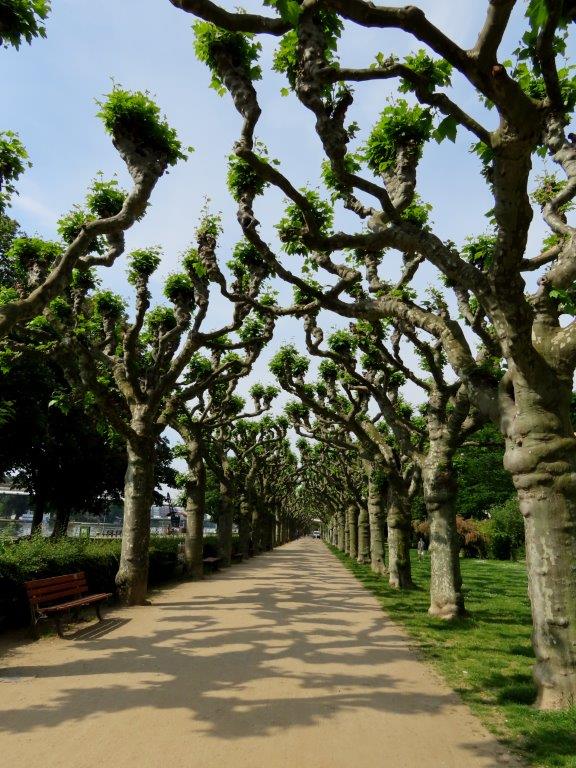
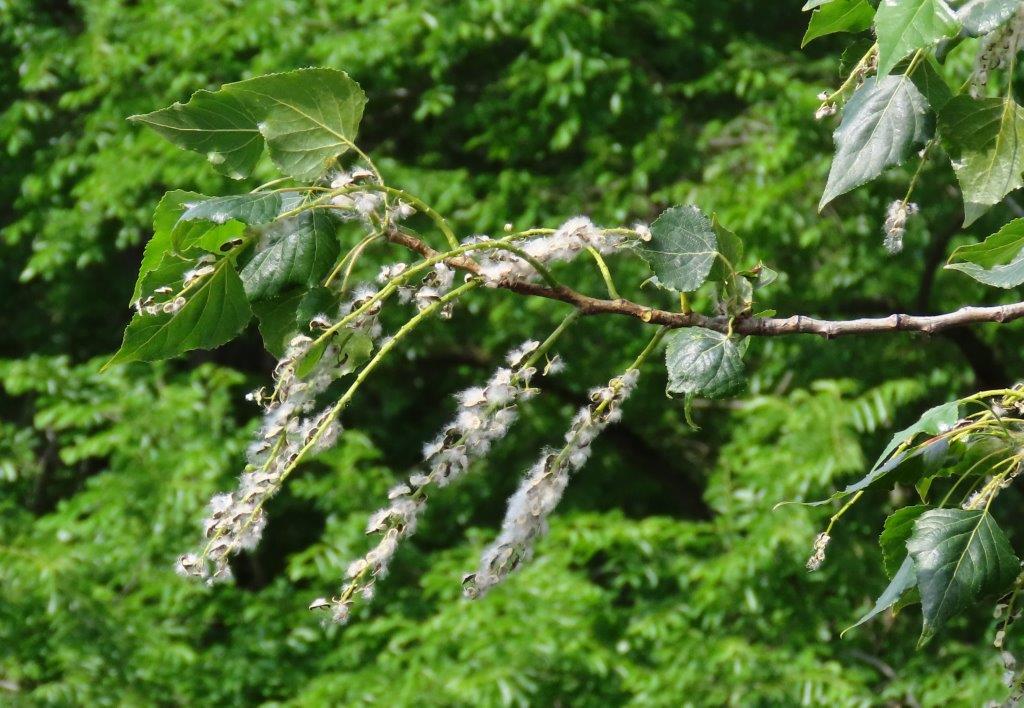
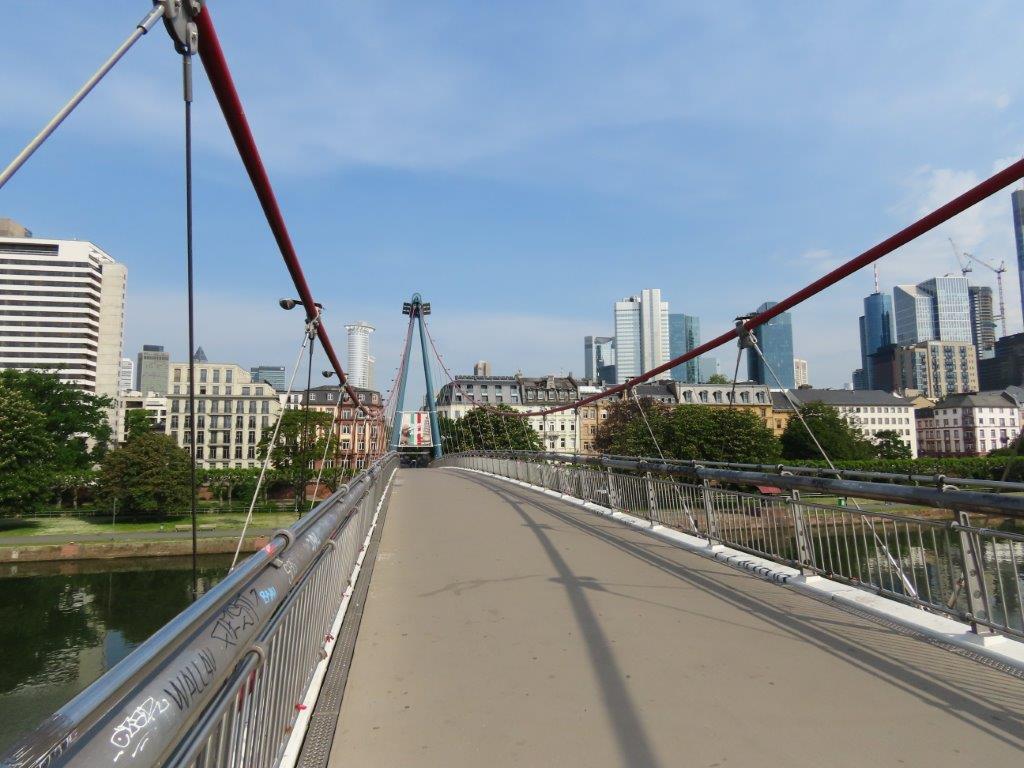
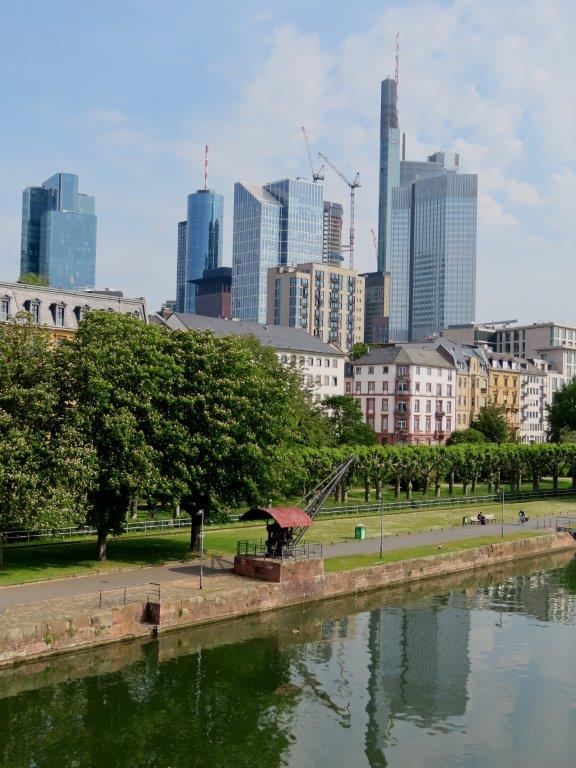
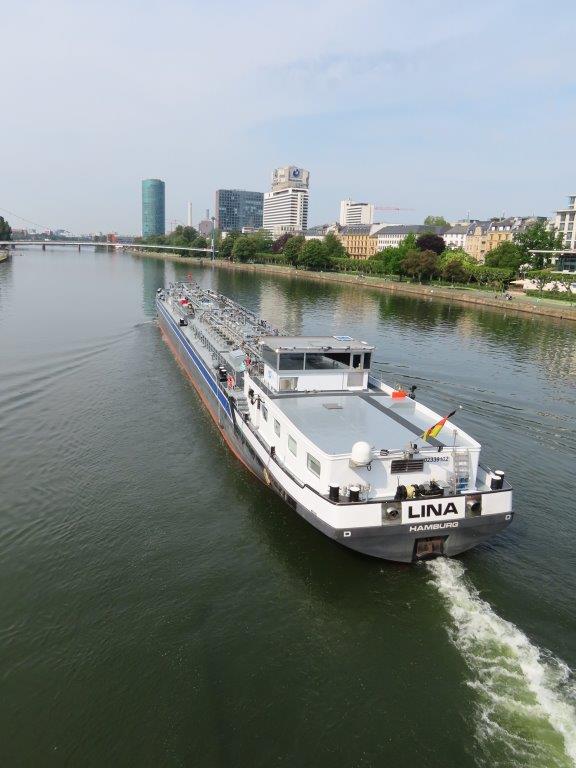
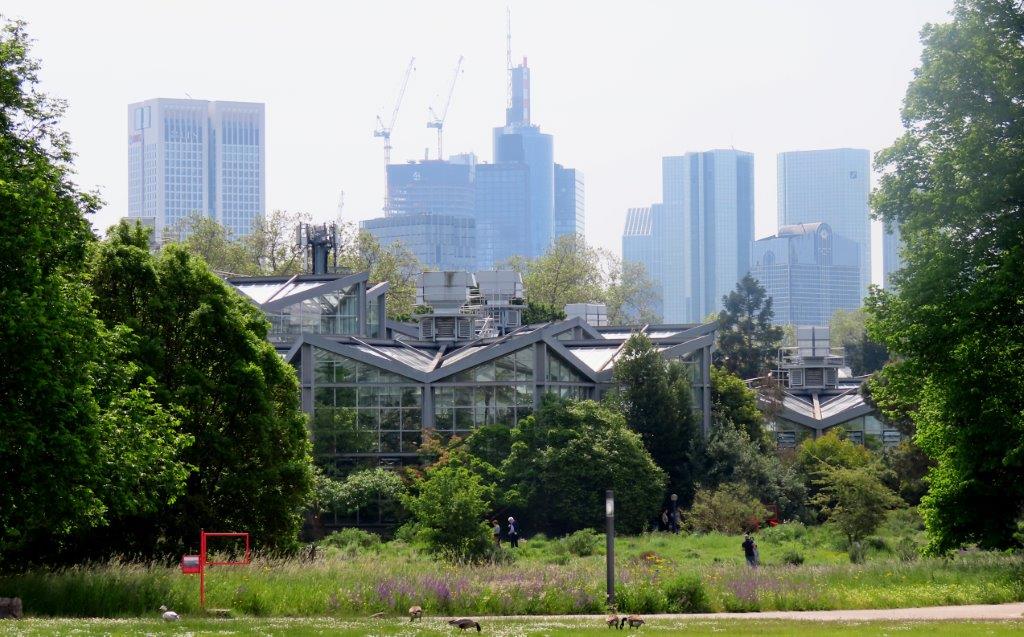
There are a few calling points on the ICE trains between Regensburg and Brussels, but we thought for our first trip of this type we would stop over in the largest city, Frankfurt, for a couple of nights. Having travelled down the Rhine then up the Main on the way out, we had already had a snapshot of the riverine views, and once there, the pleasant river walks between lines of hydra-like Plane pollards and cotton-drifting Black Poplars casting some welcome shade gave good views of the economic powerhouse that is the city…

… an urban jungle with canyons of glass and steel which harboured (as expected) Peregrines, along with city-centre-dwelling Buzzards, and surprising densities of House Sparrows, along with hordes of screaming Swifts.

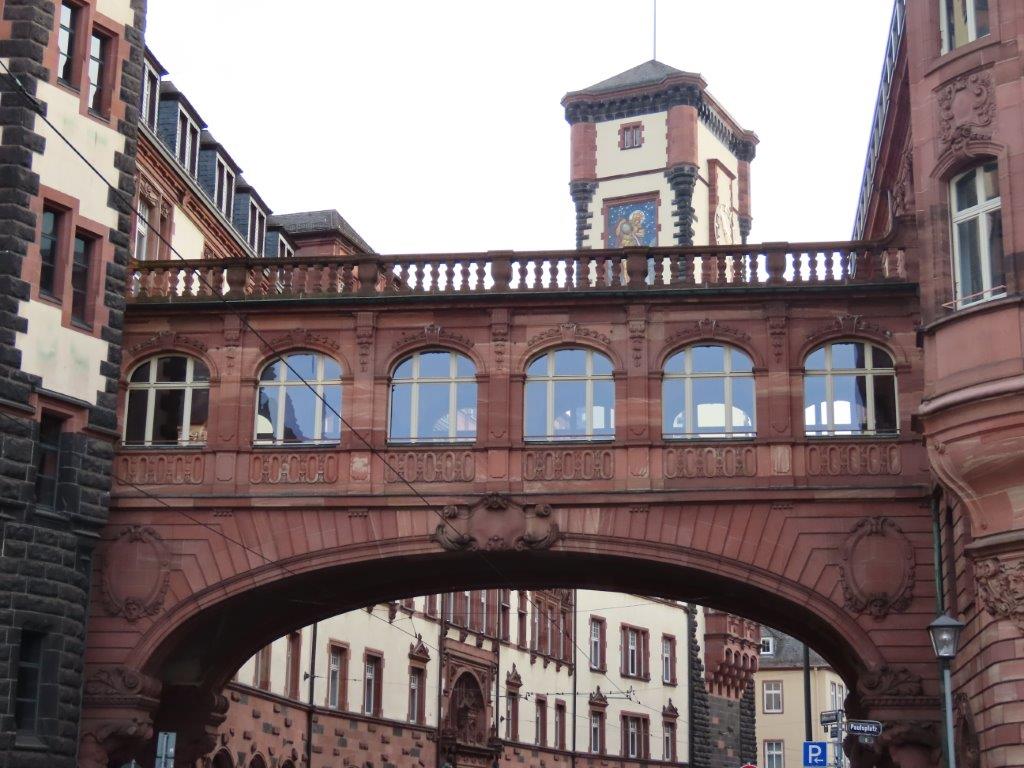
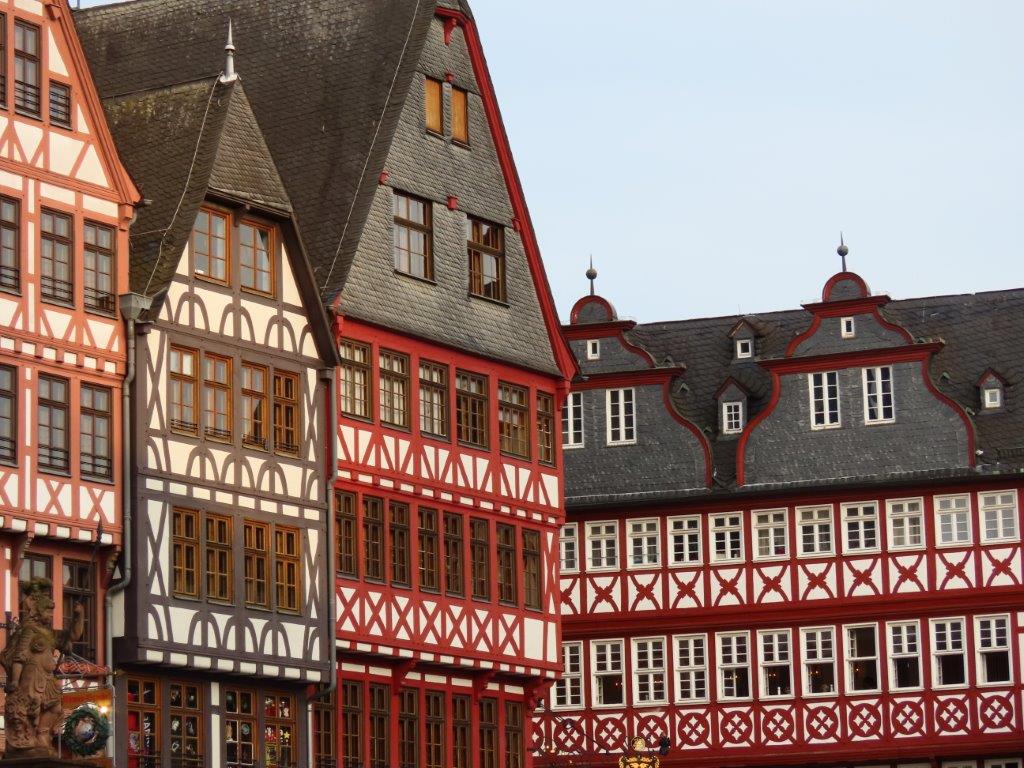
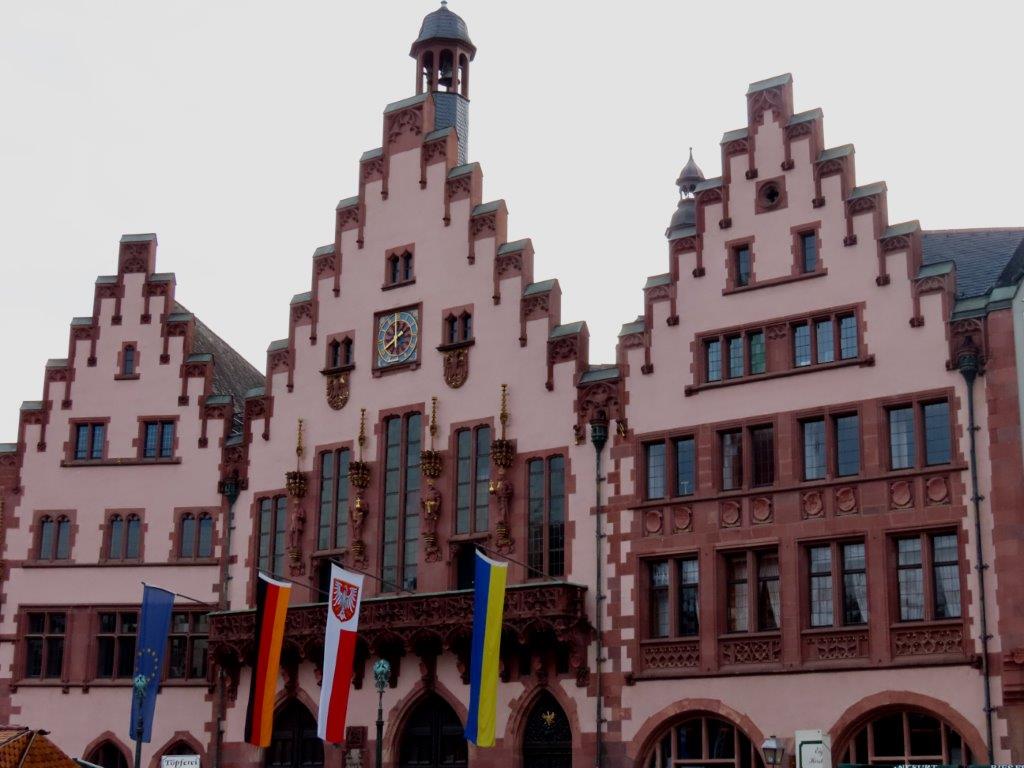
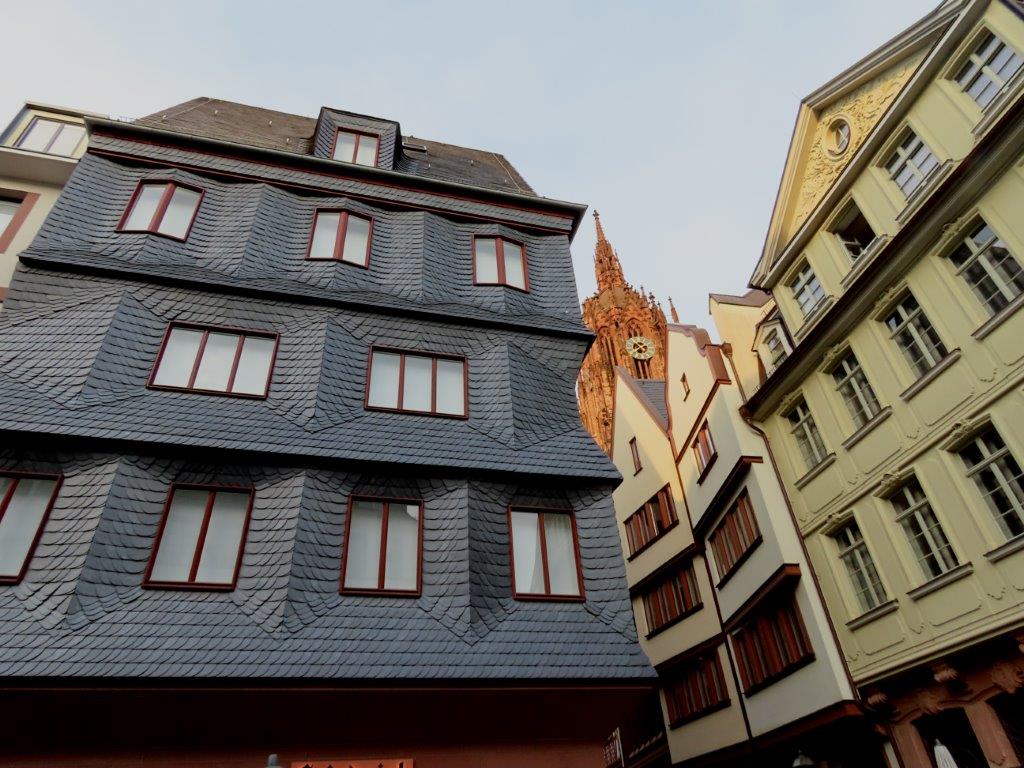
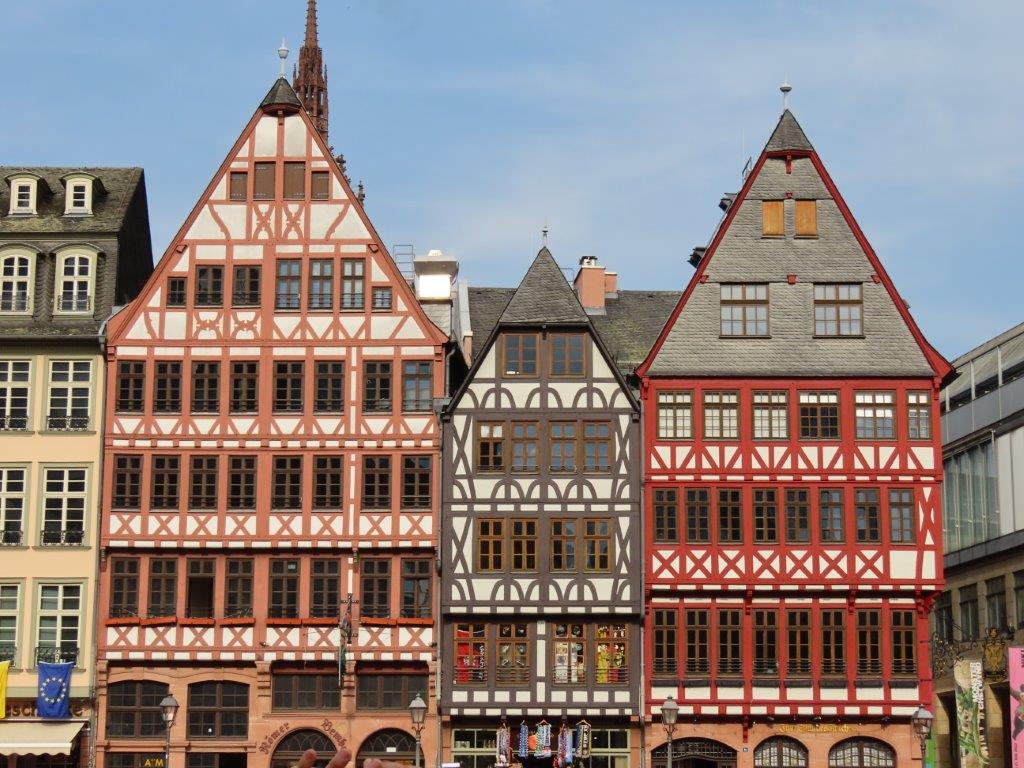
An evening in the ‘old’ city was eye-opening for the attention to detail that has evidently been given to its restoration after the area was flattened during WW2.

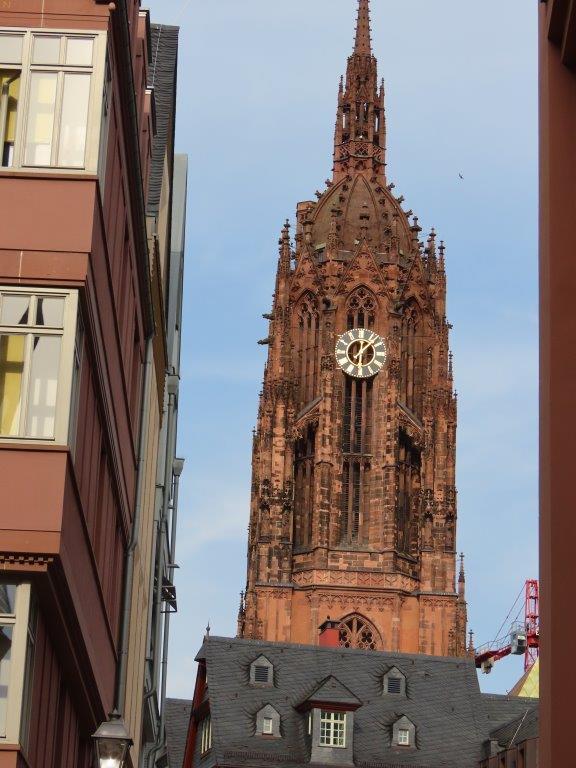
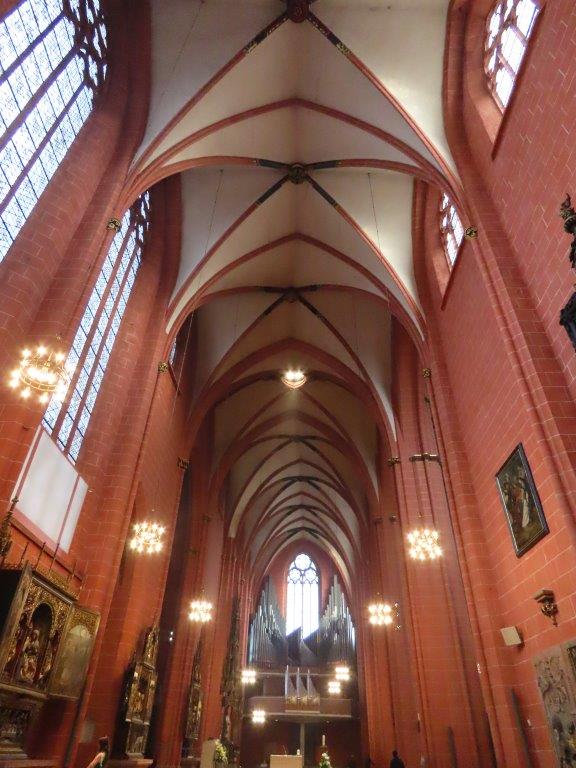
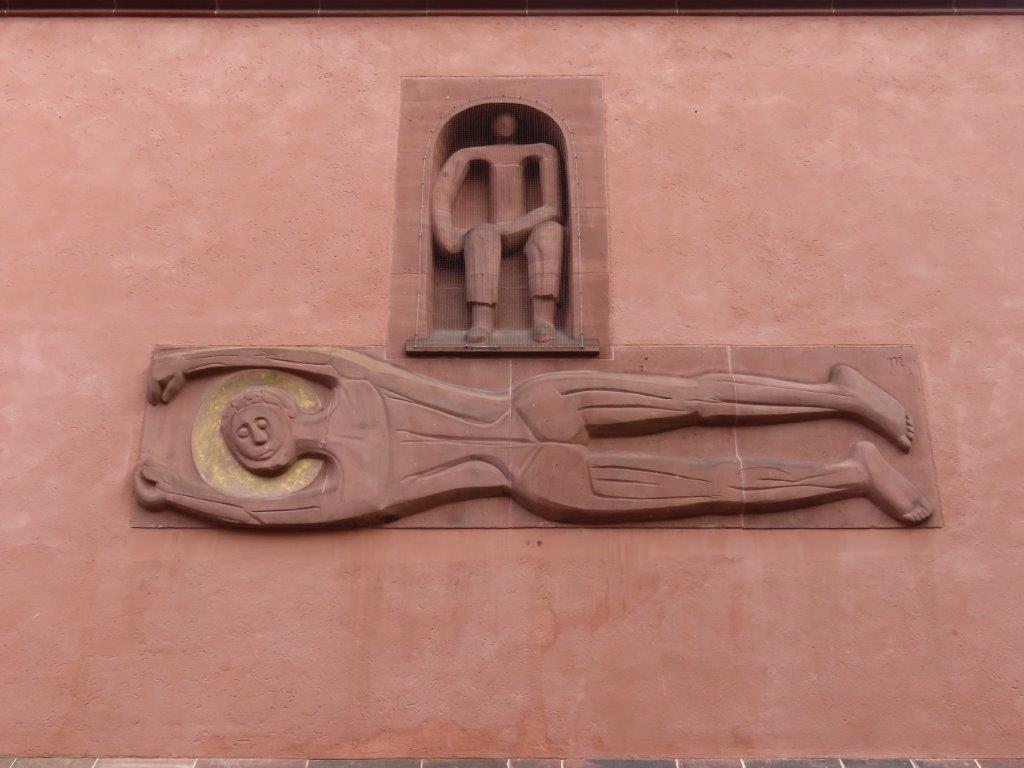
And even the cathedral, the red stone and its crisp edges and straight lines the product of its 1950s reconstruction.  Almost a pastiche we thought at first, until we realised this in fact the third church on the site during its venerable 1500 year-old history: nothing stands still, not even buildings.

Then there is the organ, an object of pure architectural beauty, which one imagines will produce sounds to match…

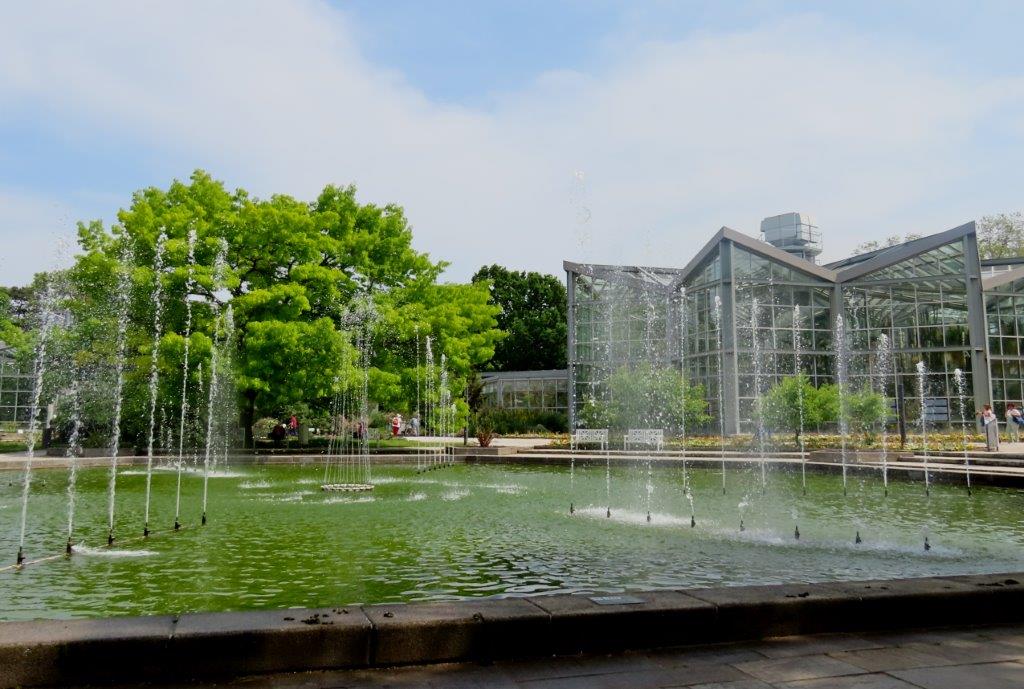
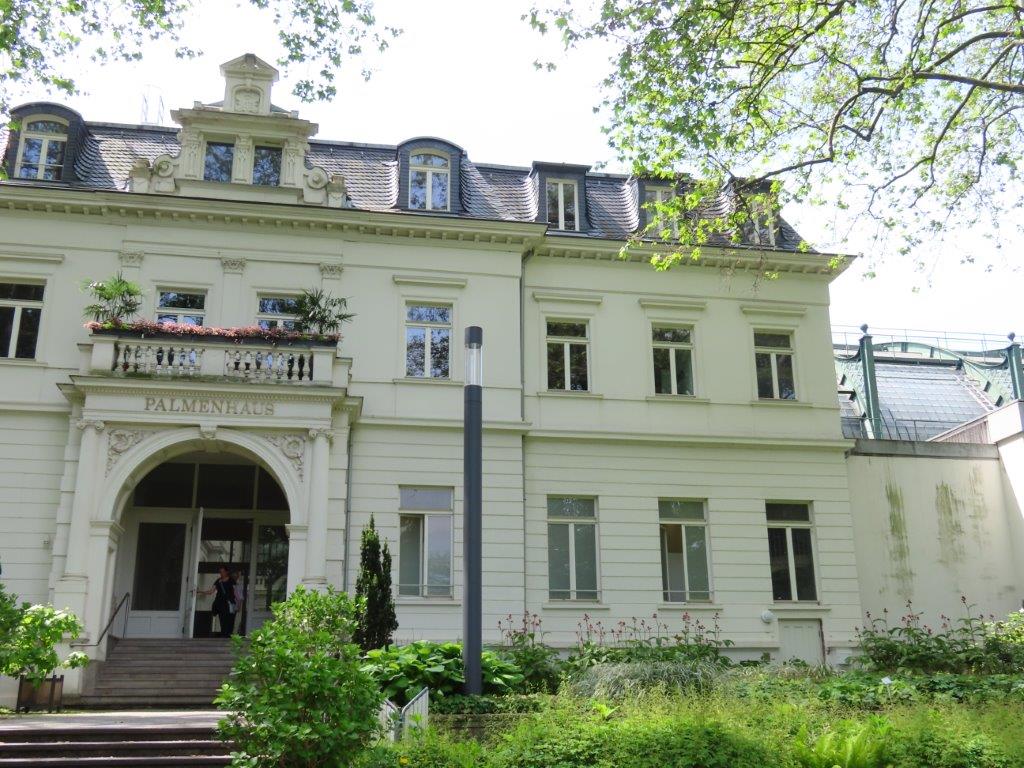
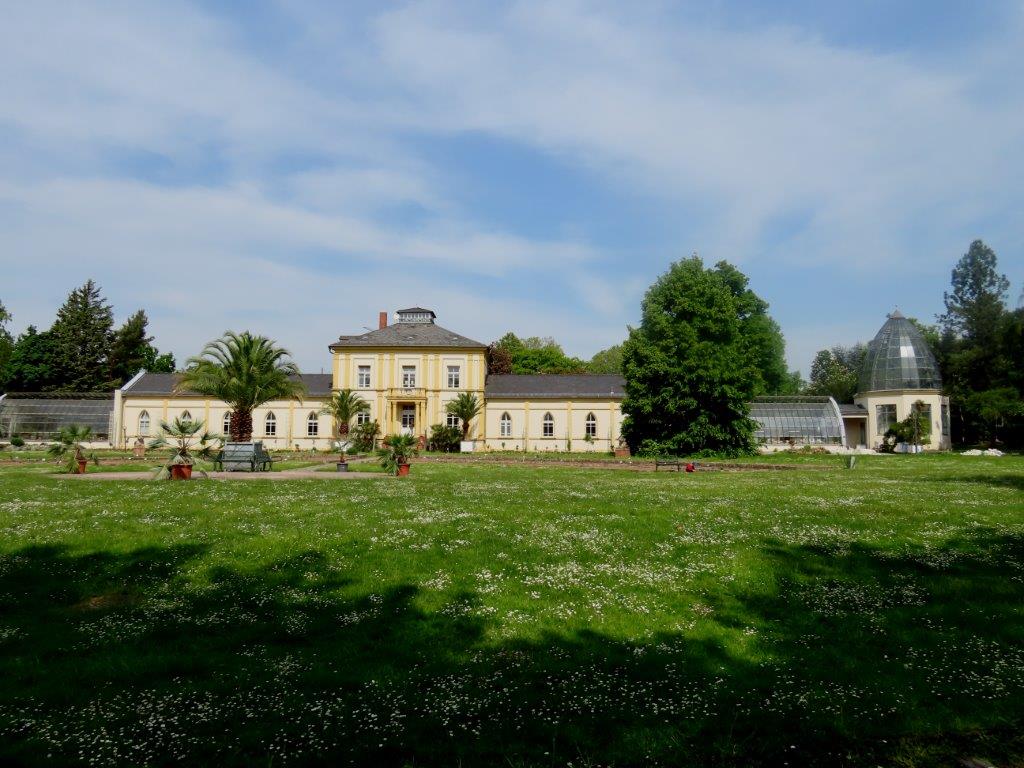
Our day to the north of the city centre in and around the Palmengarten was a hot one! So much so that we were rather pleased one of our intended destinations, the Botanic Garden, was closed (another time maybe…).

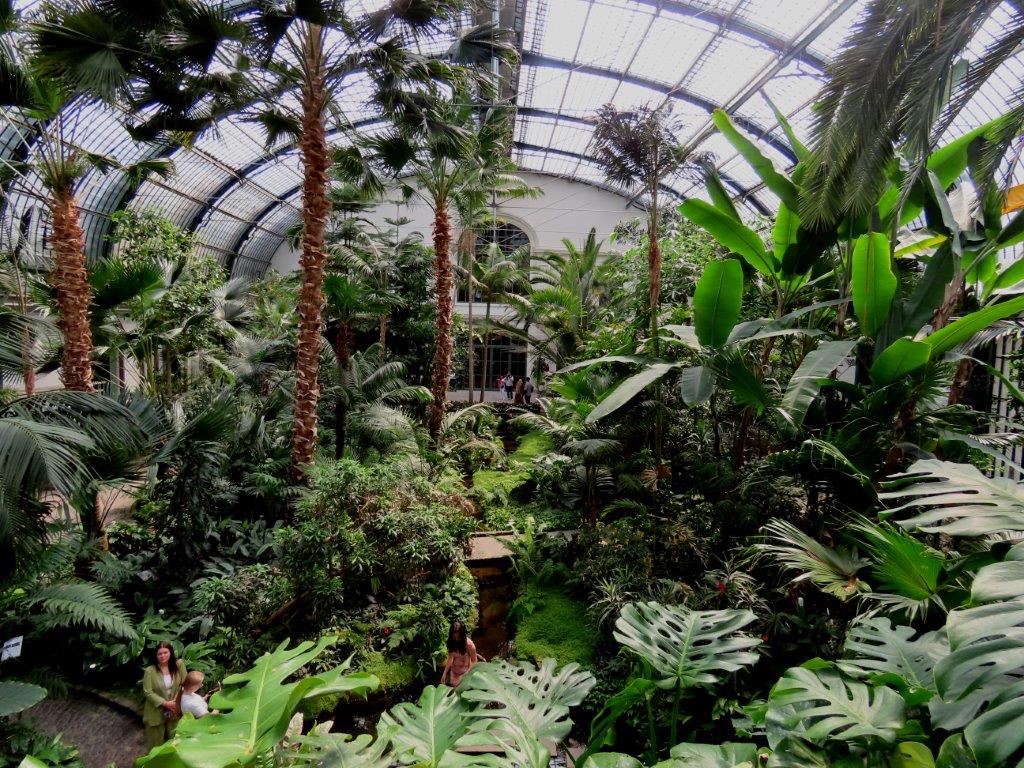
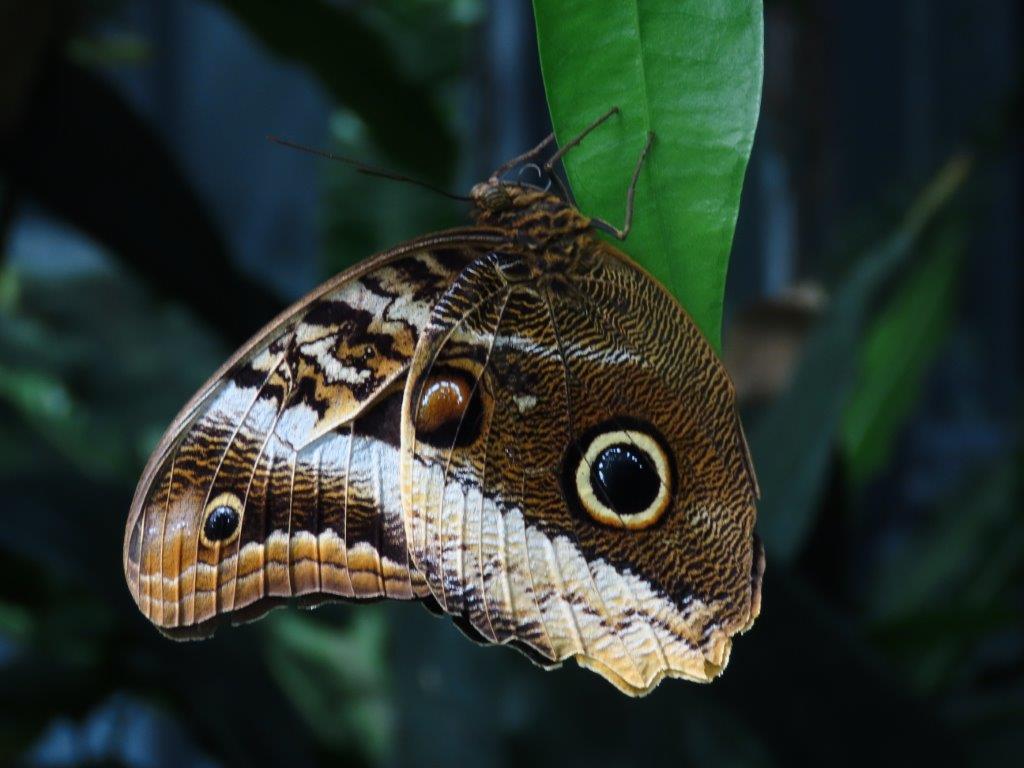
Not dissimilar to Kew Gardens, this has  extensive greenhouses coving a whole range of biomes, and a tropical butterfly house.

The outdoor gardens are many and varied, and full of interest to the botanist, even though the labelling  is rather patchy and, sadly, all too often wrong.

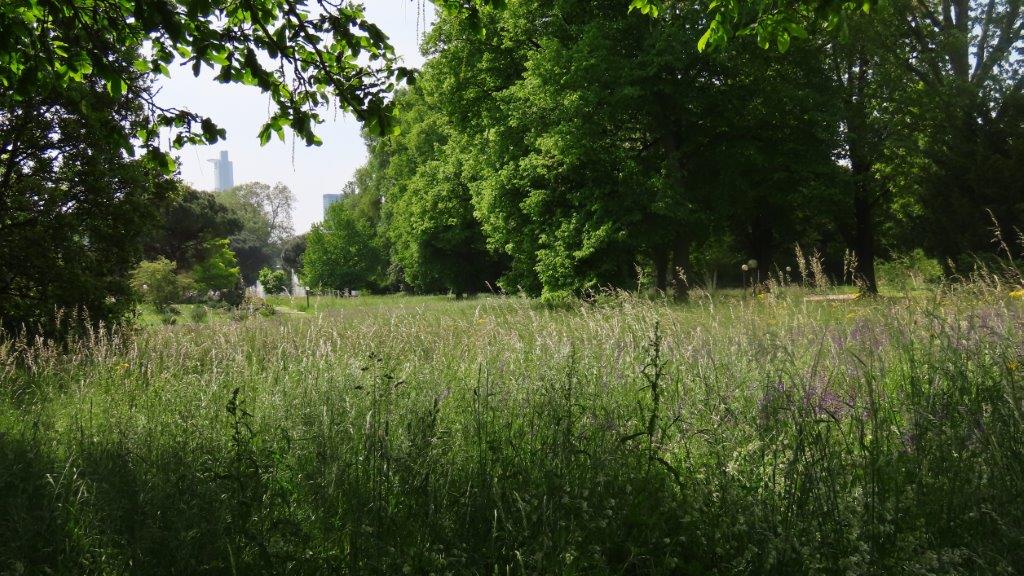
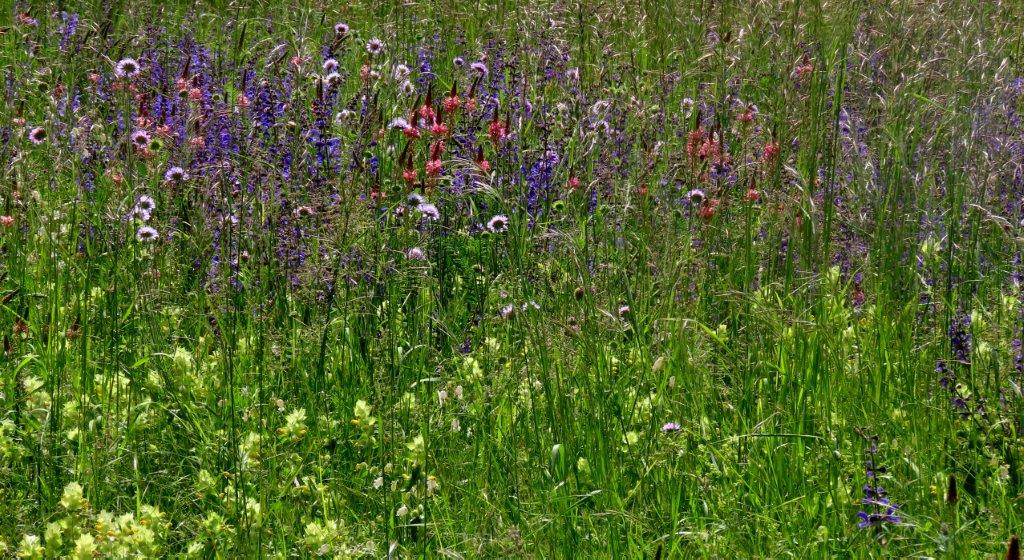
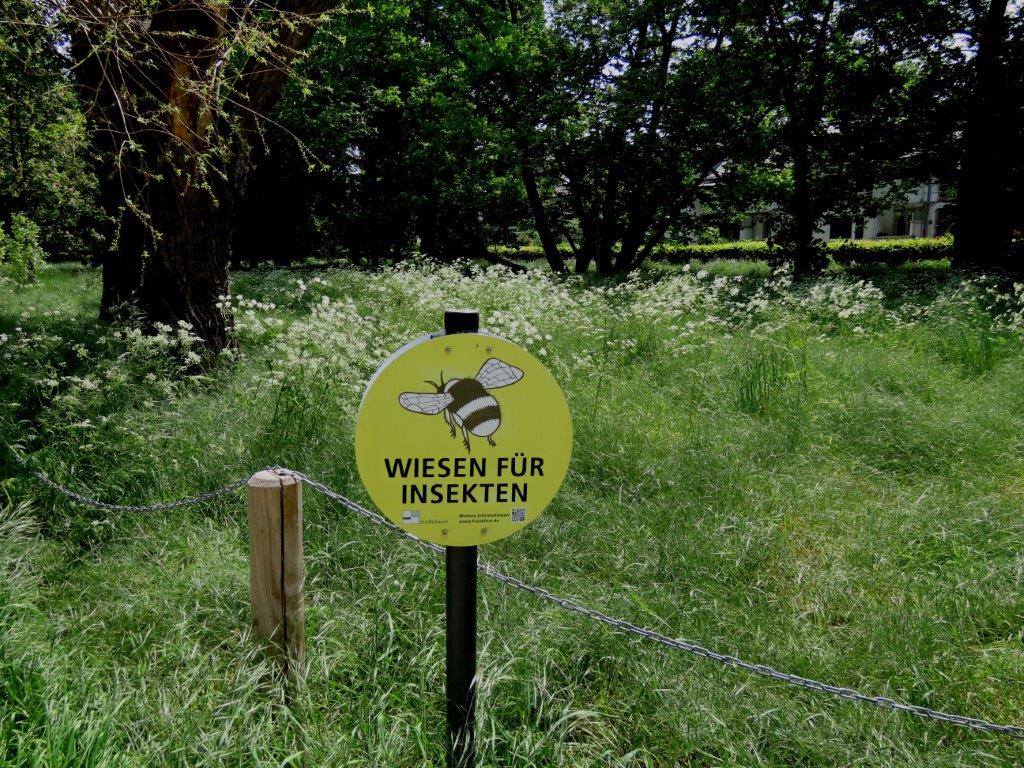
One pleasing feature though is the extensive area of long grass, well signposted as being for wildlife (butterflies especially) alongside showier, less naturalistic, but still valuable prairie-style swards.

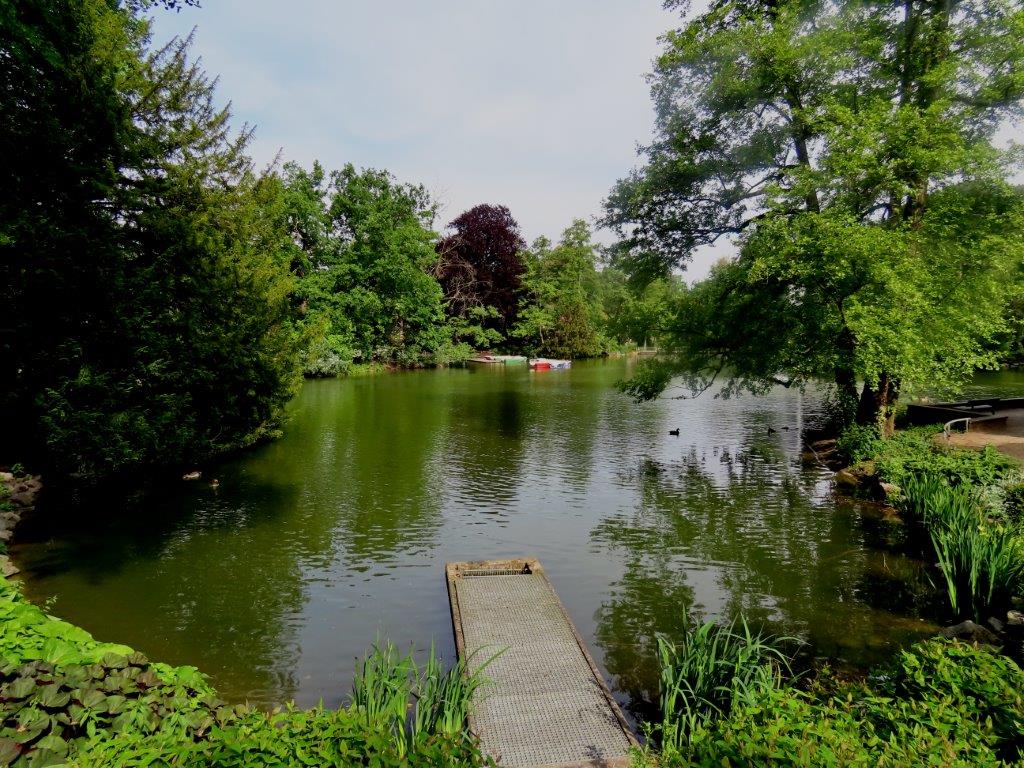
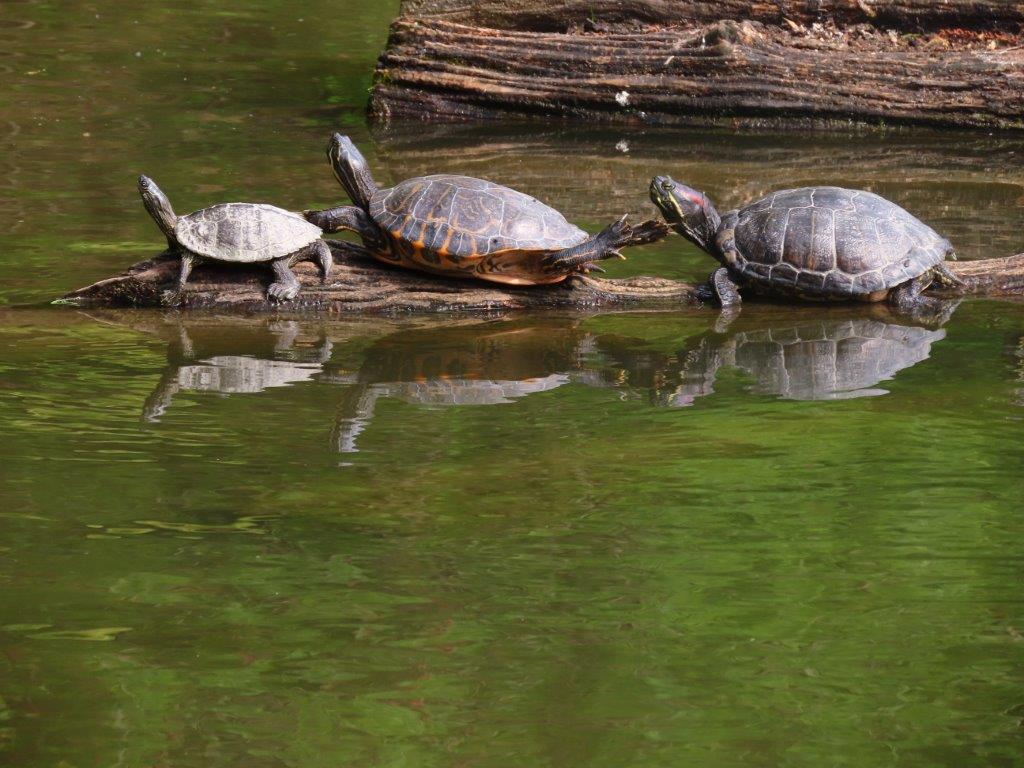
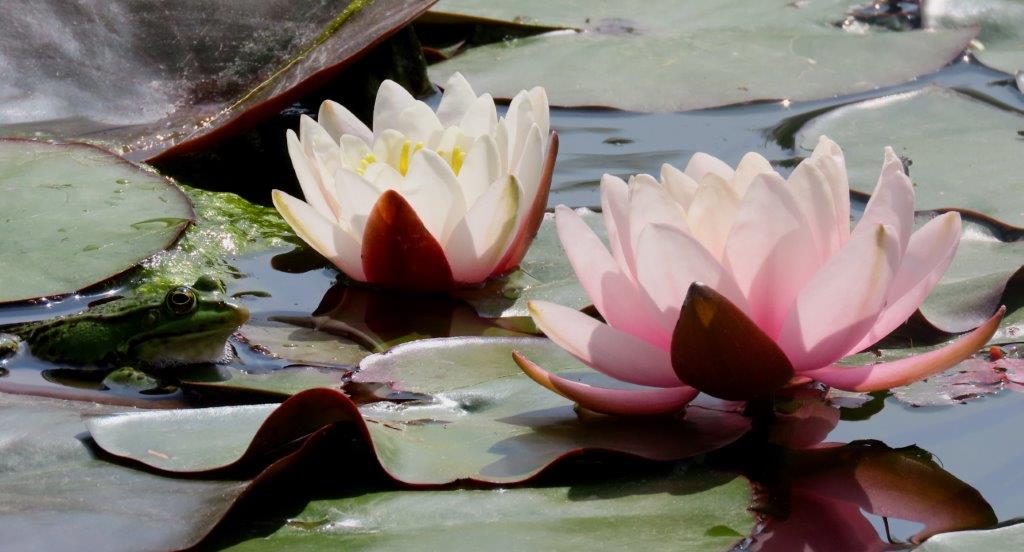
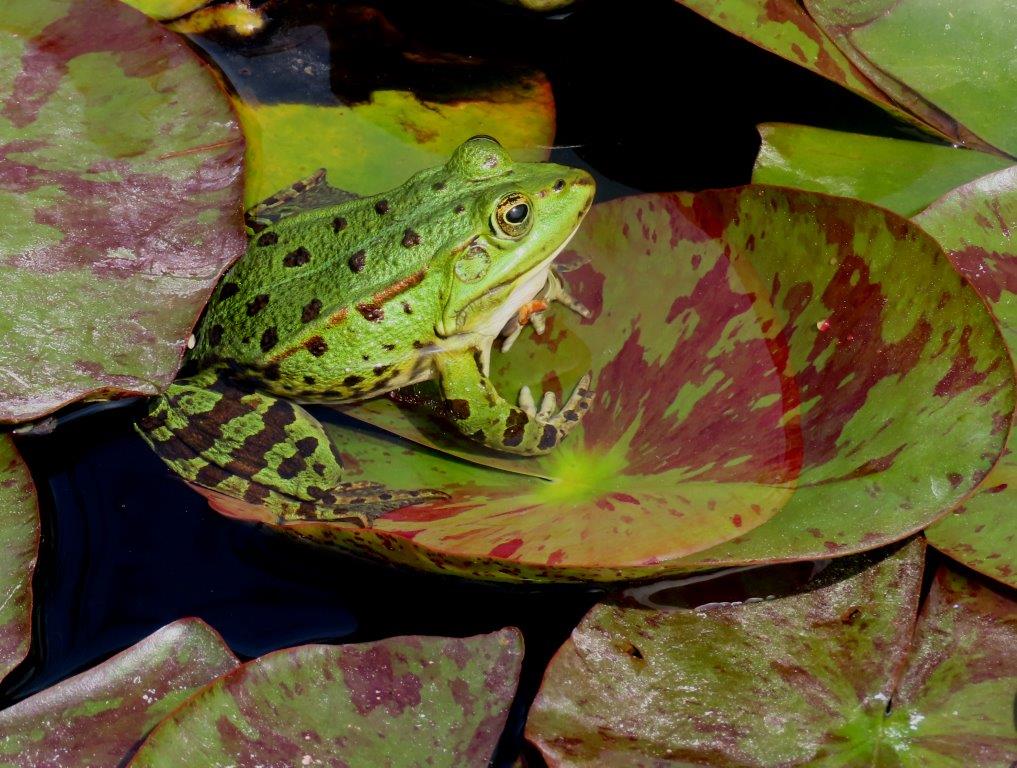
Around the lakes there were Terrapins, both the native European Pond and North American Red-eared species, while the smaller ornamental pools were full of Edible Frogs, their loud quacking choruses audible from a long range.

What seemed to be lacking, sadly, was insects  not (presumably) as a result of pesticide use, more the weather. But as it warmed up, next door in the Gruneburg Park we found plenty.

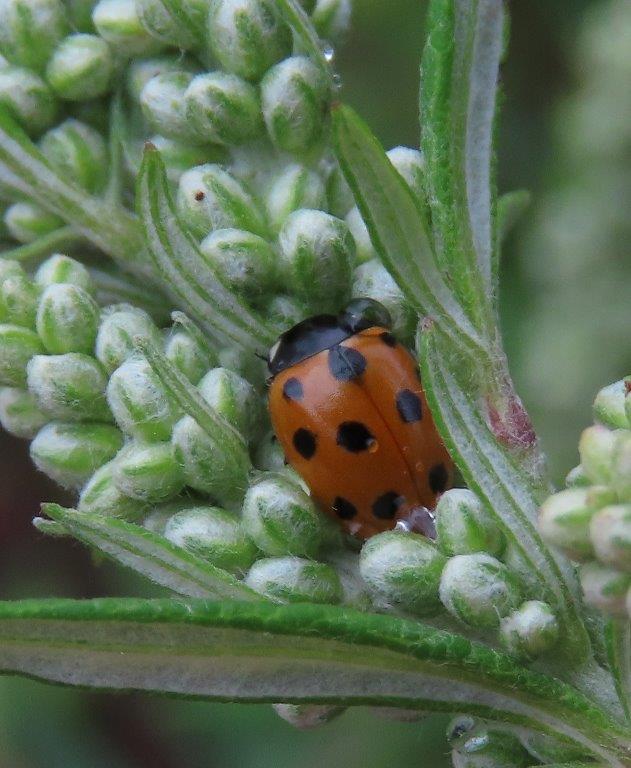
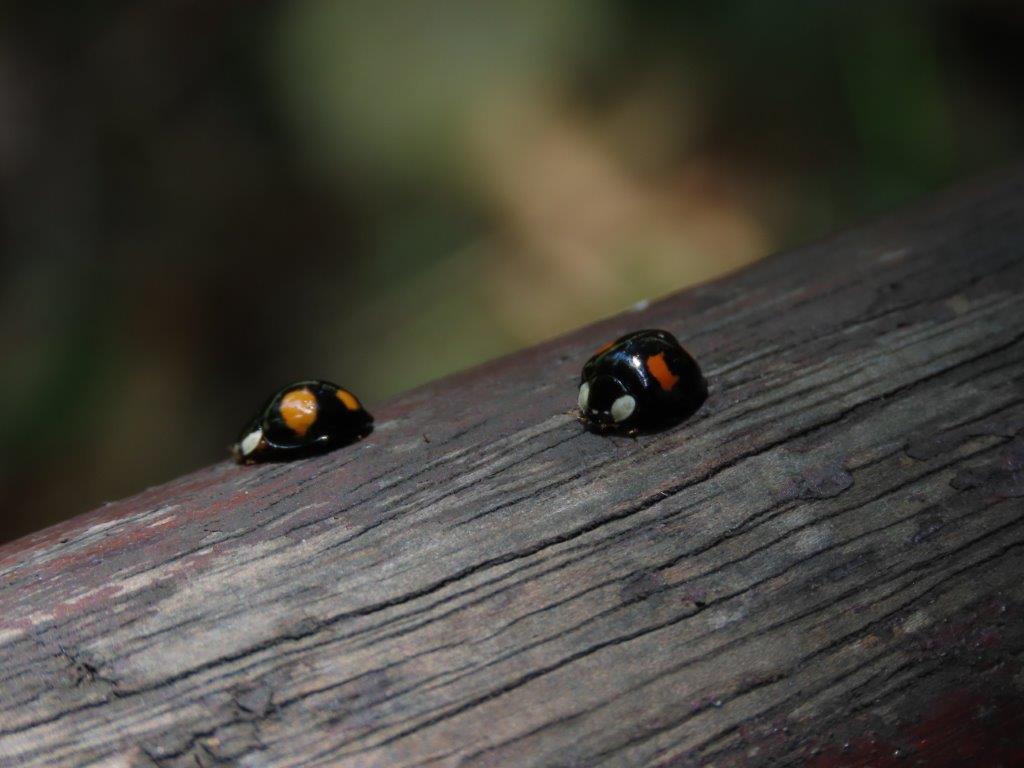
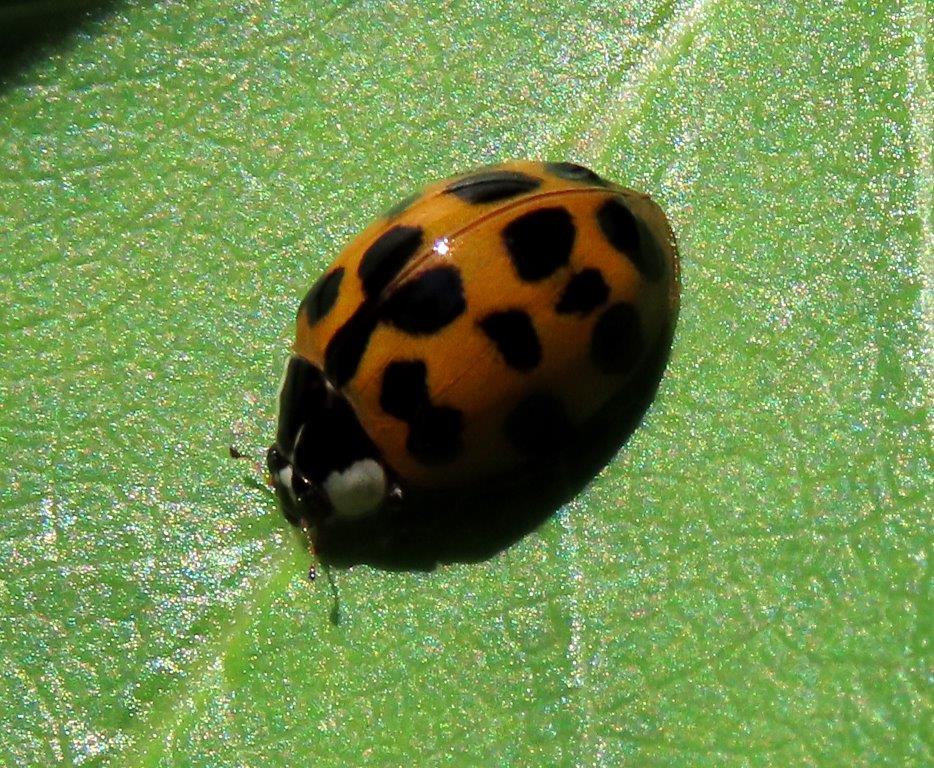
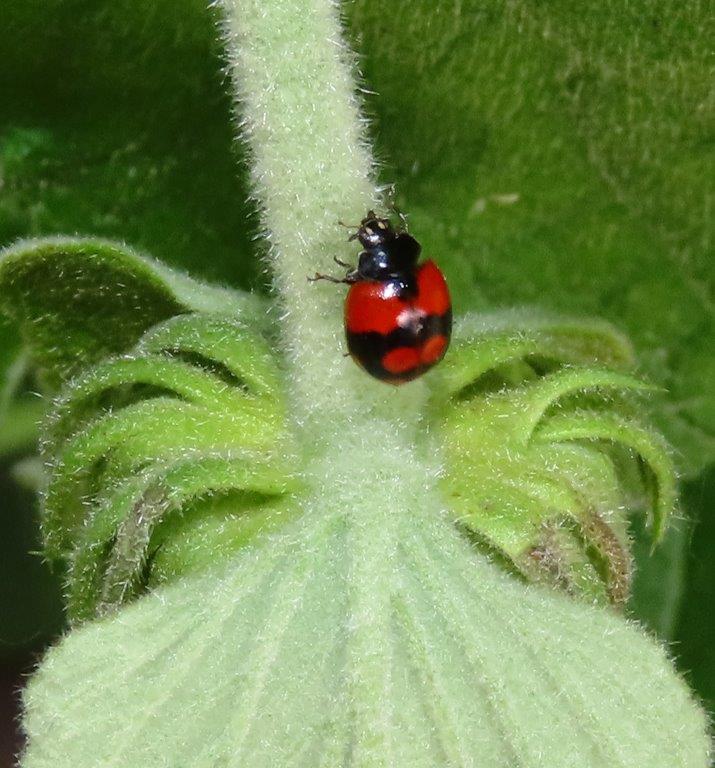
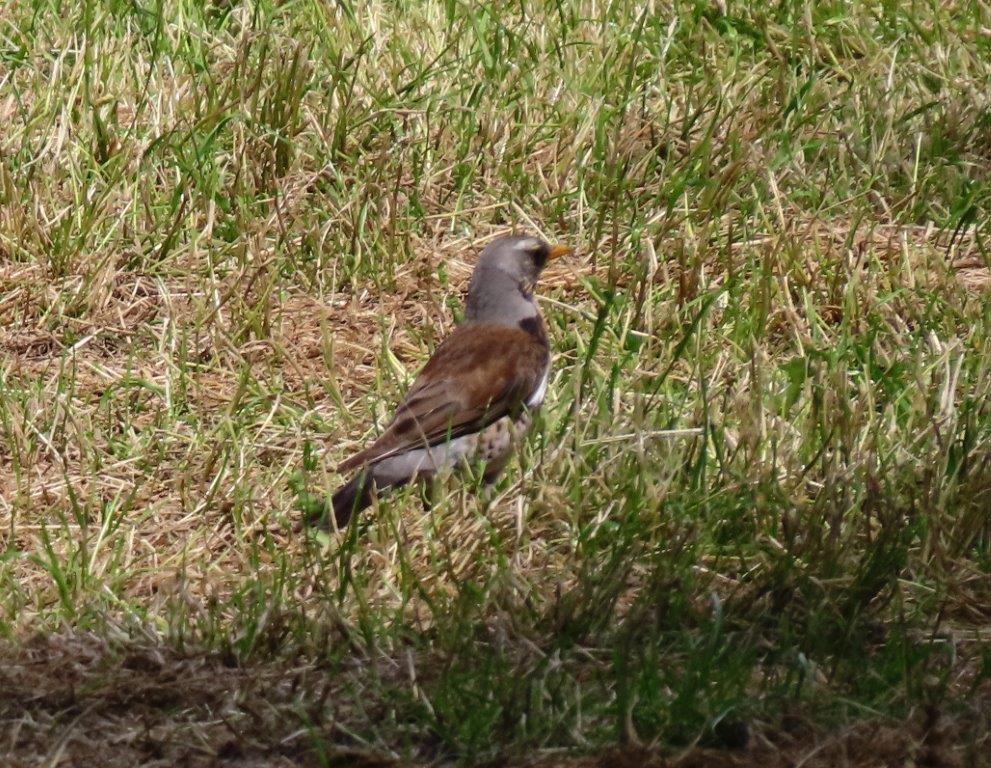
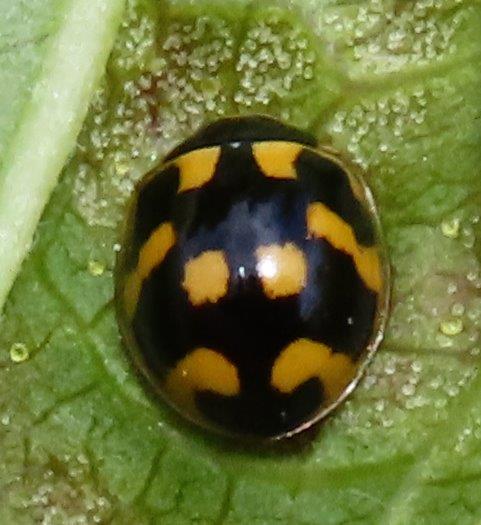
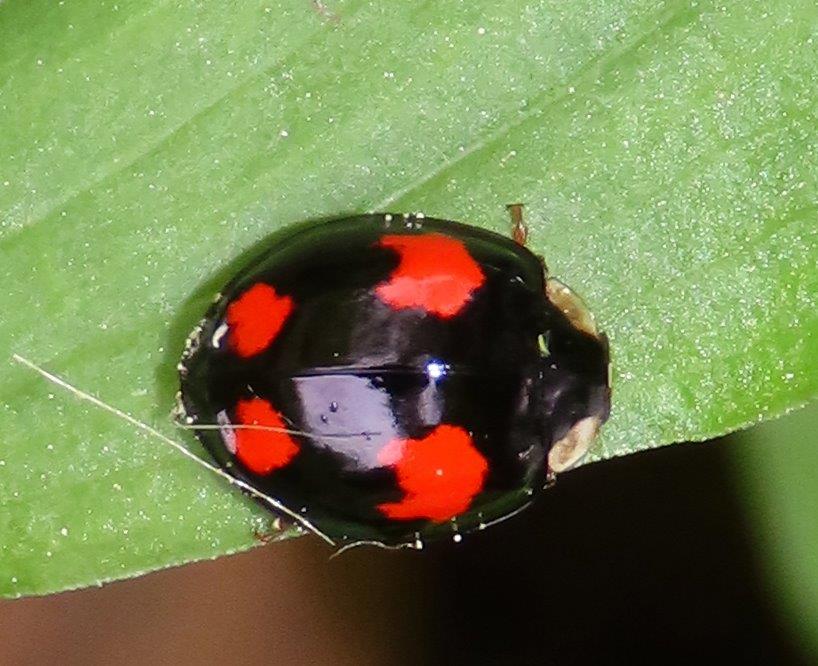
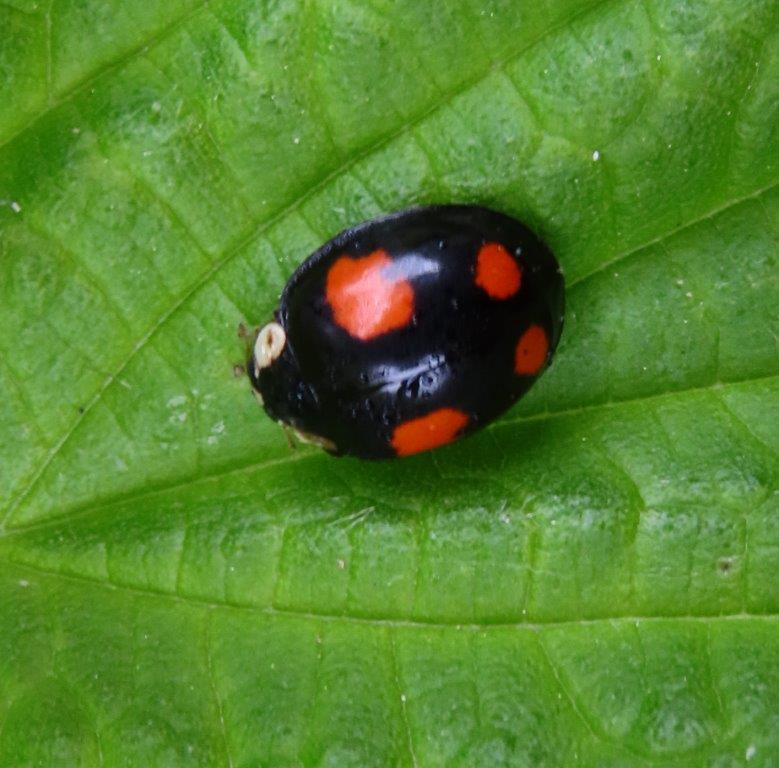
Of particular interest were a ladybird Oenopia conglobata , which we have never seen before but is considered as a possible future colonist of the UK, and families of Fieldfares hopping around, something we see only in winter…

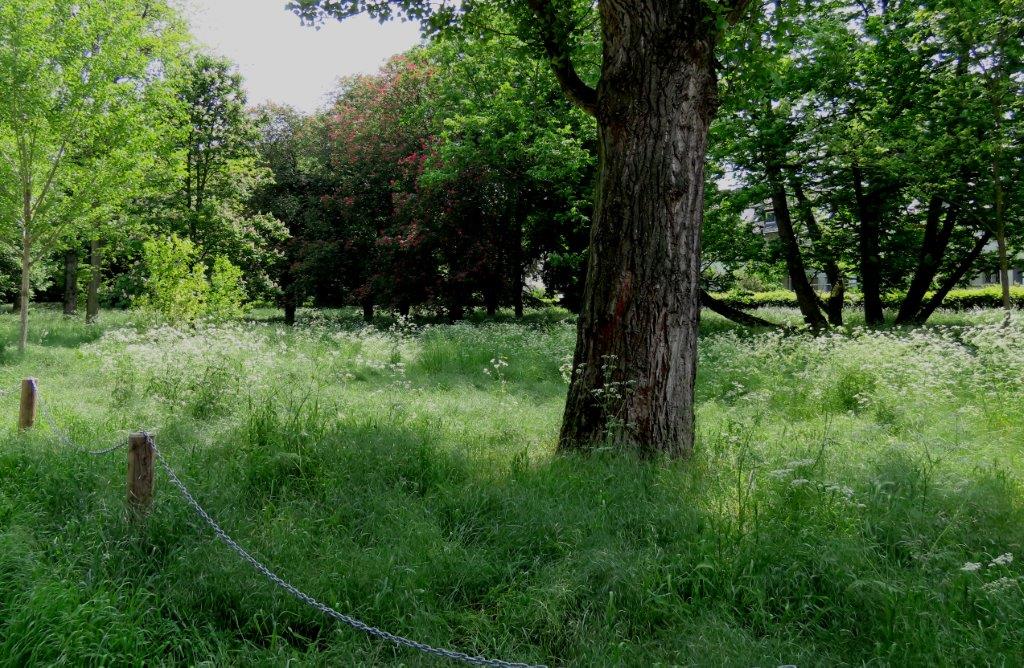
… and as seemingly everywhere in both Belgium and Germany, large tracts of recreational grass turned over to nature. What’s more, signposted accordingly!

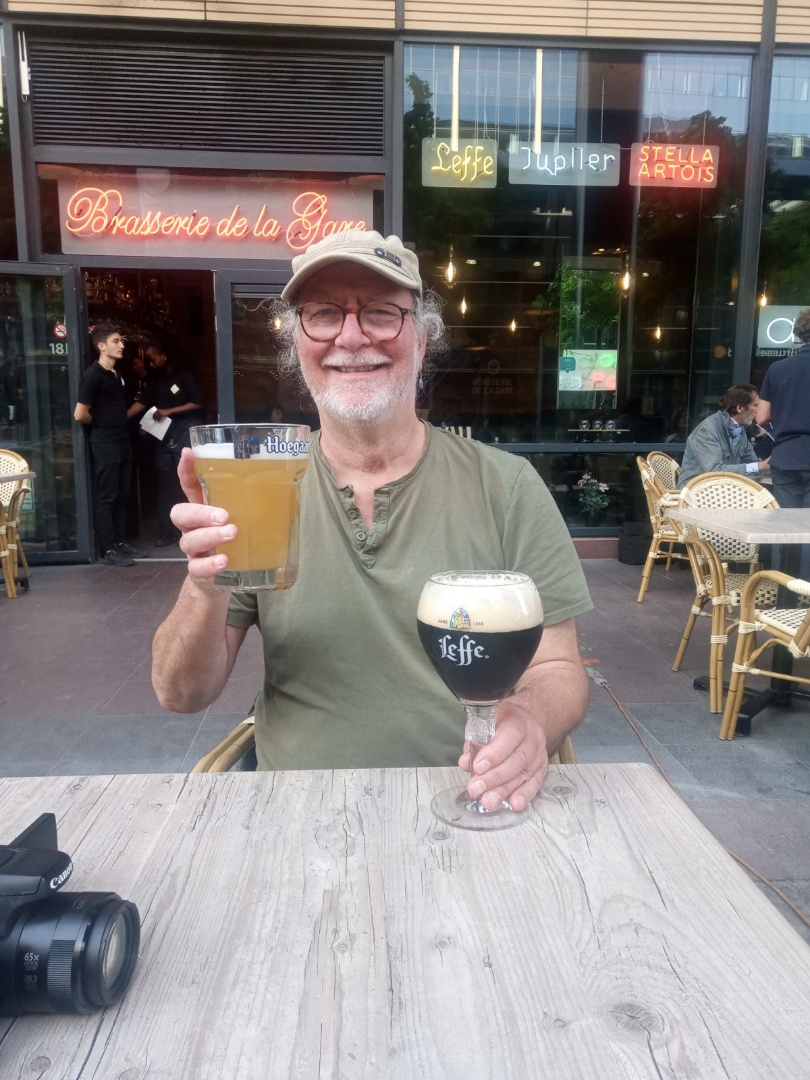
And so it was back into Brussels, with a clear hour to get in a last Belgian beer in our favourite bar before the Eurostar home!
Bavaria by train: Regensburg and area

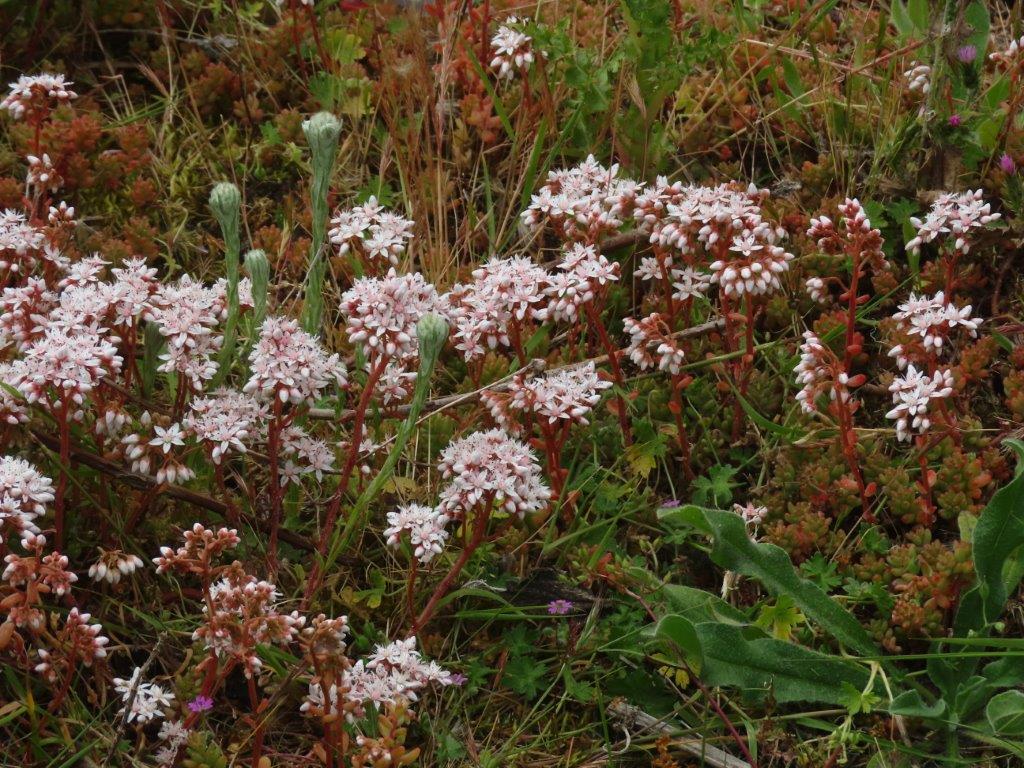
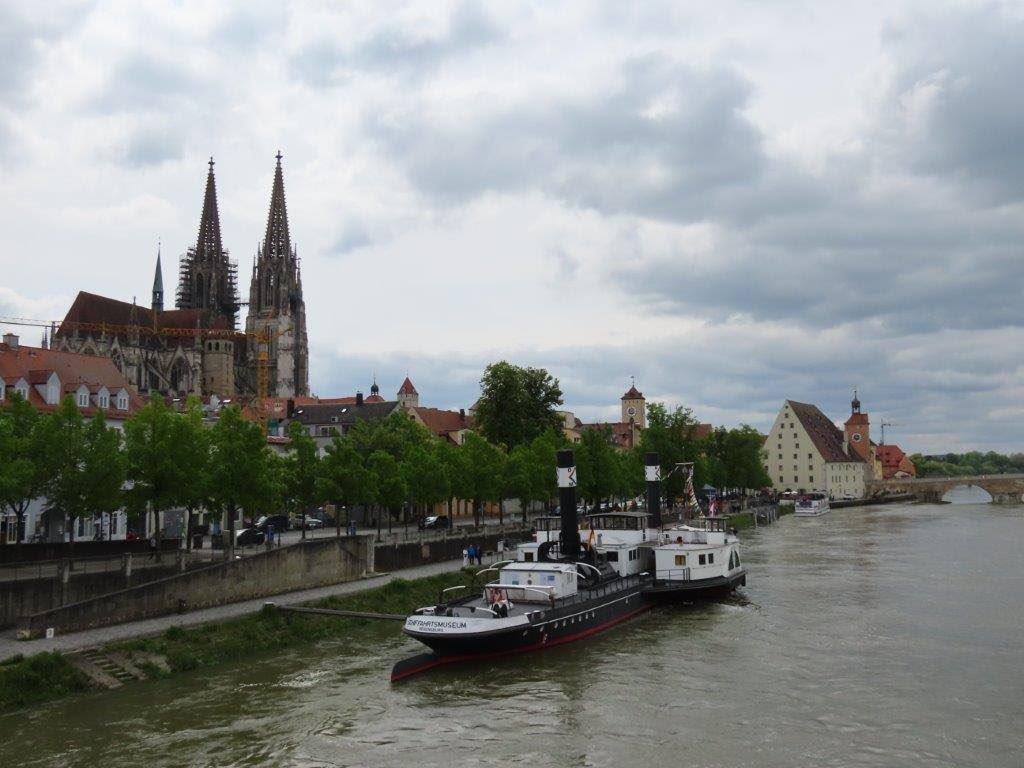
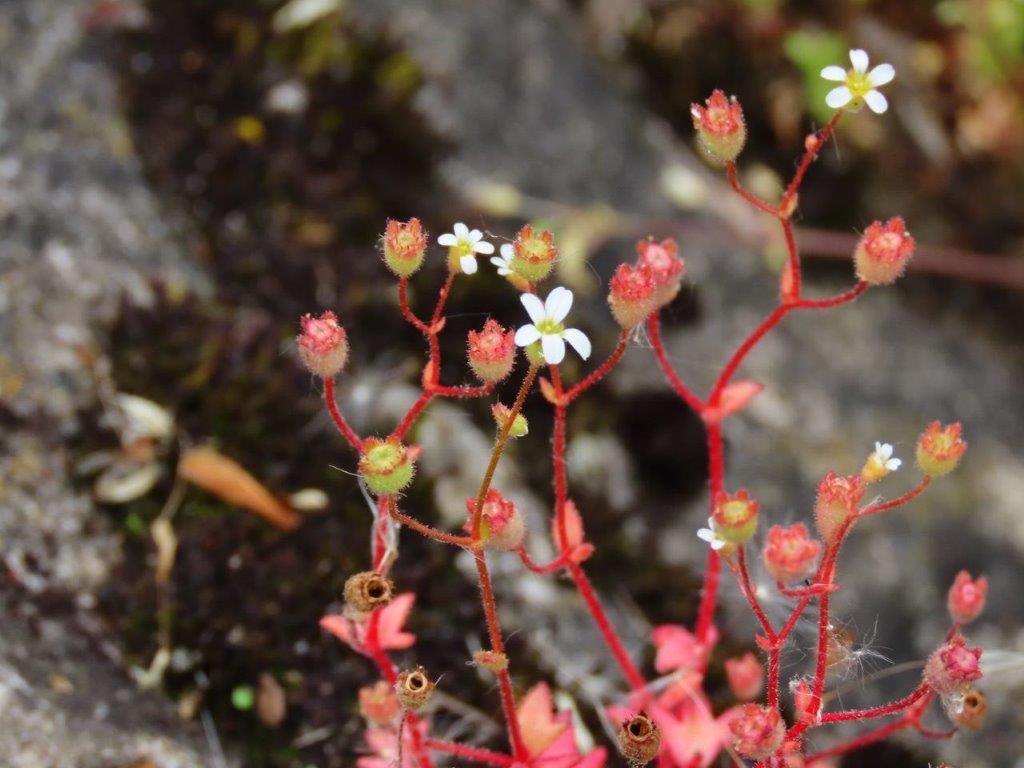
The filling in our sandwich holiday was spent in and around Regensburg, a small city we have always loved, sitting at the northernmost reach of the Danube, here some 100m wide, its reinforced banks covered in Rue-leaved Saxifrage.

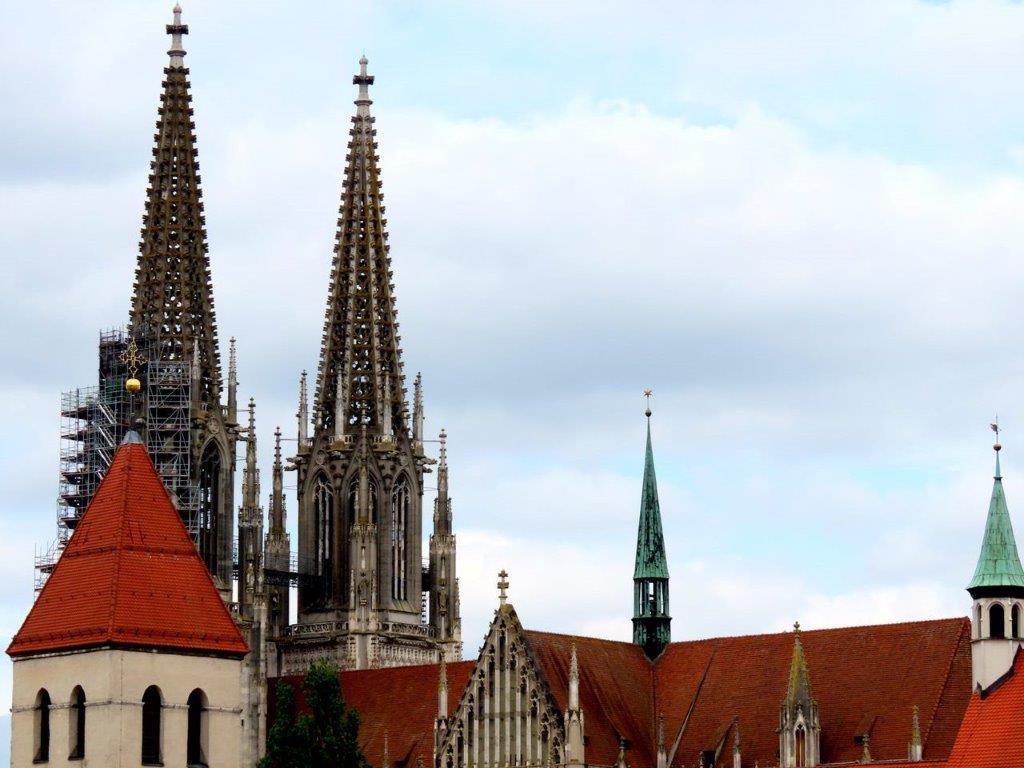
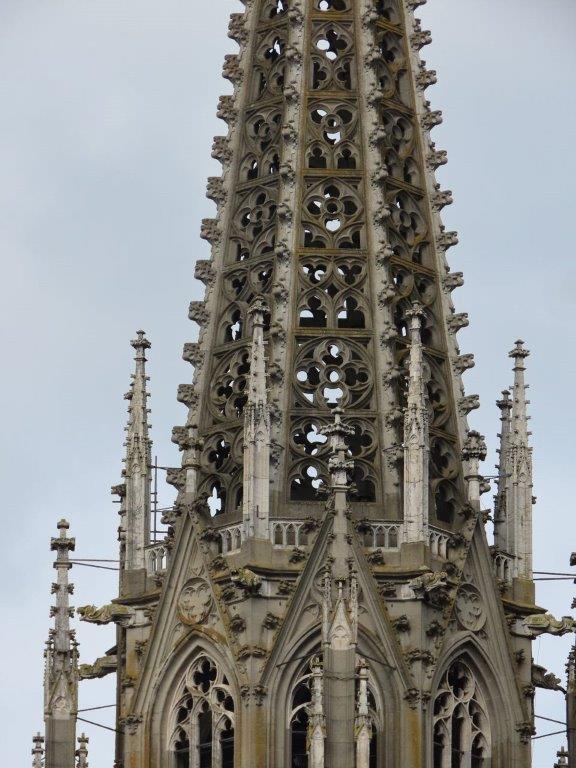
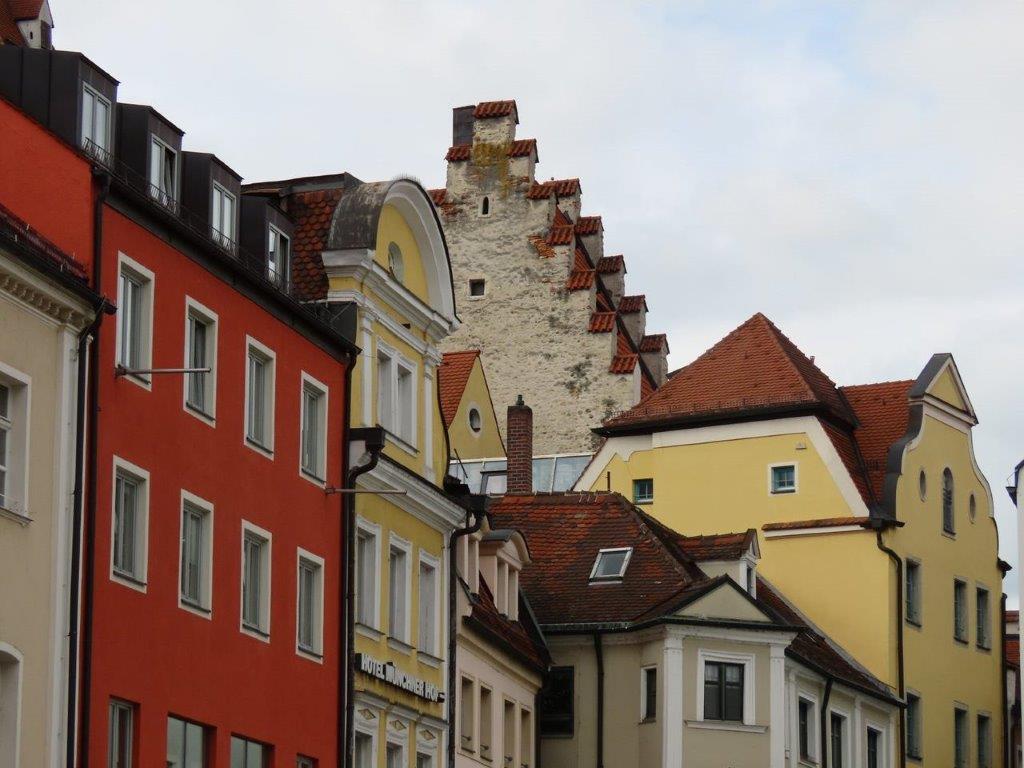
A World Heritage Site by virtue of its historic buildings, not reconstructed as it was little-bombed during the war, the architecture is very attractive: wherever you are, there are the distinctive open-lattice twin steeples of the cathedral.

Regensburg is also home to one of the very best botanic gardens I have ever seen. In its 4.5 hectares it has taxonomic beds, habitat beds, geographic beds, themed beds and greenhouses, so many interesting plants that it draws me back time and again. It is also impeccably labelled – nowhere else have I failed to find an error!

… and, as Spring turns into Summer, it is a super place to see a range of insects and other invertebrates, apart from butterflies, in common with the UK thus far this year.


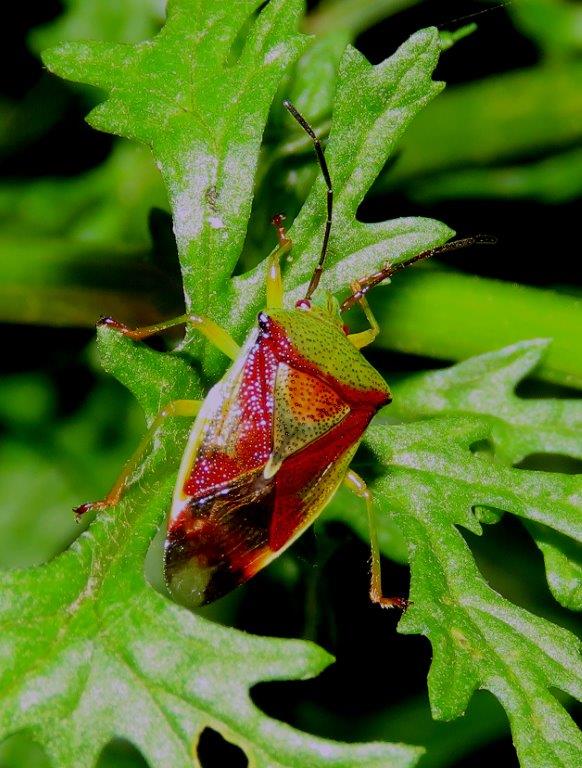
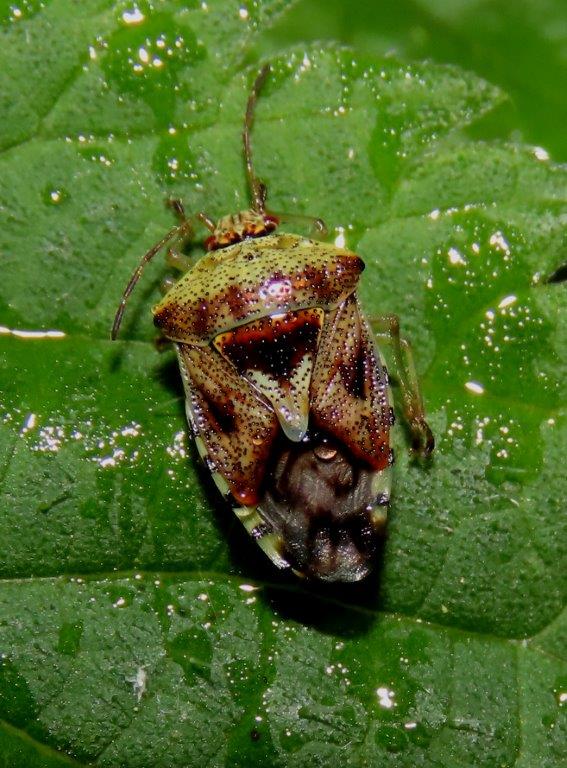
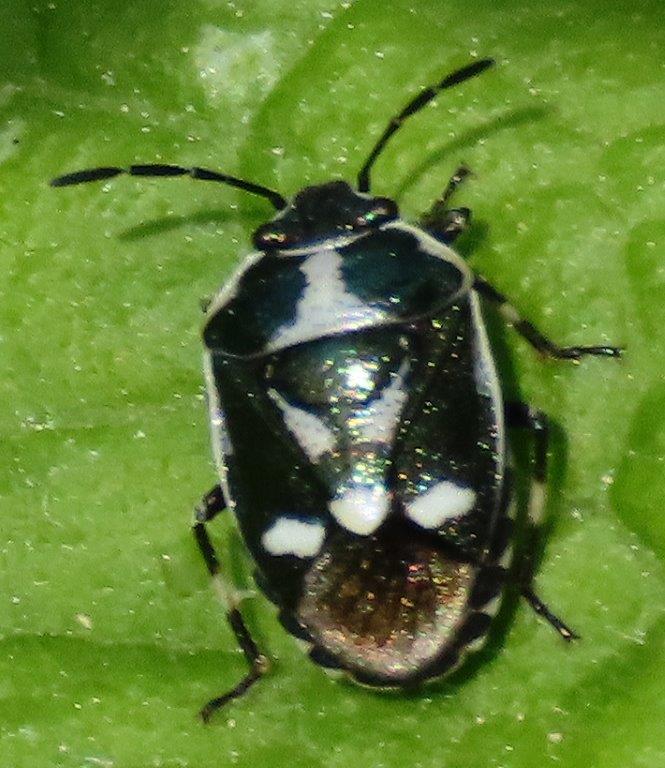
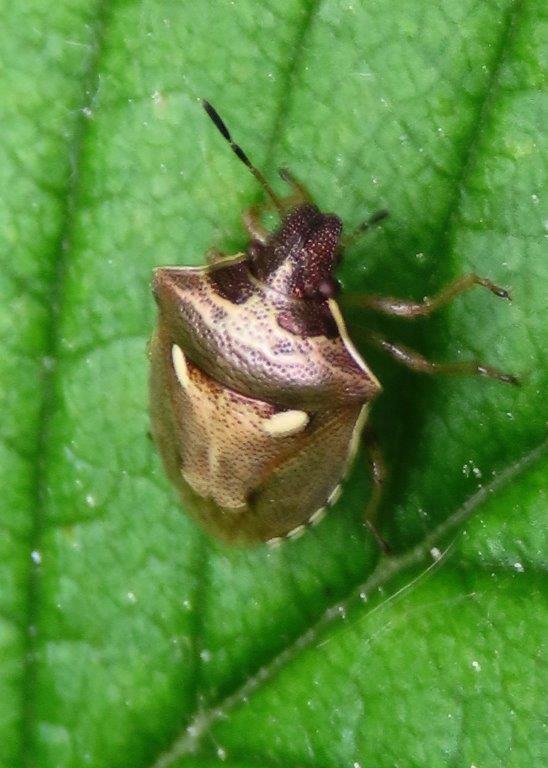
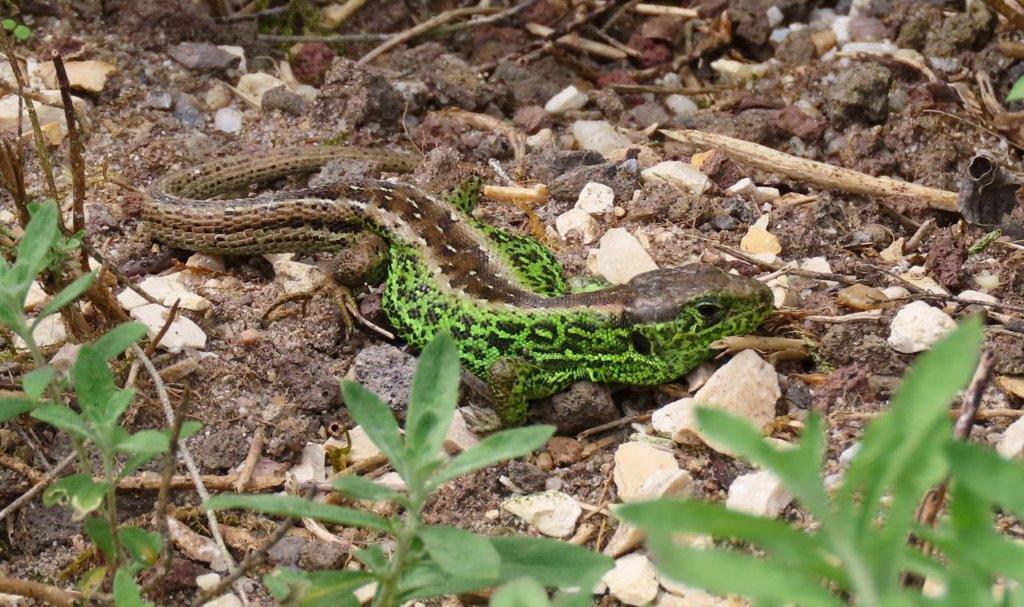
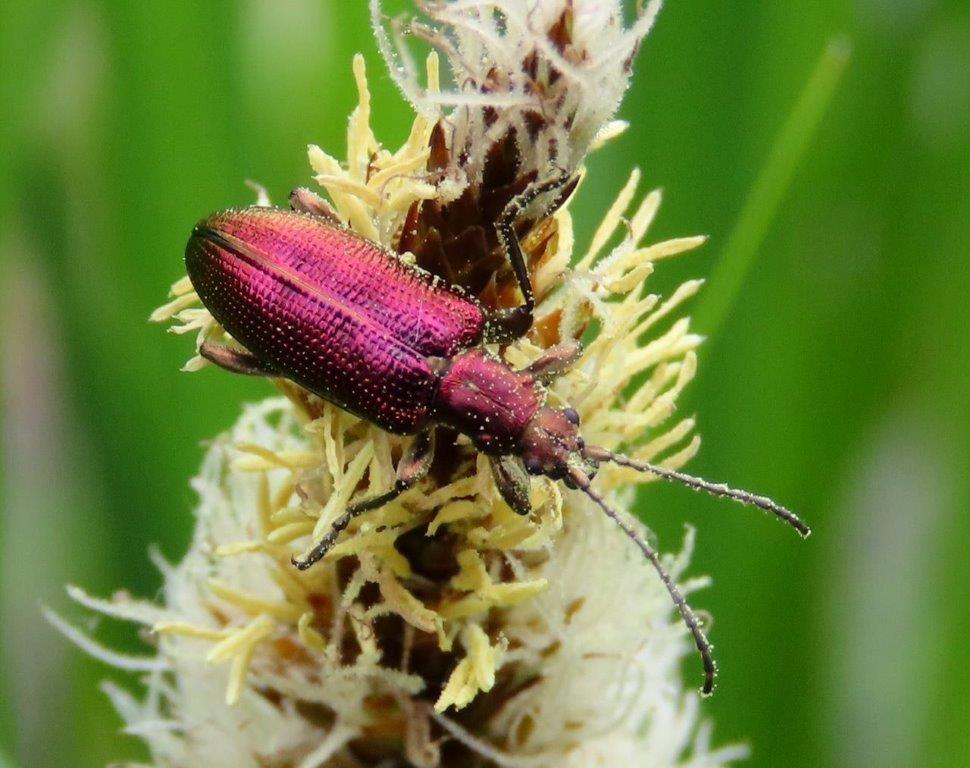
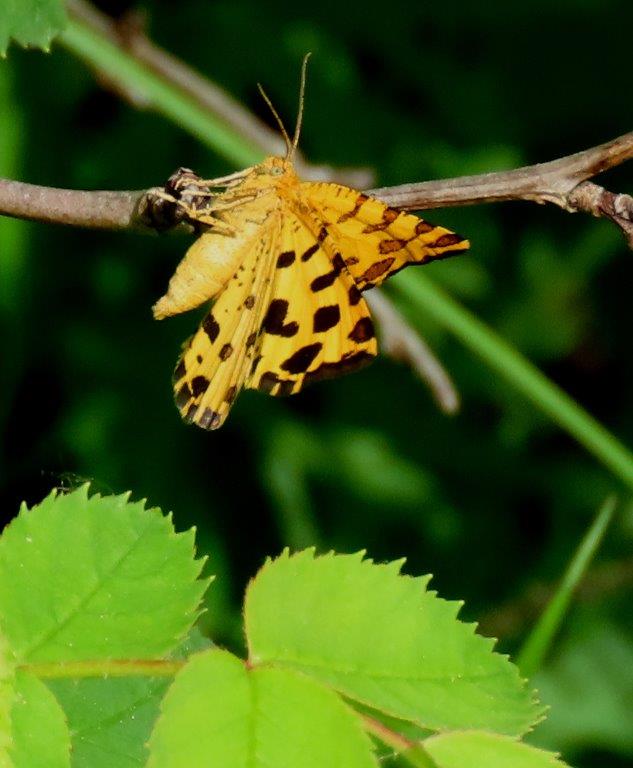
Two particular insects stood out for us: first, the chafer Valgus hemipterus, which is a southern European species, but one which seems to be on the brink of colonising London, and second, the New Forest Shield-bug, a rarity in the UK restricted to that area and the Isle of Wight. Perhaps it is no coincidence that near to the latter we also found a basking Sand Lizard, a species whose UK heartland is also the New Forest and surrounding heaths.

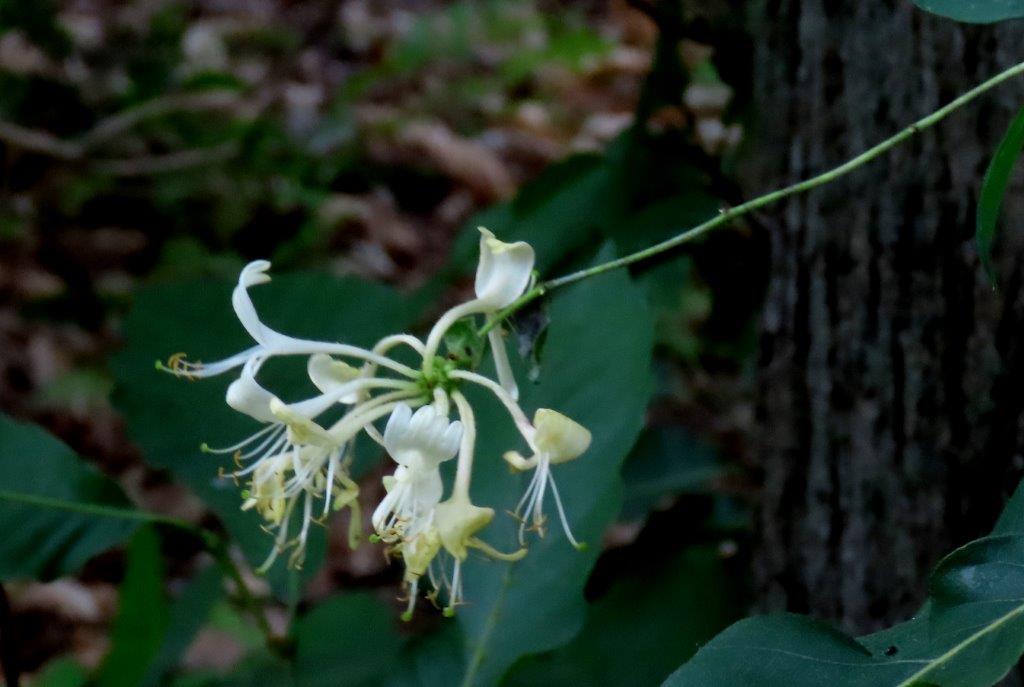
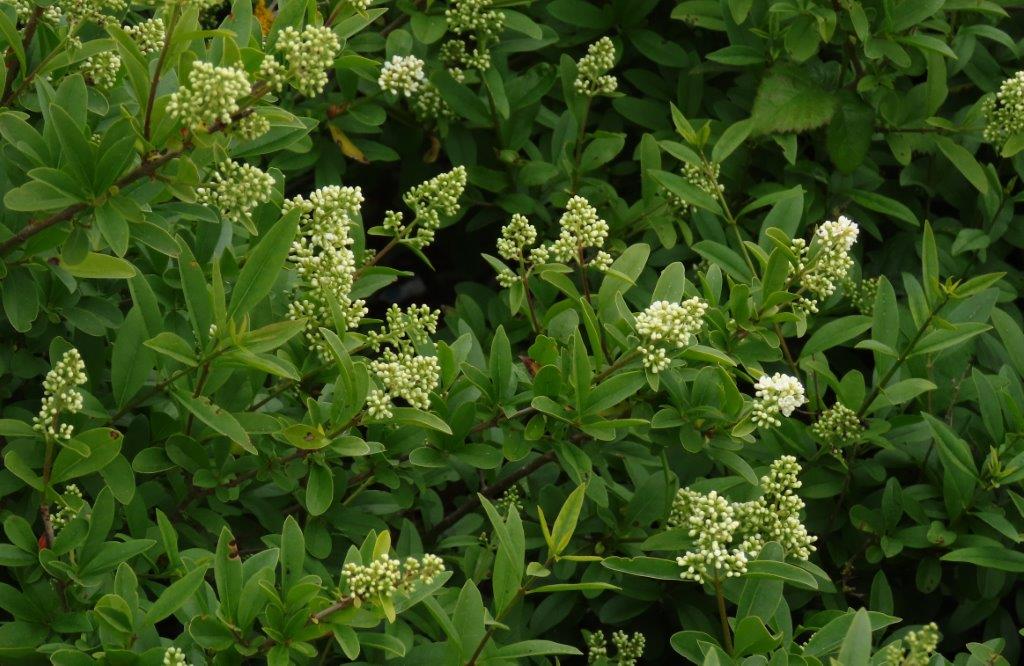
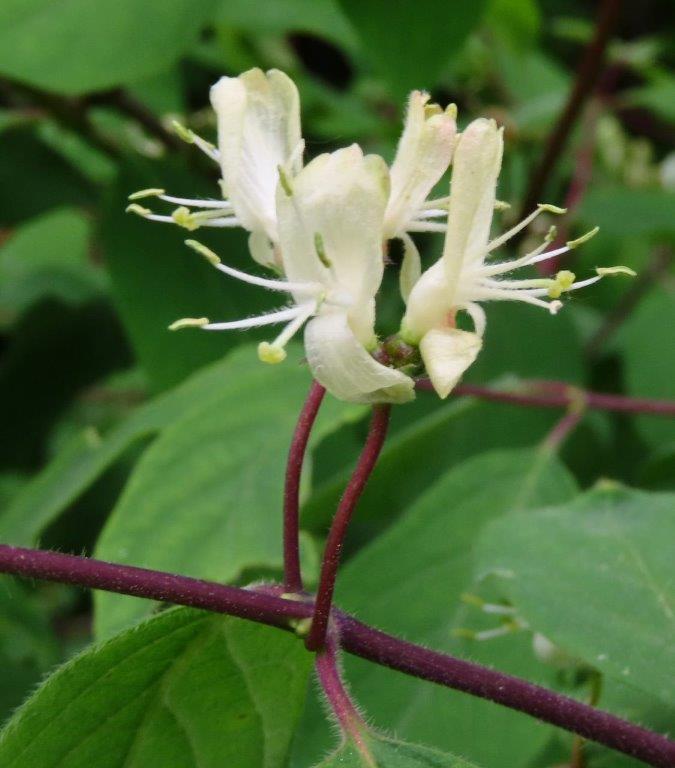
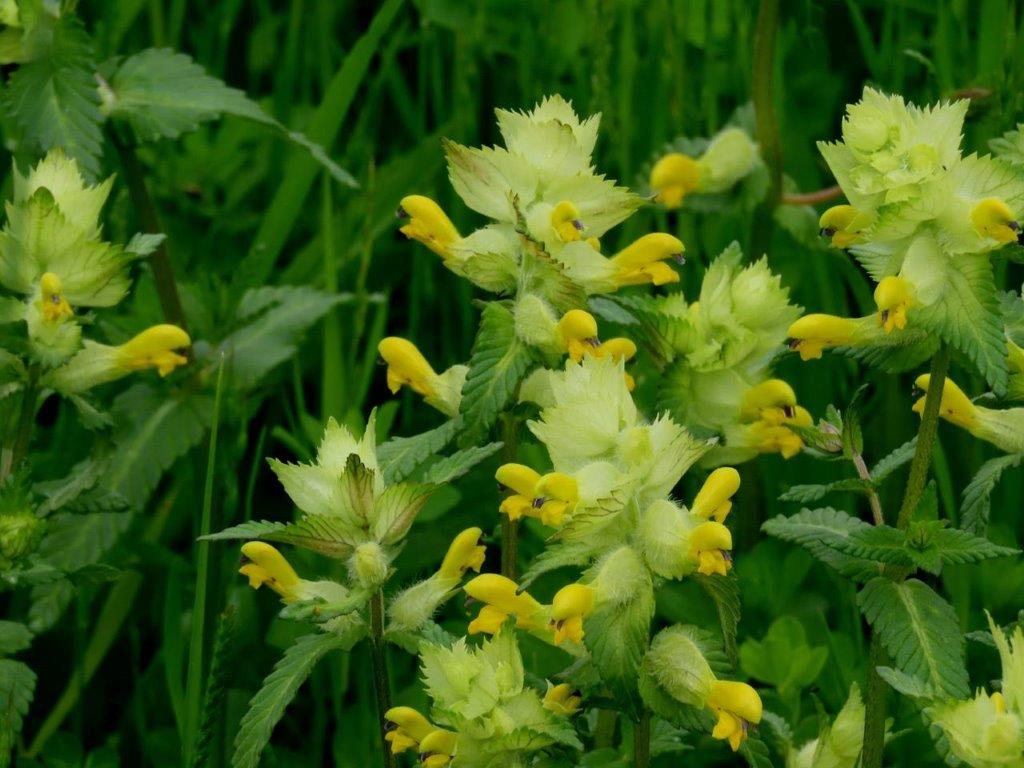
Away from the historic centre of the city, new developments seem to have been well provided with, or integrated into, nature, with hedges of Fly Honeysuckle and hay meadows with Greater Yellow-rattle, among many other interesting species.

‘No Mow May’, as in Belgium, seems to be taking off as an idea (whether for the ecology or for saving money really isn’t important) but in the small village in which we stayed, there seems to be a clear majority in favour of ‘(over)tidy’. Fortunately my sister is not one of those, and her garden was simply teeming with wildlife.

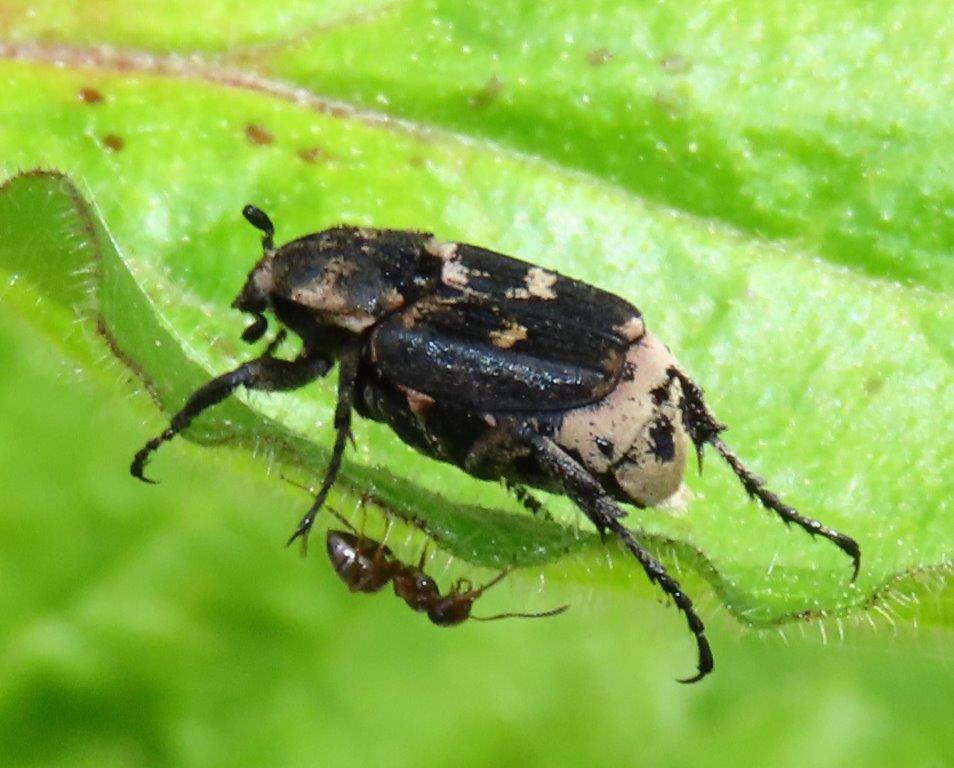
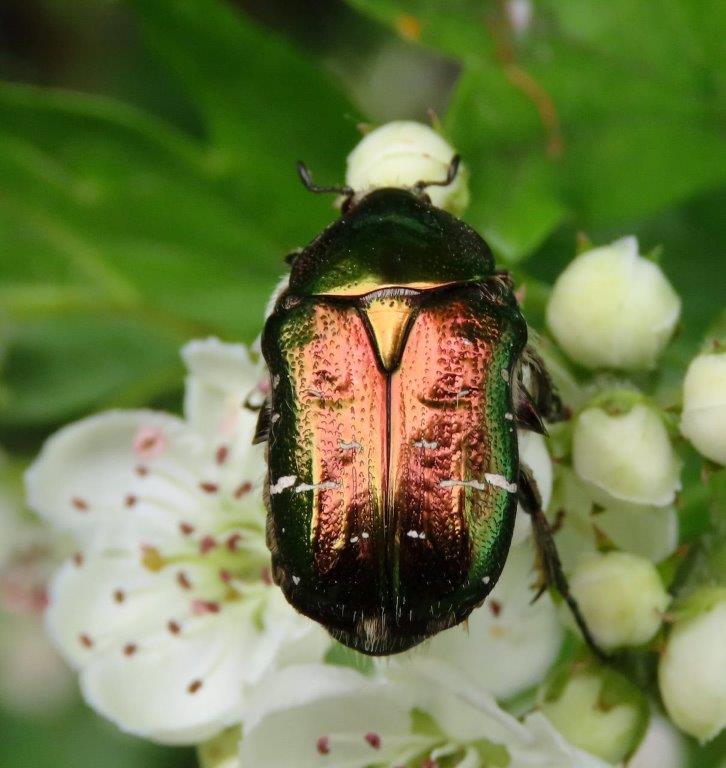
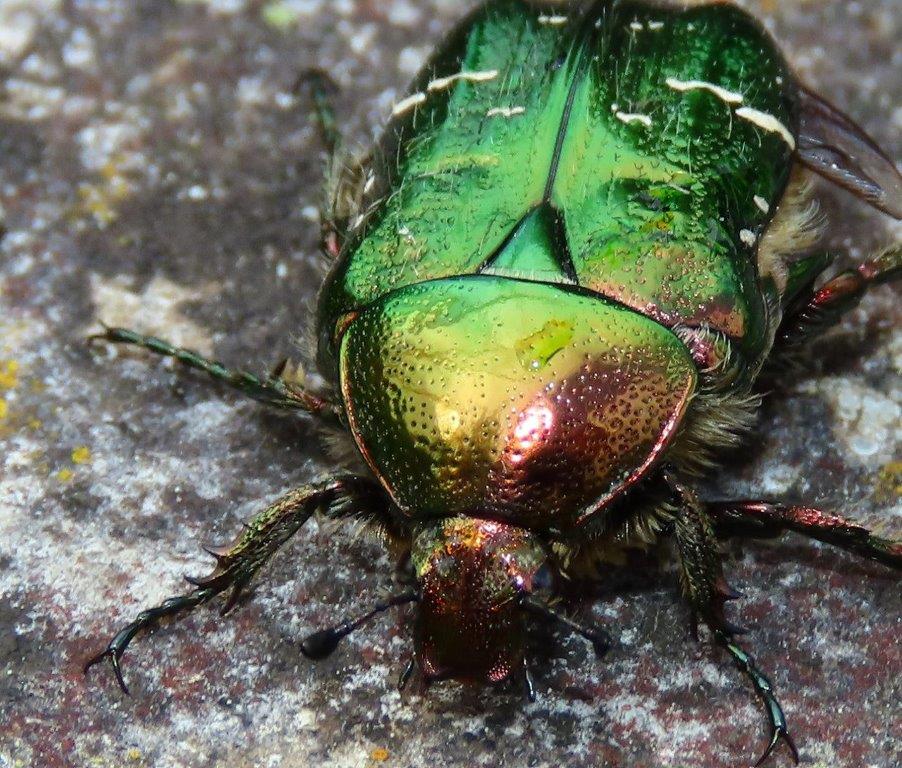
The Drumming Spider (trying hard to beat a rhythm on a chair) and Rose Chafers were two of the highlights, photos of the latter being a near-casualty when it plunged into the pond, until rescued by Jude. They show two poses, and how the colour can change markedly with the angle of the light.

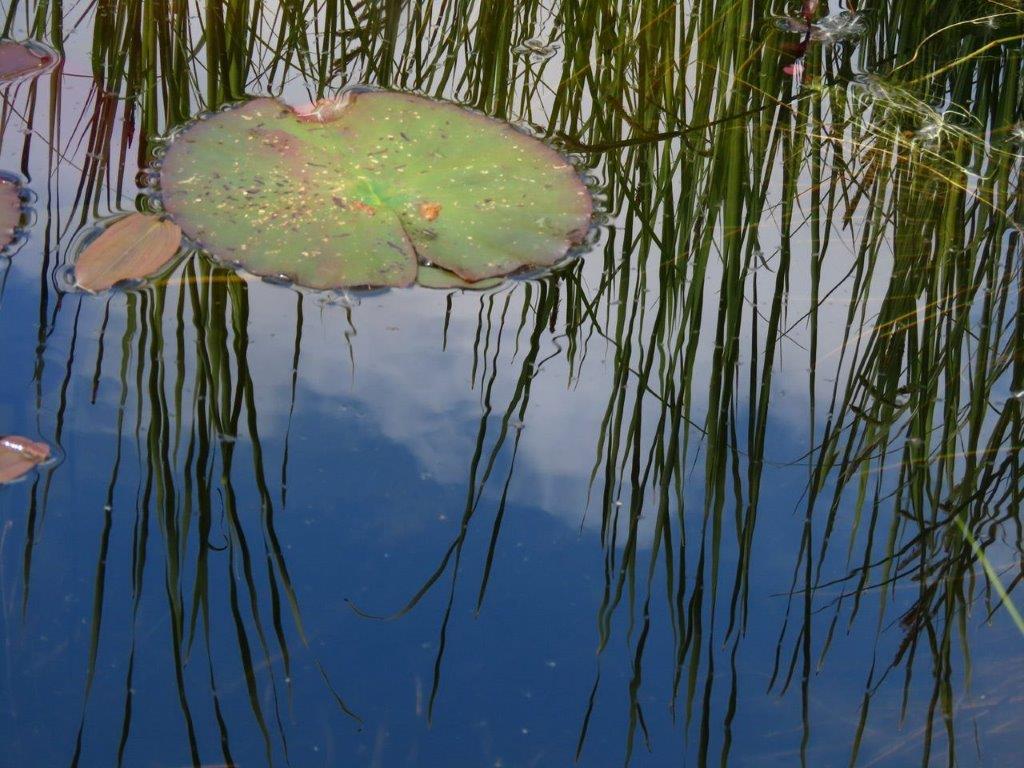
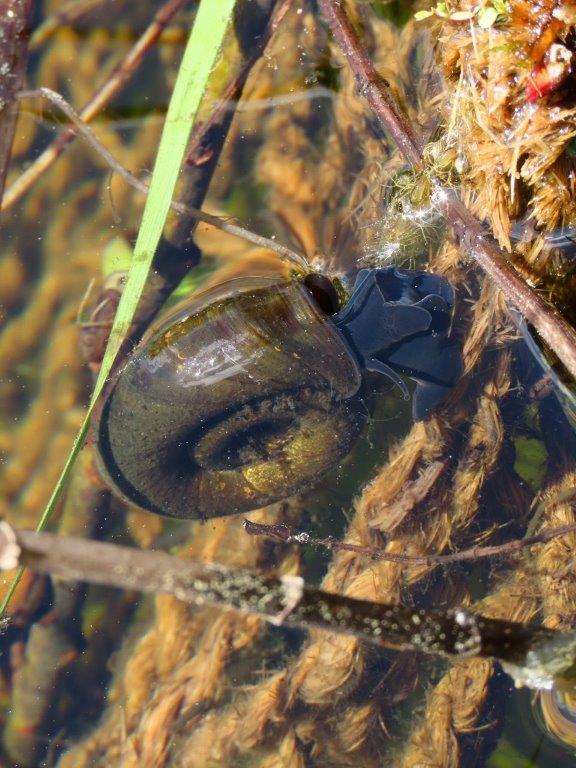
The pond is an absolute centrepiece to this garden, with all manner of life living in, on and around it, including both Smooth and Alpine Newts which didn’t want to be photographed.

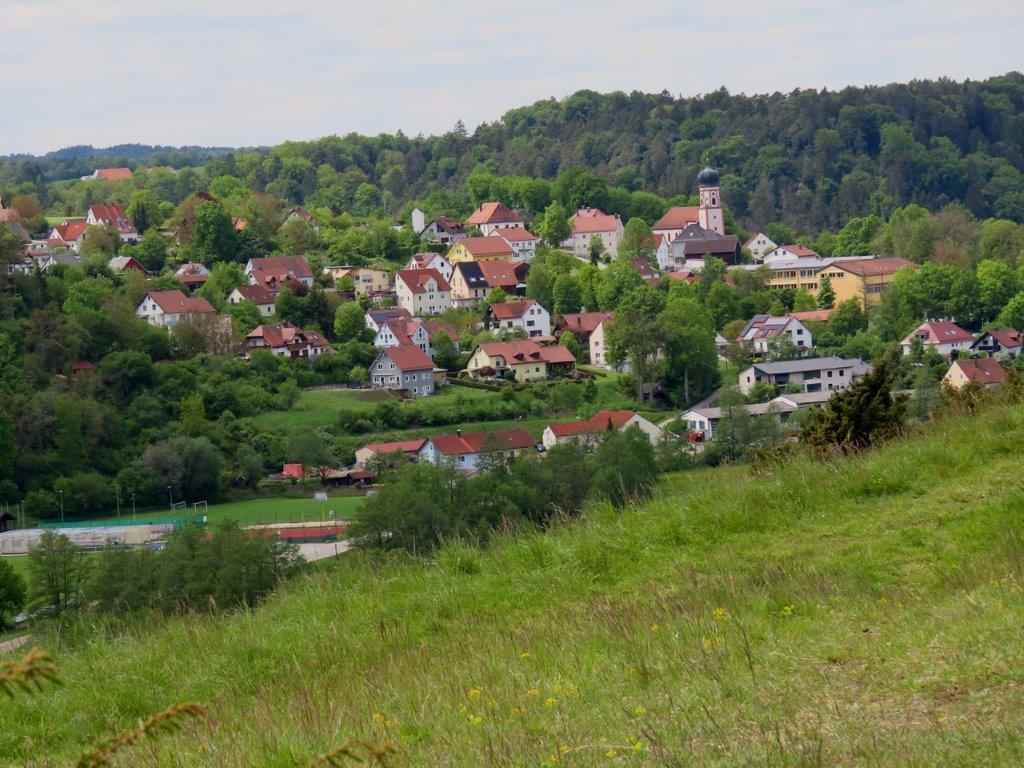
Walking around the village was a sheer delight, especially when the weather eventually warmed up …

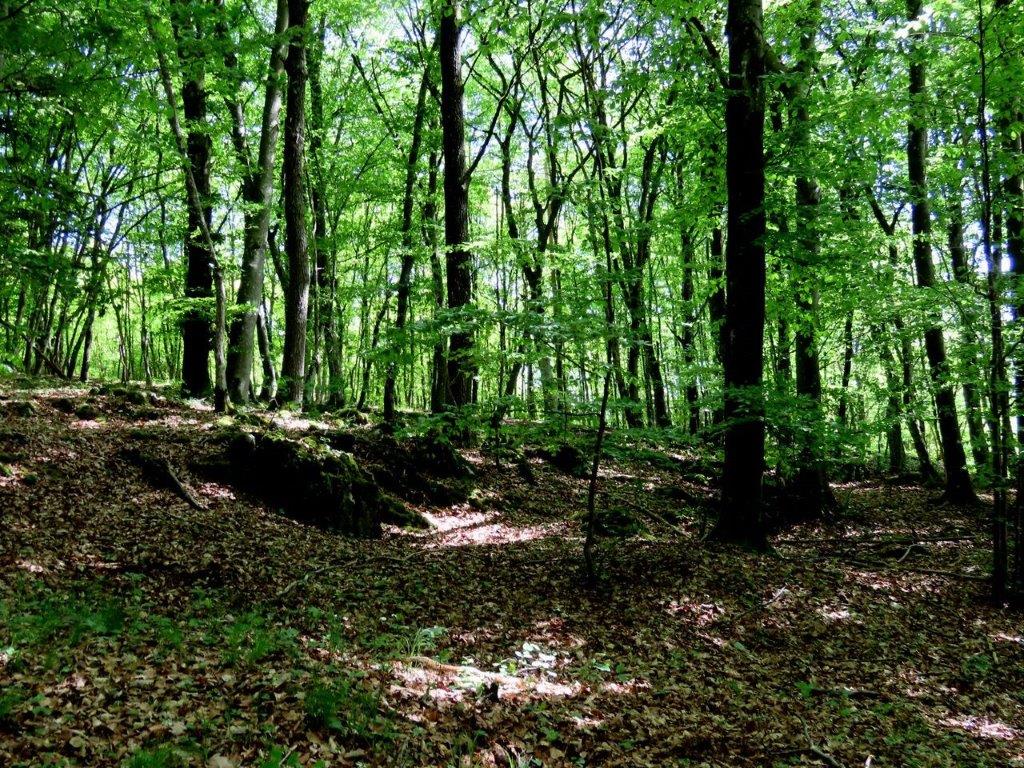
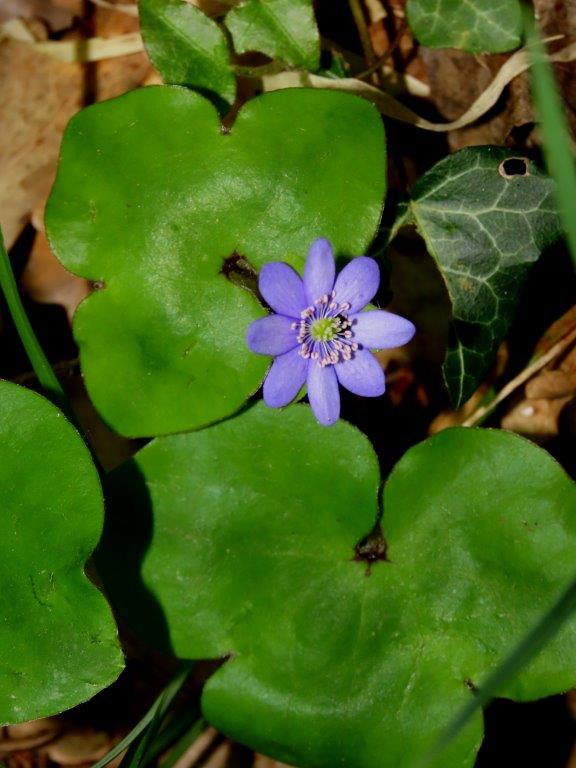
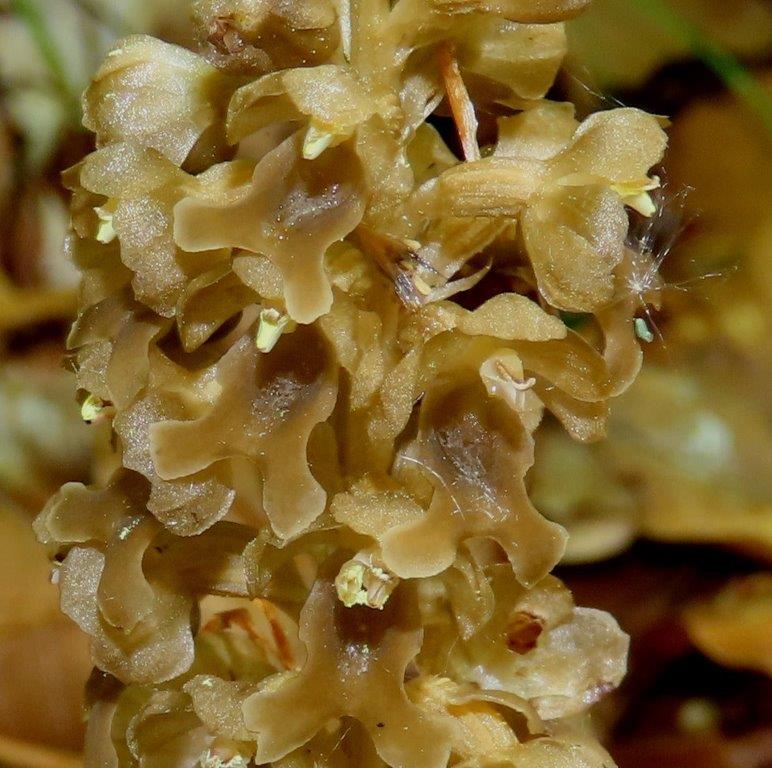
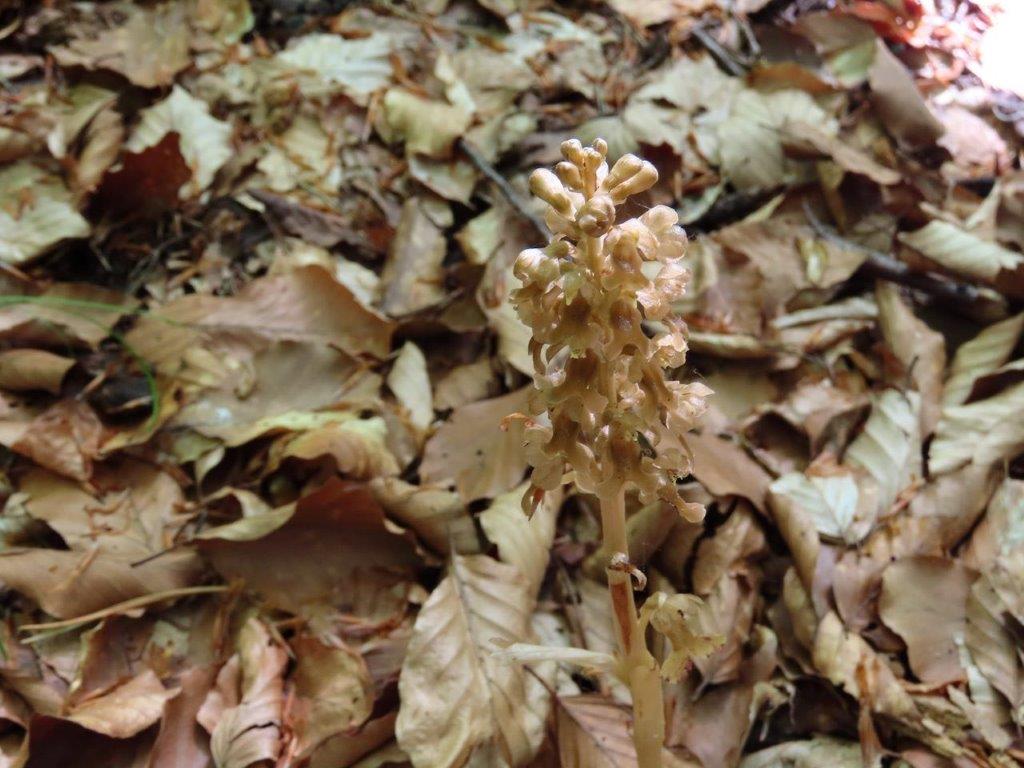
… while the surrounding Beech woods were home to Black Woodpeckers, Bird’s-nest Orchids and Hepatica…

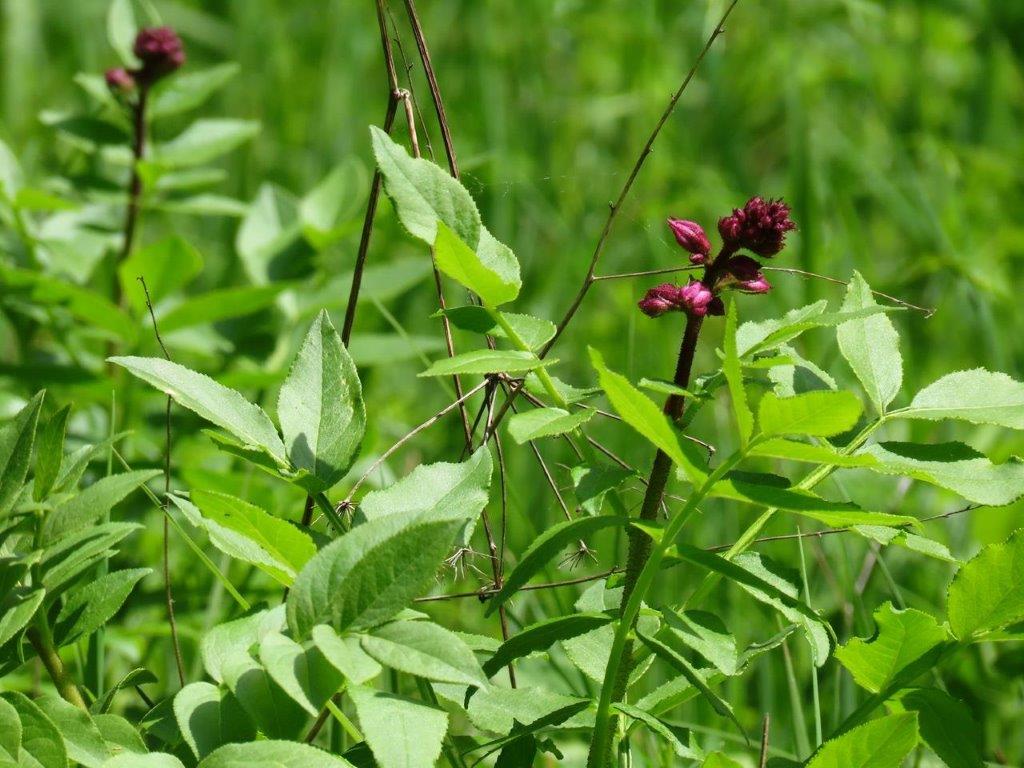
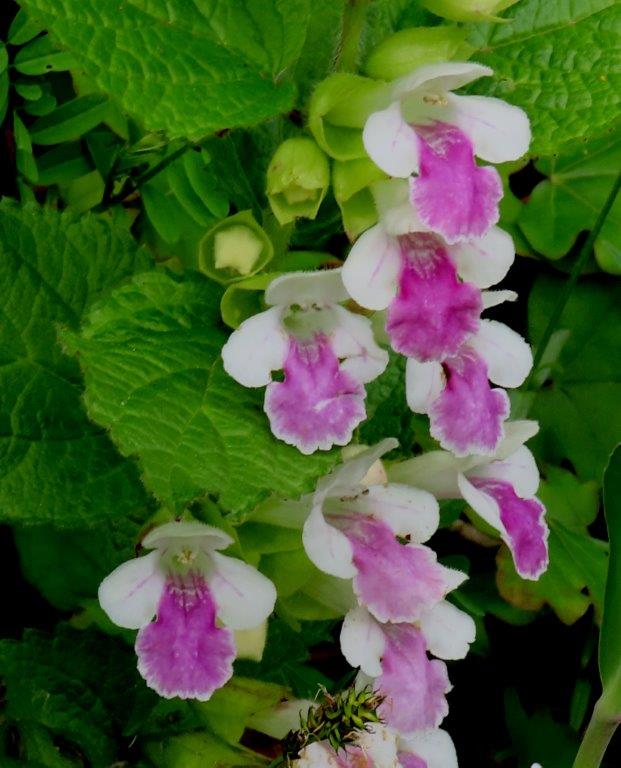
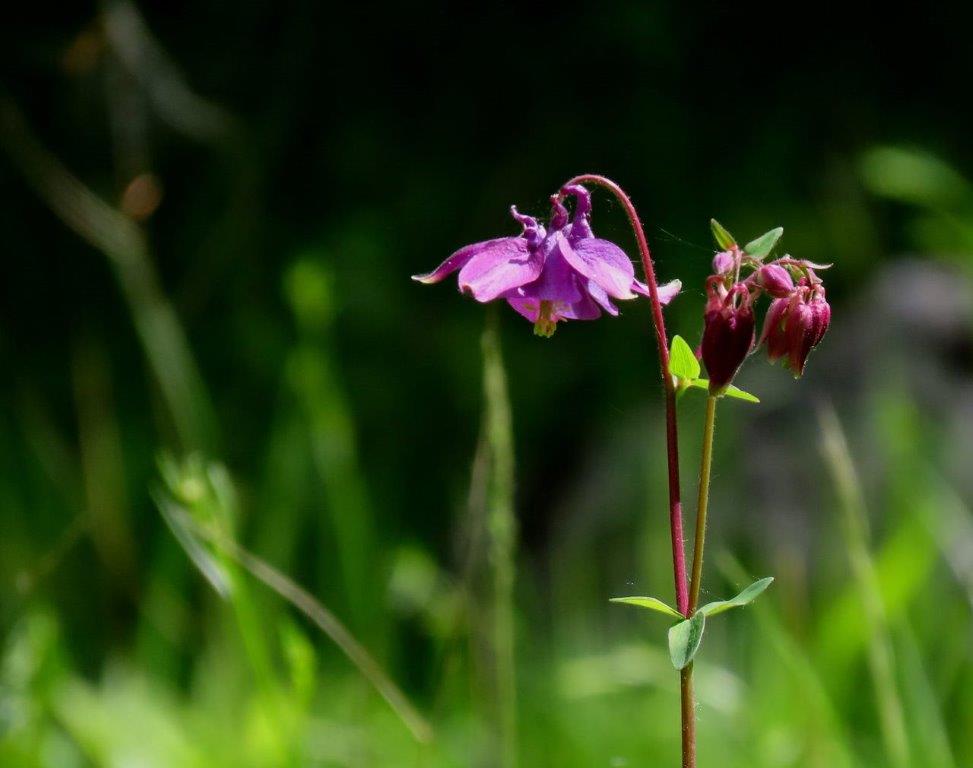
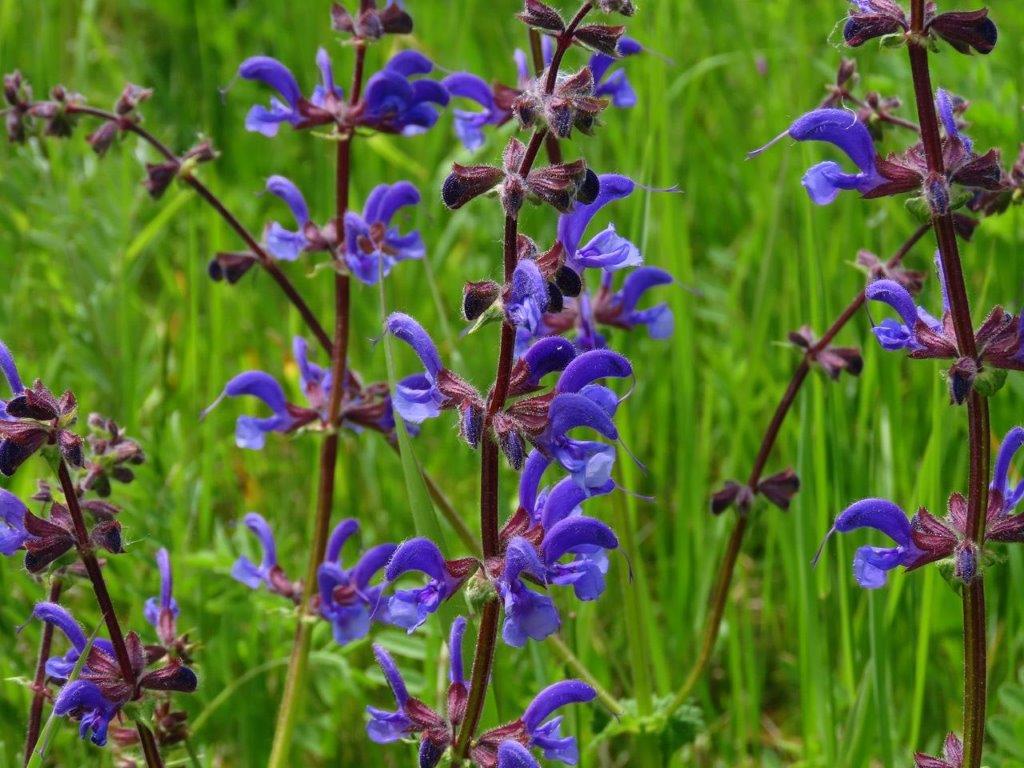
… with clearings home to Burning Bush, Bastard Balm and Columbine,  plus Orange Tips and a whole load of other insects.

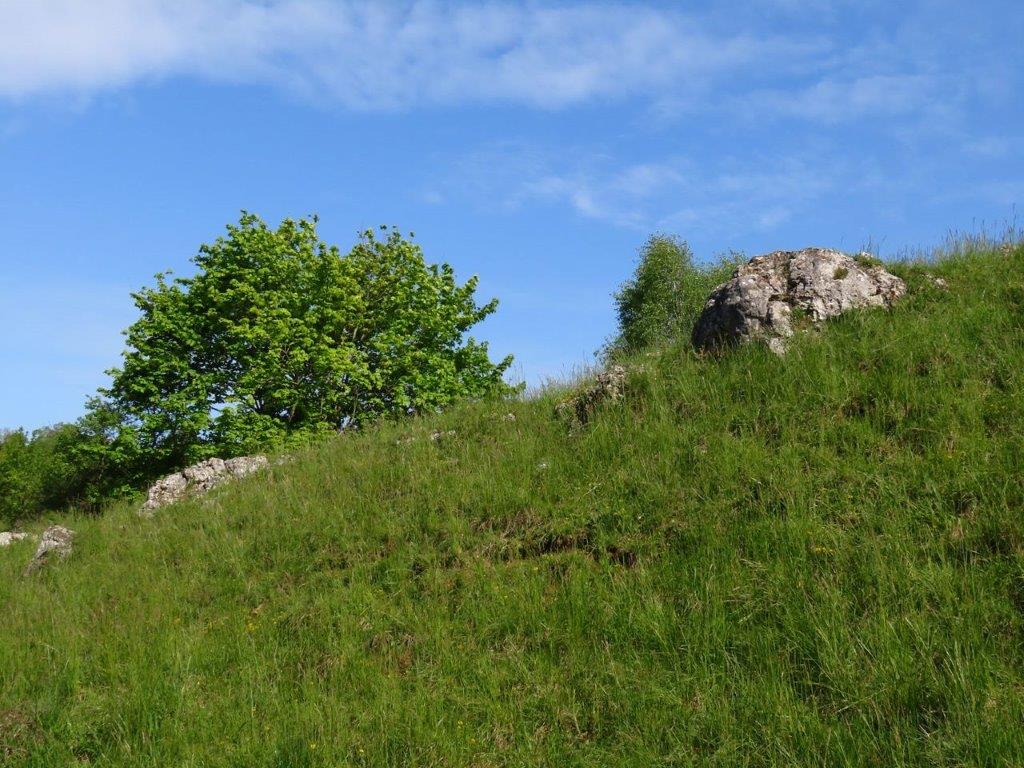
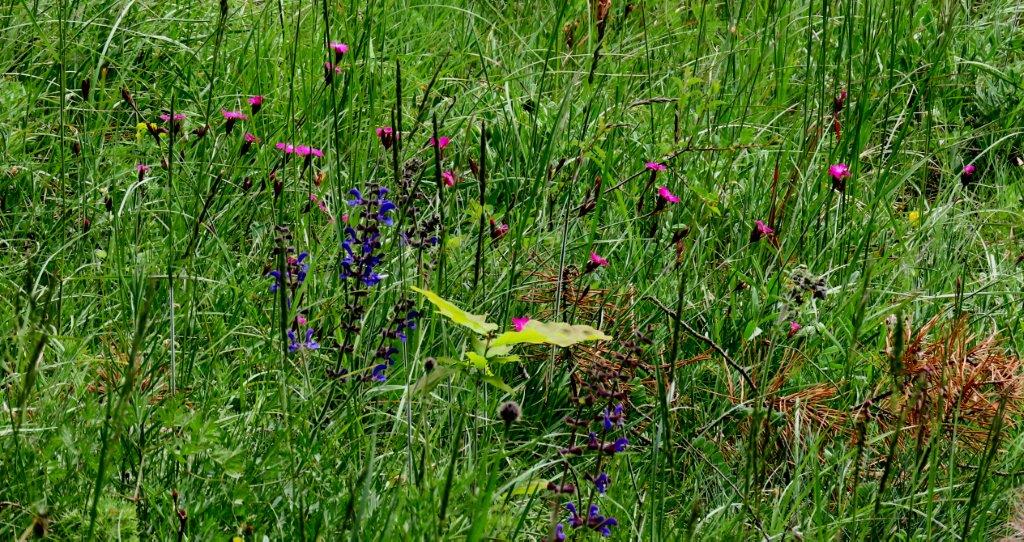
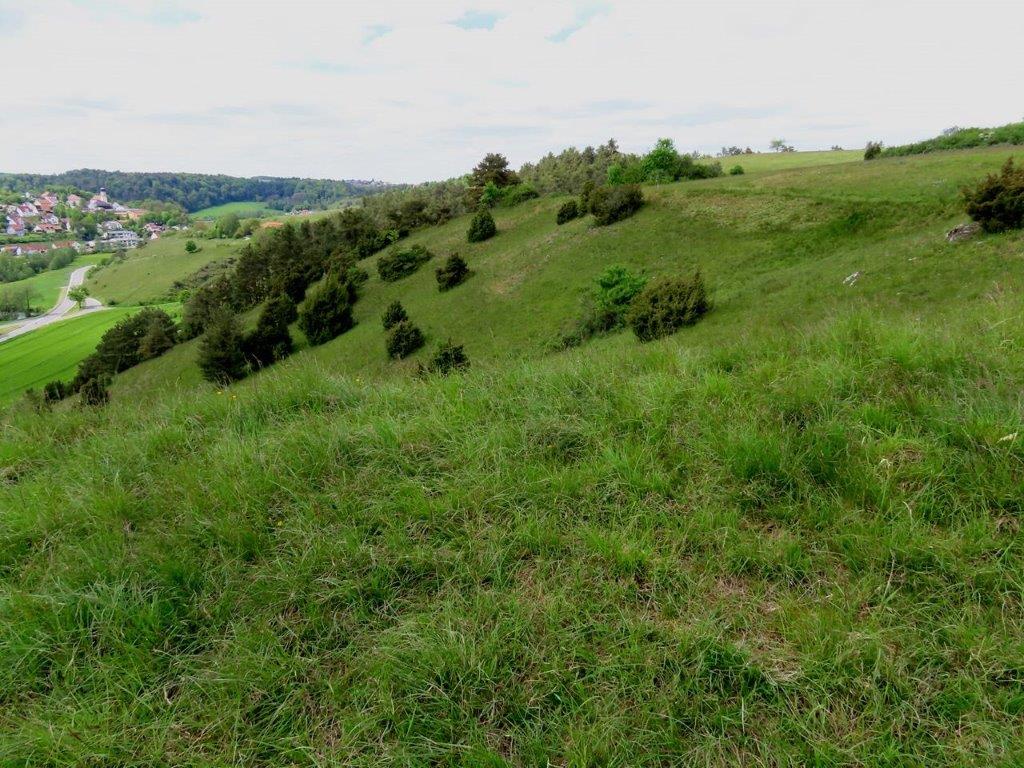
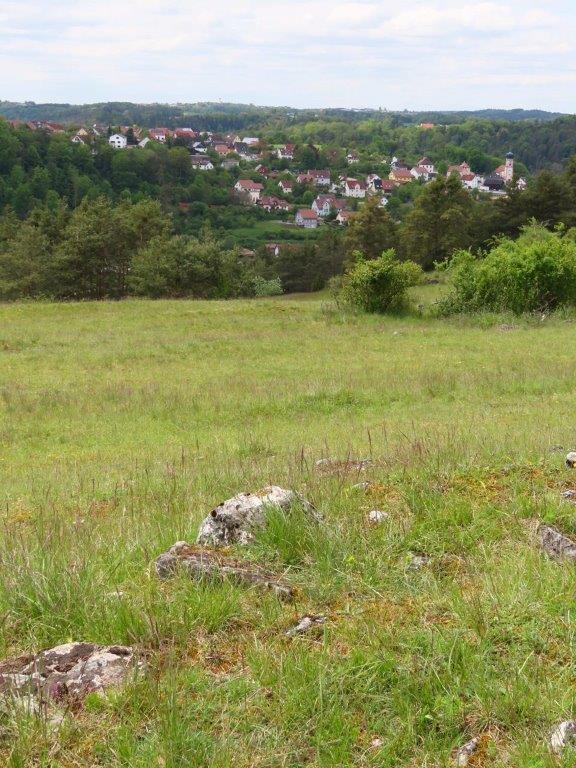
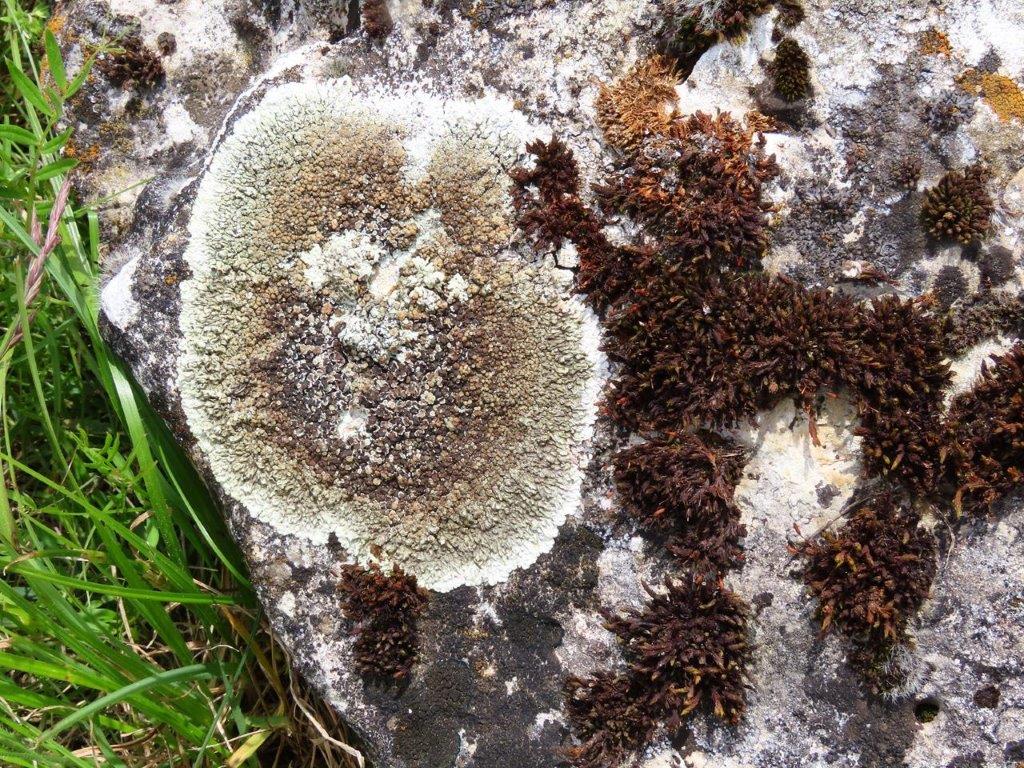
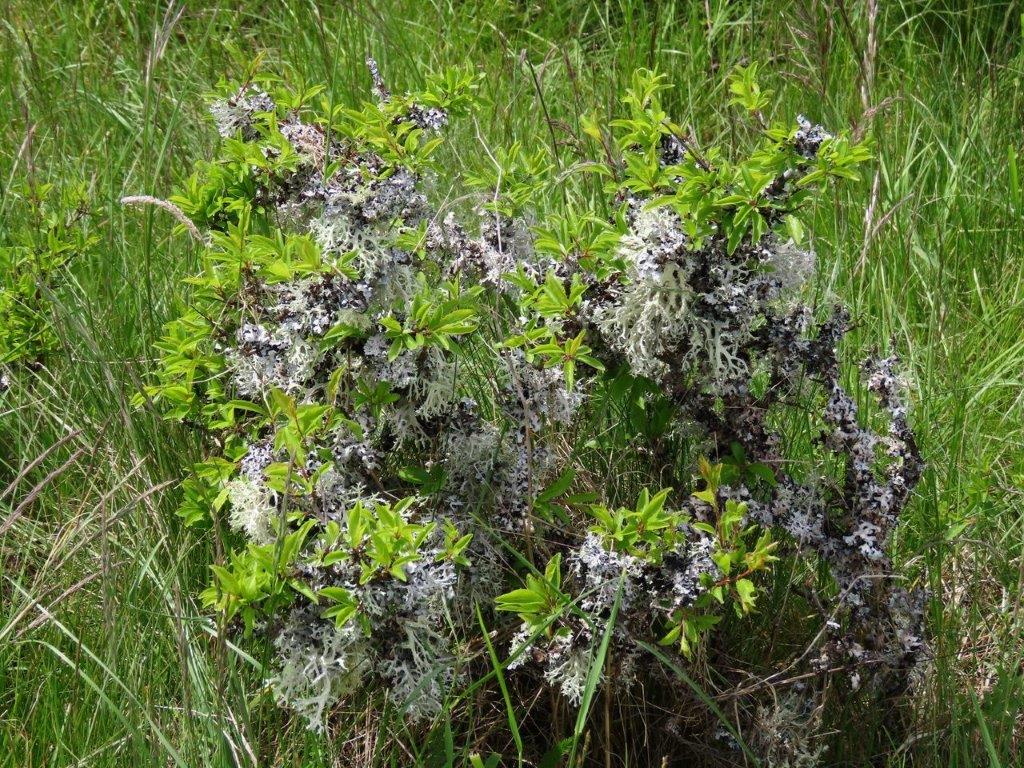
The whole region has limestone underfoot, and even in the village bounds there are fragments of species-rich limestone grassland, with a huge diversity of plants and invertebrates alike:

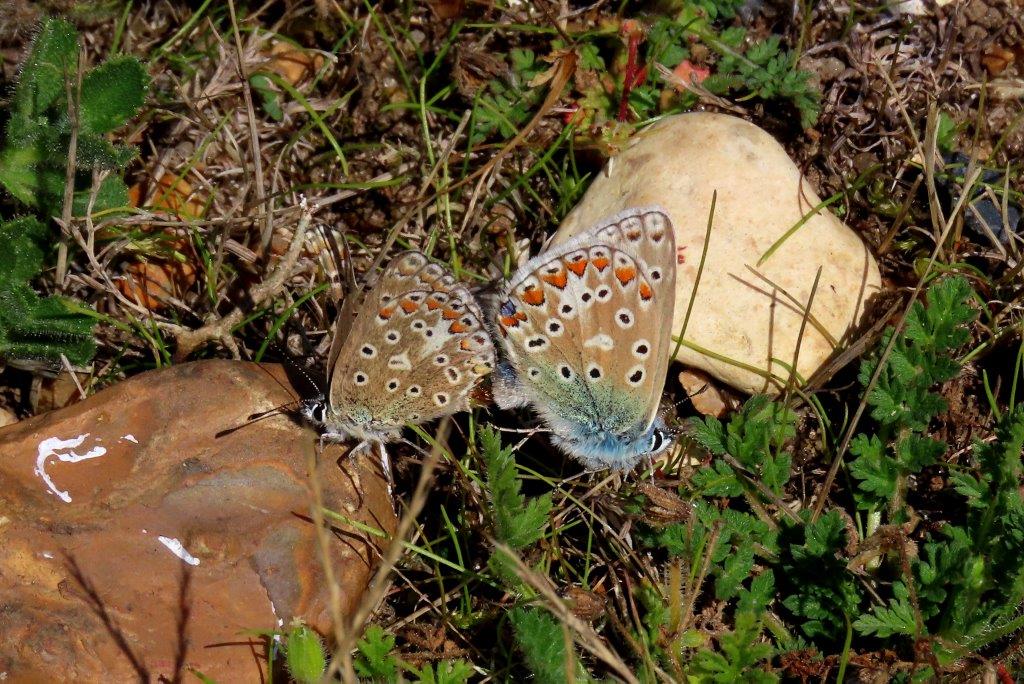
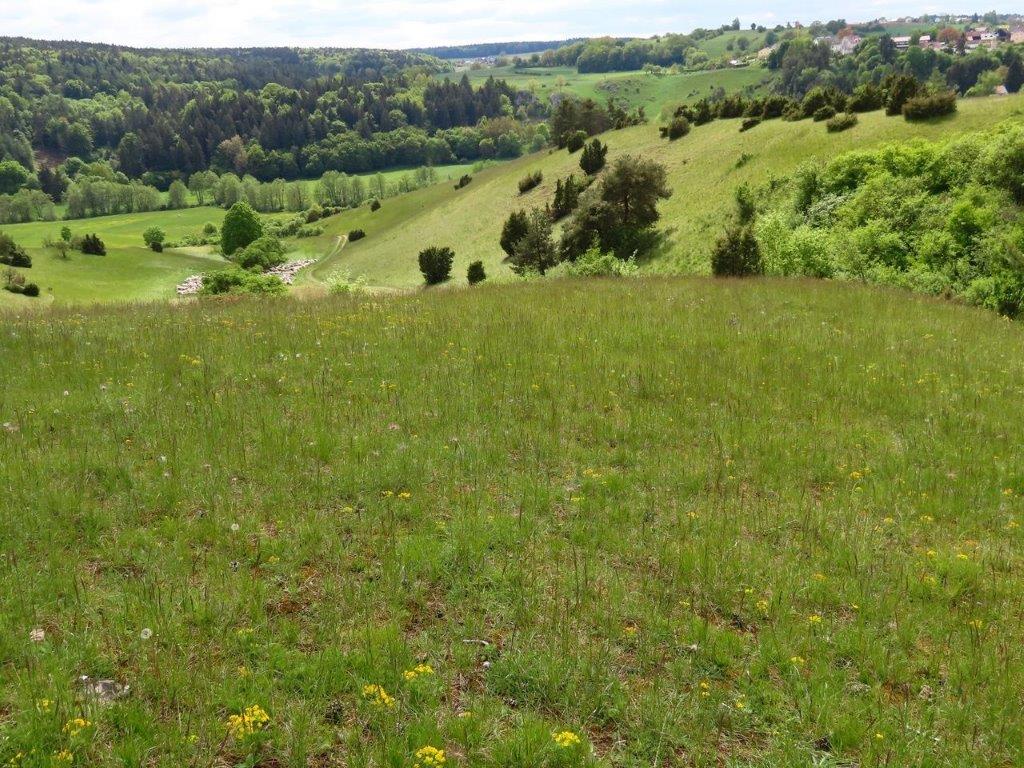
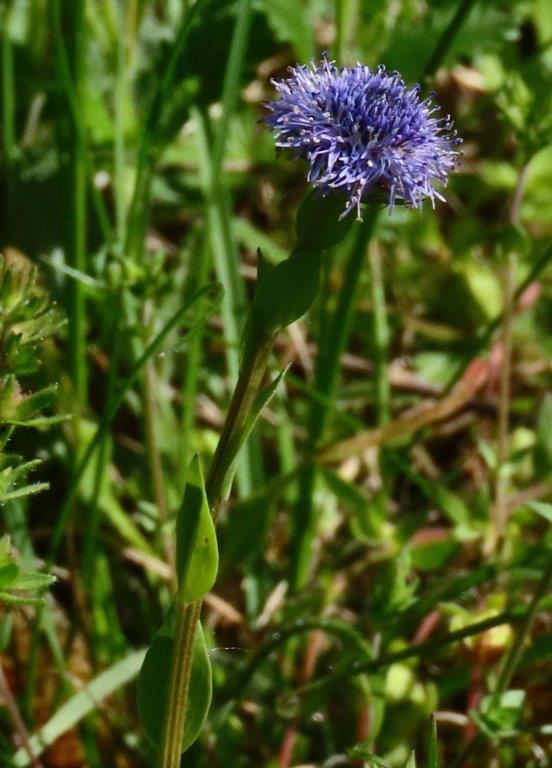
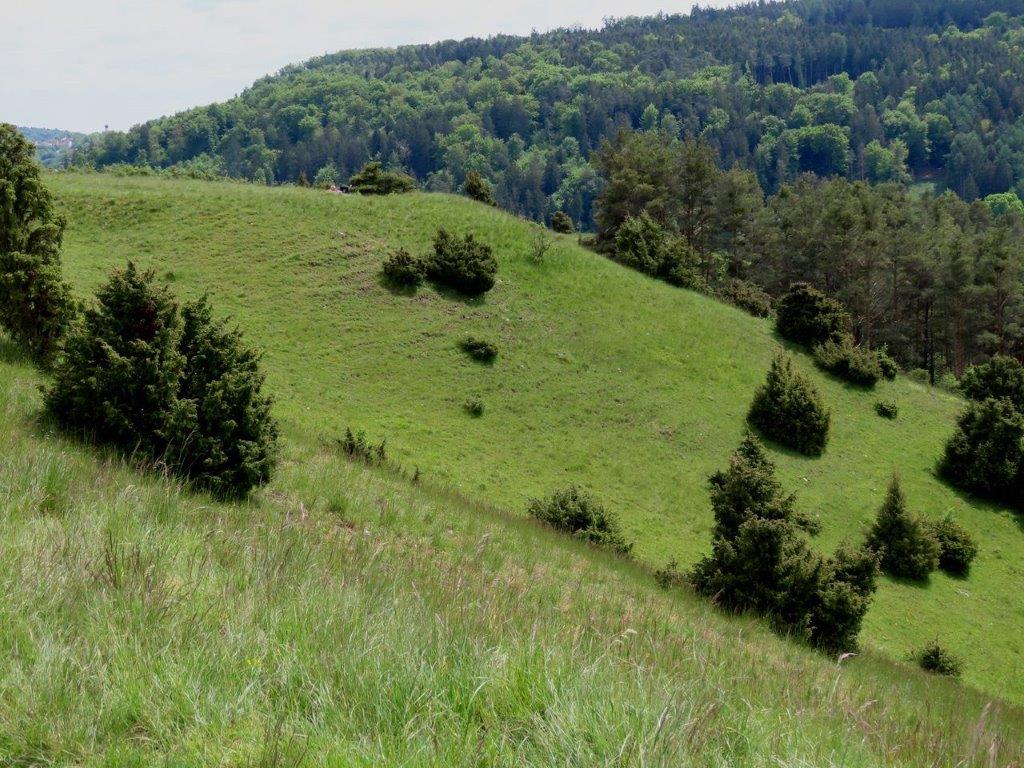
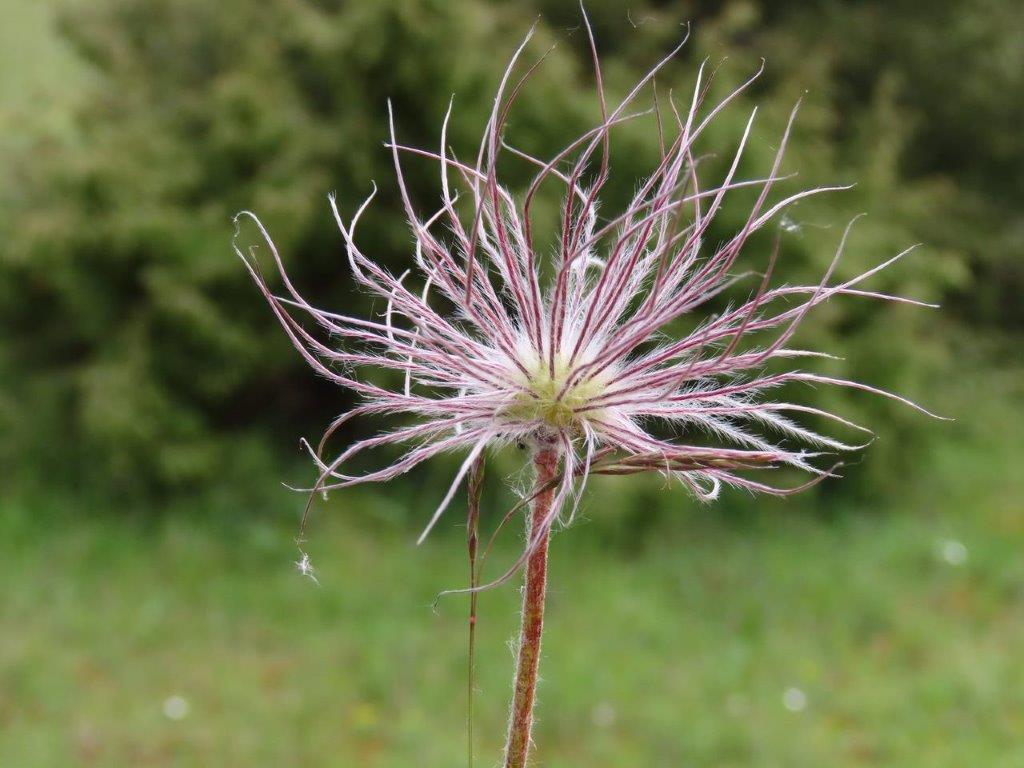
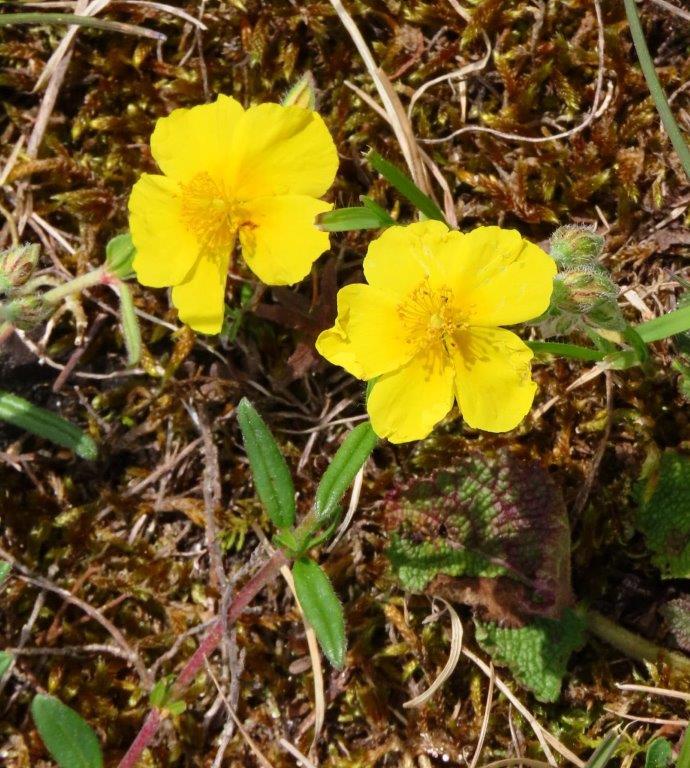
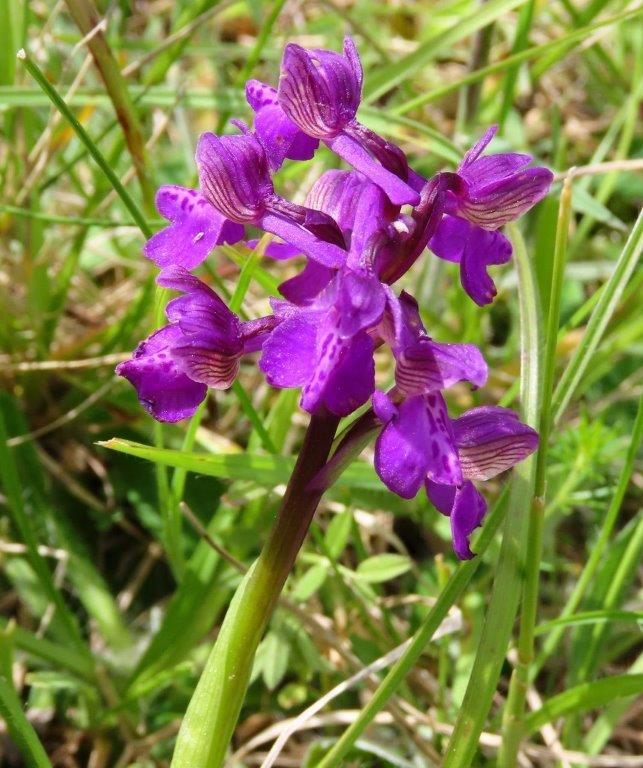
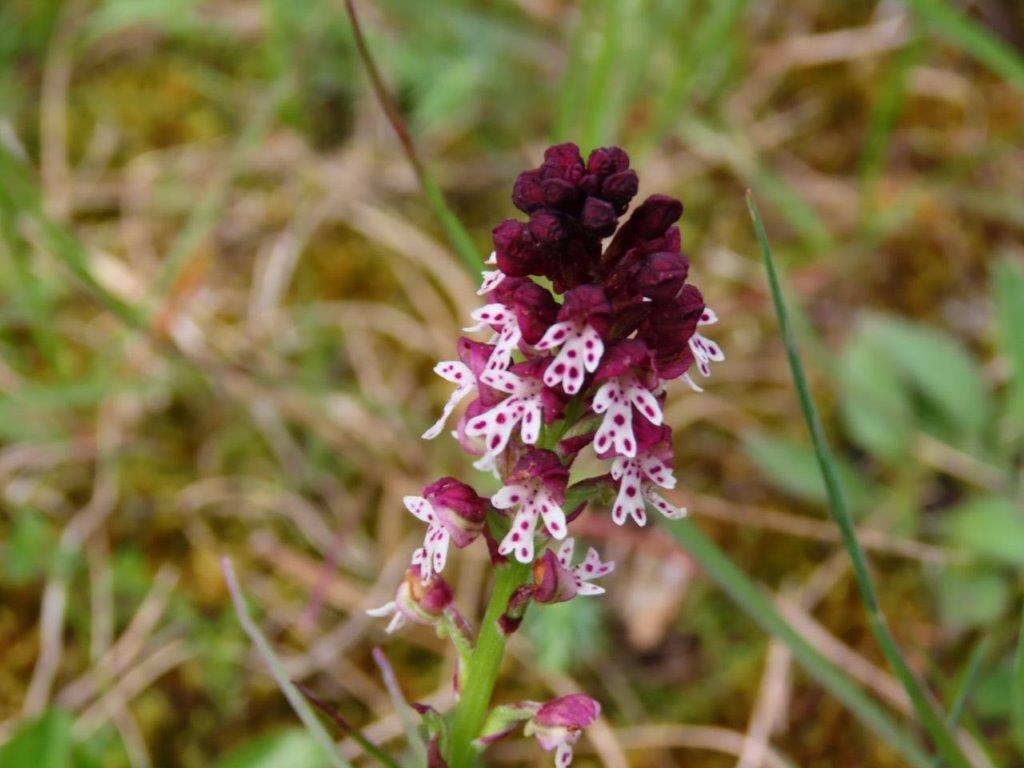
But away from the settlements the limestone grassland is even more extensive, and richer, with Swallowtails and Common Blues, Yellowhammers and Skylarks, Burnt and Green-winged Orchids, Spring Gentians and Pasqueflowers, Juniper scrub,  many other plants and insects ….

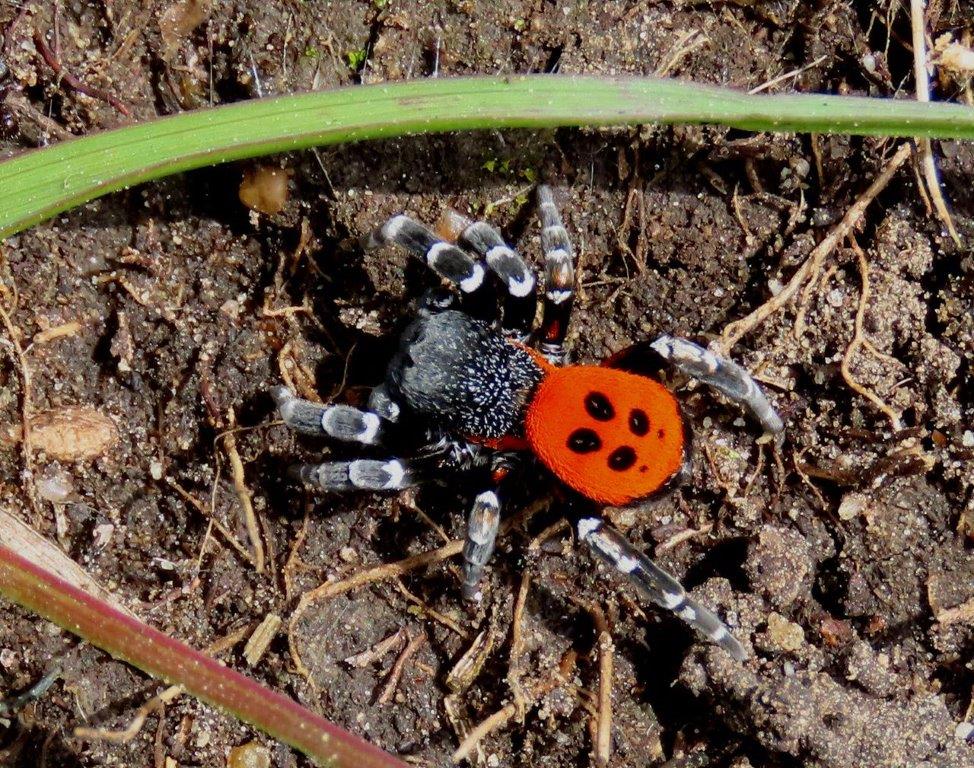
… and the undoubted natural highlight of our entire trip, a male Ladybird Spider, an almost-heart stopping sighting, in what is one of very few few localities in the whole of the country. Indeed, just as in Britain, this is a Red Data species in Germany, and although we didn’t know it at the time, we stumbled upon it in its main remaining locality. And on our wedding anniversary too!


Bavaria by train: the way there – Brussels & Cologne

Just before the pandemic, we had our first long-distance overseas train holiday of more than a couple of days, to Switzerland. The success of that, together with the delight of clear blue, unsullied skies during Covid, made us resolve to continue with the 6% club as our preferred mode of travel, and so for our return to Europe, we spent 10 days visiting family in Bavaria travelling by train.

The great thing about train travel, apart for the lower emissions, is that you can see the landscape slipping by and change as you get further from home, and that you can extend your holiday by exploring intermediate destinations. For us, heading out, that involved Brussels. Just a couple of hours out of St Pancras we were living the life, eating moules frites and drinking Belgian beers under blue skies (which sadly largely disappeared for the next few days behind the grey cloud we have become used to at home this Spring).

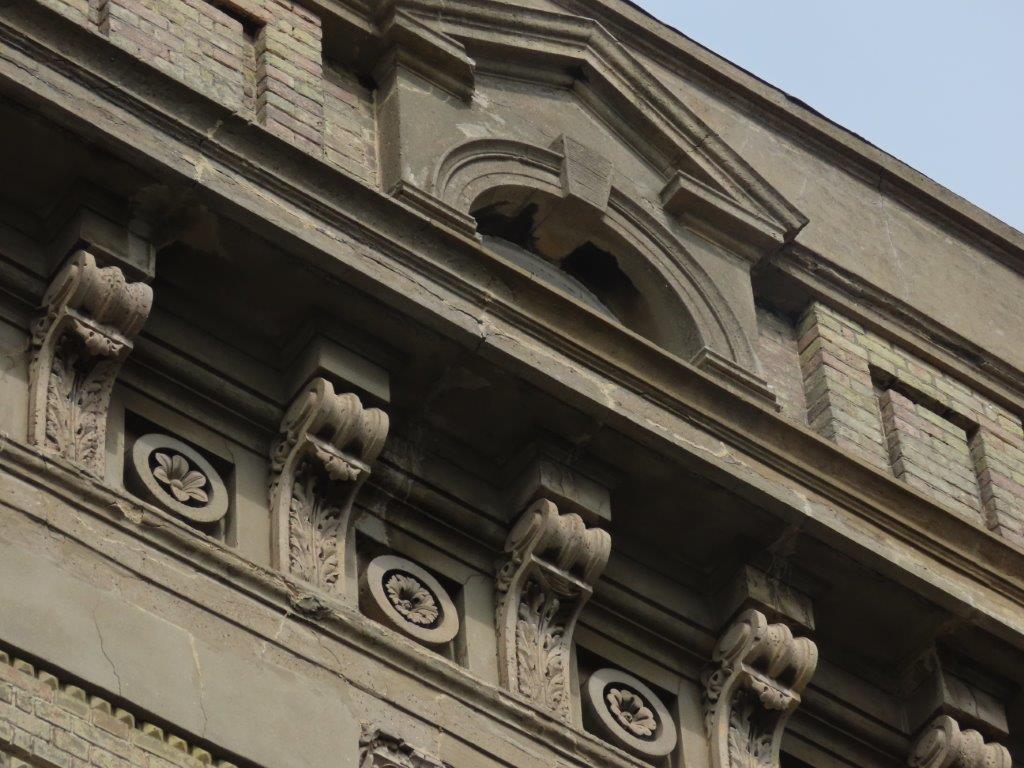
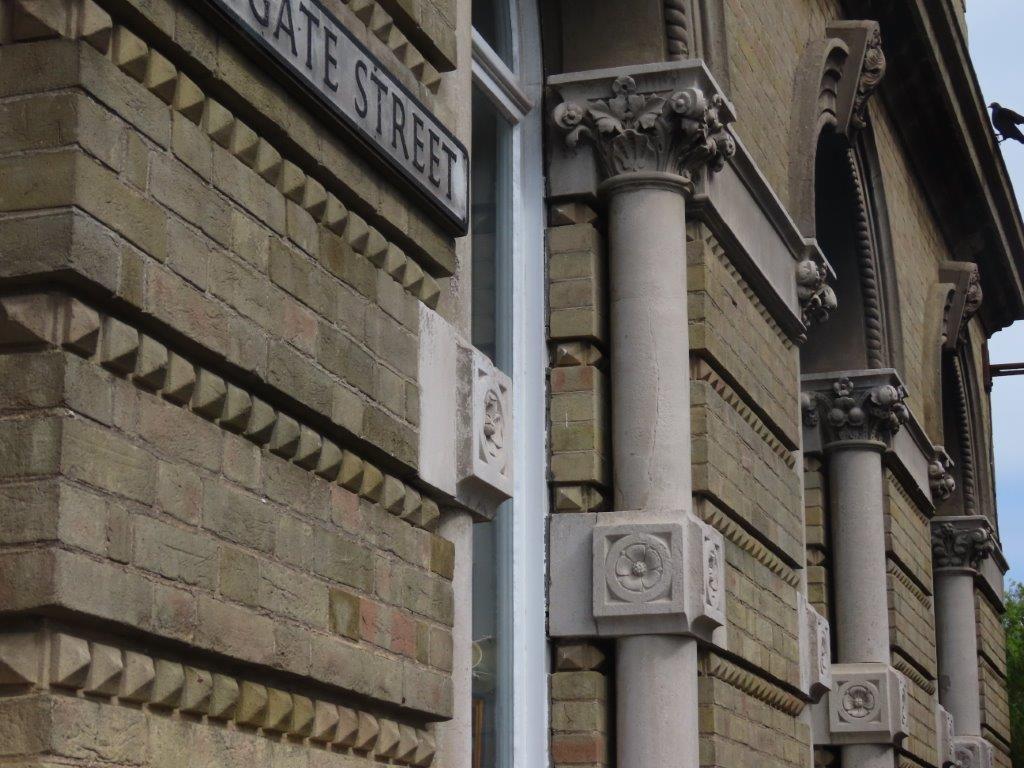
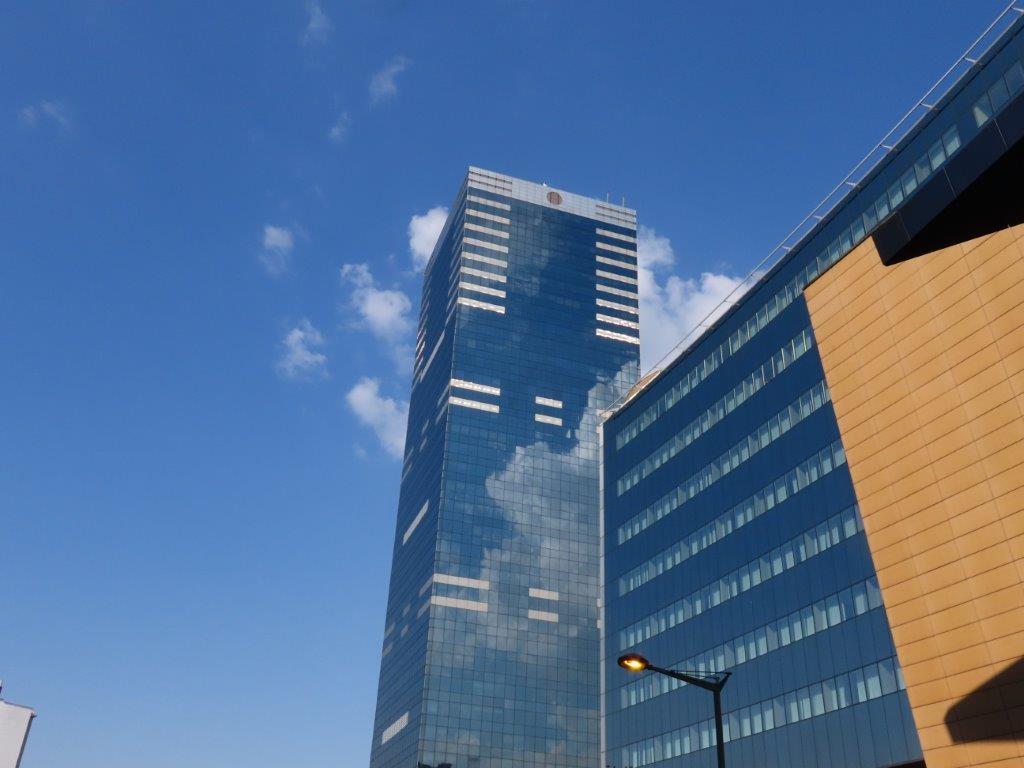
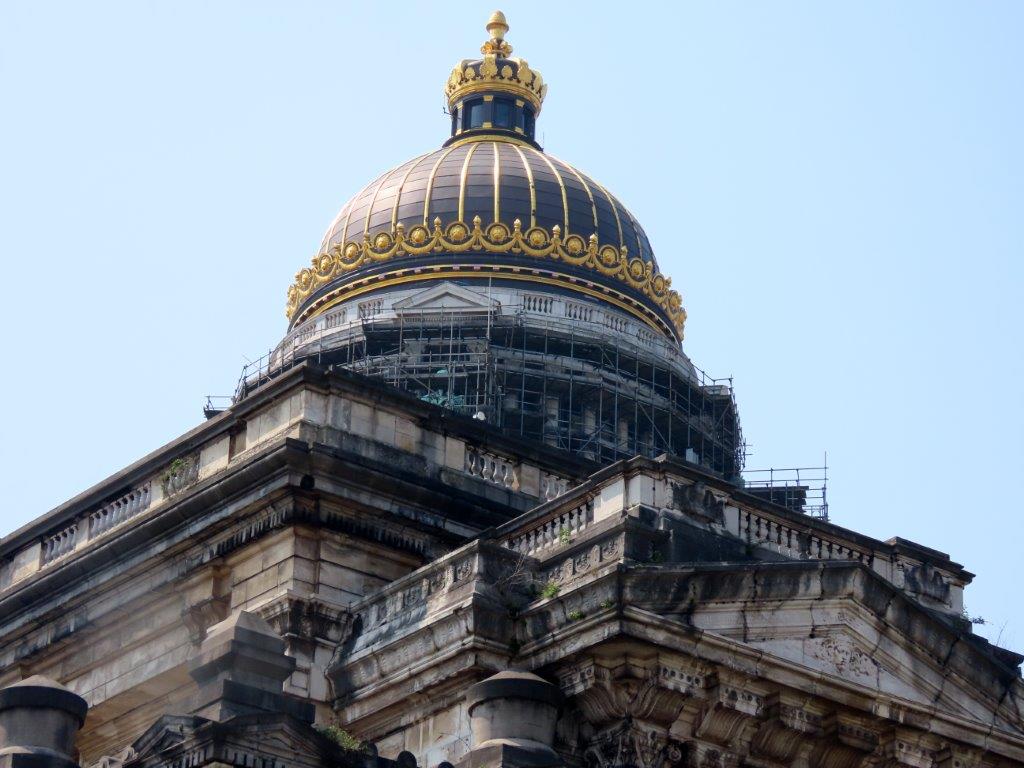
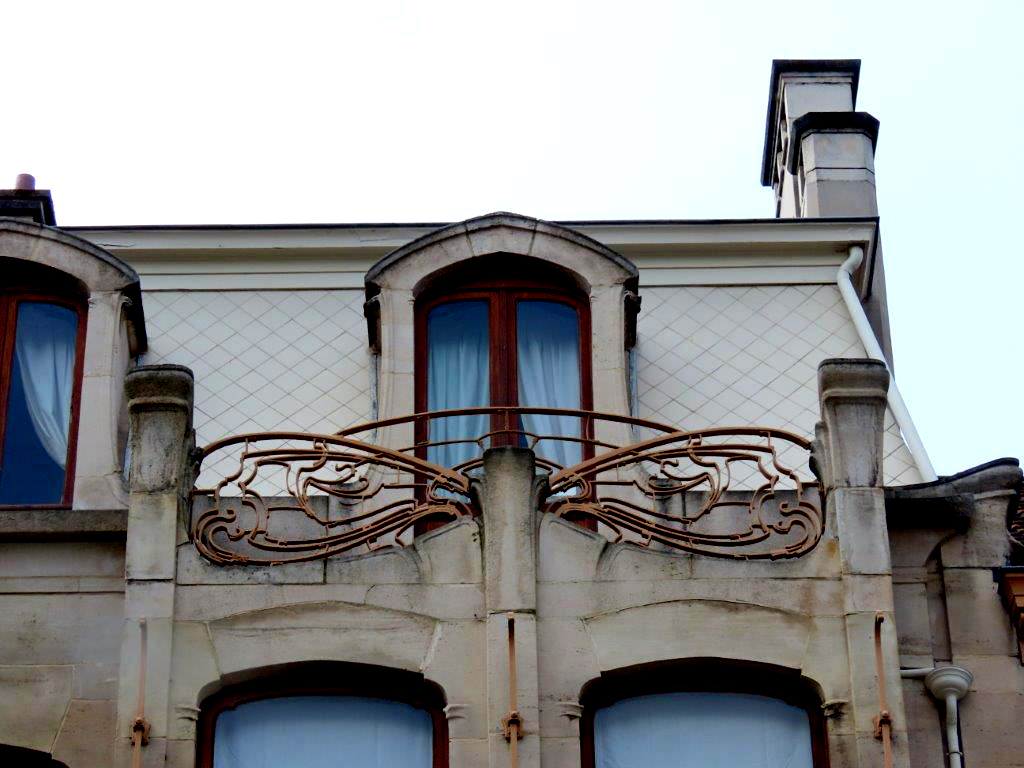
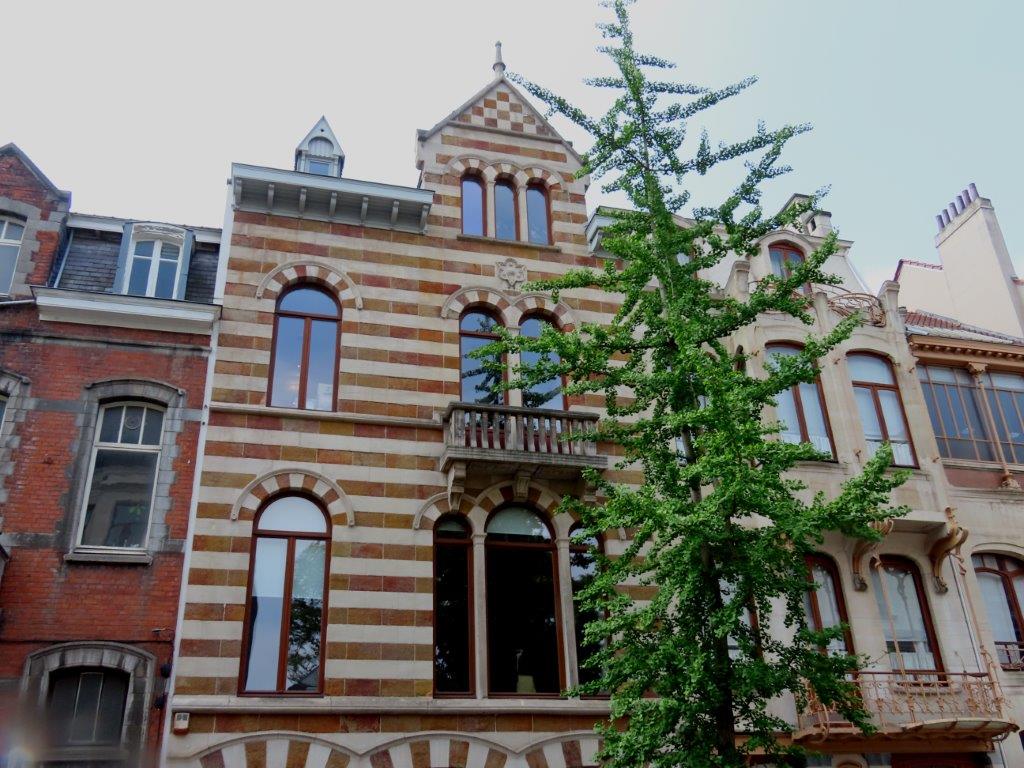
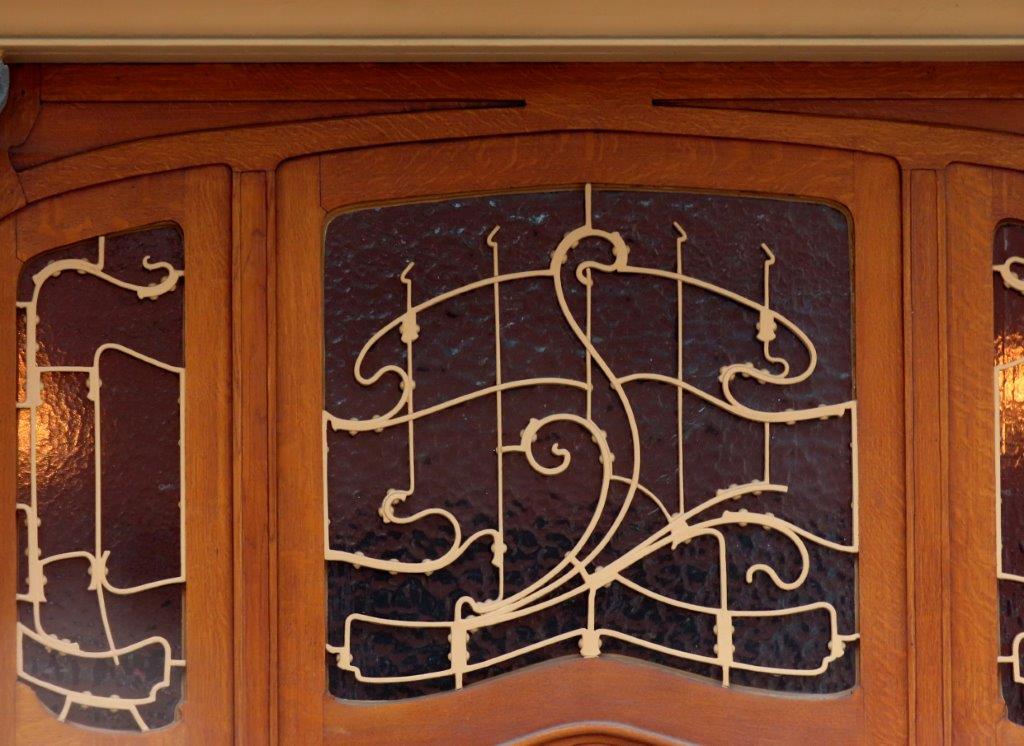
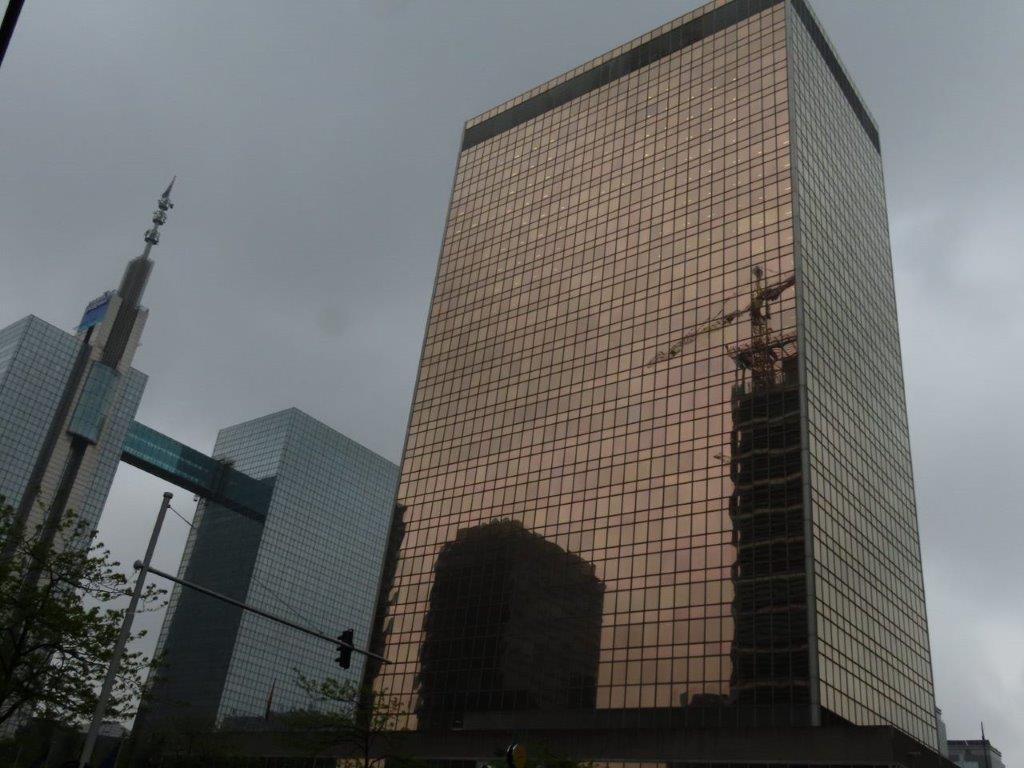
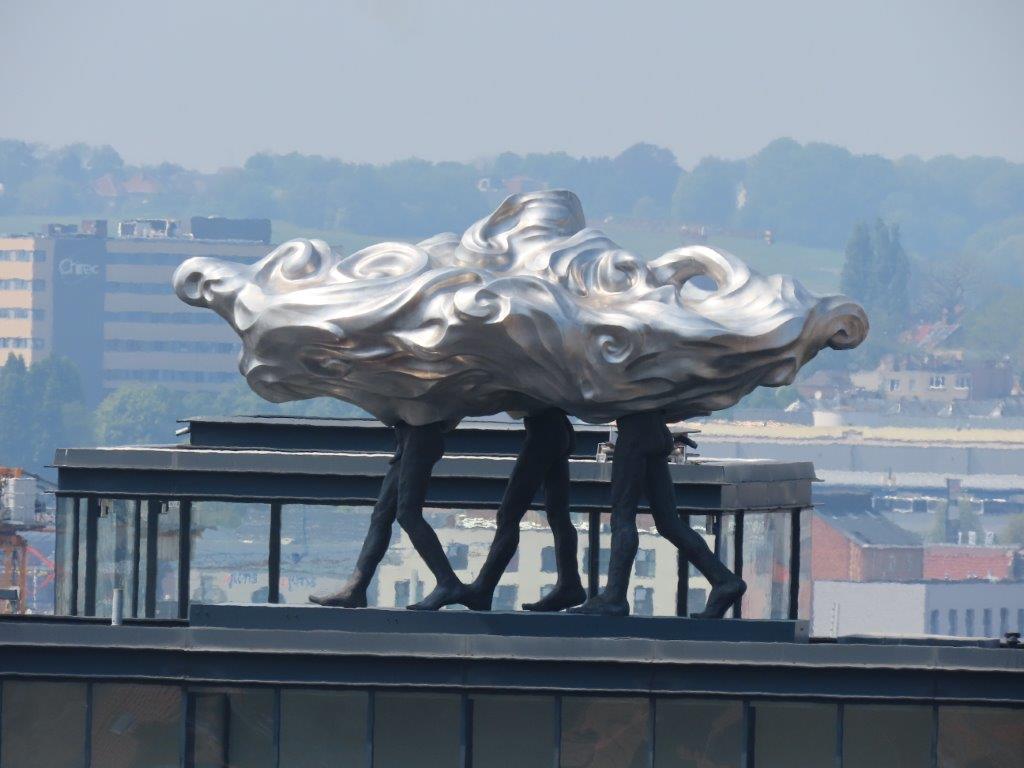
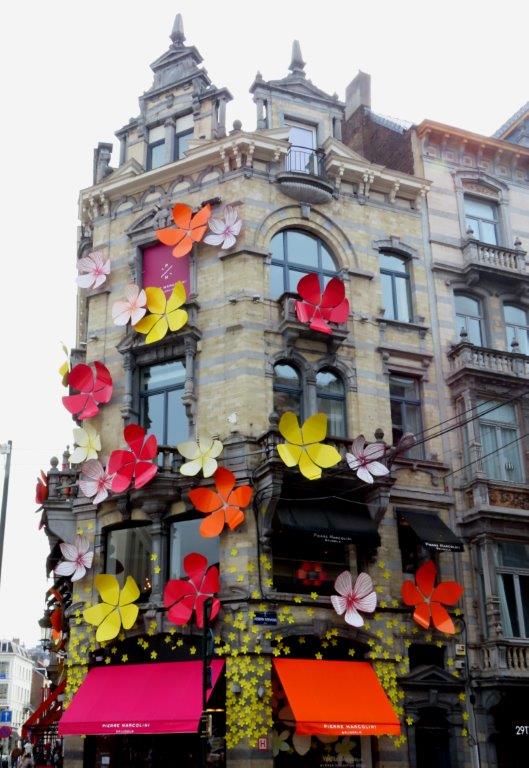
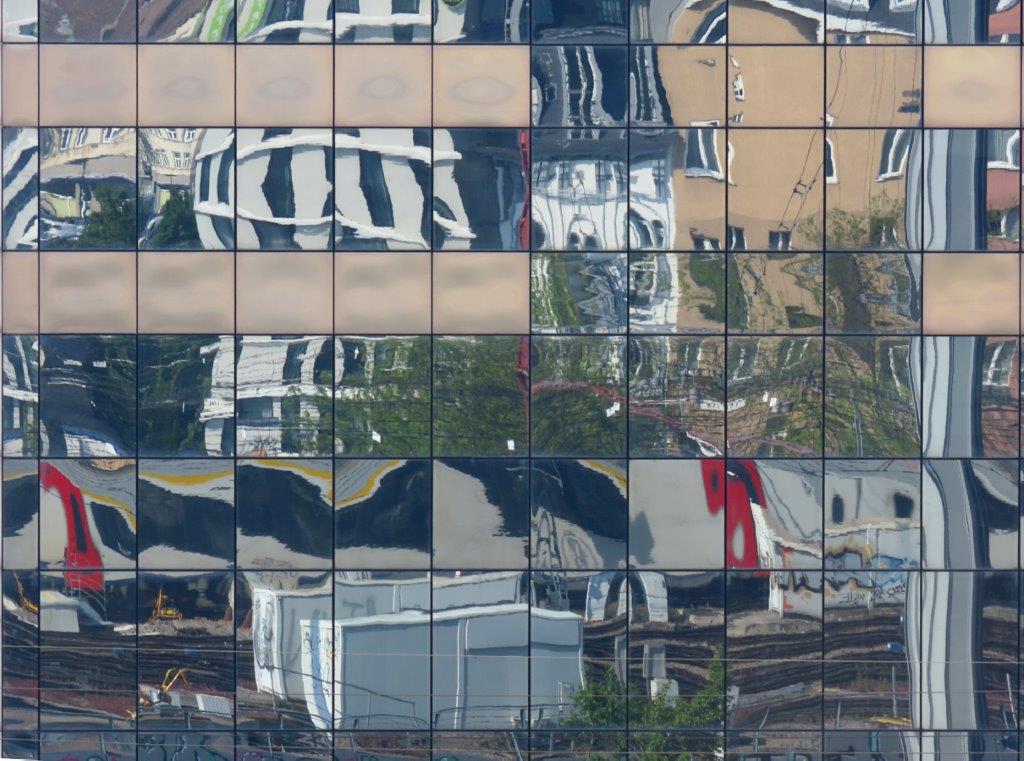
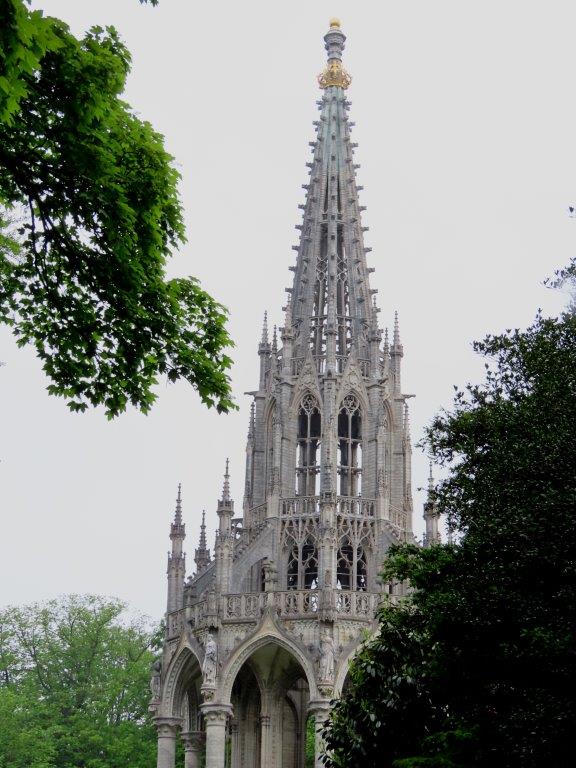
Over the next couple of days we got to know the city well: the architecture, from the extravagances of the Baroque to the naturalistic curves of Art Nouveau to the edges and reflections of modern times…

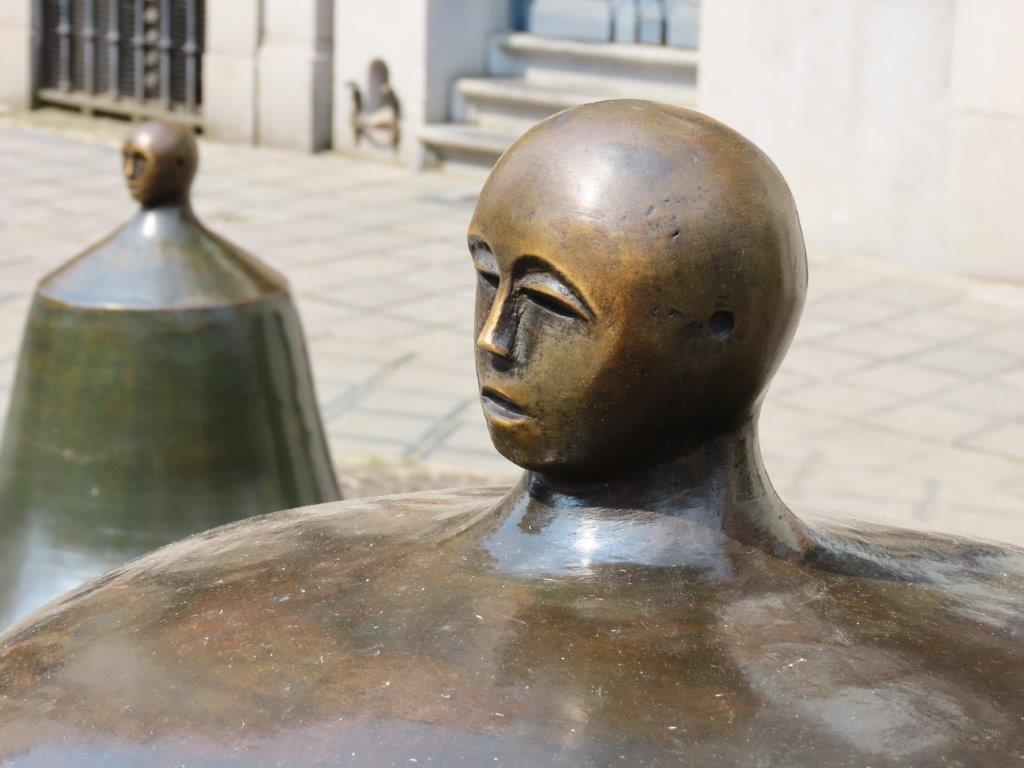
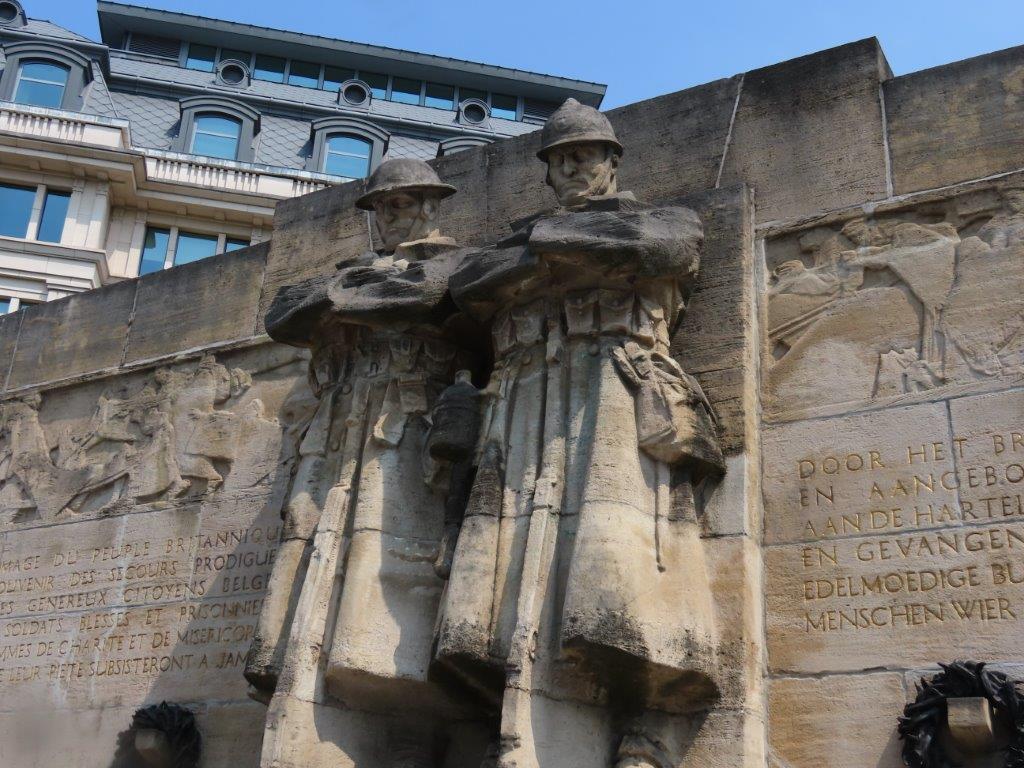
… the monumental art …

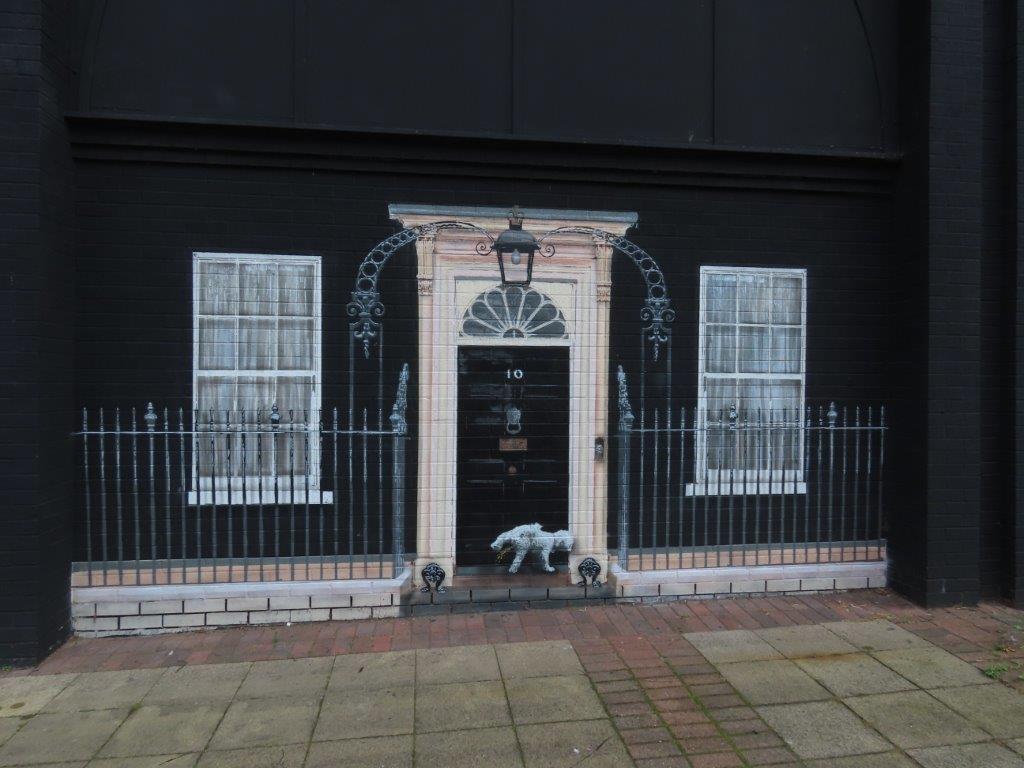
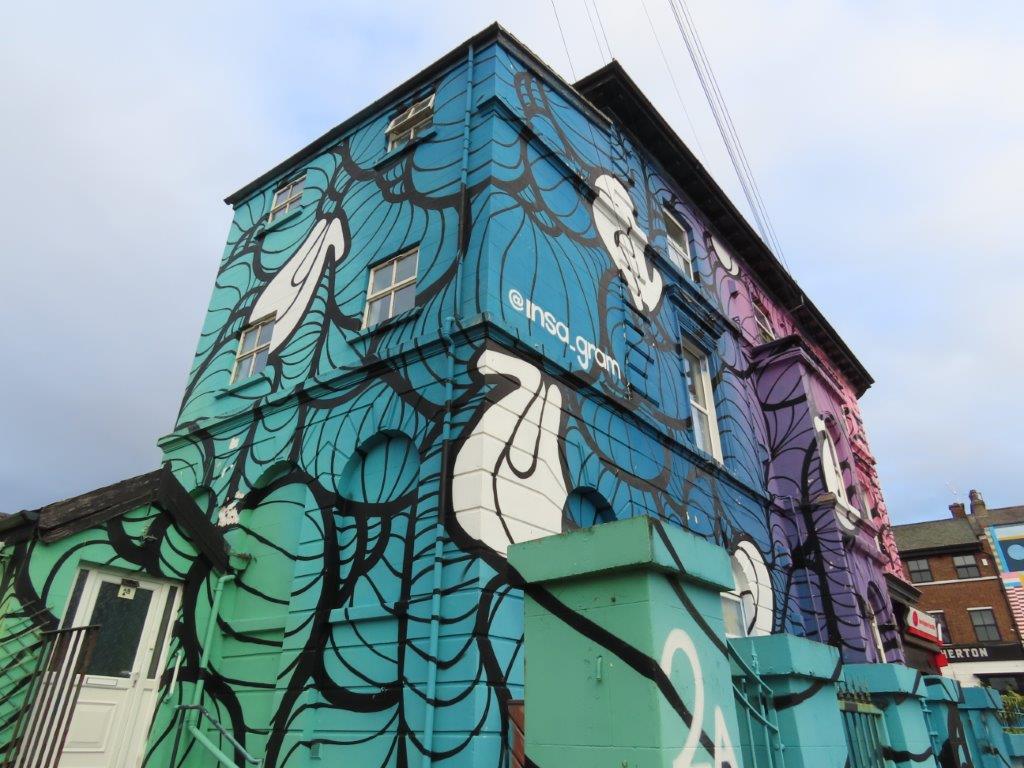
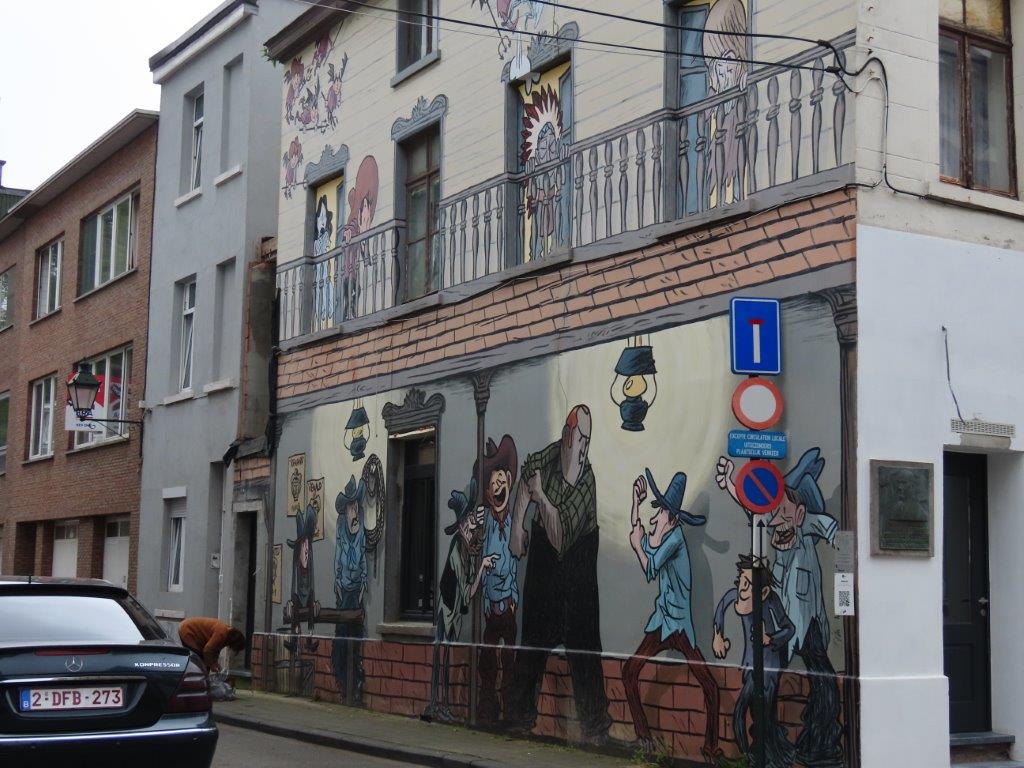
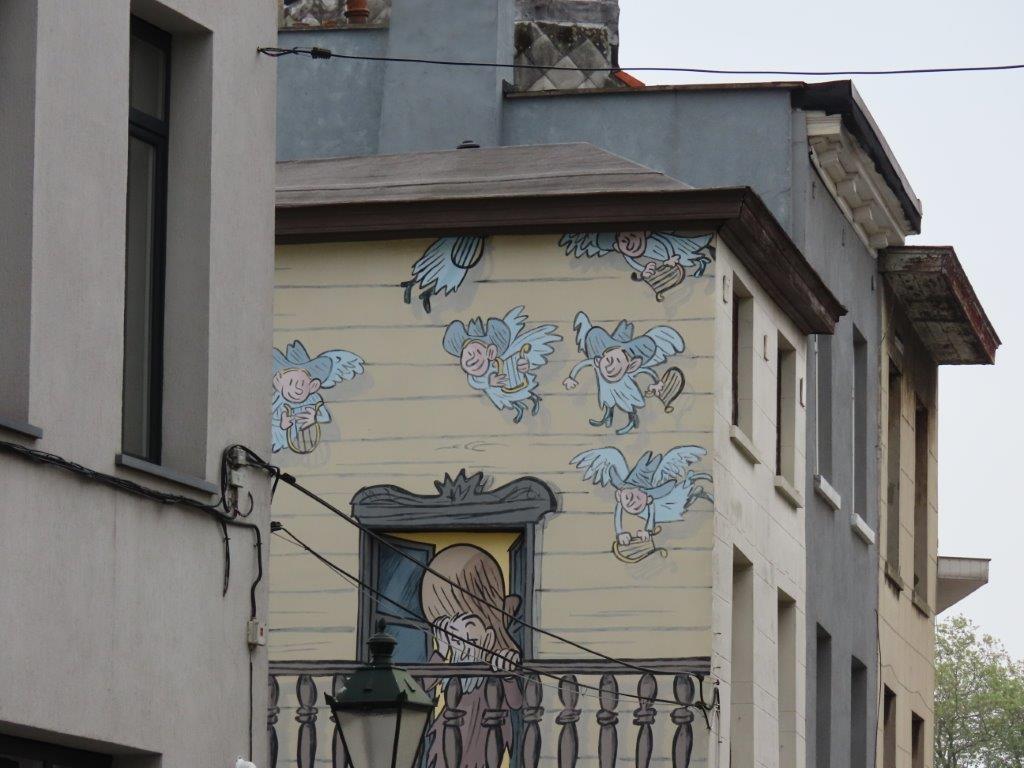
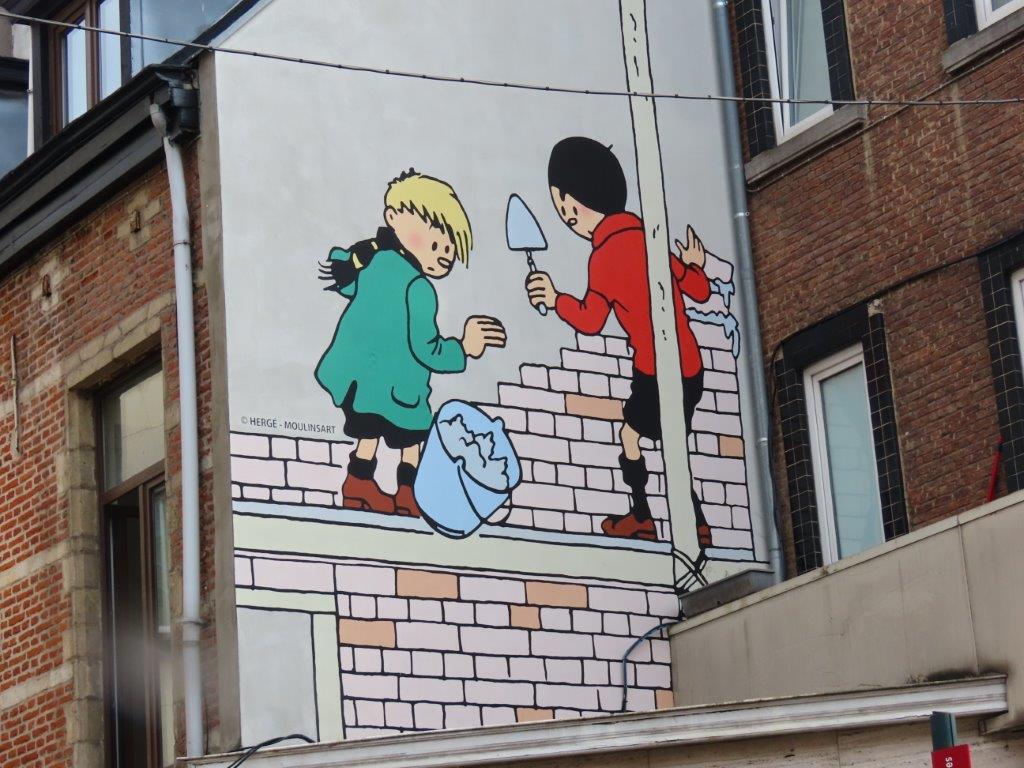
…. to the street art, of all kinds.

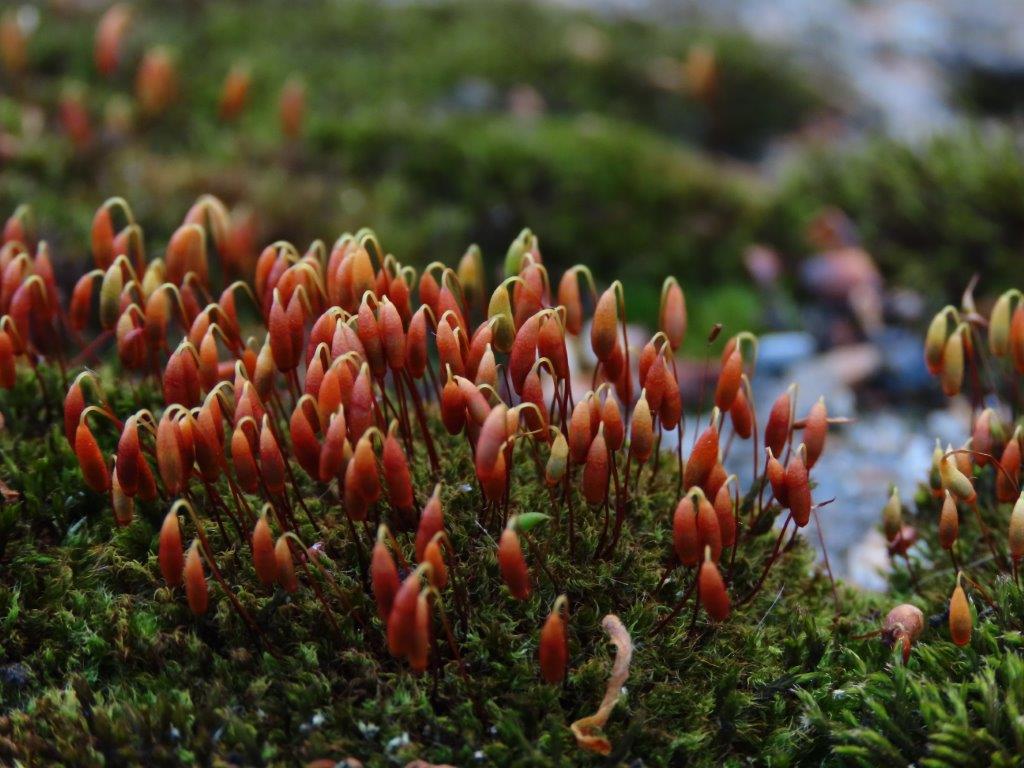
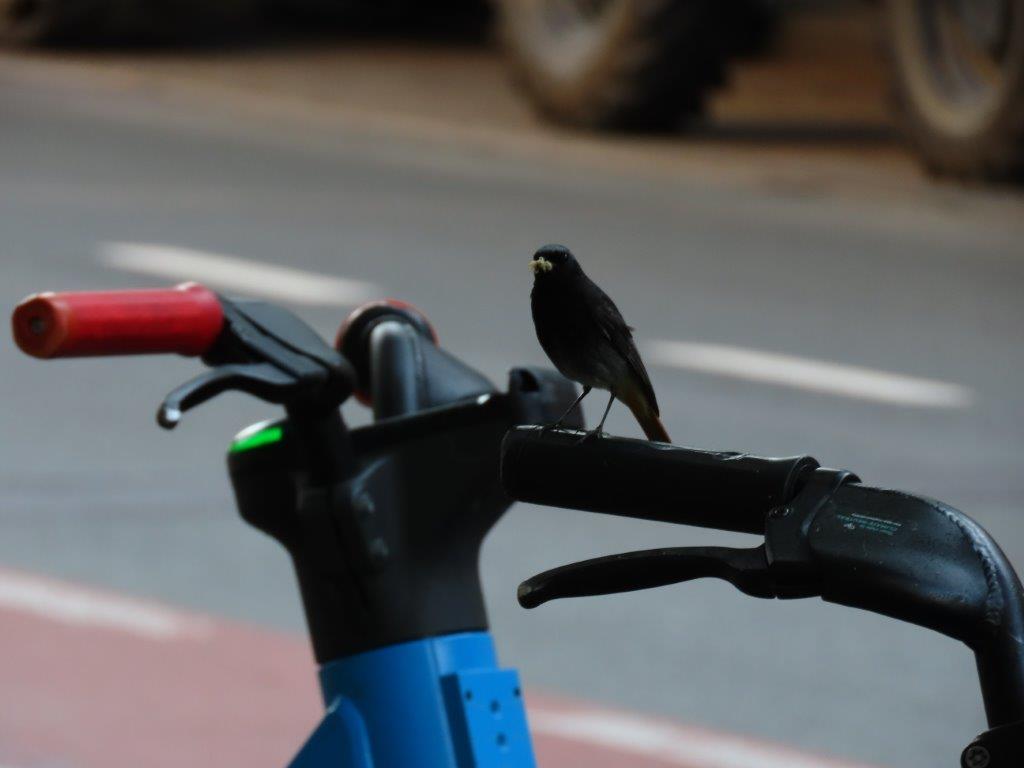
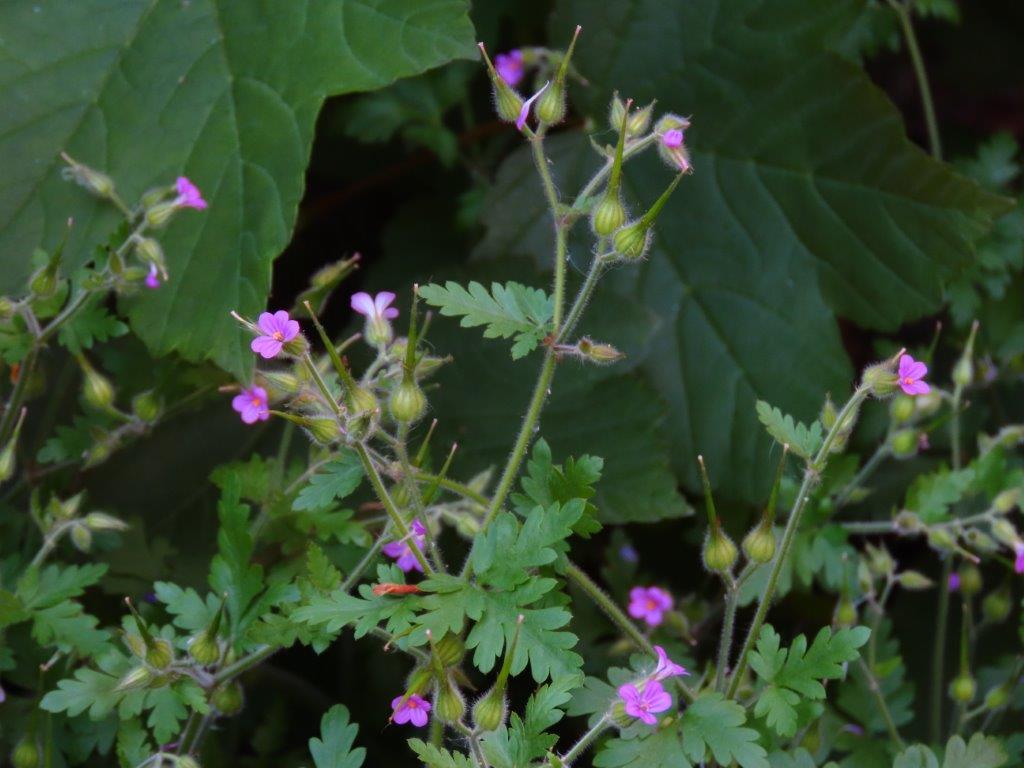
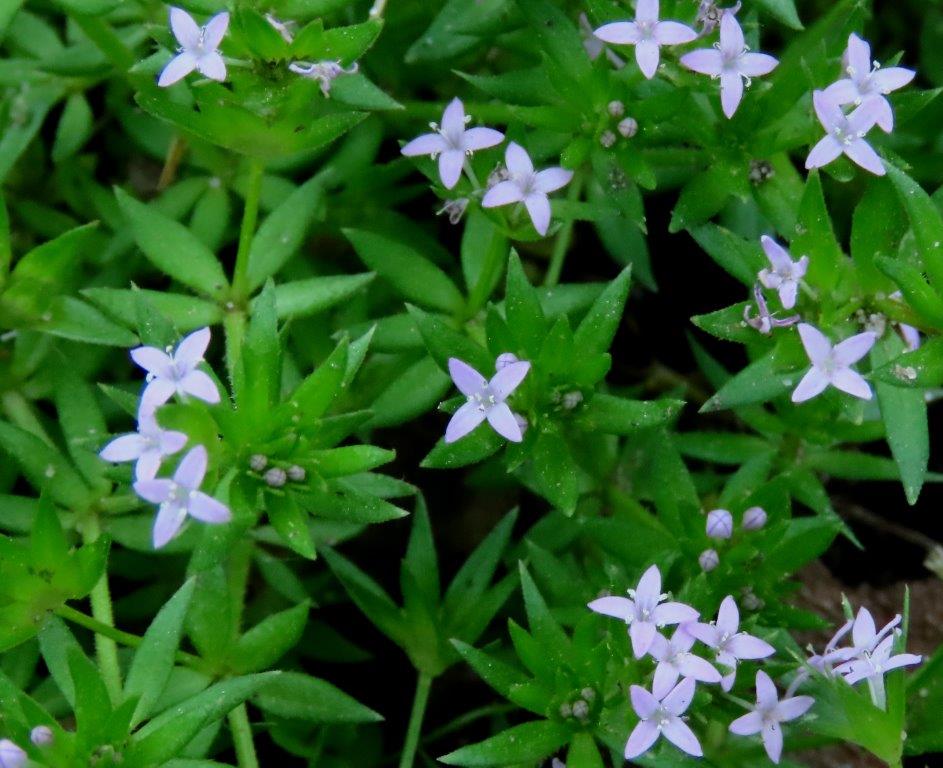
And of course, even on the mean street of Brussels there was wildlife, from the mini-forests of moss sporophytes atop the walls, to the Black Redstarts in crackling song from many a rooftop, and the (unsprayed!) planting pockets for boulevard trees extensively colonised by Little Robin (rare in the UK) and other delightful pavement plants.

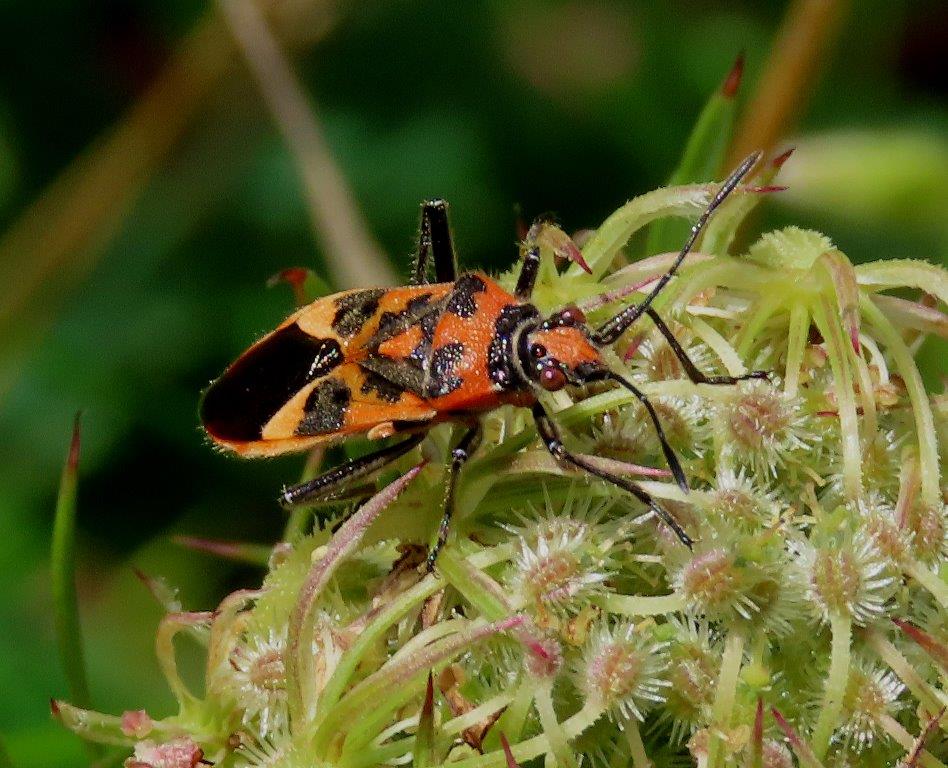
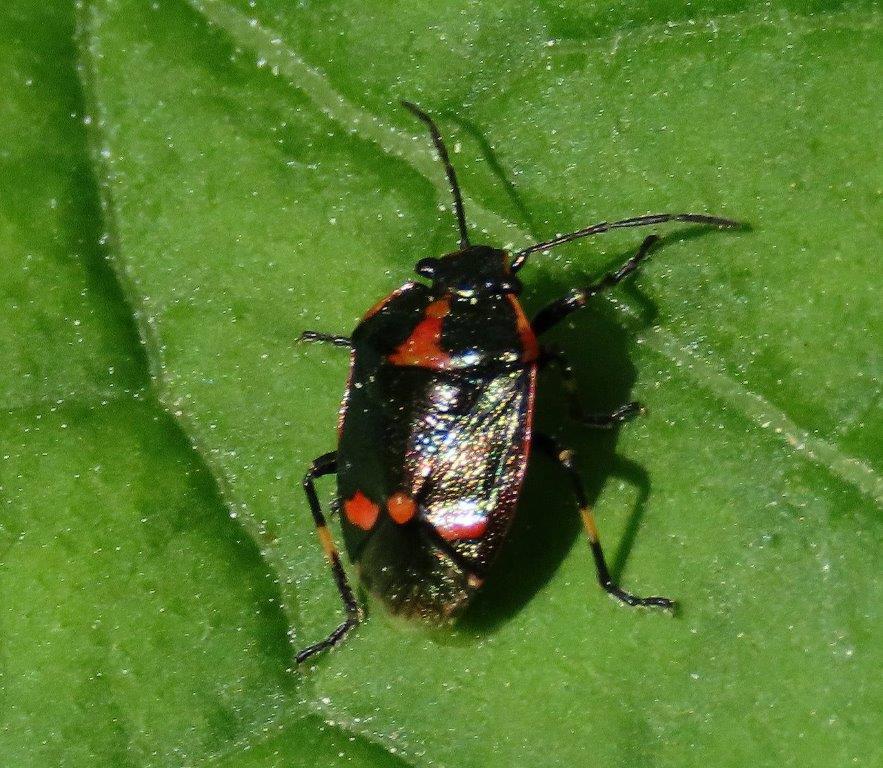
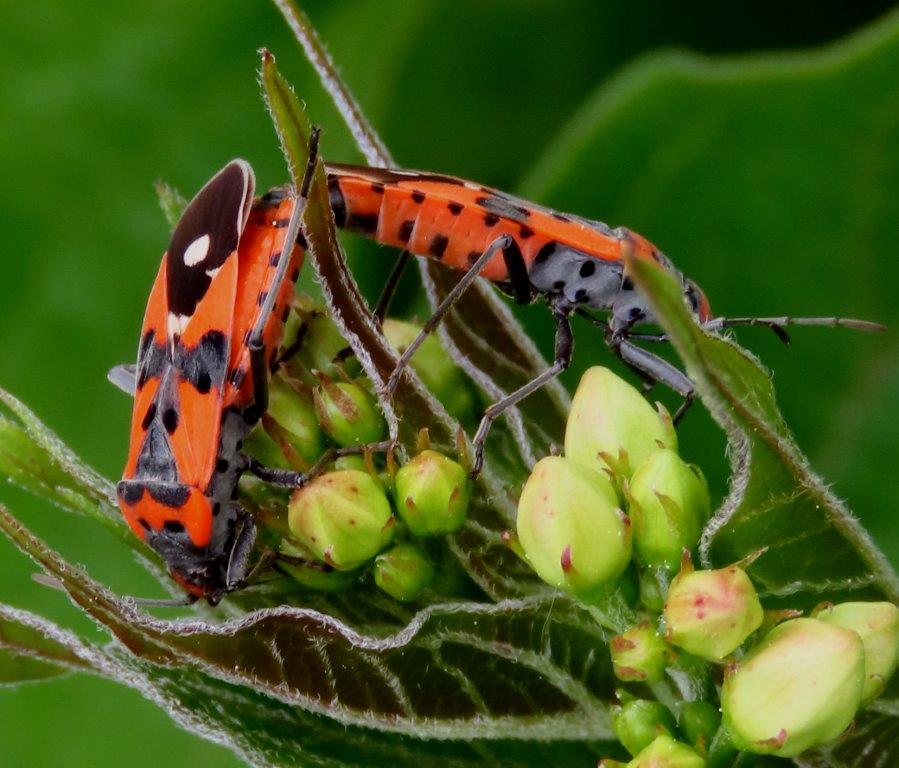
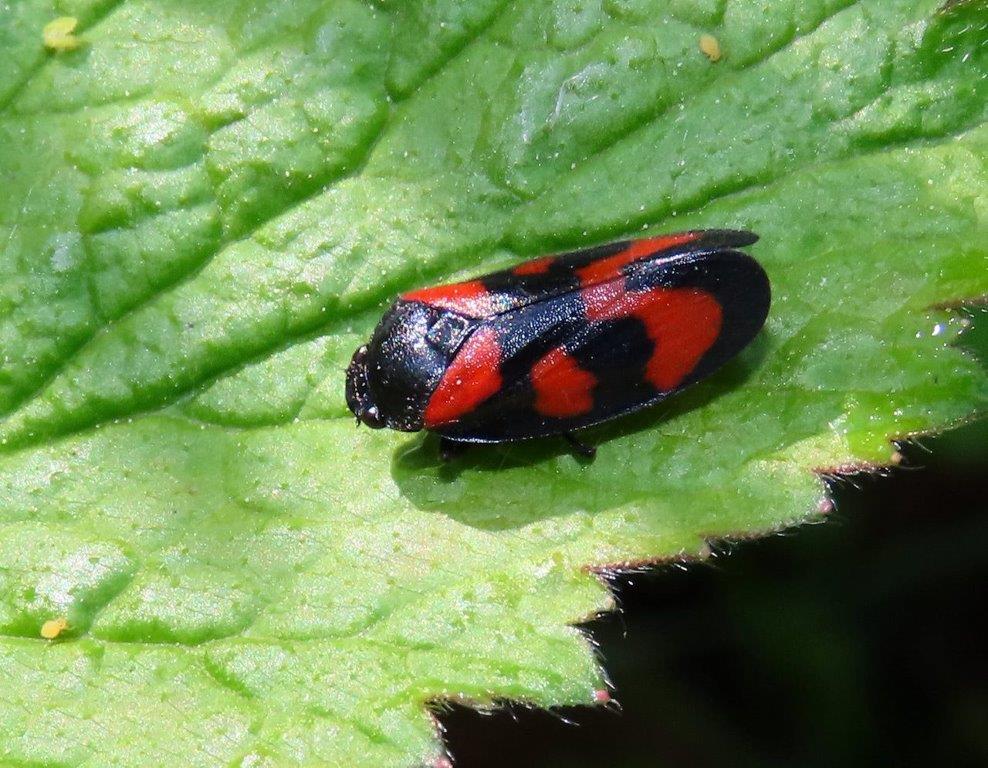
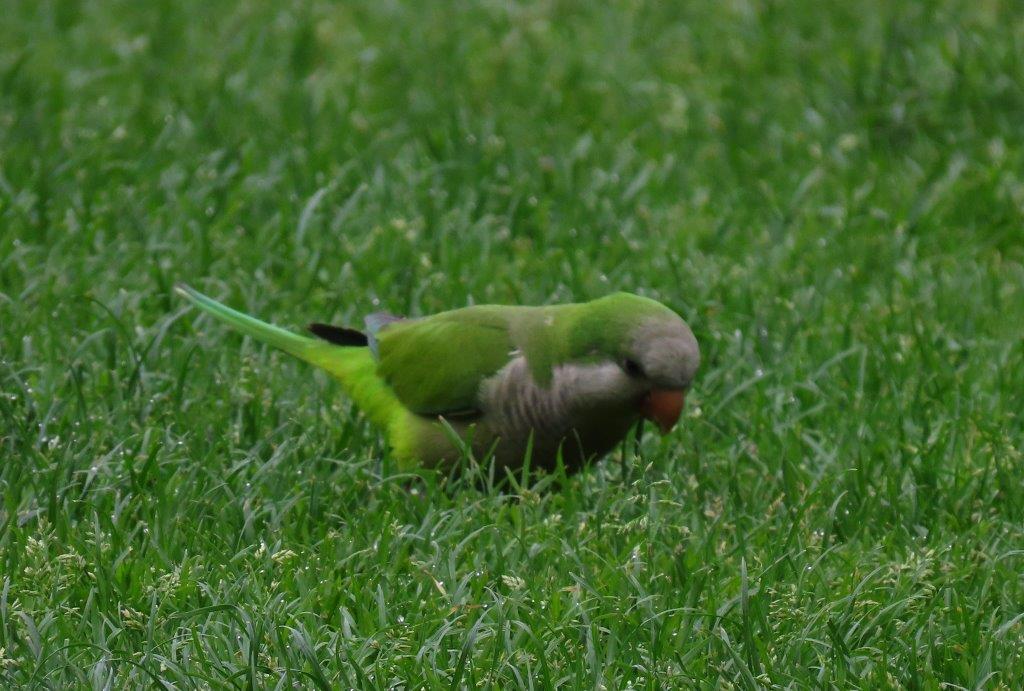
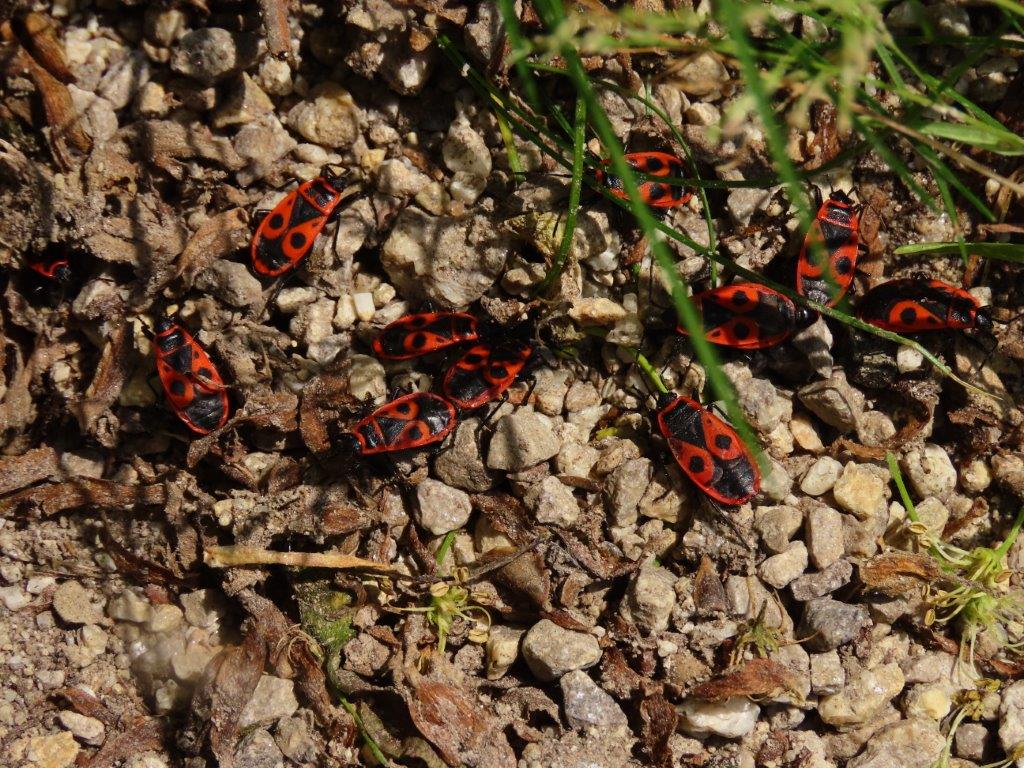
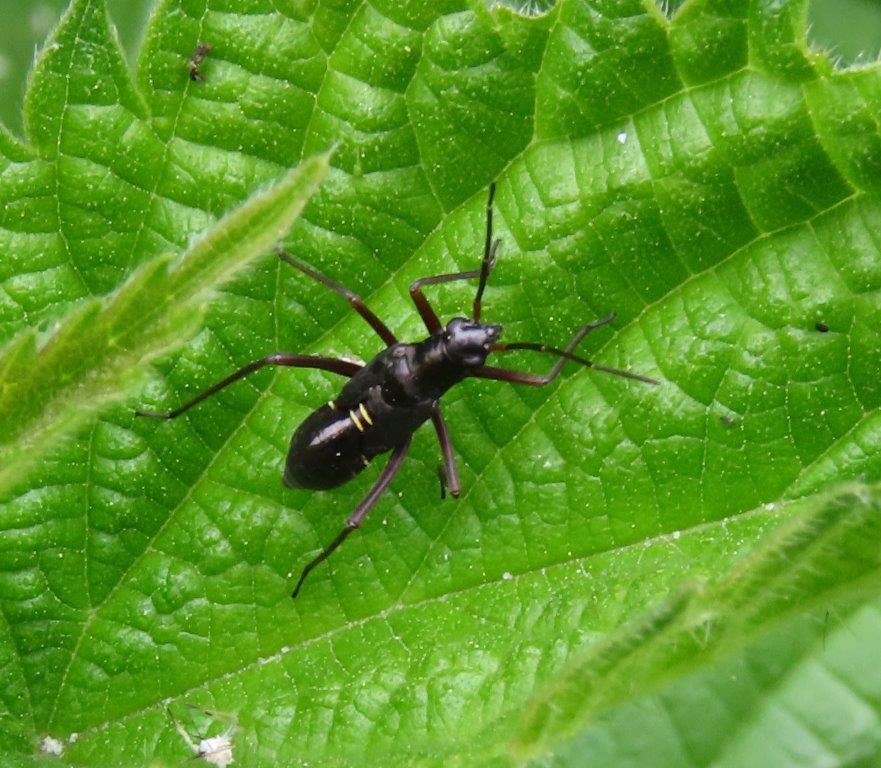
There was also more formal greenspace and there the noisy battalions of Monk Parakeets, seemingly more keen on feeding on the ground than the Rose-ringed Parakeets we are more familiar with in London and elsewhere, together with (wherever there were Lime trees) the ubiquitous Firebugs.

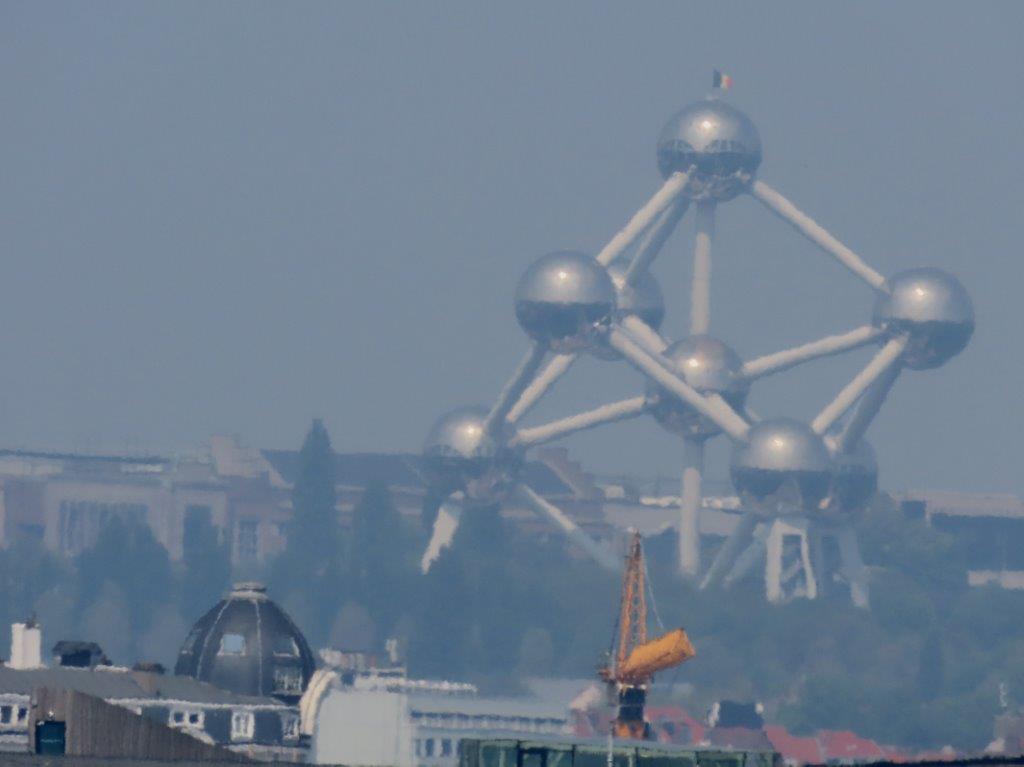
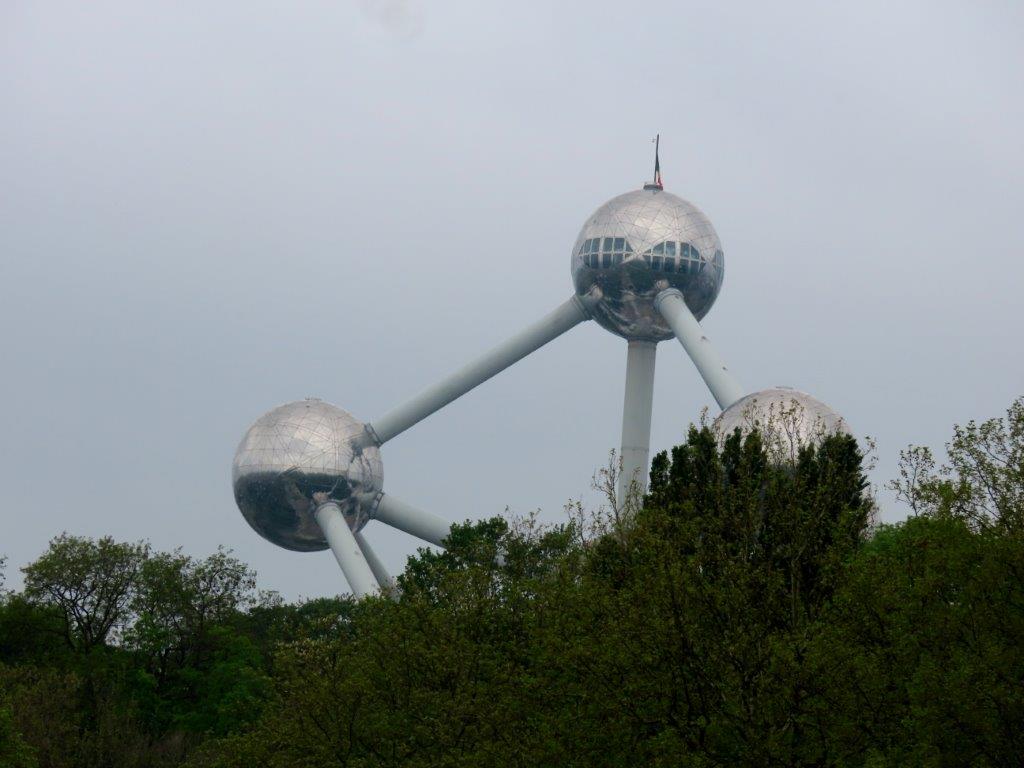
Next day we explored further, taking the Metro out to the Atomium, the wonderful Modernist structure built as the centrepiece of the 1958 Expo (and actually designed to be standing for only six months!). It still feels futuristic now, so its impact 65 years ago is unimaginable… Wherever you have a view of the skyline, throughout the city, the Atomium is there.

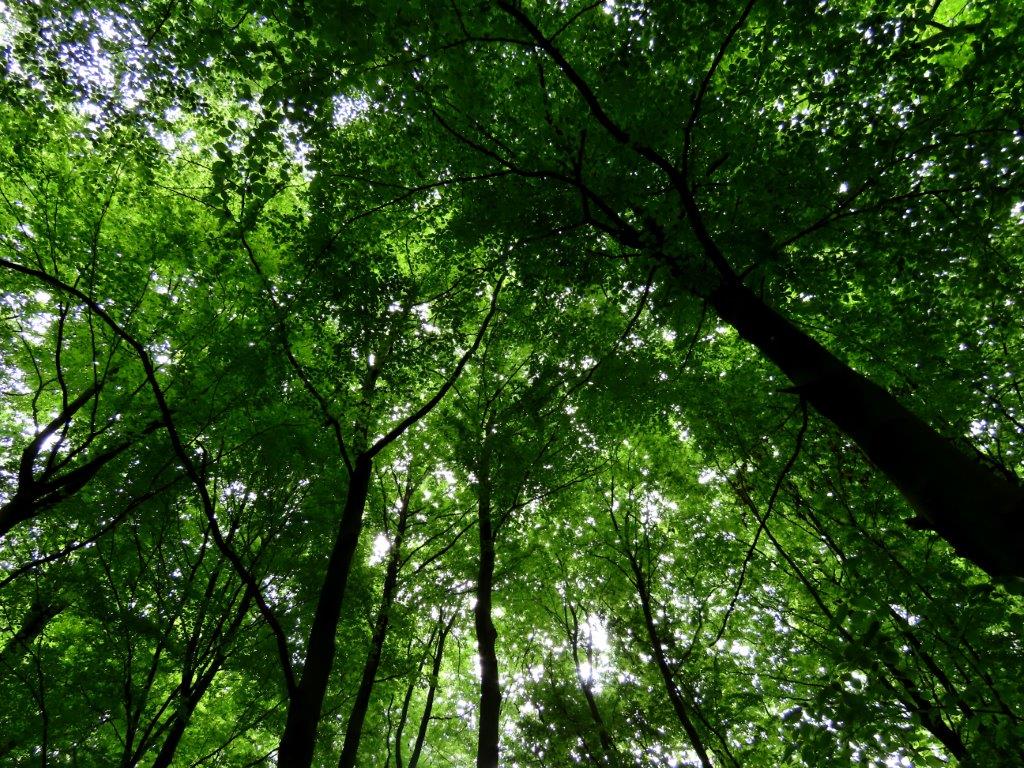
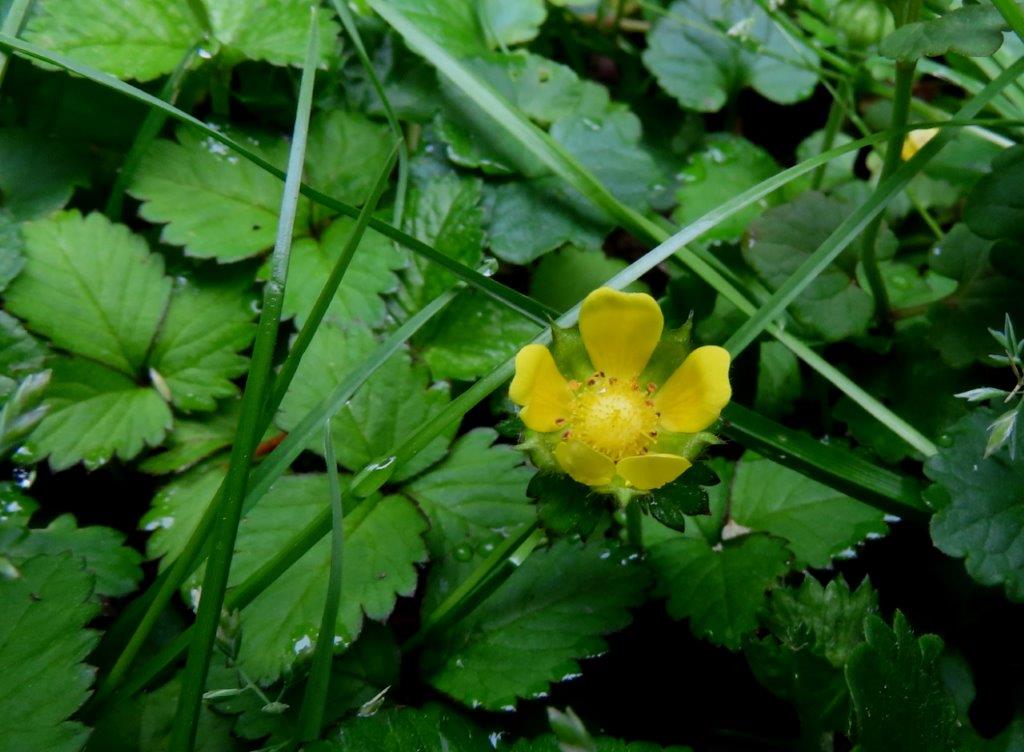
It is sited on the edge of a vast royal park, much of which has open access, around the lakes, grasslands and through the extensive Beech woods, where the flowers were pretty much as in British equivalents, with the addition of Yellow Strawberry.

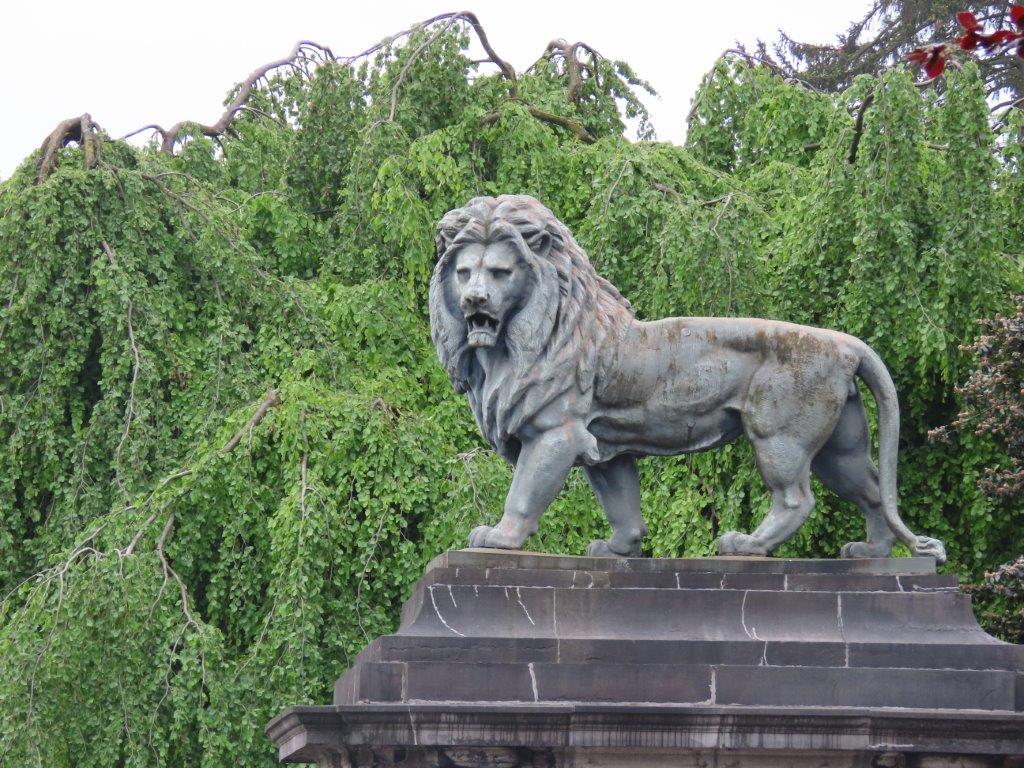
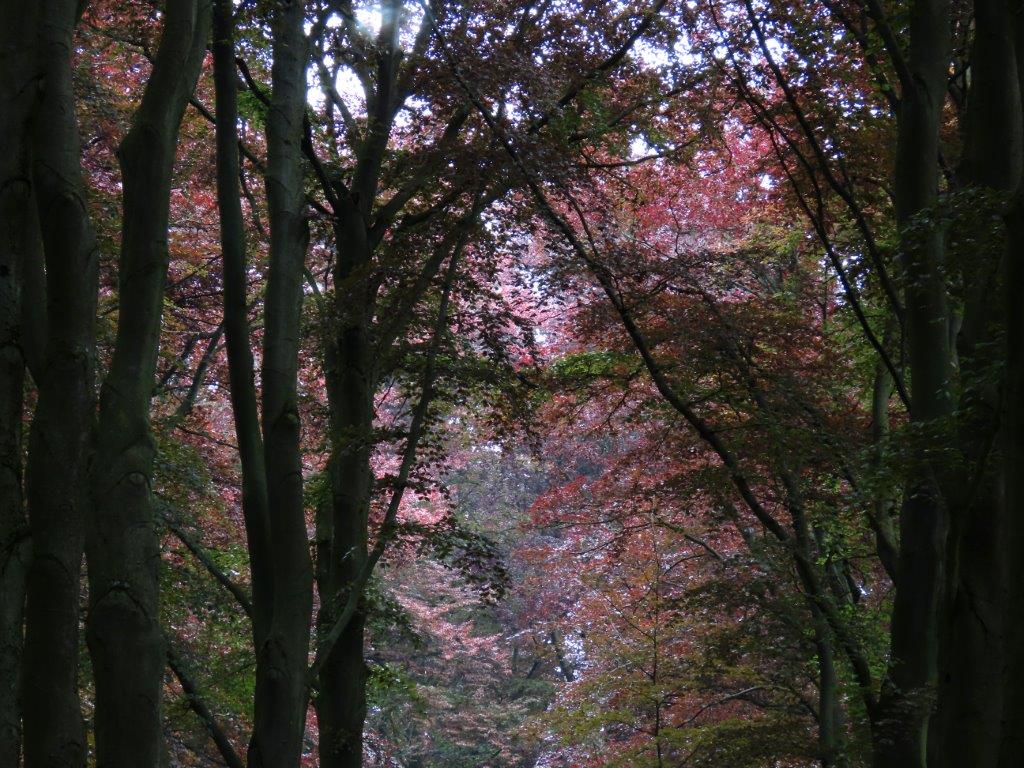
Statues, monuments and a magnificent avenue of Copper Beeches that casted an almost autumnal light were all indiciations of past and present human use, but the pair of Goshawks displaying high overhead clearly don’t mind!

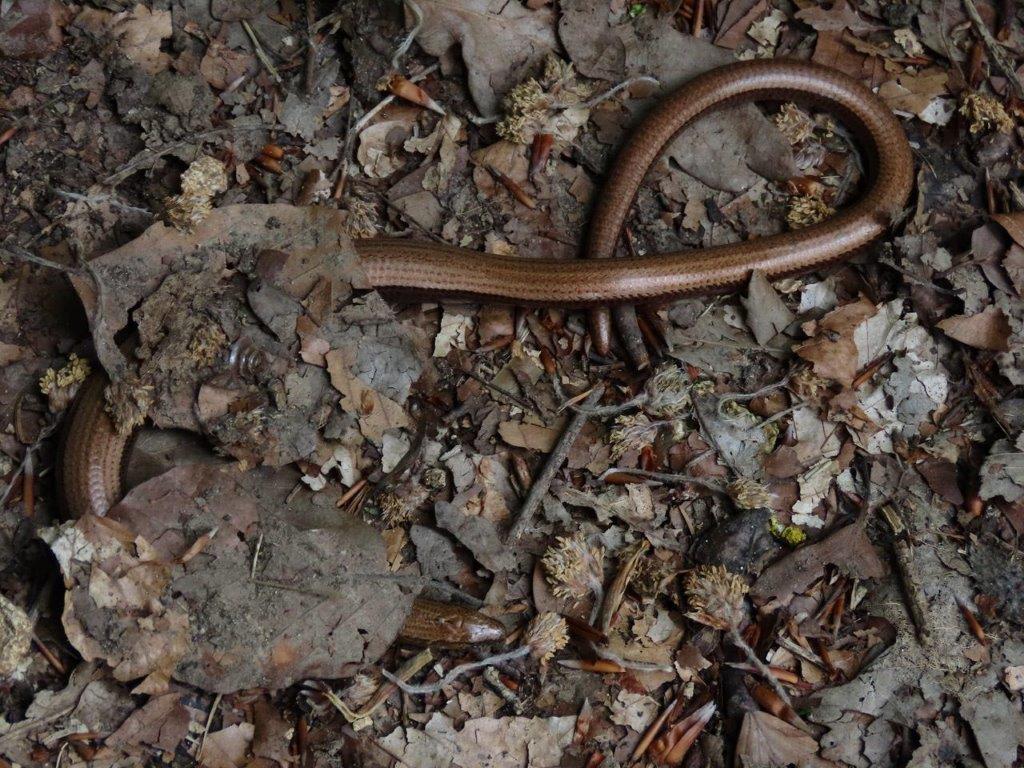
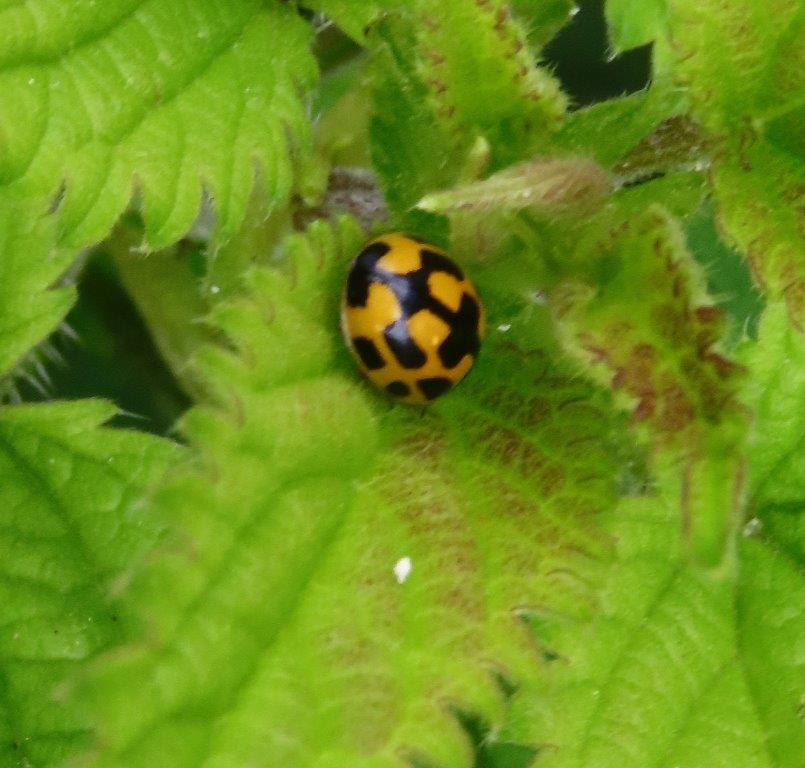
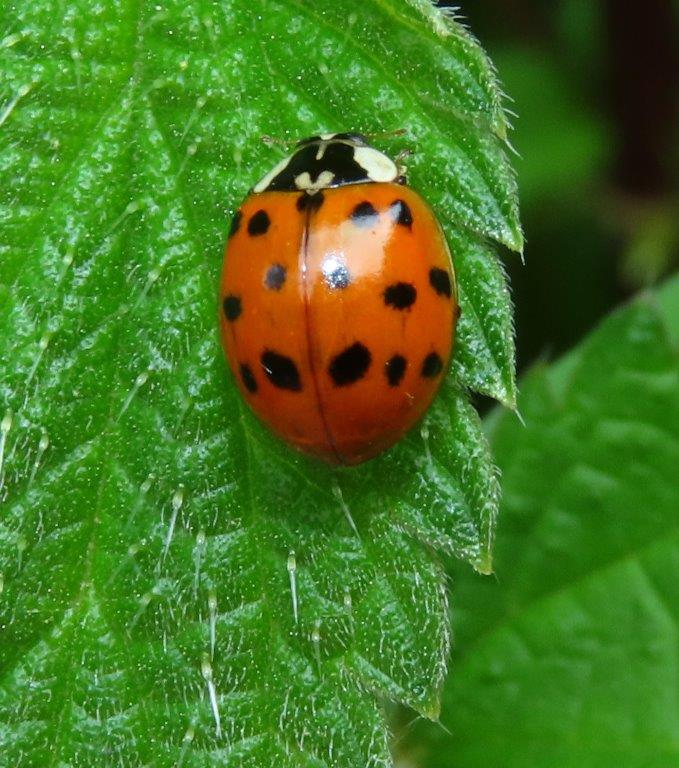
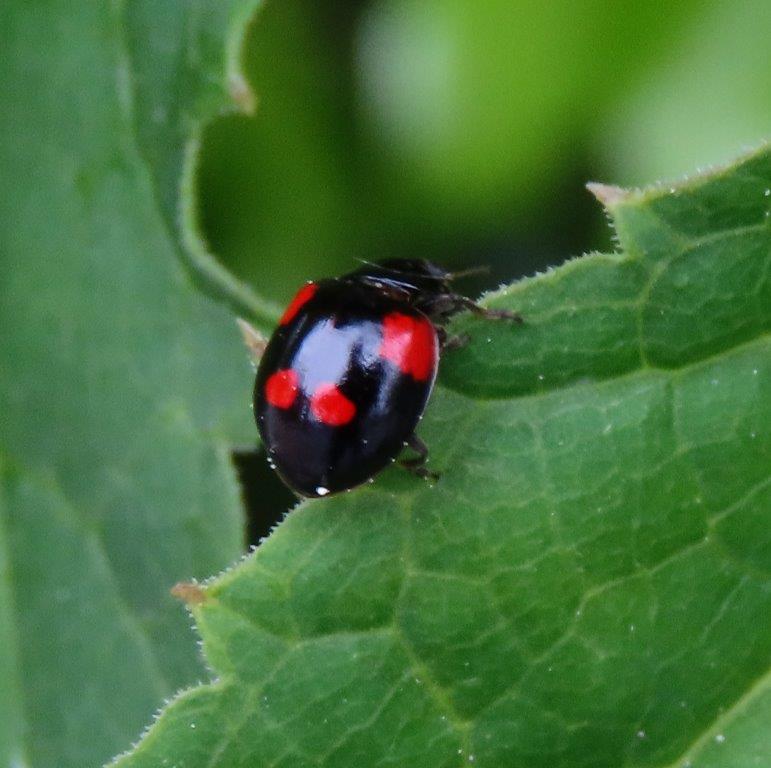
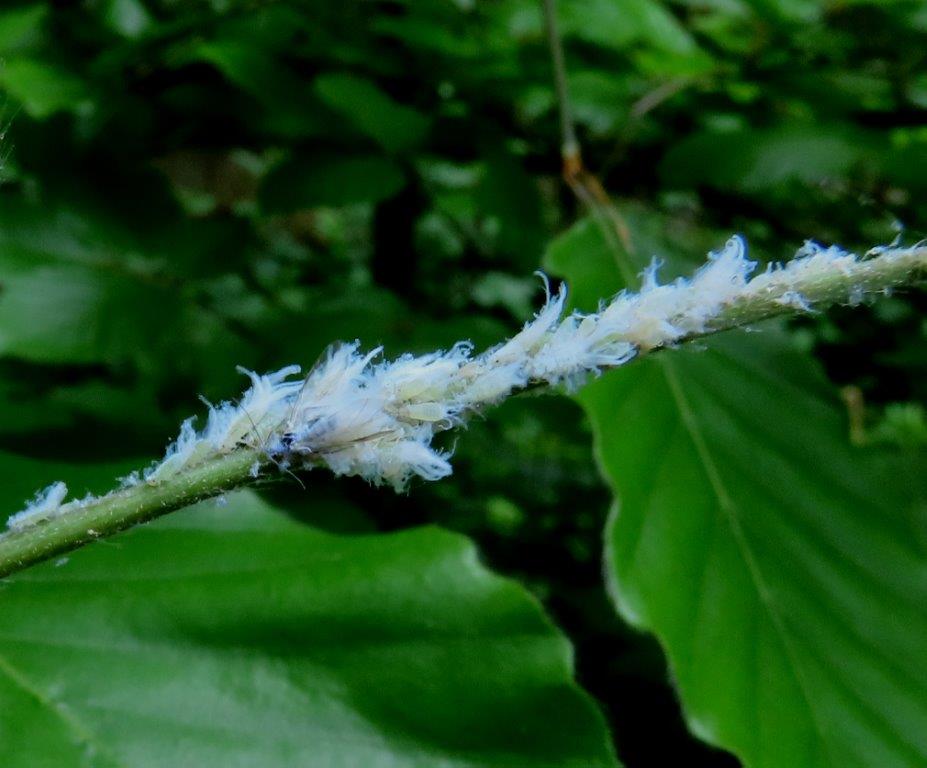
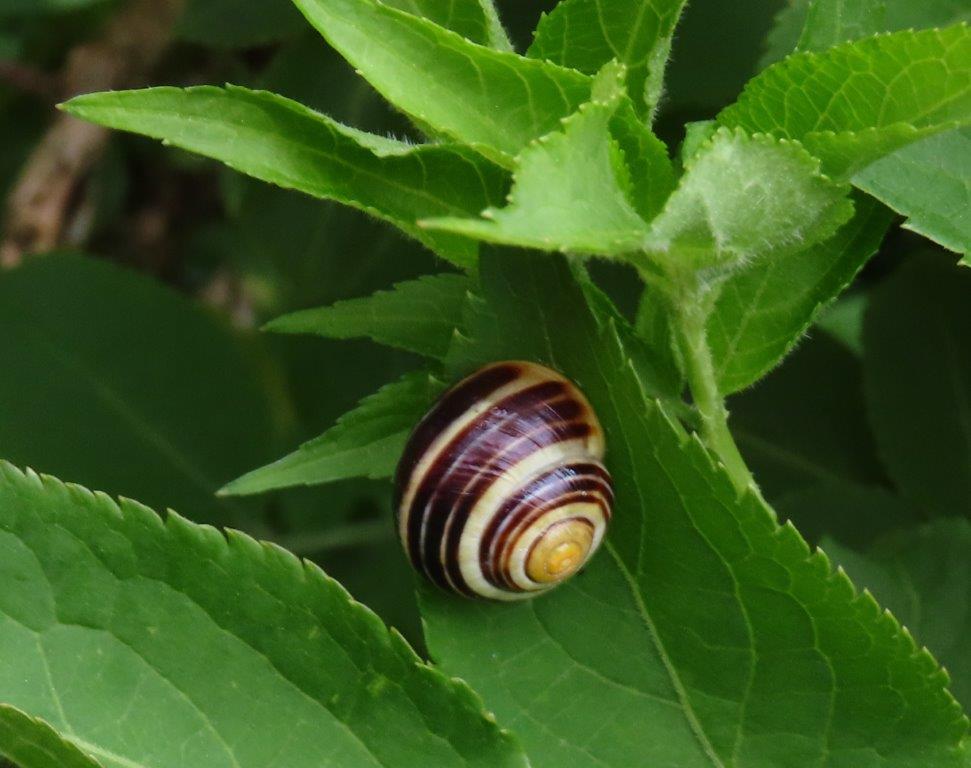
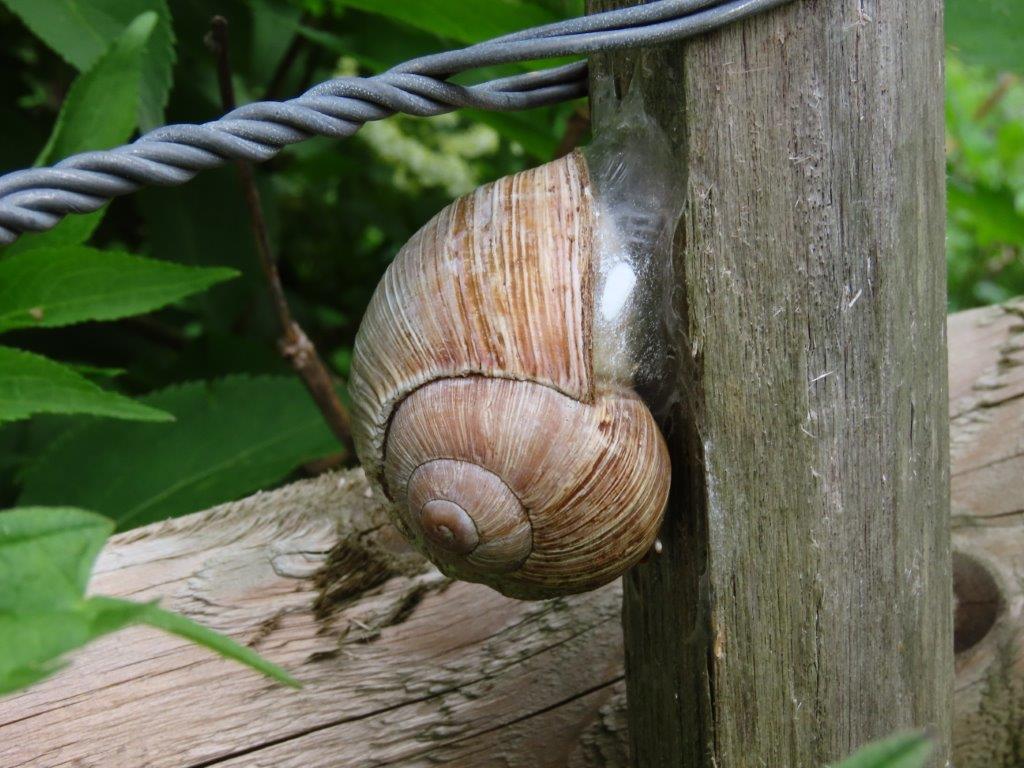
As with the flowers, invertebrates were mainly those we might expect to see in a London park (including a range of ladybirds and Beech Woolly Aphid), with the exception of the huge Roman Snail.

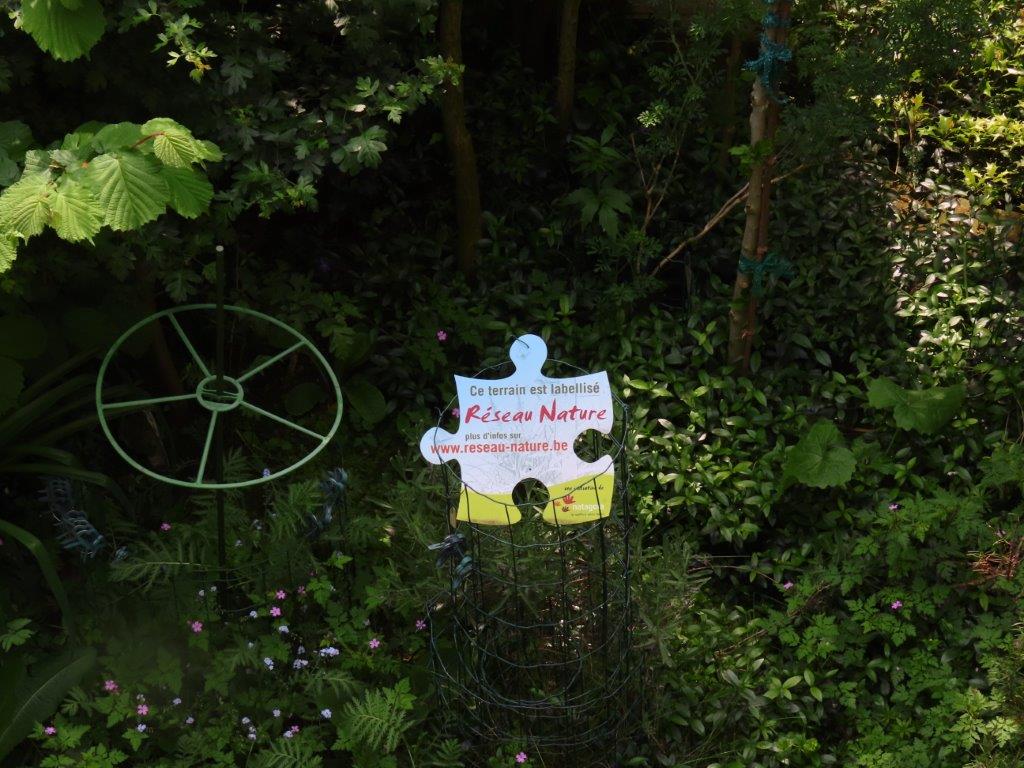
An excellent couple of days, in a city we would like to see more of, in a country we would love to eat more of the food of and drink more of the beer of! From a nature perspective, it was good to see the apparent steps towards sustainability, from the spray-free street tree planting pockets, to the swathes of longer grass in the greenspaces with wildlife-friendly native and non-native plants allowed to flower, and the mini-wildlife sites in the heart of the city proudly labelled as parts of the Nature Network. On top of that, while we were there it was Eurovision, and in a commercial break on Belgian TV, a prime-time ad for their equivalent of No Mow May!


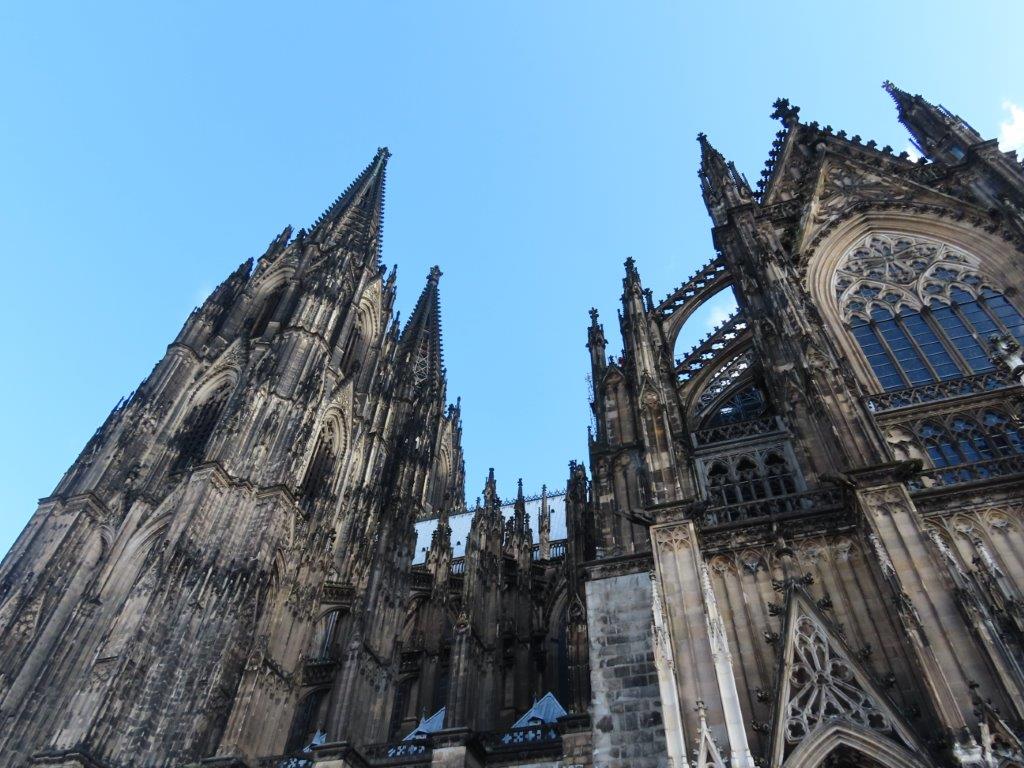
And so, after a fun-filled couple of days, and with rain in the forecast and the cold north-easterlies re-establishing, it was back on the train and heading to Bavaria, with just a couple of hours in Cologne to stretch the legs and have breakfast, and wonder anew (see here for our last trip there) at the vast, scary monster, the apogee of gothickry, that is Cologne Cathedral…

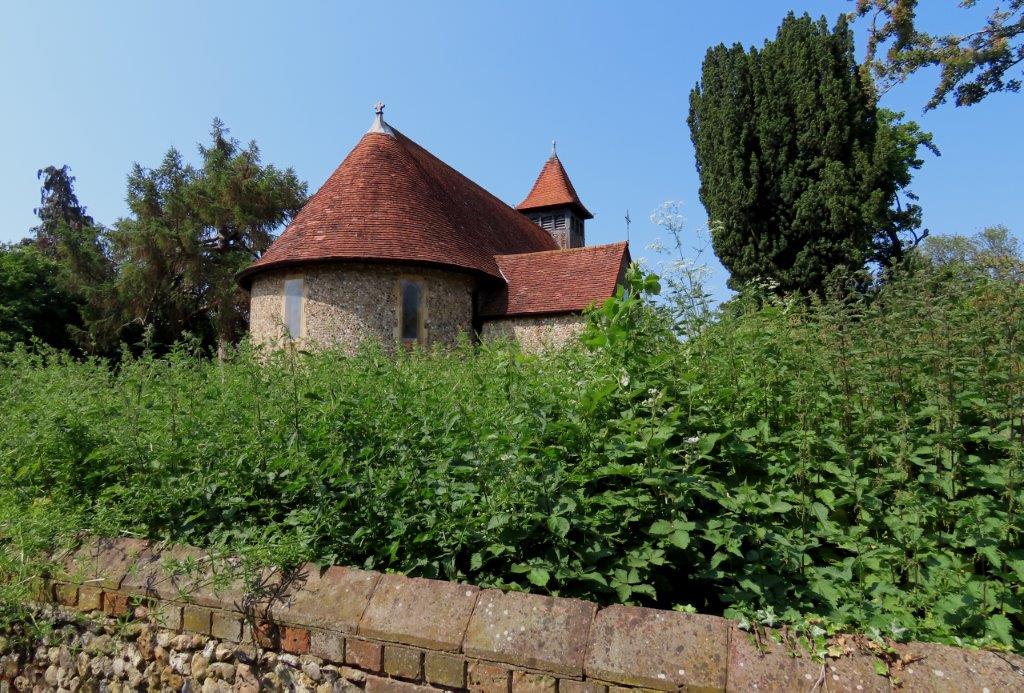
East Grove, Wrabness – small but perfectly formed!

Essex as a county abounds in ancient woods, more by area than in the whole of Norfolk, Suffolk and Cambridgeshire put together. I have known East Grove on the southern bank of the Stour Estuary for forty years, and always felt that it is one of the very best, despite its small size.

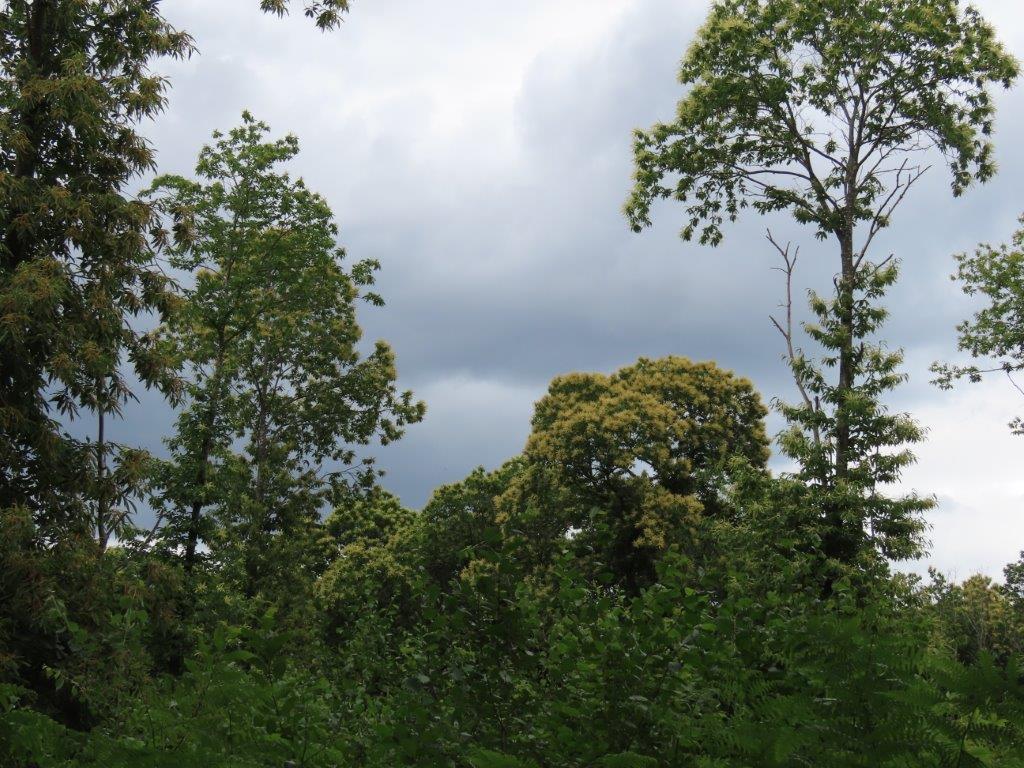
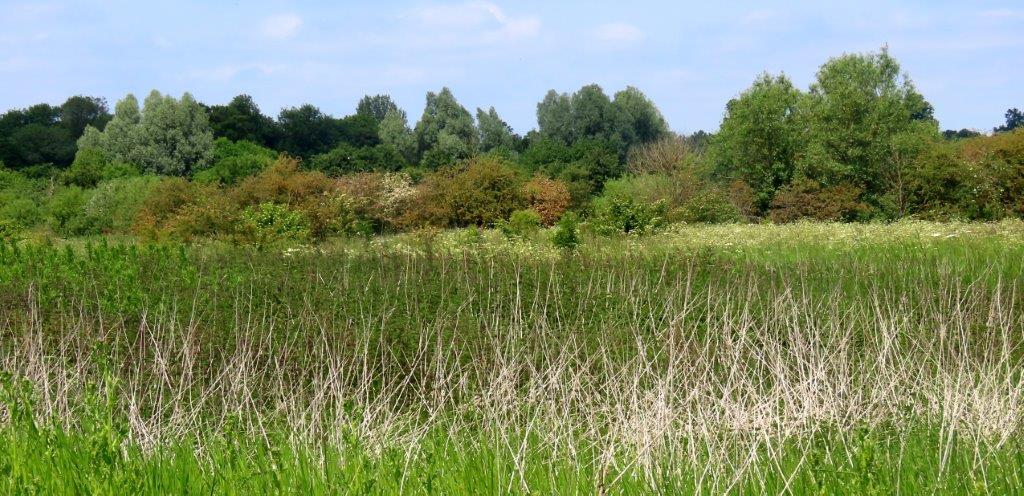
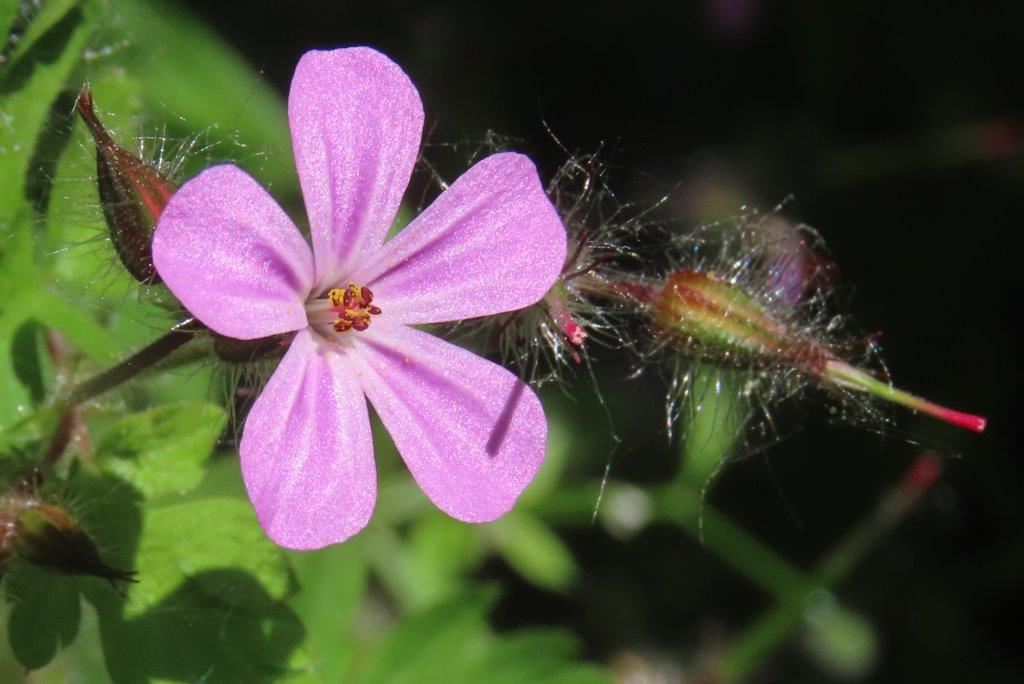
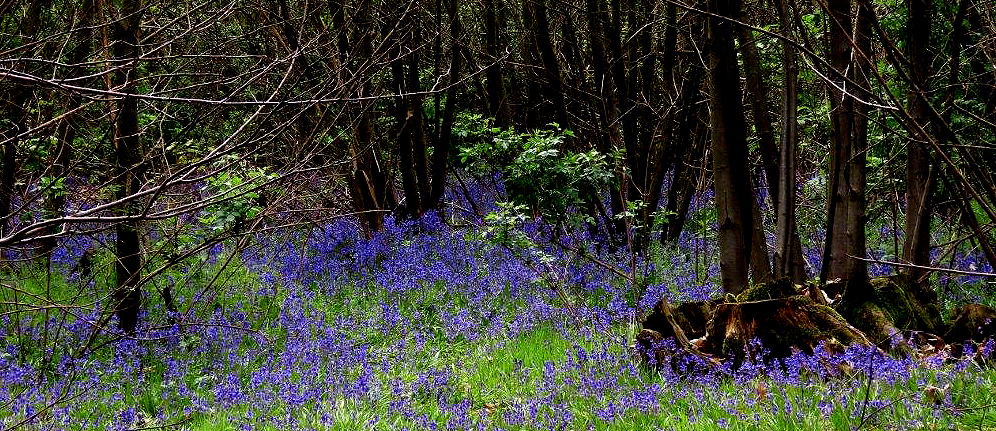
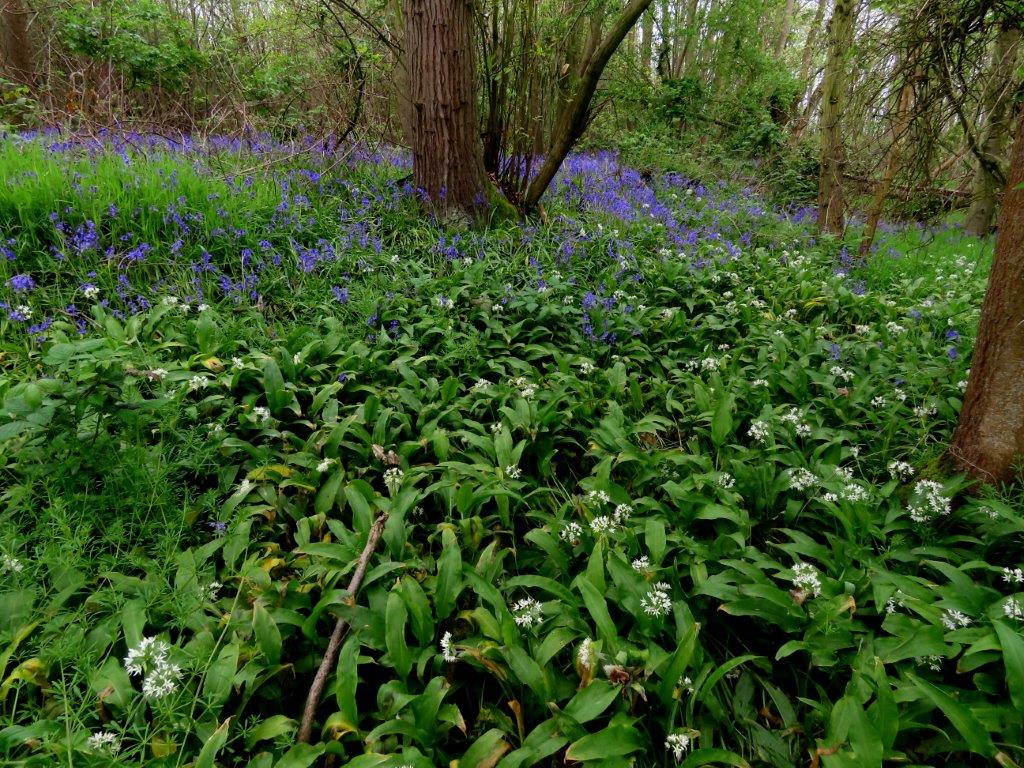
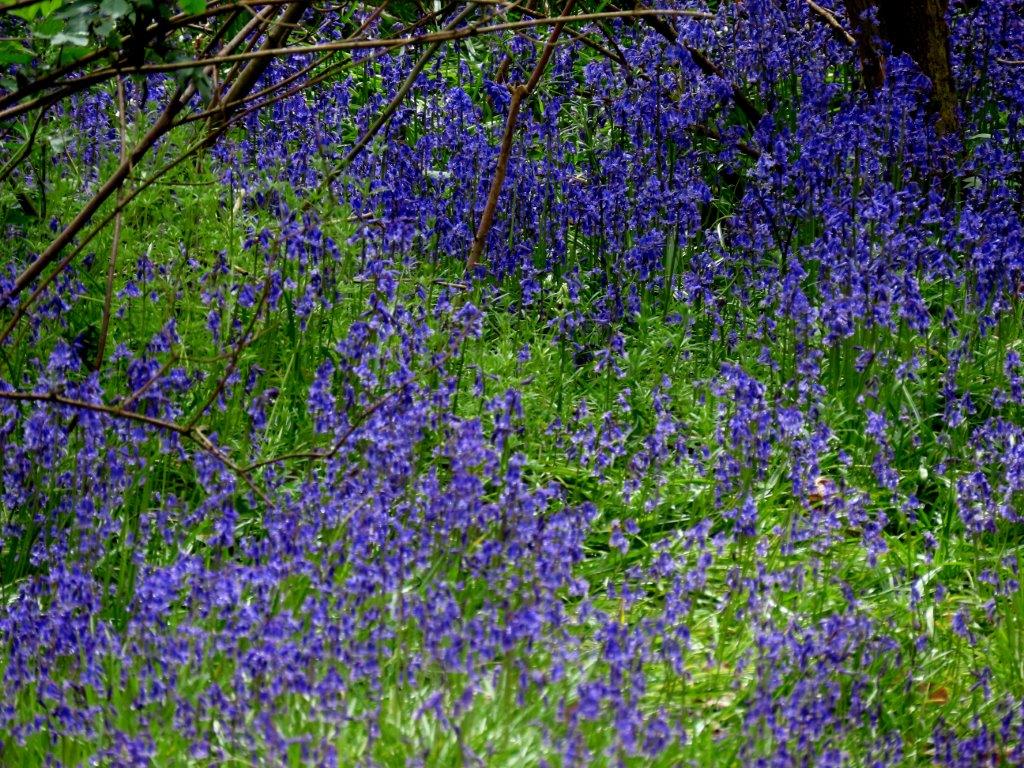
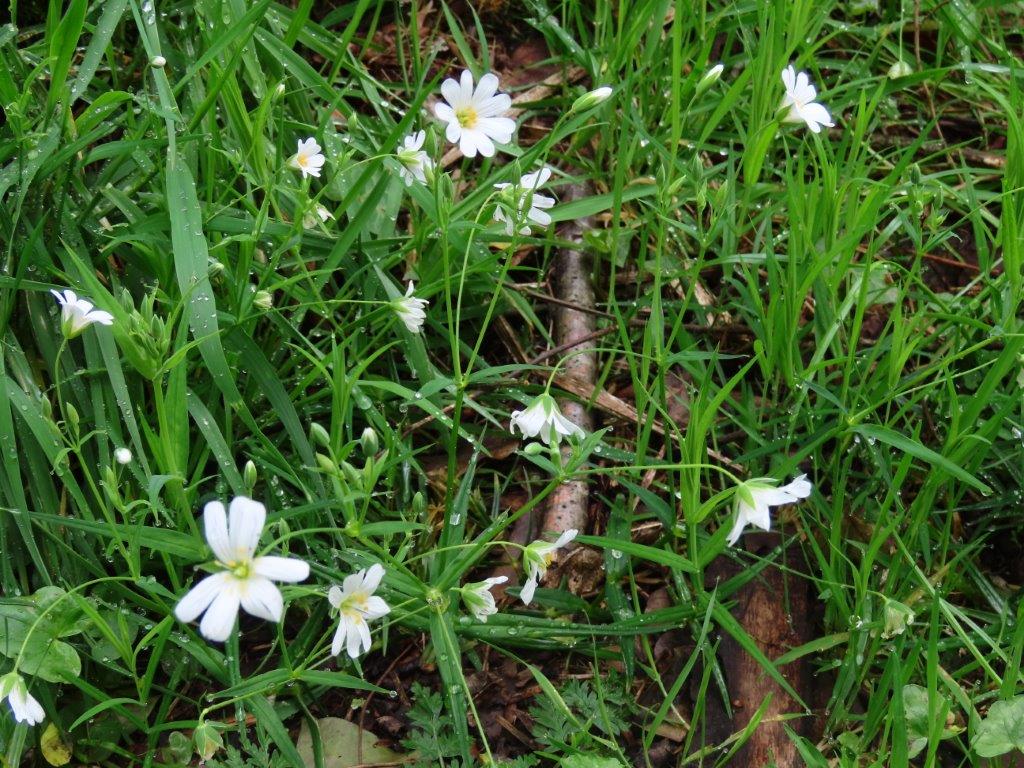
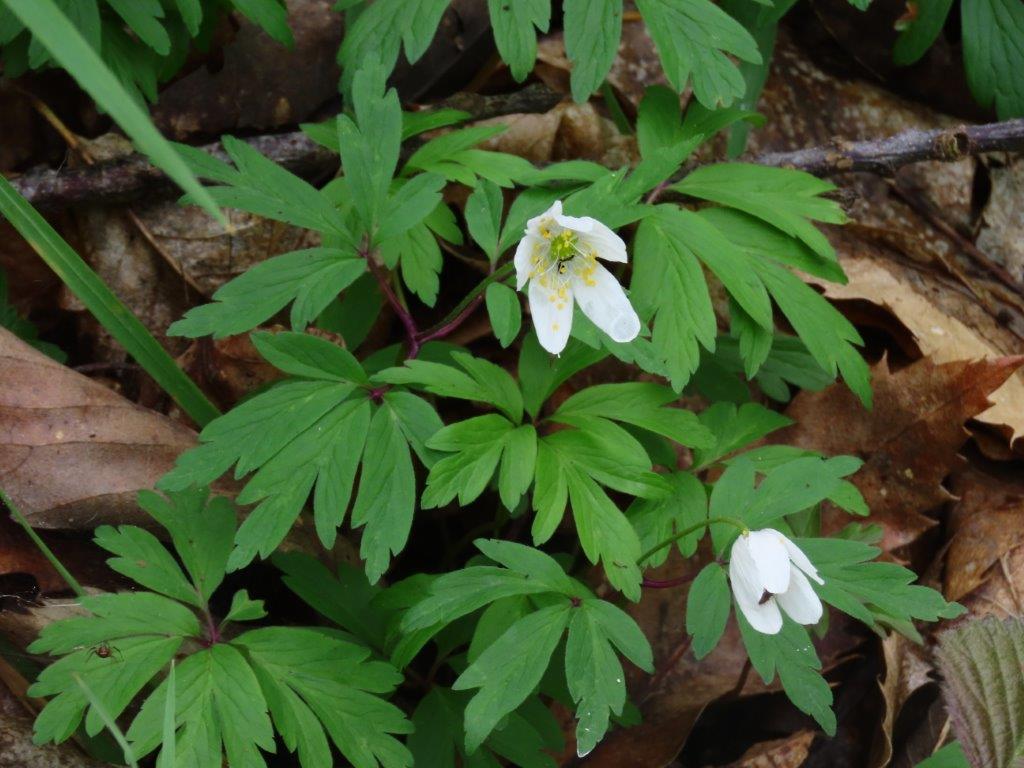
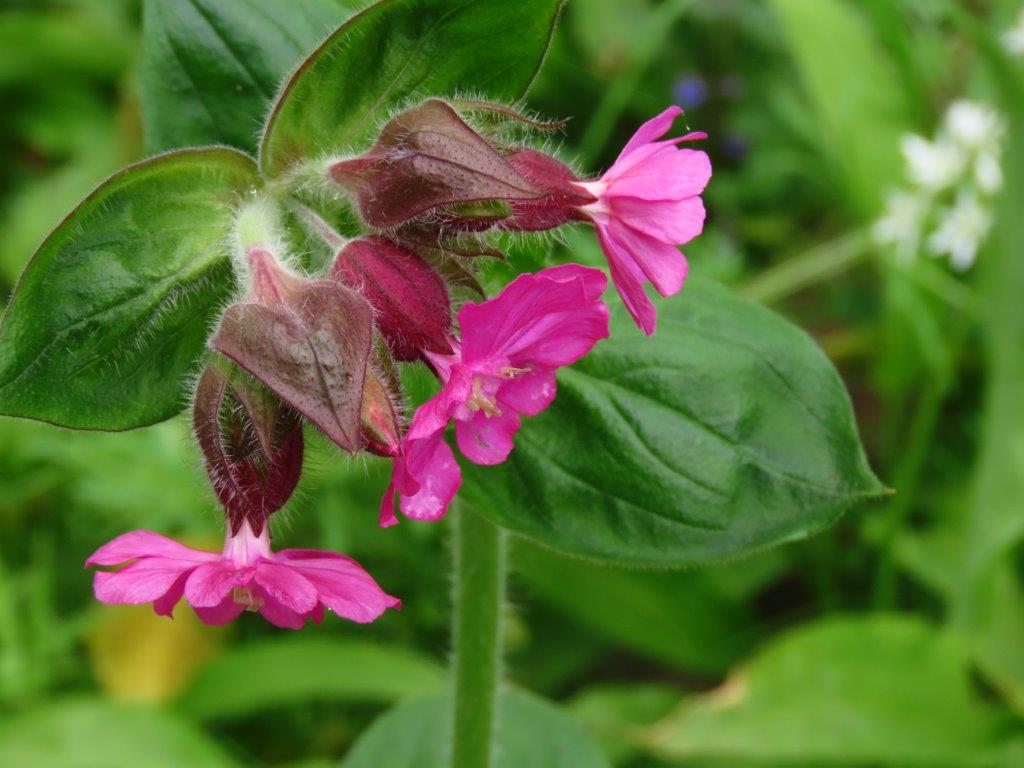
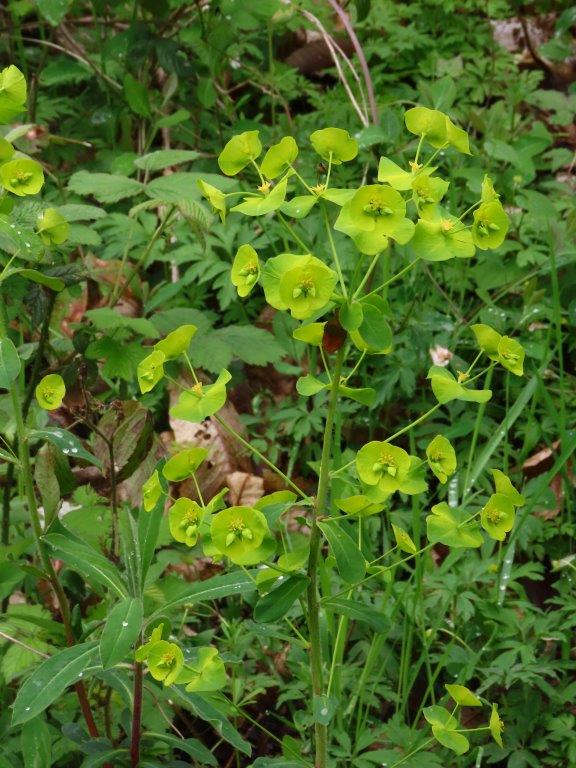
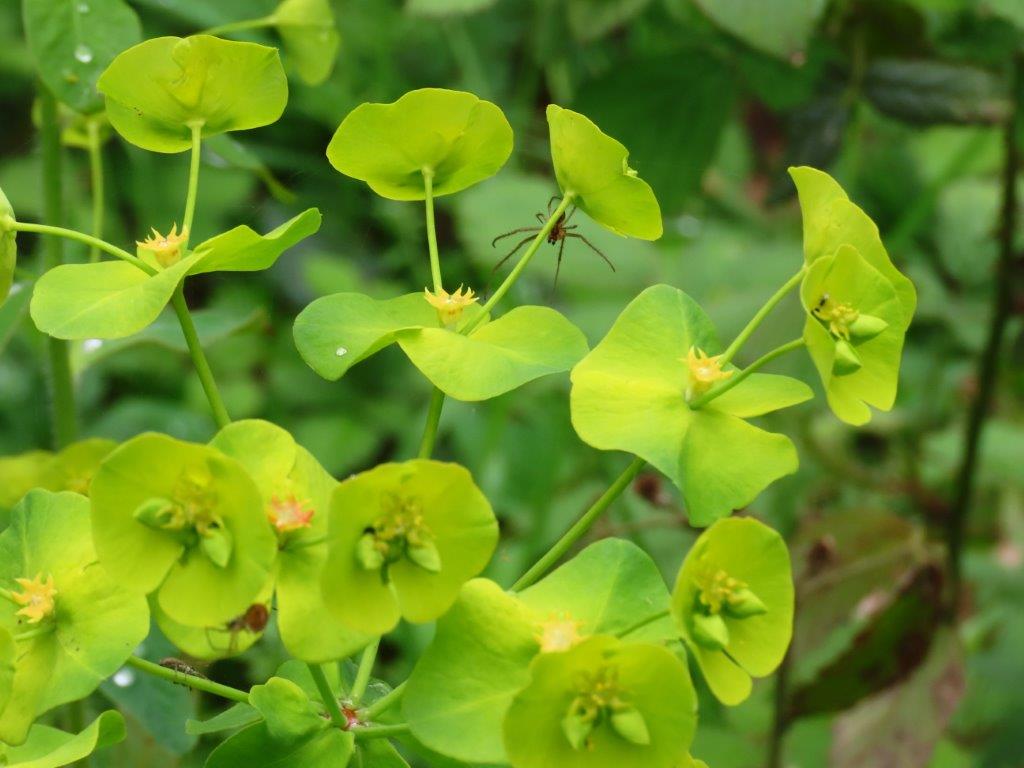
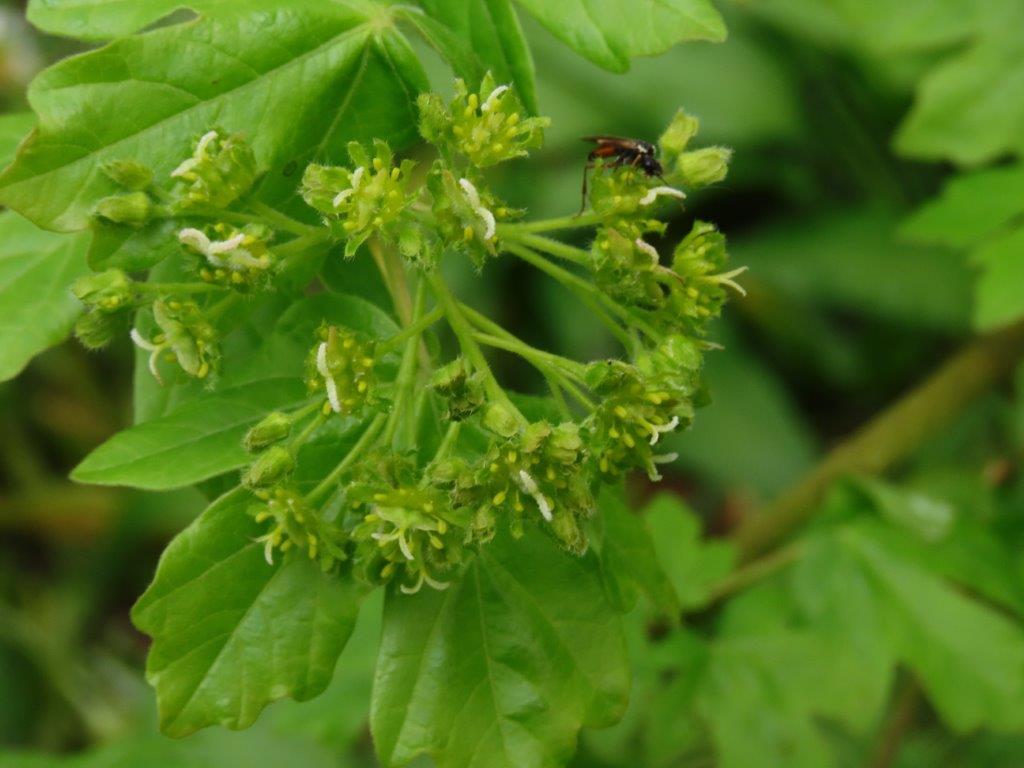
Squeezed into its couple of hectares is an active Sweet Chestnut coppice, with Oak and Field Maple trees, and THE most diverse ground flora for its size I have seen. Bluebells of course abound, but after their first flush, the monochrome blue vista is punctured with white Greater Stitchwort and Wood Anemone. And this weekend, Red Campion has burst, alongside the Yellow of Archangel and acid-green Wood Spurge, all to complete the colour-wheel.

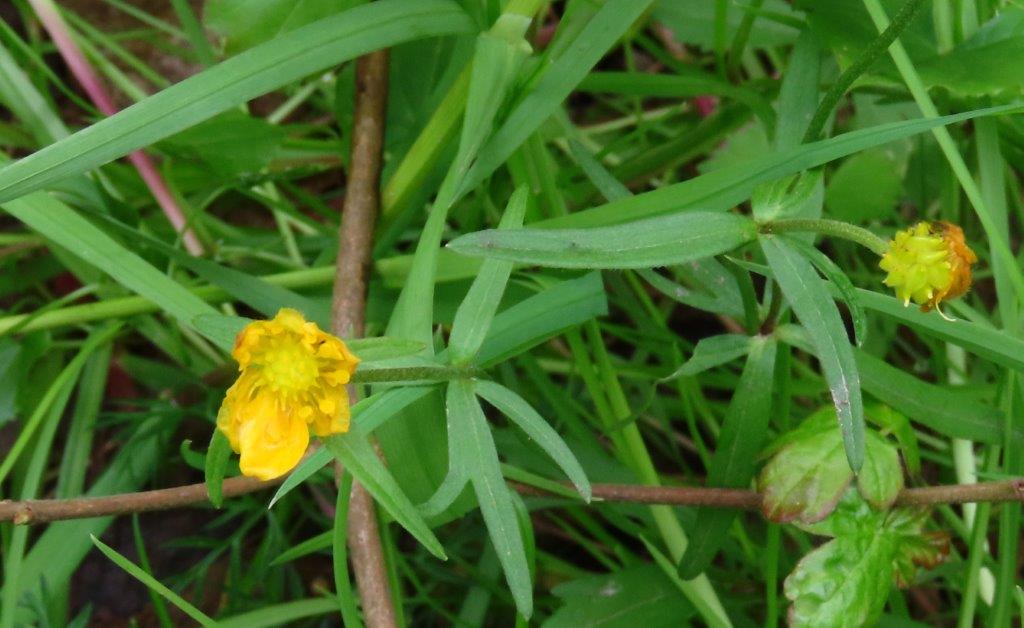
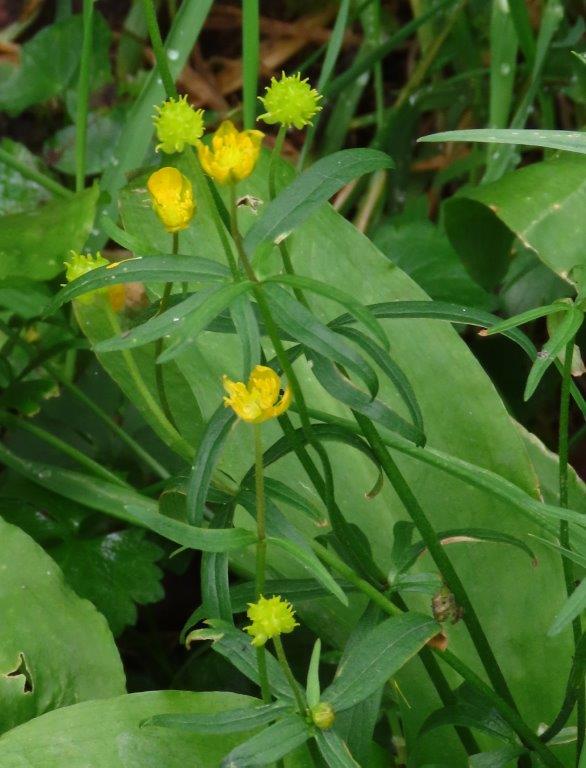
The delightfully named, but actually rather scrappy Goldilocks Buttercup, its flowers usually missing one or more petals and those that it has being pretty manky…

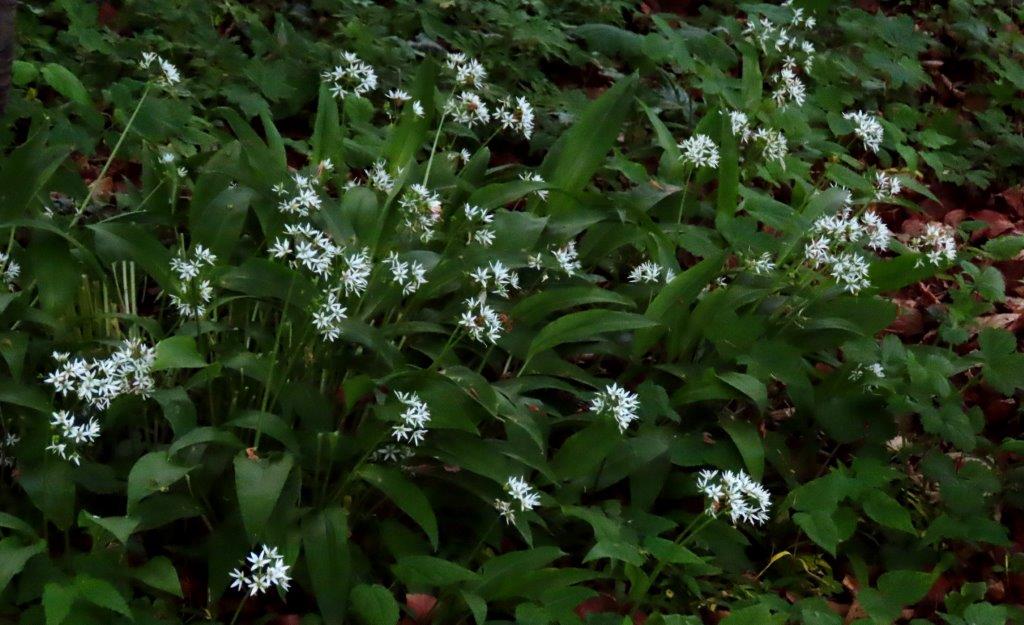
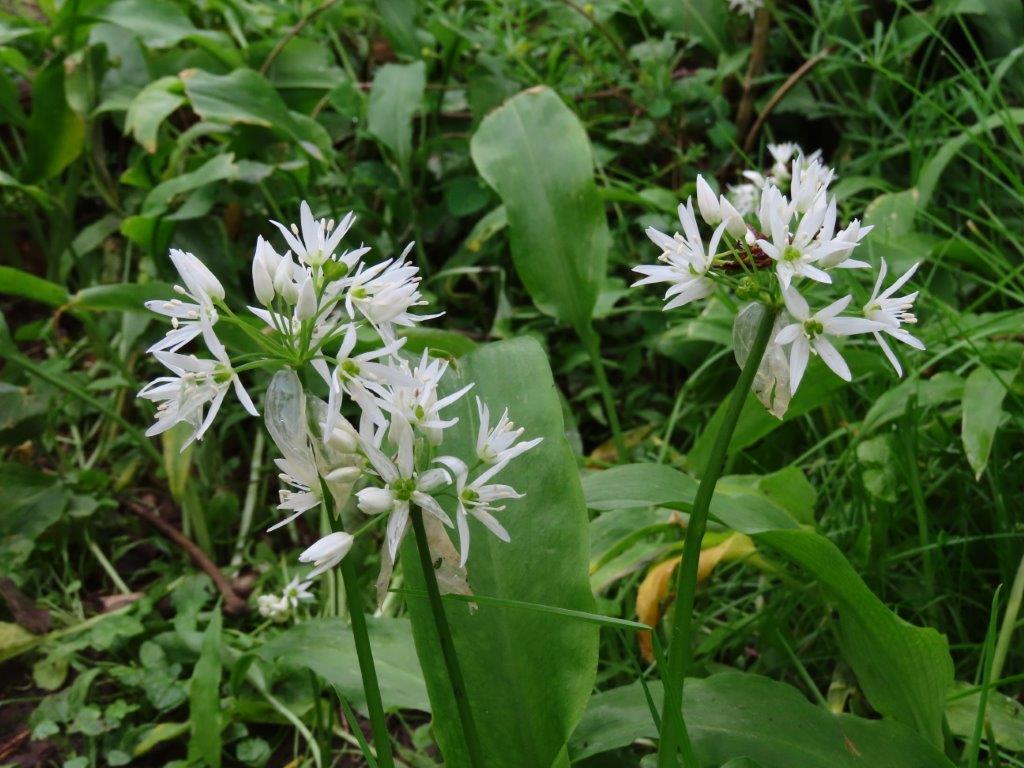
And to cap it all, Ramsons is now blooming, scenting the air with its wonderful garlic fragrance: there are few places locally where this can be found in abundance.

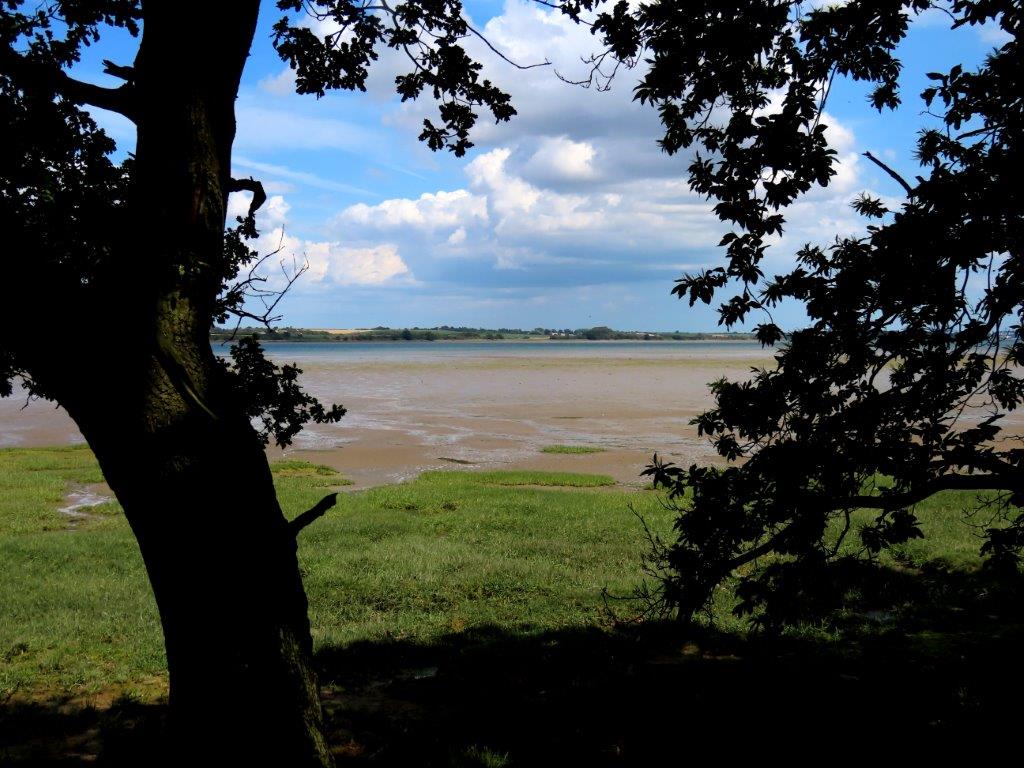
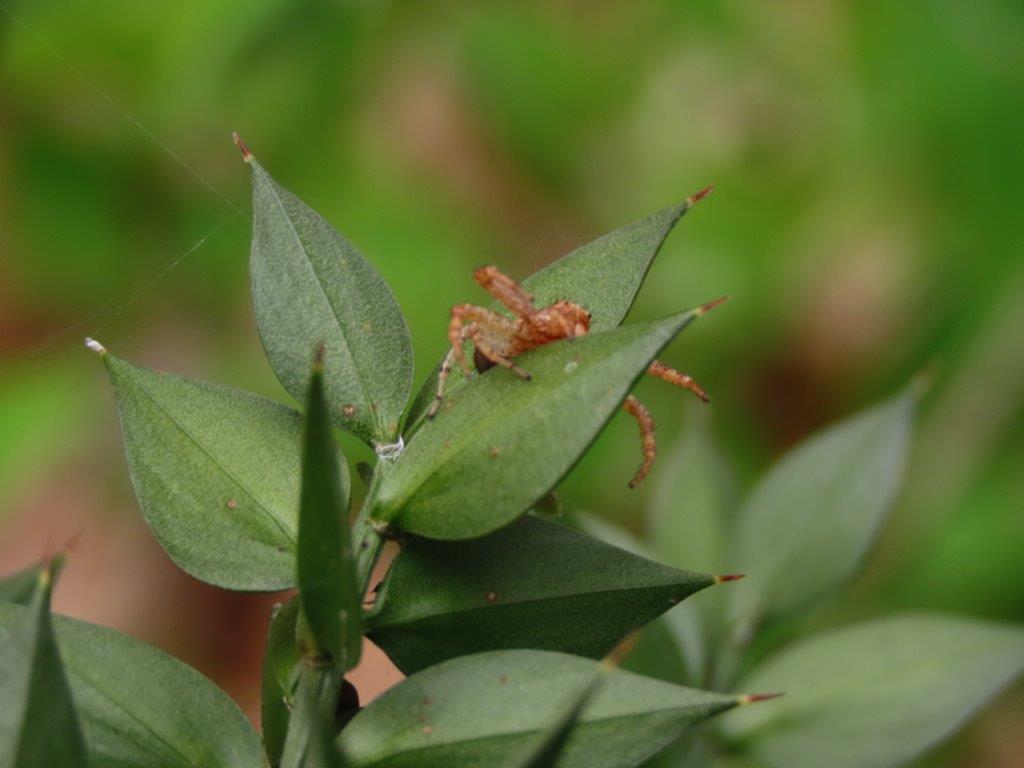
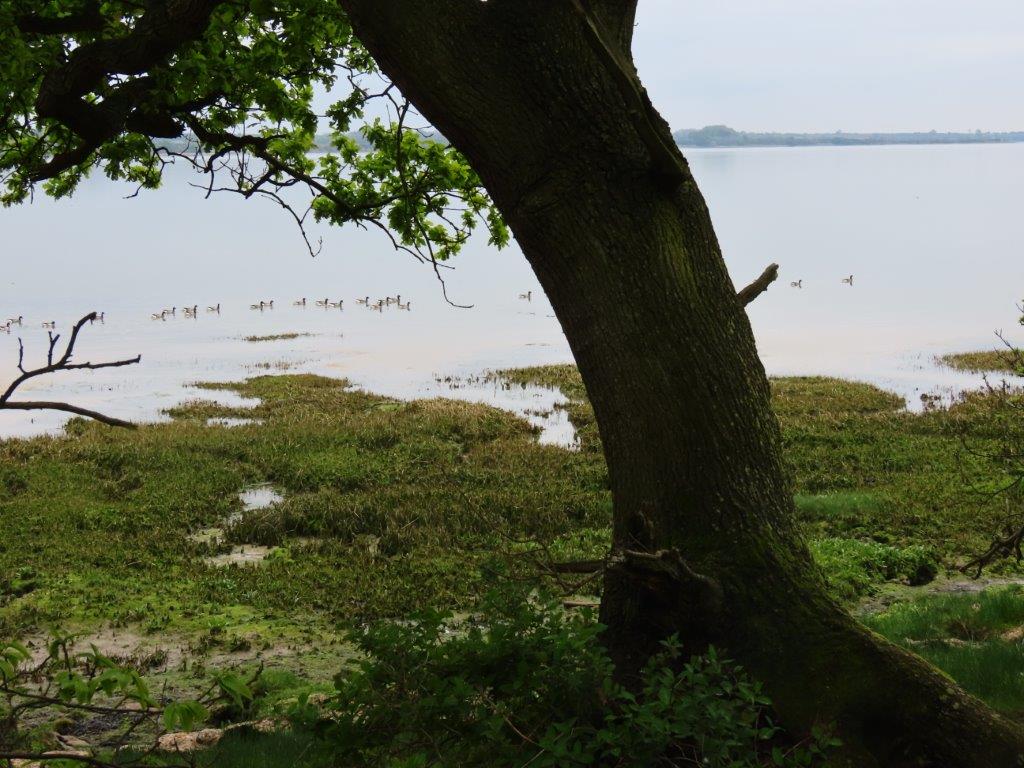
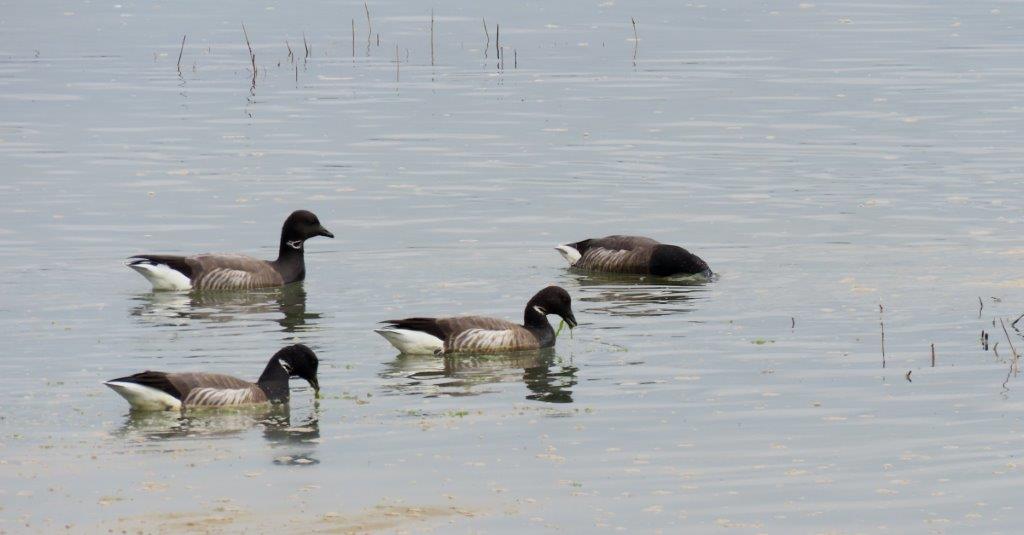
To walk in this wood is an assault on the senses – a complete colour palette, the scent of the garlic, the prickling of Butchers’-broom and especially in mid-May at high tide, the gentle burbling of Brents on the water. Gentle, but occasionally rising to a crescendo as they take flight – this estuary is a renowned staging post before they head off to northern Siberia, in the hope that winter has relinquished its grip. This wood is almost unique in Essex in having a tidal, estuarine frontage.

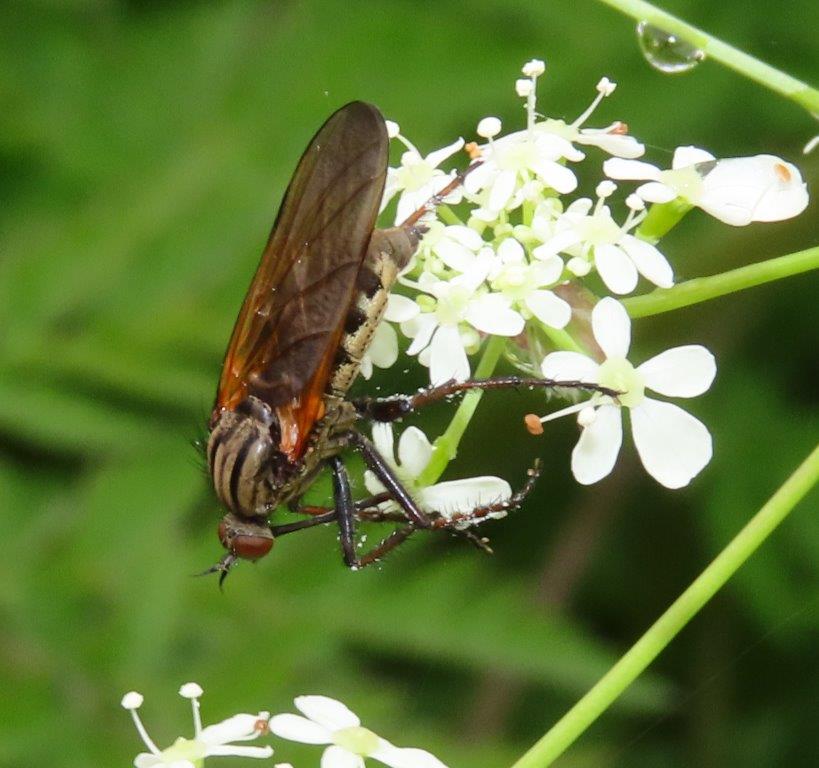
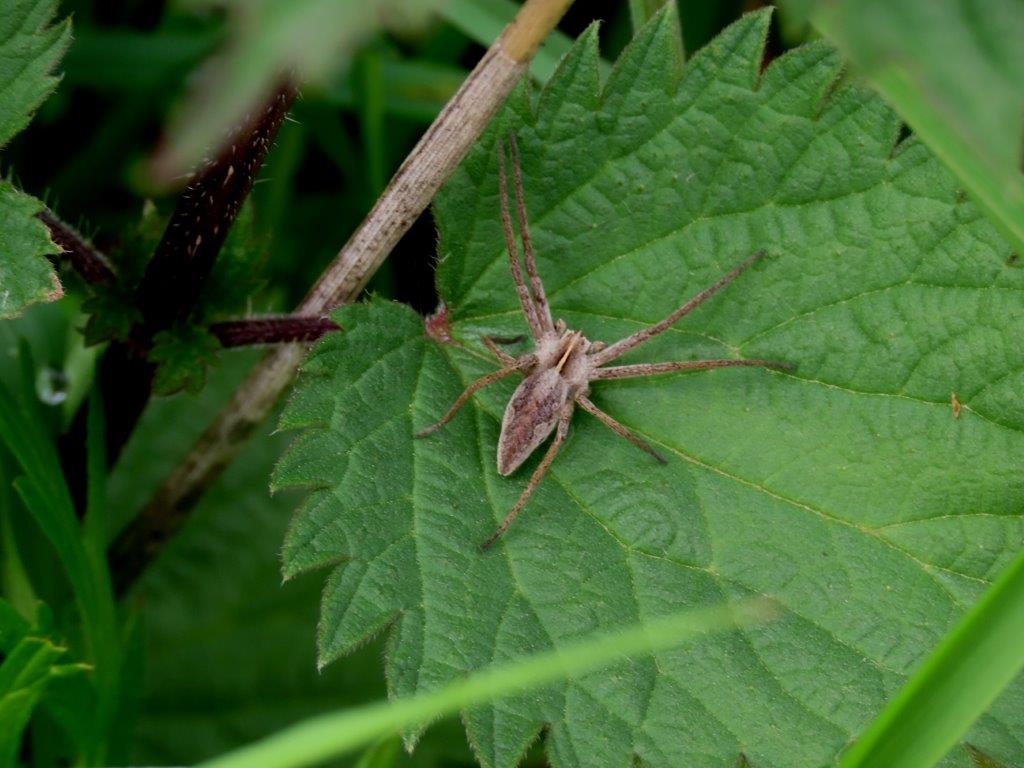
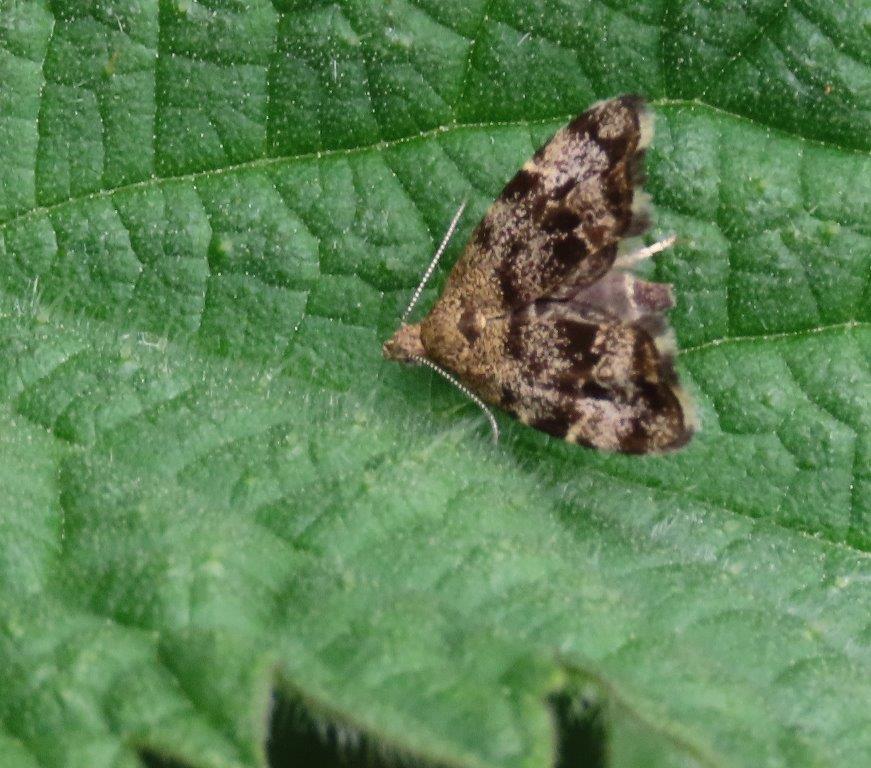
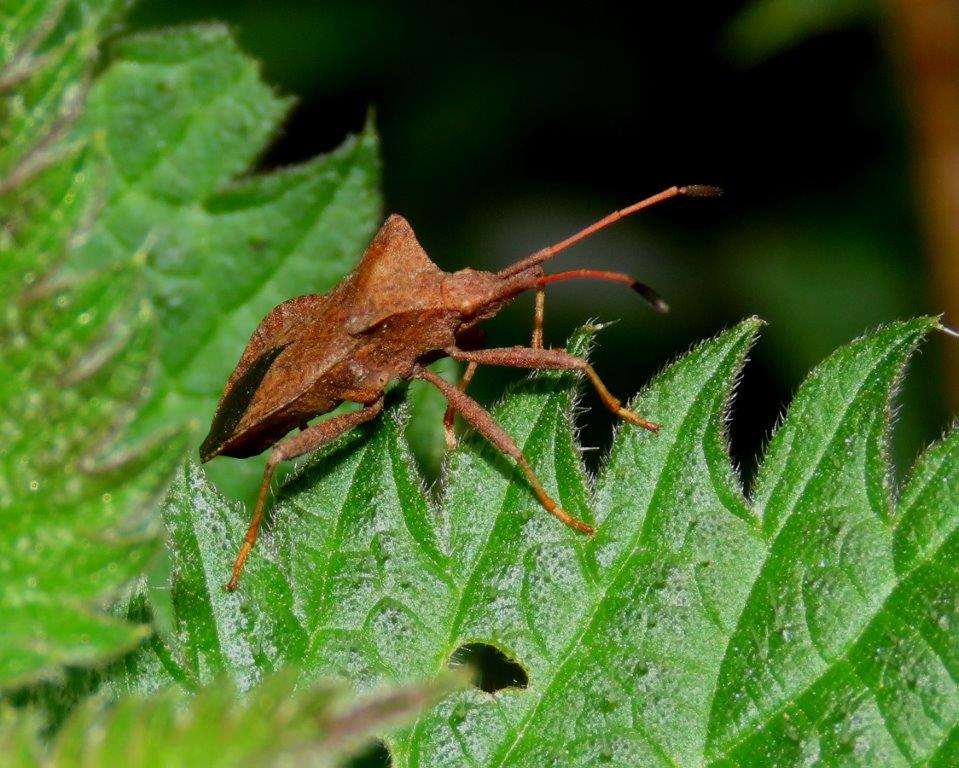
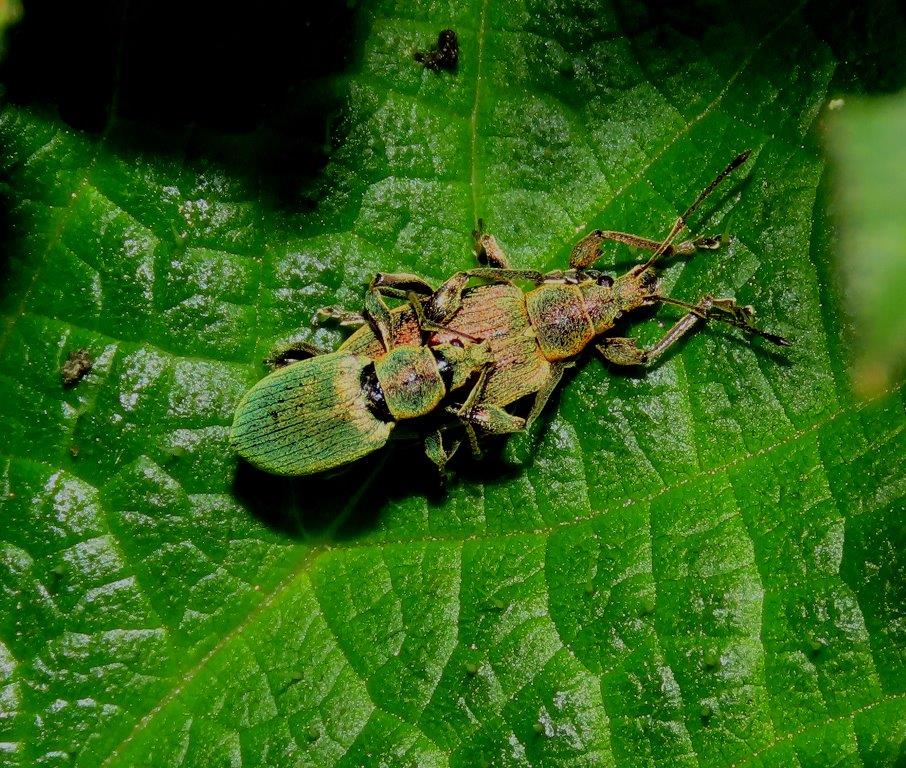
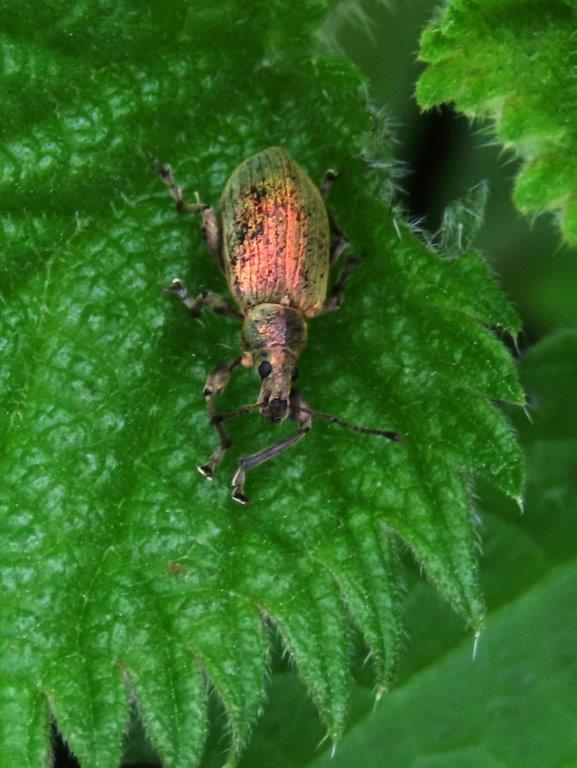
On the first really warm, humid afternoon of our year, the insects and other invertebrates were out. A good selection is shown below…

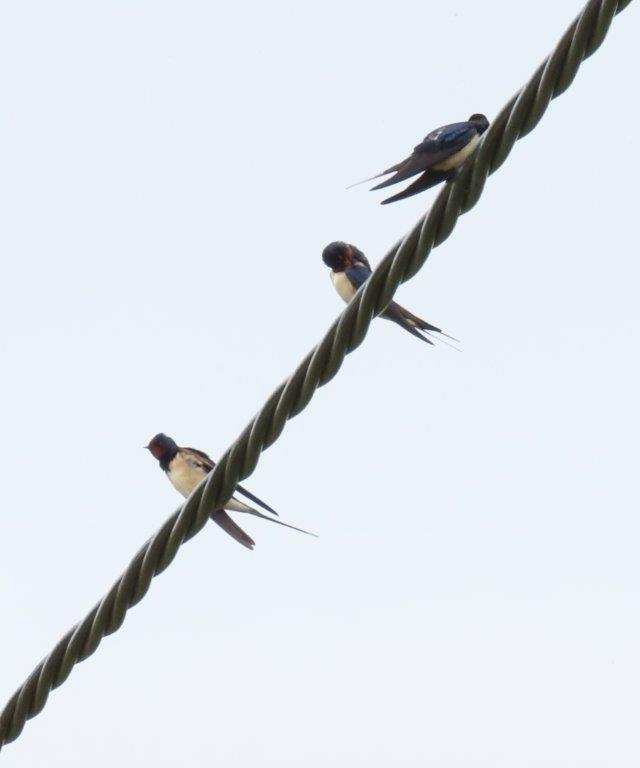
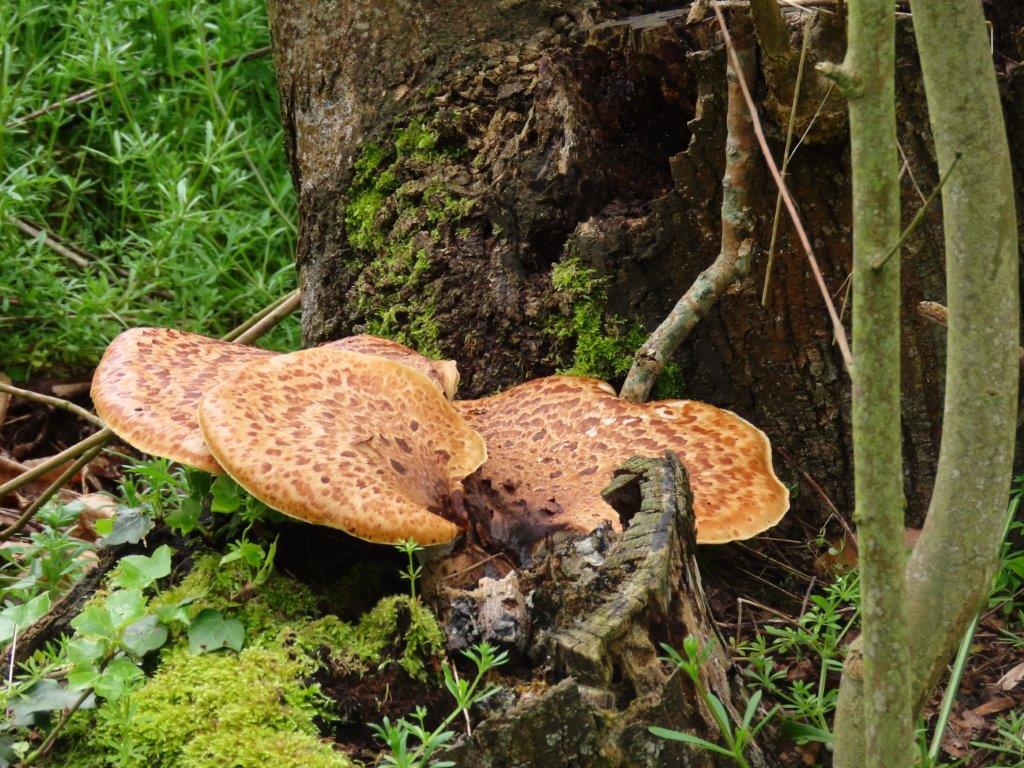
… as Swallows sang from the wires, probably four pairs in the neighbouring  stables. and a magnificent Dryad’s Saddle exploded from an old tree stool …

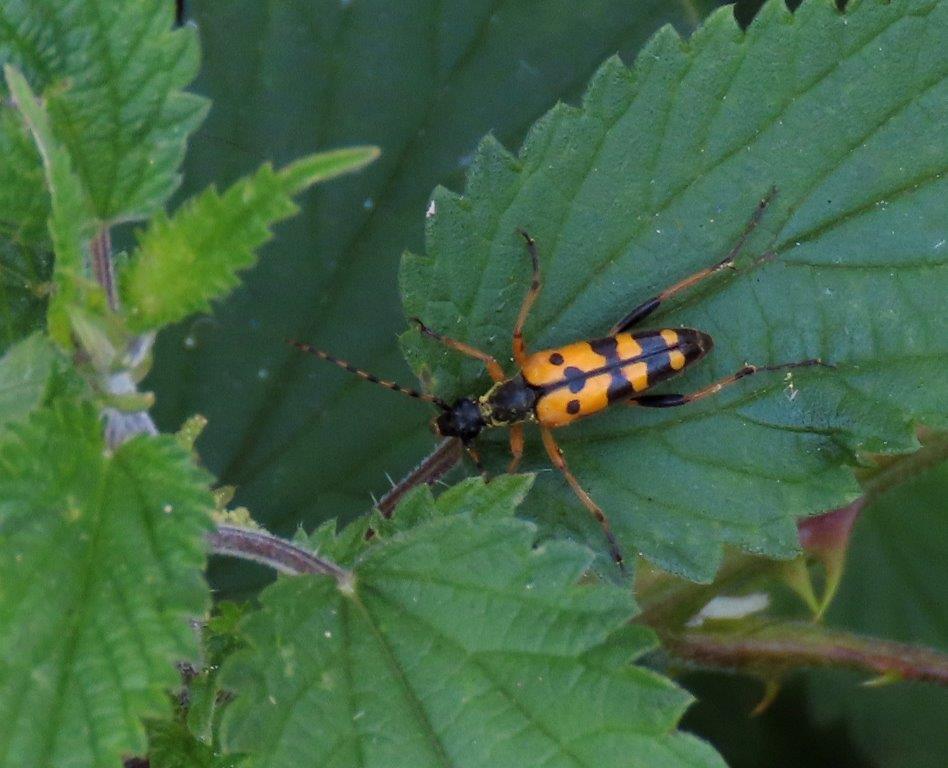
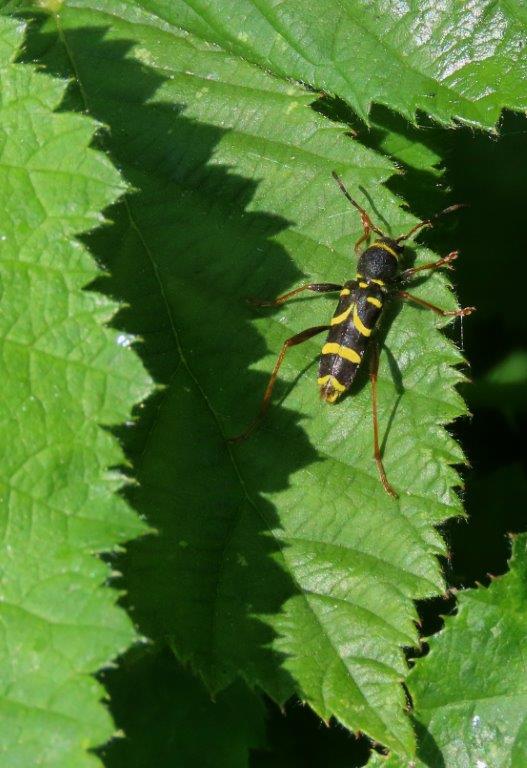
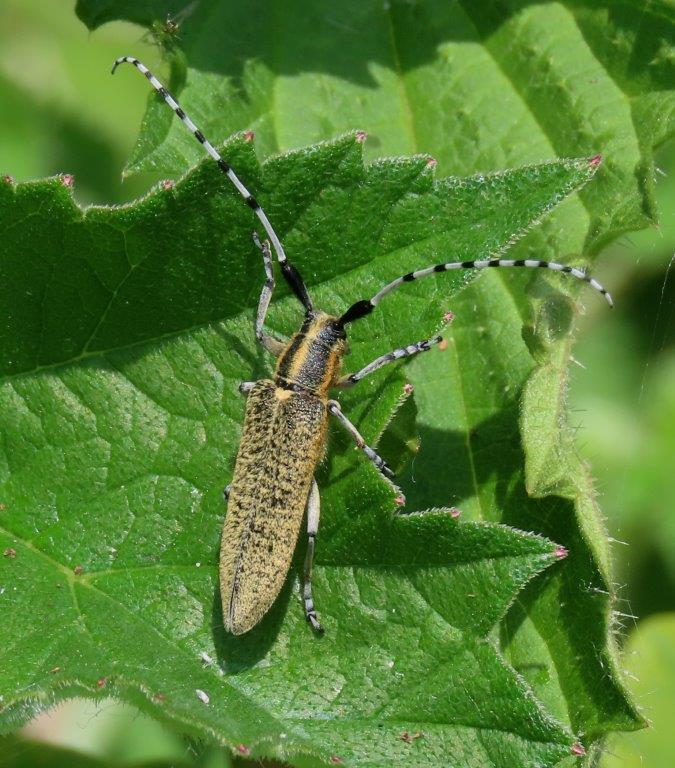
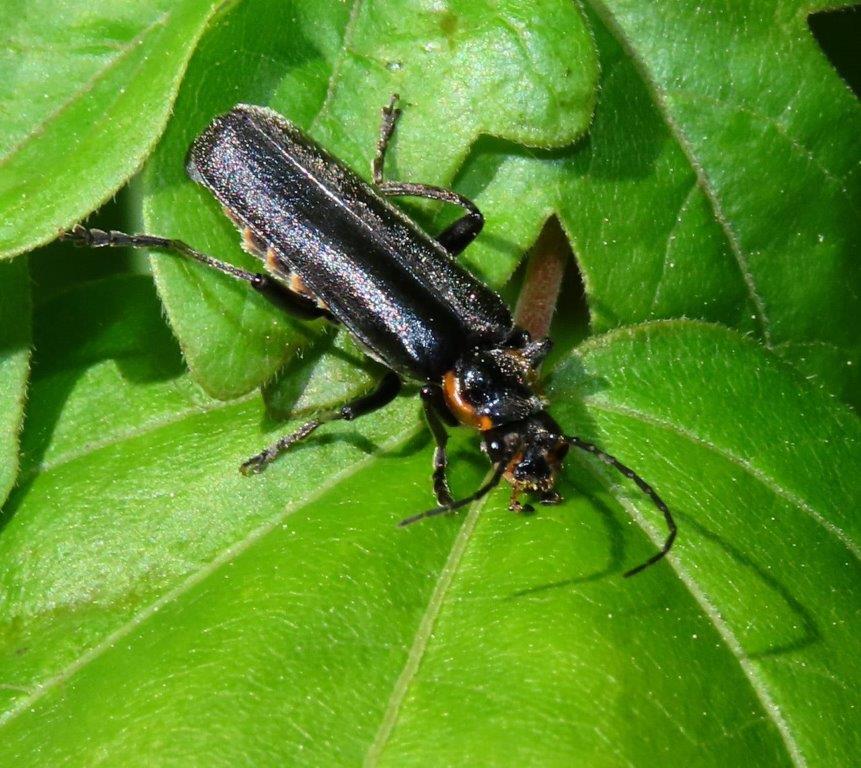
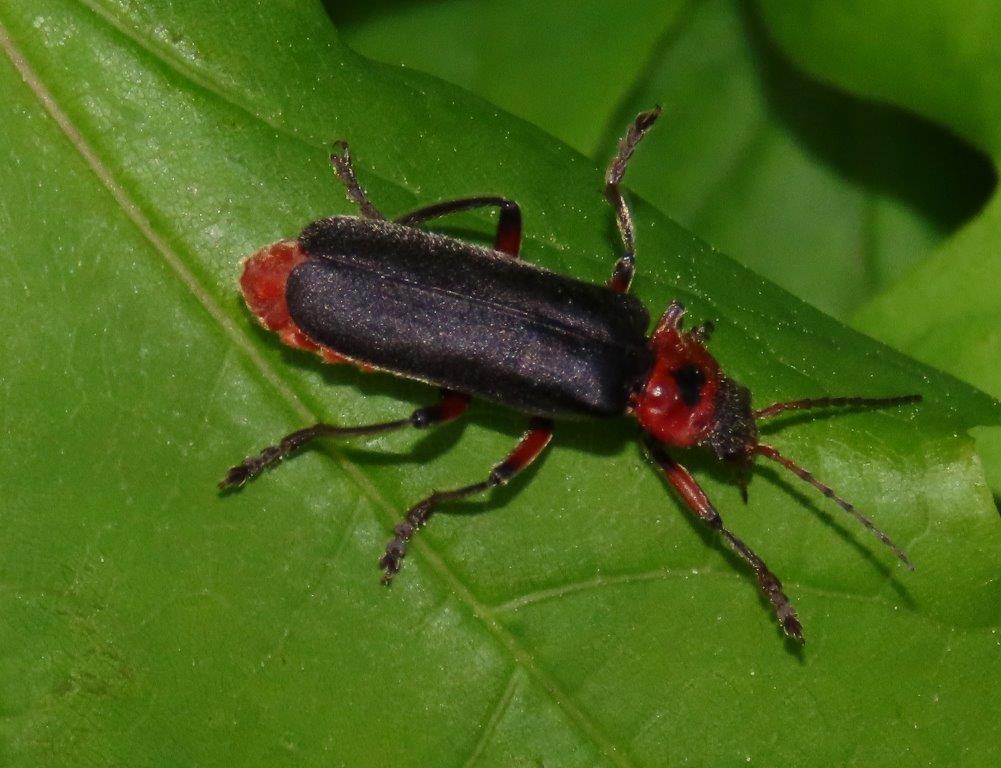
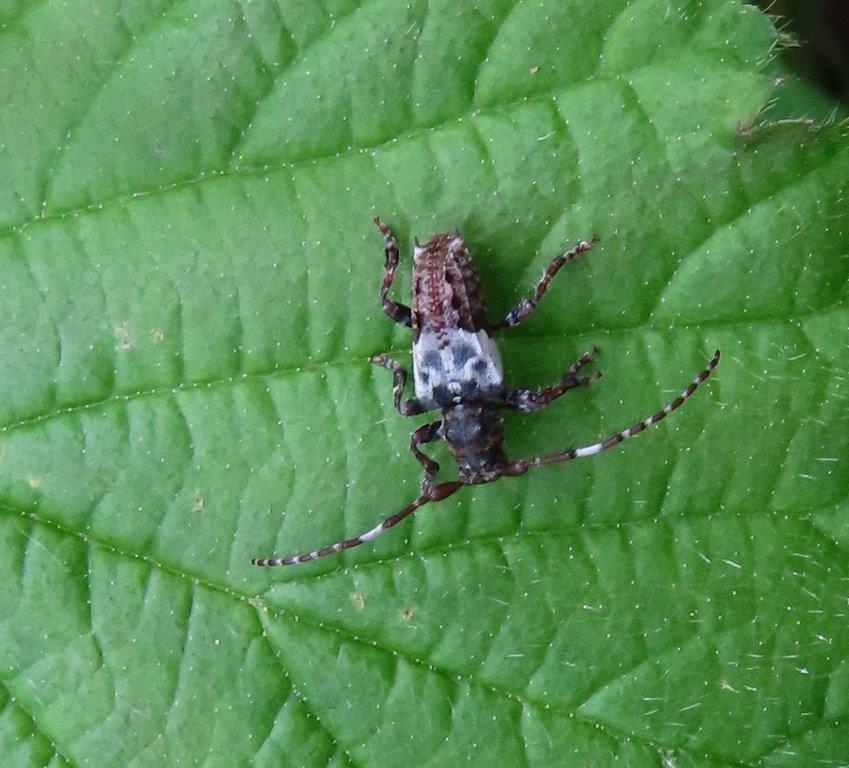
… but pride of place must go to the Greater Thorn-tipped Longhorn-beetle Jude spotted. A lovely beast, and not at all common. The National Biodiversity Network map shows only half a dozen previous Essex localities, including one from Stour Wood, the RSPB/Woodland Trust just 500m downstream. All in the course of a Sunday afternoon stroll!

The Wild Side of West London

Inspired in part by reading a new book we were sent for review (see here BOOK REVIEW: West London Wildlife | Chris Gibson Wildlife), we decided to spend a couple of days based in Chiswick to get to know some of the delights of that part of the city, both natural and otherwise. A great birthday present, as it turned out, in no small part to our break coinciding with the first truly warm Spring weather.

First it was to Gunnersbury Triangle, an iconic pocket park of a nature reserve, one we have been to several times before (see here and here for previous blogs). It was as expected delightful, with Chiffchaffs and Blackcaps singing, Sallow trees in bloom …

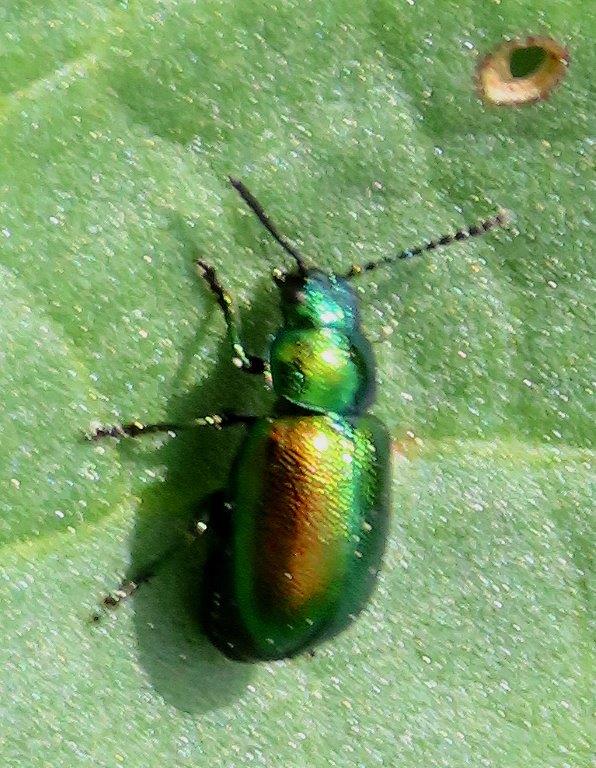
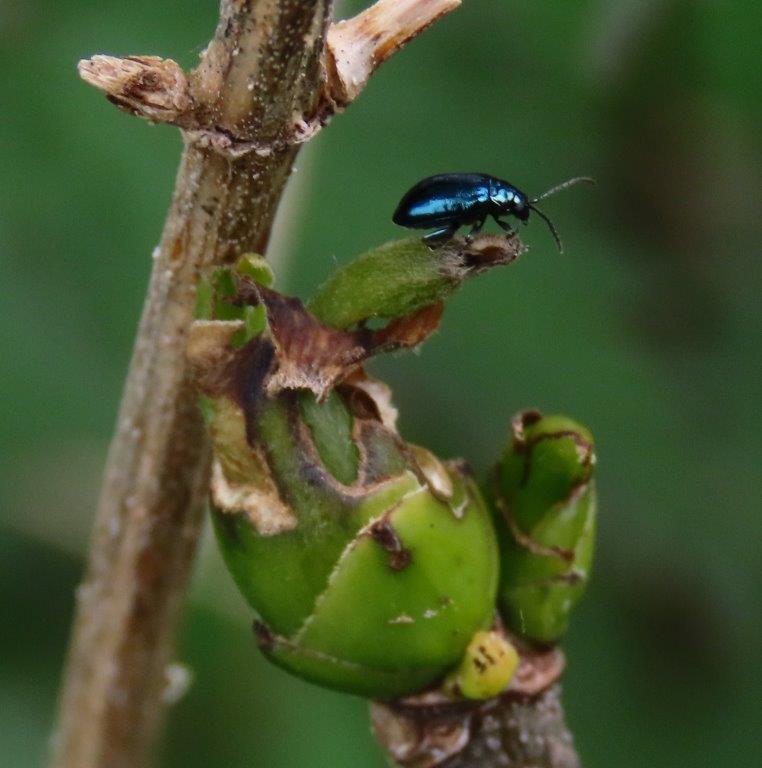
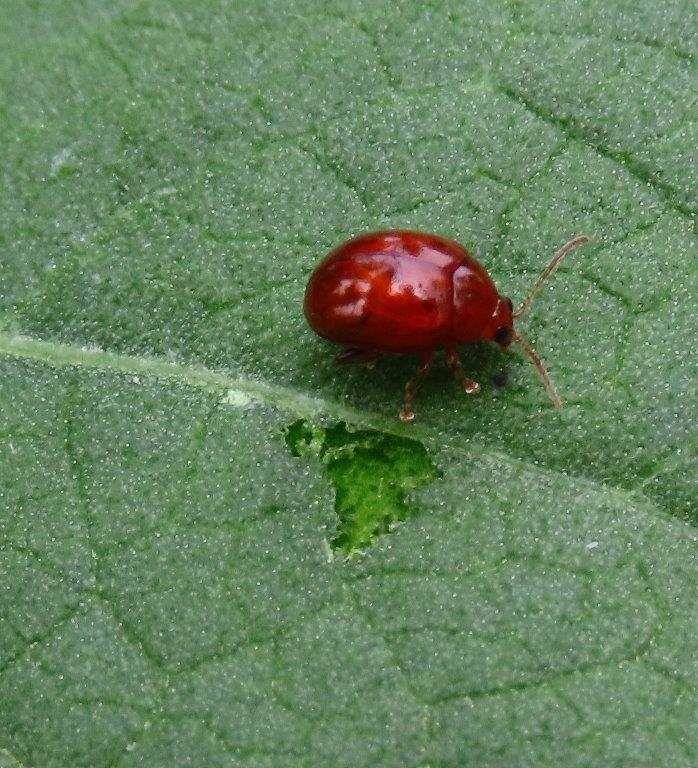
… and in sheltered spots, invertebrate life making most of the sunlight, including our first Dark-edged Bee-flies, Hairy-footed Flower-bees and Green Tortoise-beetles of the year…

… along with much, much more …

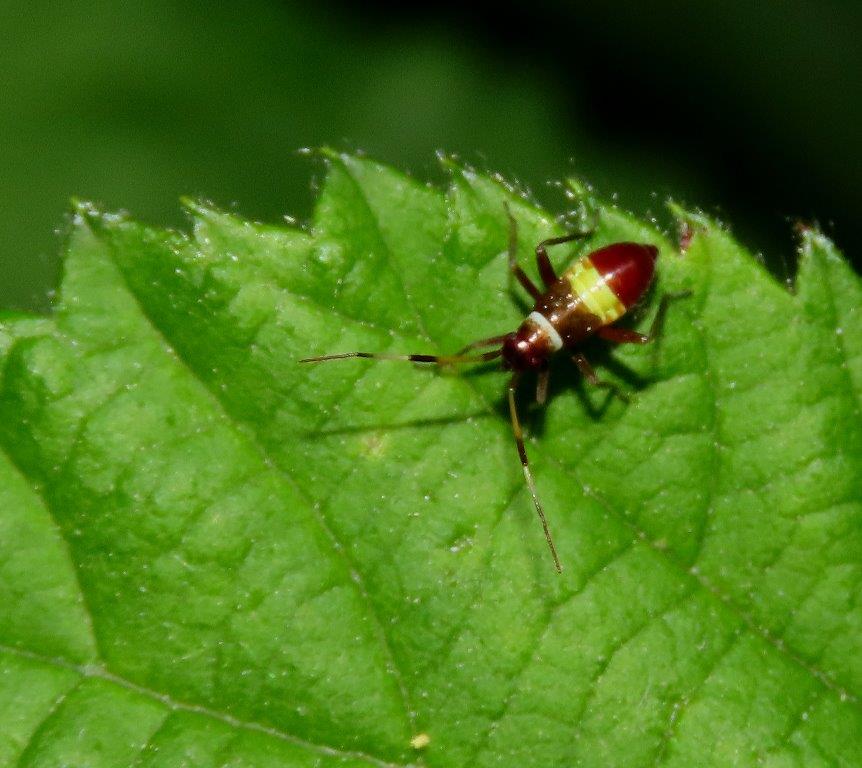
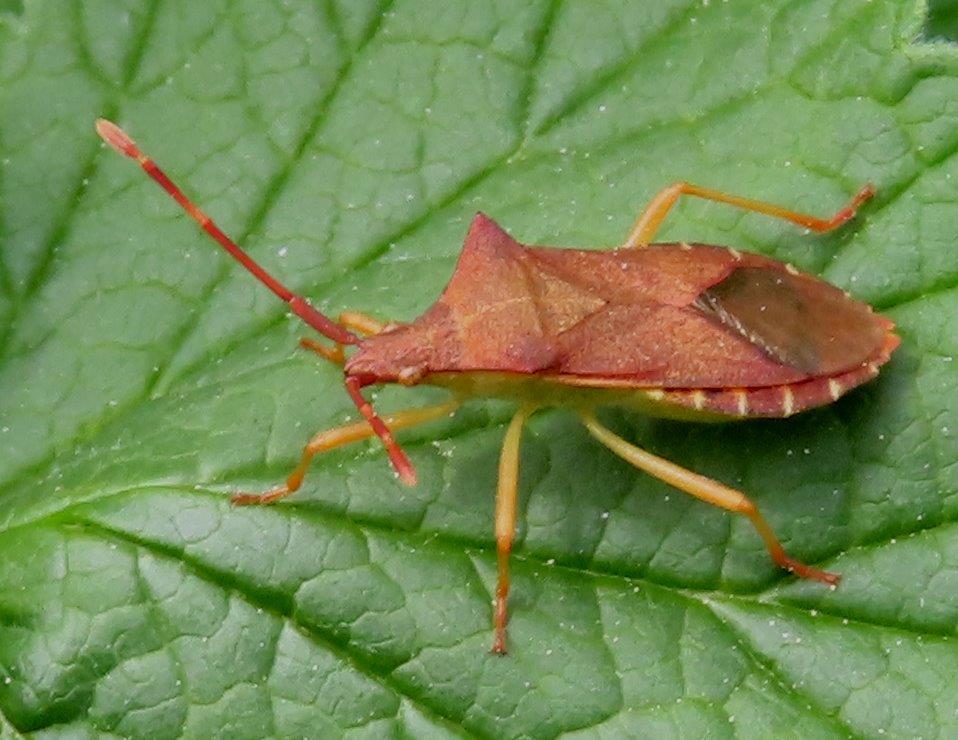
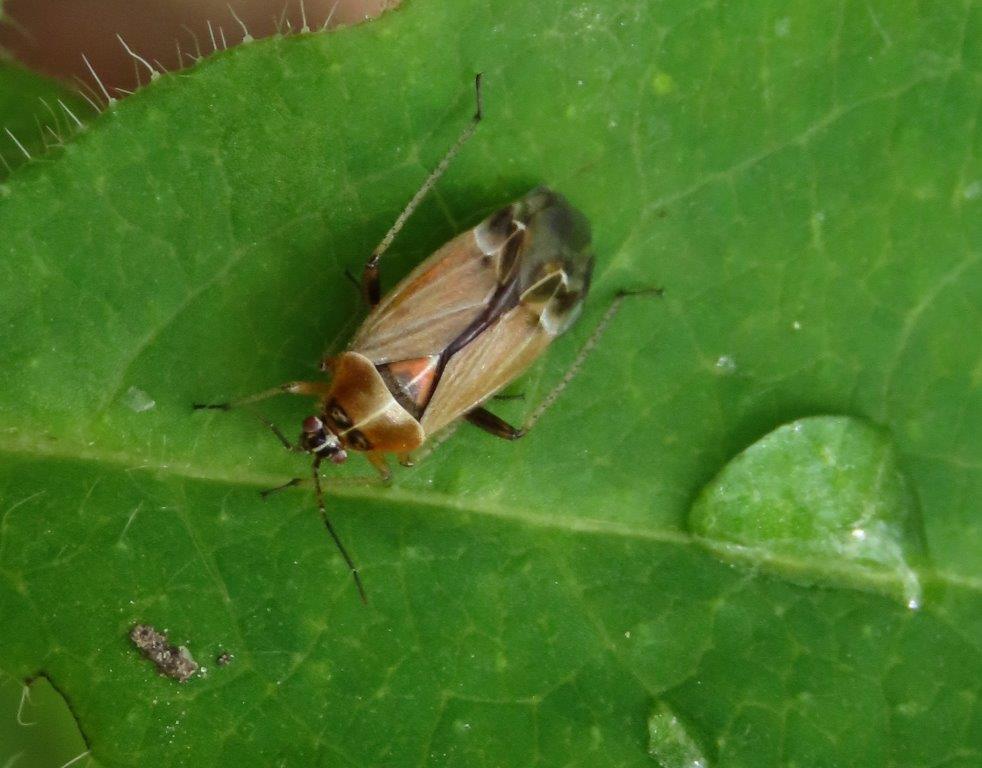
But special mention must be made of two very unexpected bugs, ones that tend to be found in rich sandy habitats and ancient woodland clearings respectively, Rhombic Leather-bug and the spurge-bug Dicranocephalus medius.

The surrounding area of Acton Green is not without interest either, from the Art Deco-style Chiswick Park tube station to the rather more recent Mosaic House, and everywhere splashes of natural colour revelling in the light:

Moving on to Chiswick proper, we went from the High Street and its profusely flowering Hop-hornbeams to the somewhat less attractive flyover…

…and the rather improbable survival of Hogarth’s House amid the roads and offices, with its garden, again an oasis of green, shot through with vivid spring colours.

Chiswick House & Gardens is of course an altogether larger green lung, with calling Nuthatches and singing Blackbirds. and as in all such places resounding to the incessant chatter of Rose-ringed Parakeets.

Coots were sitting tight on their monumental nests in the lake …

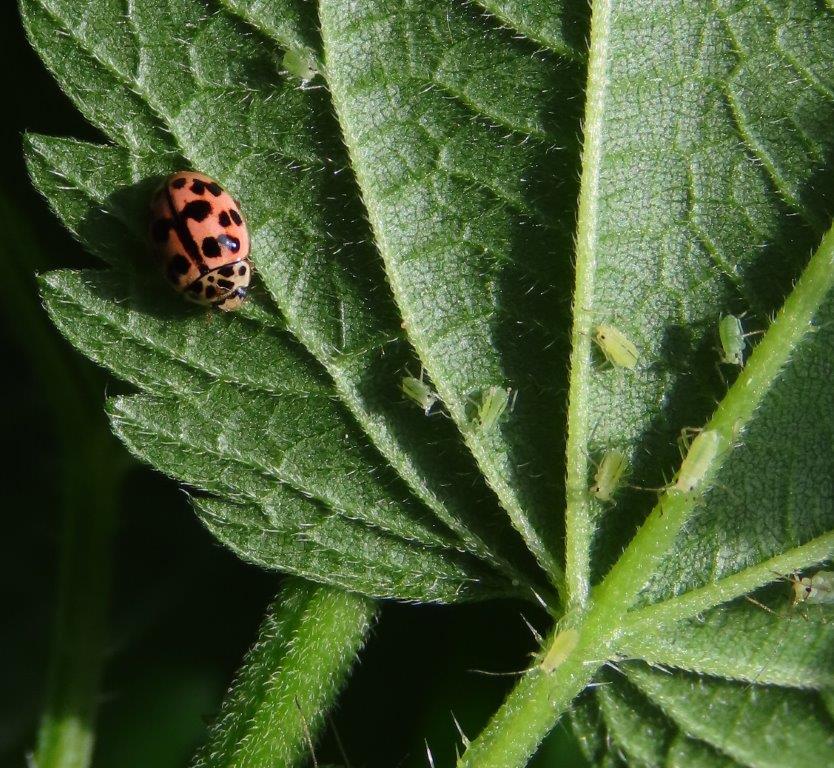
… and Stinking Hellebore was coming to the end of its flower season, while we have never seen Butcher’s-broom flowering so profusely, and as ever harbouring ladybirds, including this Cream-spot Ladybird.

Continuing up-river, Strawberry Hill House was full of the ‘eccentricities’ of the 18th century elite…

… and the garden had its own such oddities, with a lovely display of Hoop-petticoat Daffodils and a Grey Heron which has adopted the table-begging habits of the city pigeons.

Back to the river, our walk took us towards Teddington (sadly not along the bank itself, as the riparian frontage, which should be an asset for all, has been purloined by the select few) …

… across the bridge at Teddington Lock, with weed-waving Great Crested Grebes in full display …

… to Ham Lands nature reserve, where spring was once again asserting itself, with bursting buds of Wild Cherry, Norway Maple and Ash, buzzing Bee-flies, and and Brimstone butterflies everywhere!

A delightful end to our time in the Wild West of London, all rounded off with a welcome pint in The Anglers and a magnificent meal at The Wharf!


#WildEssex – a walk along Mistley Walls

A sunny day sandwiched between rain, rain and more rain –  we were so lucky that our Mistley bird walk turned out to be then!  So lovely to be out in the sunshine, though we were all glad of our gloves and hats as the wind was keen (as Jude’s Mum would have said!).

We kicked off with lunch in The Crown pub which coped with our various dietary requirements admirably  – this place seems to be going up in the world with some refurbishments inside and out. It really is the perfect spot to eat and enjoy views of the estuary, right over to Brantham and Holbrook. Restaurant | The Crown Manningtree | Manningtree

Our walk followed the banks of the Stour from Manningtree to Mistley, looking at the bird life being pushed up to us on the rising tide. The numbers of birds were perhaps not as many as we had hoped for – why was this?  Well, possibly we were slightly late in the season, the cold weather definitely a factor, and worryingly perhaps bird flu has taken a toll. We sadly saw a dead gull on the shore. ‘Social distancing’ isn’t something birds would know about, and Mistley can be a ‘’go to’ gathering place for our feathered friends.

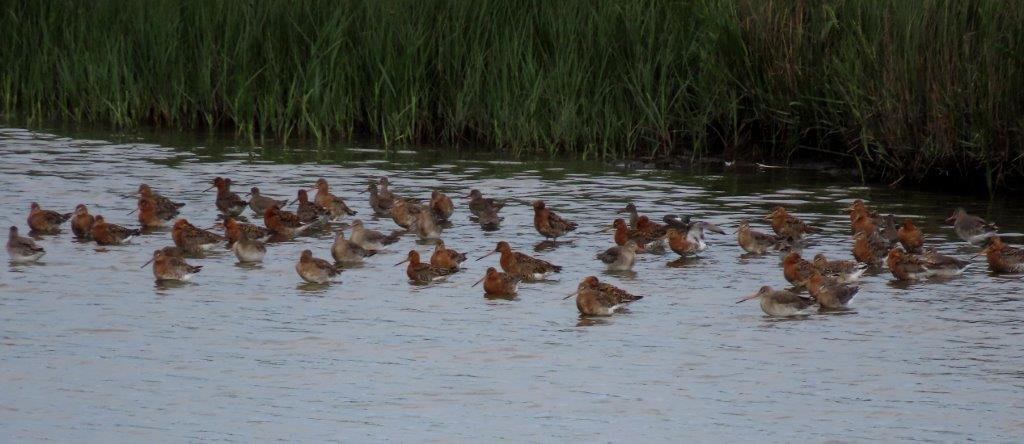
We saw the usual waders, all uniquely equipped with different bill- and leg-lengths enabling them to forage for different goodies in the mud: Black-tailed Godwits (many starting to moult into russet summer plumage), Redshanks, Turnstones, Dunlins and Avocets, with a lone Oystercatcher pecking about in the confines of the old outdoor swimming pool.

Various kinds of duck floated by, including Teals, Shelducks and Mallards, and a couple of Great Crested Grebes with their weird and wonderful head adornments dived for lunch in the deeper waters of the Port as we looked on. Our local celebrity species, Dark-bellied Brent Geese were visible both out on the water in number and nearer the shore in small groups. Each estuary of the Essex coast is internationally important for these charming little geese, together supporting a fifth of the entire world population, breeding in high Arctic Siberia.

Gulls provided entertainment with their squawks and antics. Lesser Black-backed Gulls (particularly handsome birds in our opinion) were demonstrating courtship behaviour; Black-headed Gulls acquiring their ‘black’ heads (actually brown) to make themselves look even more beautiful; Herring Gulls with their customary cries and scuffles for food.

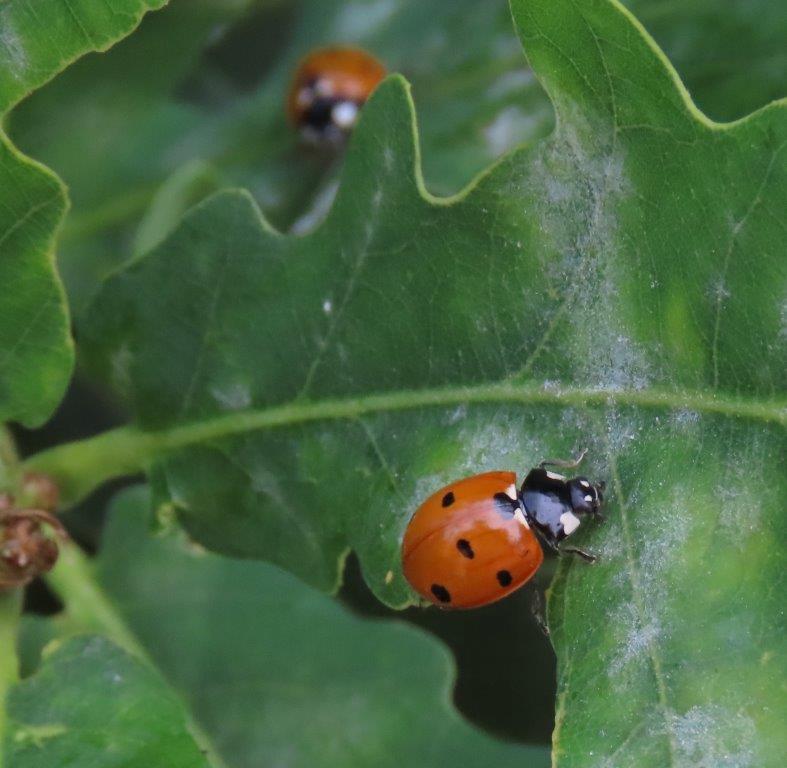
In the Mistley Towers grounds Blackbirds were seen and Robins heard. A Chiffchaff sang its onomatopoeic song, reminding us that Spring really is here (despite the chill wind, and forecast overnight frost!). But as our regulars know, birds are only a small part of what we are about – and other aspects of nature were noticed and enjoyed: Holm Oak leaf-miners patterning the leaves; lichens in many different forms on tree trunks and on the ancient wall of Hopping Bridge; the corky bark growth of Elm; and a smattering of plants including Sweet Violet, Red Dead-nettle and White Comfrey being particularly interesting. Few actual insects were seen apart from a 7-spot Ladybird, though of course the leaf mines were showing evidence of mass insect activity, the adult moths to come later in the summer.


The whole area of the Mistley Walls is historic and interesting – well worth a visit.  The Towers, designed by Robert Adam, proudly demonstrate the wealth that was Mistley. The church constructed between the towers is now long dismantled, but the structures themselves were retained as seamarkers for vessels approaching the port. Nowadays the quay area is rather sad, all fenced off (despite ‘Free the Quay’ campaigning for many years), but the local logistics company is clearly busy judging from the number of large lorries in and out. These vehicles no doubt contribute to the rather overwhelming volume of traffic along the Walls, bringing noise and pollution; although these factors were disturbing to we human beings, the resident (and many) local swans and geese seemed totally oblivious.

Ironically, it is these human intrusions that help to habituate the birds meaning the Walls are the best place to watch these normally shy creatures well anywhere on the Essex coast.

As always we were delighted that such a wonderful group of nature enthusiasts could join us and we look forward to the next WildEssex adventure…


Halifax: four seasons in three days….

Second in our series (after Coventry) of seemingly unlikely holiday destinations, Halifax has been on our radar for several years. Long before Happy Valley-mania, a friend told us of the renovation and reopening of the Piece Hall, and with our love of Industrial Architecture, our interest was piqued. After several false starts (yes, Covid!) we finally got to spend a couple of days there last week…

The Piece Hall, an 18th-century textile market (albeit masquerading as a Venetian piazza) is regarded as the most important secular building in Yorkshire, and it is really a cathedral to commerce, the commerce that shaped West Yorkshire. All was quiet on the days we visited, just right to appreciate the scale and design, and the disappearing vistas down the colonnades.

The Piece Hall alone justified our visit, but there was so much more in the town, from the 19th-cntury Town Hall, designed by Charles Barry (he of the Palace of Westminster fame), to the numerous mills all in various stages of being upcycled into use once again.

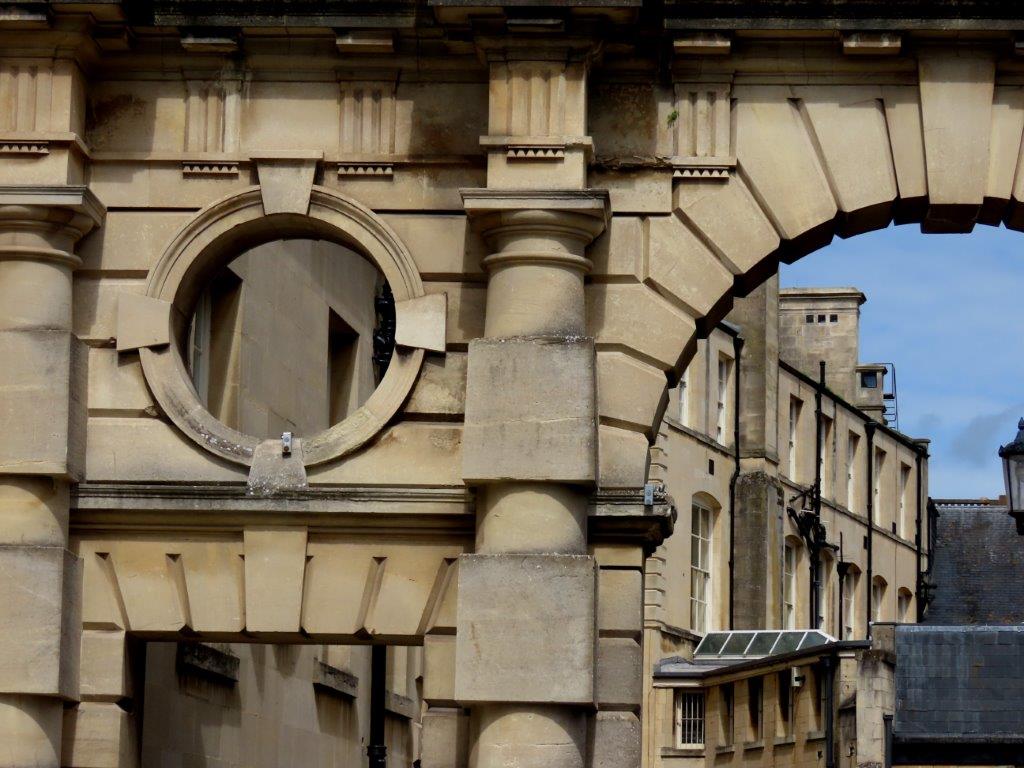
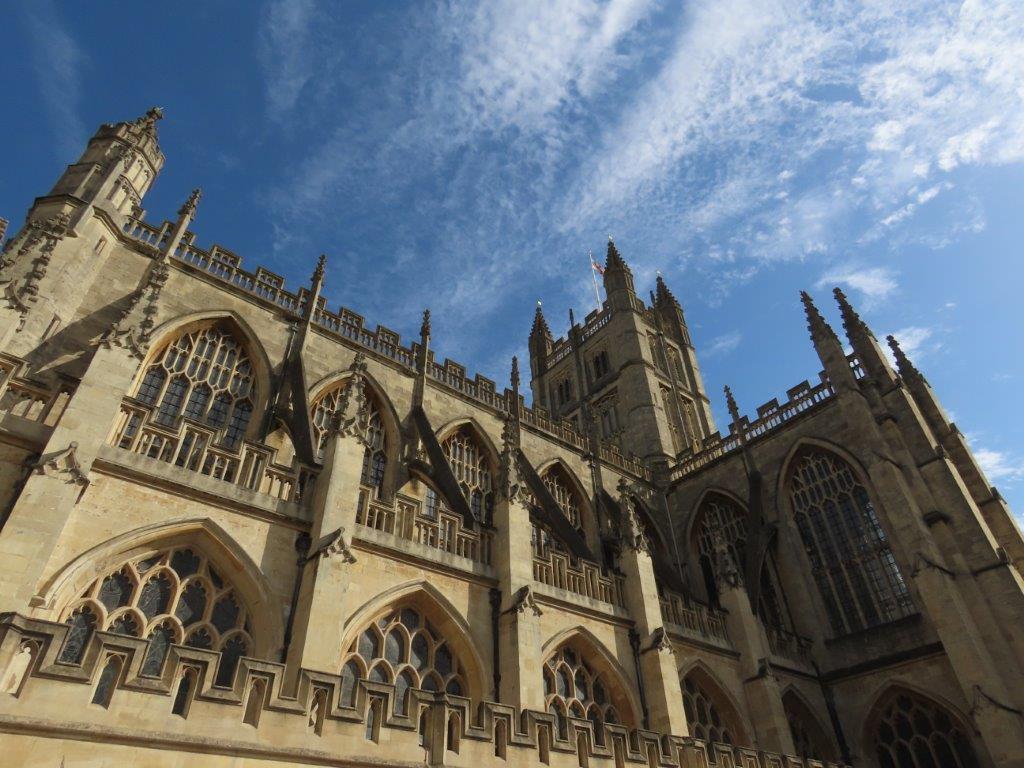
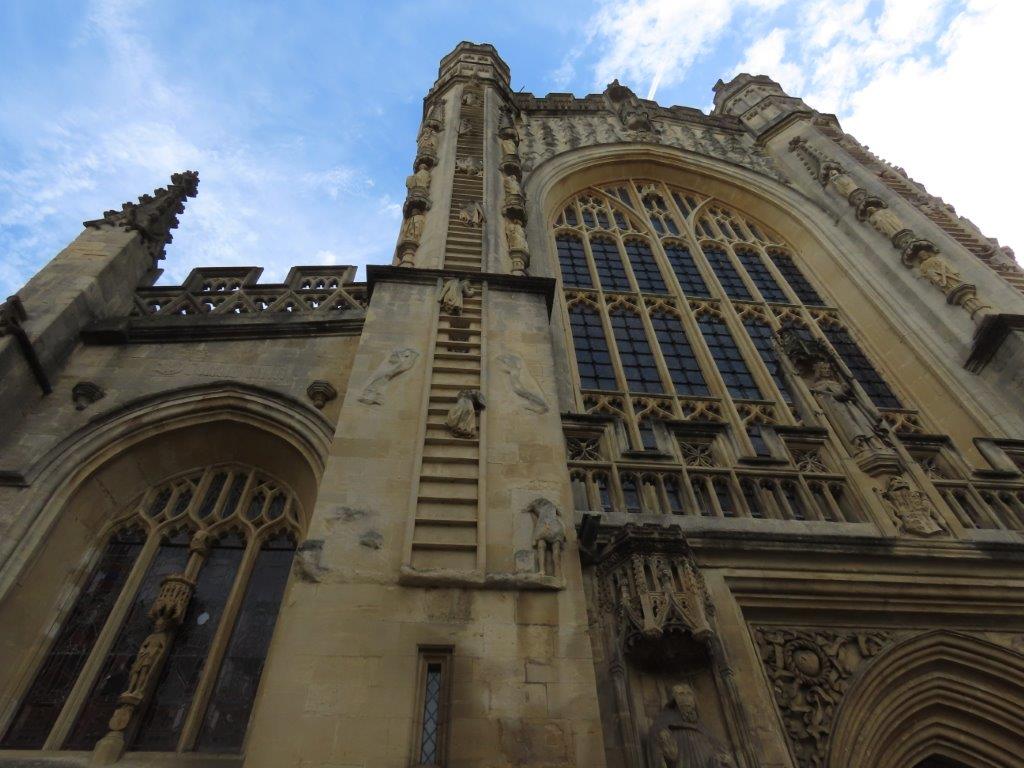
And all buildings looking better than in the not-too-distant past, the honey-coloured stone (especially beautiful in sunlight) having been released from the smoky black legacy of the Industrial Revolution. All except for the oldest building, the Minster (dating back to around 1450) which was presumably too fragile and precious to withstand sandblasting: it still shows the soot of ages.

Pleasantly rustic inside, with some lovely, almost-clear windows showing their leaded tracery to advantage, this church was remodelled by yet another eminent Victorian architect, George Gilbert Scott.

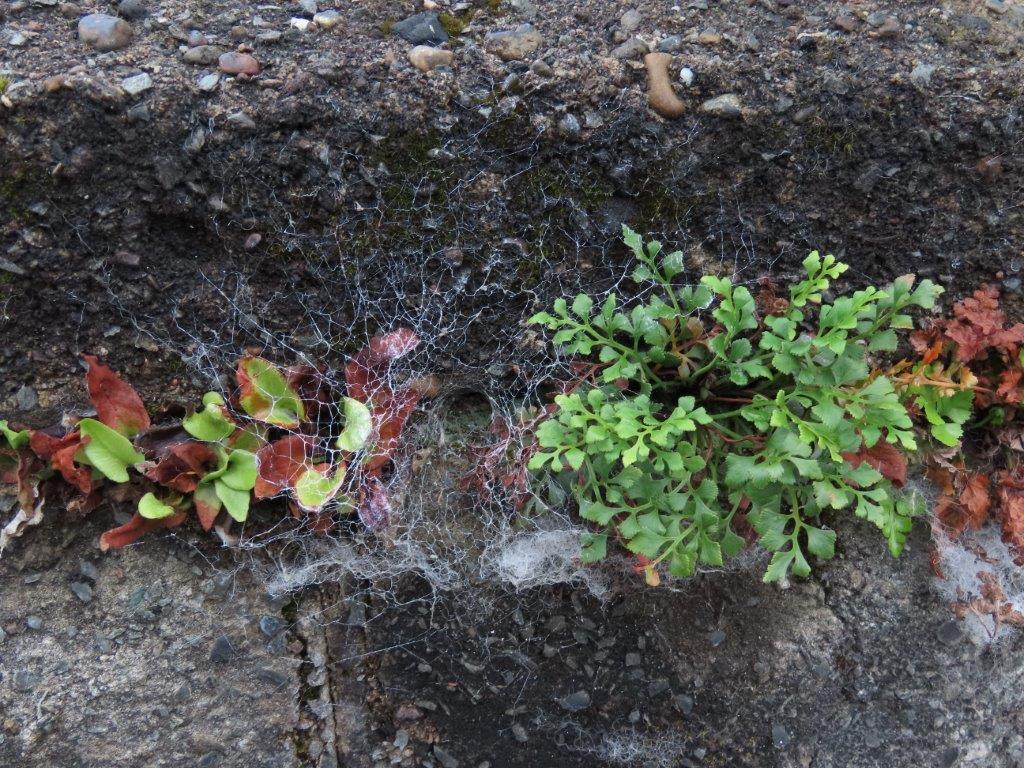
As is our wont, we did of course seek out the green. A walk alongside the River Hebble provided just that, with mosses and ferns clothing stone walls, and last-year’s Self-heal bringing a touch of botanical art.

And it was art (and architecture), intentional and otherwise, that sent us through Leeds on the way to Halifax as we changed trains.

The beautiful blue skies of our arrival, however, didn’t last, and as the third day dawned, Storm Larisa was making her presence felt. Just time for a quick jaunt to see a friend in Sowerby Bridge, then make tracks homewards before the return of winter left us stranded…

Coventry: city of hope and reconciliation, architecture and art – and wildlife

Why Coventry? The question we were often asked when we said we were going away for a couple of days there. Pretty much the same as most people’s view of our home, Essex. But always with an open mind and a sense of urban adventure, we went…and loved it! Helped by two days of glorious winter sunshine and cloudless cobalt skies, good food and drink, welcoming locals and a tangible Christmas spirit as the first hard frosts of winter were unleashed.

Of course the two cathedrals were always going to be a centrepiece, the old, bombed one embracing the modern in a much-needed gesture of reconciliation. Particularly beautiful and poignant in the sunlight were the remnant fragments of stained glass in the mediaeval window tracery…

… but the ruins exuded a tranquility that transcends its troubled past, a great place to contemplate the sculptures and watch the Peregrines on the still-standing steeple.

The new cathedral was no less stunning, with a warm welcome and the ever-changing play of light, shadow and colour from the amazing stained glass and internal architecture:

Elsewhere in the city, an array of unexpected treasures, buildings old and new, the Art Deco interior of our Premier Inn, and even guerrilla shadow-art…

As so often in urban areas, it was the waterways that provided the green arteries of life. The Canal Basin we sought out would probably have merited more time (and a few extra degrees Centigrade!)…

… while the River Sherbourne we stumbled upon by accident, apparently a project area for Warwickshire Wildlife Trust and partners to bring nature into the lives of the city residents. How thankful we should be for such initiatives, giving us the chance to see the surprising (to us) sight of a Little Egret flying out of the shallows into a riverside tree. All very unexpected so close to the city centre, and rendered even more magical with its early morning tracery of frost.

#WildEssex on Tour: Burnham and the River Crouch

A first for #WildEssex – a few days away to a place far enough away to make it seem like a holiday, but not too far, with the necessities – both good wildlife and pleasant pubs 😊.  What more could we have wanted?  Well, Chris’ leg being in better shape may have speeded up the whole thing, but actually a slow pace with frequent opportunities to stop, look and listen fitted perfectly with the whole ethos of Wild Essex. The weather played ball, our group of ladies gelled brilliantly and made the whole experience a lot of fun. So thank you all!

Burnham-on-Crouch is a pretty place with maritime running through all its veins. Some of us resided in one of the ancient waterside pubs, Ye Olde White Harte, complete with lots of beams and quirkiness. Others chose to set up camp together ‘The Camper Van Three’ in their delightful touring vans.  The weather was pretty kind to us – one evening having the best sunset ever (even by Wivenhoe standards)…

… and that on the second evening was almost as impressive!

The ever-changing tides gave us constantly shifting views of the River Crouch – both for the birdlife and for the yachts and other boats moored along the riverside and at the yacht harbour.

Our amblings took us both east and west from Burnham and on the final morning we took a short but very enjoyable boat trip over to Wallasea island, now an RSPB reserve fashioned out of Crossrail spoil on top of a low-lying island previously used for intensive agriculture.

The birdlife here was somewhat disappointing, although we know that come the wintertime it will be teeming with birdlife. We were hoping to spend a whole day there but that was thwarted by the ferry not running the day we had planned; as it happened, the lack of a ferry was serendipitous given the dearth of birds.

On other days, Riverside Park, part of which is a brownfield site (so important for invertebrate life especially) and a de facto Nature Reserve, provided us with lots to admire, and we were impressed with Burnham Wick Farm, a working farm which strives to promote and help wildlife along with their daily raison d’etre of growing food.

During Chris’ ‘Sit-down Sessions’ we had the chance to think about and discuss tides and the moon; the importance of oysters, both in the past and now trying to restore Native Oyster stocks; the conflicts about how best to use our land – food, solar power, wind power, wild spaces, housing? – plus a lot else besides.

So what did we actually see?  We have compiled a list (see here Burnham lists)…., but some of the highlights included:

PLANTS – Sea Buckthorn with its cacophony of Starlings, the berries of the plant now sometimes used in superfood cooking (as an interested passer-by told us) which we tasted but were not particularly impressed with; Sea Aster in all its forms on the marshes; the ‘menagerie’ of plants, Bristly Ox-tongue, Common Fleabane, Goat’s Rue, Slender Hare’s-ear, Buck’s-horn Plantain, Autumn Hawkbit, Dogwood and more; many other fruiting species, often abundantly, including Buckthorn and Holm Oak; whole swards of Strawberry Clover and Narrow-leaved Bird’s-foot-trefoil; plus the beautiful Common Reed, its leaves showing the Devil’s teeth marks – and one of the few plants you can actually identify from the sound it makes in the breeze – known as ‘psithurisim ‘  (thanks Annie!).

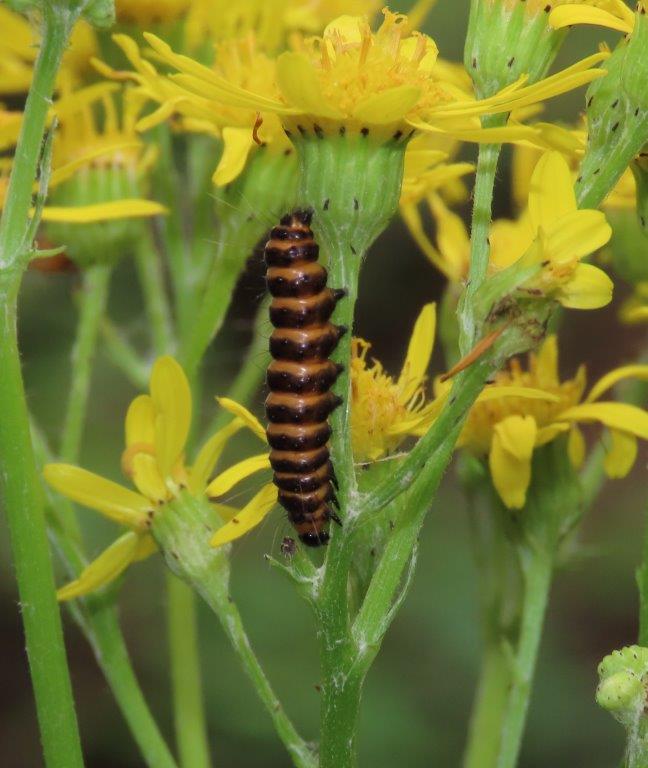
INVERTEBRATES – Garden Spider, an amazingly bright Clouded Yellow butterfly, burnet moth cocoons, plus Ivy Bees homing in on the abundant Ivy flowers, Long-winged Cone-head, Forest Bug and Parent Bugs in a variety of colourways.

BIRDS – shore birds including Little Egret, Black Tailed Godwits and Ringed Plovers, Sandwich Terns, gulls and Cormorants; woodland species including several kinds of tit, Meadow Pipits and Swallows migrating through, noisy Cettis Warblers plus overhead Buzzard, Marsh Harrier and Kestrel.

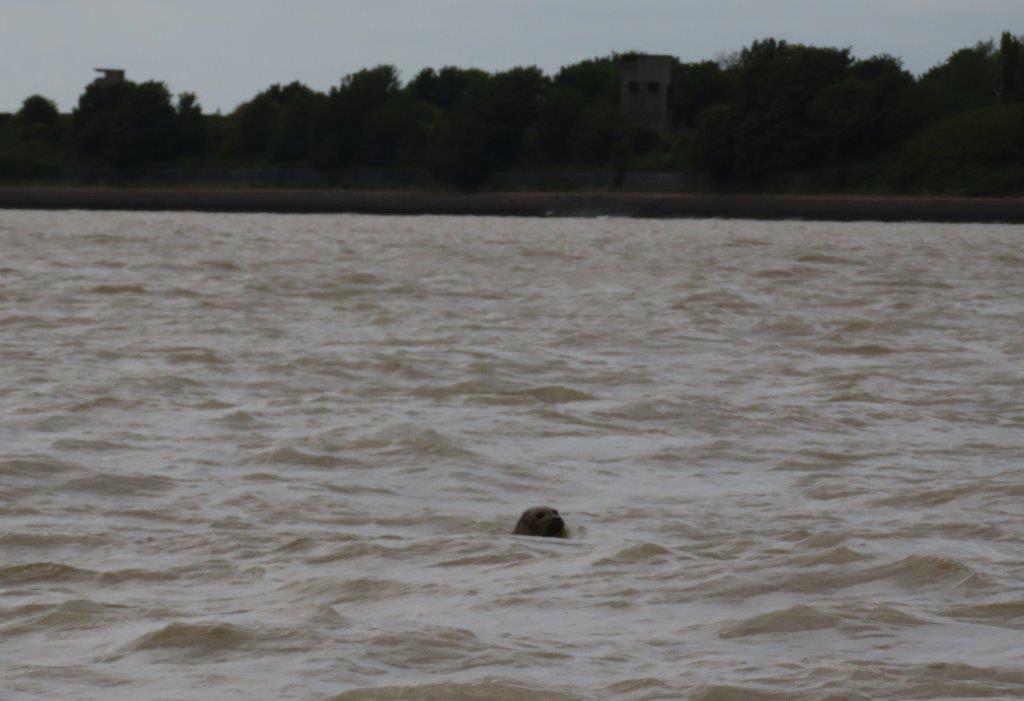
OTHER wildlife delights included fungi (the bracket fungus on Sea Buckthorn proved to be Fomitiporia hippophaeicola, with no previous Essex records shown on the National Biodiversity Network map) and lichens, galls, a Harbour Seal bobbing about, a Brown Hare, a Harvest Mouse nest and various kinds of poo!

So all in all, although things didn’t go entirely to our original plan, we had a great time and really hoping we can organise another Wild Essex On Tour trip next year. Please let us know if you would be interested in being kept in touch about this.

#WildEssexWalks: Harwich Foreshore and Beach

Lovely sunshine greeted us when we all assembled on Harwich Halfpenny Pier this morning.  This was the first time we had organised an outing to Harwich and hope that everyone enjoyed as much as we did.

We wandered from the Halfpenny Pier, via the sandy beach near the New Bell pub, right along the foreshore as far as the Low Lighthouse. From then on we followed the promenade as far as the Banksy spraycation (?) mural at Stone Point, where Harwich turns into Dovercourt.

So what did we see?

Birdlife – Sandwich Terns ( including one being harried by a Herring Gull), Little Egret, Turnstones, Oystercatchers and the ubiquitous gulls.

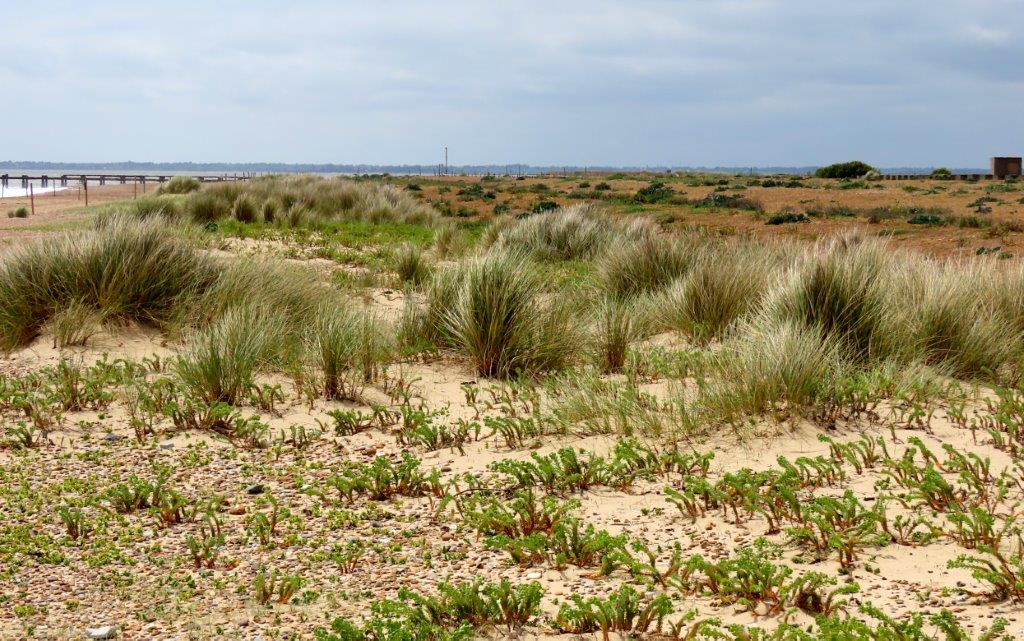
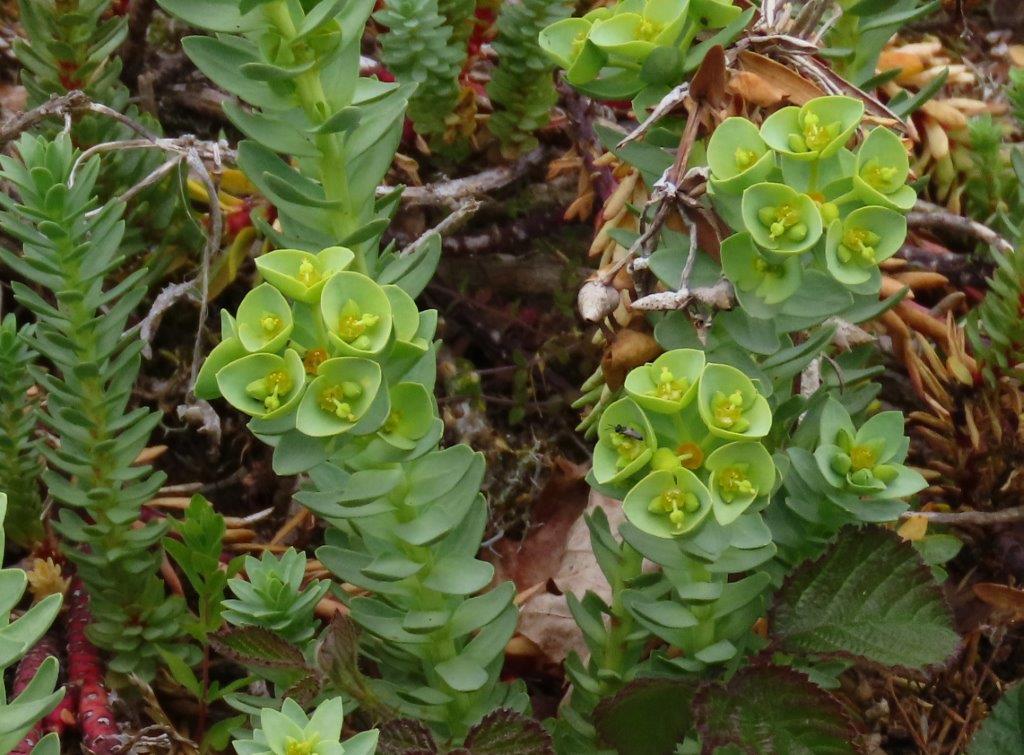
Plants – some specialities of coastal areas, most of which are very uncommon given that their habitat is restricted to a thin sliver where the sea meets the land: Sea Rocket, Rock Samphire, Prickly Saltwort, Sea Holly, Sea Spurge and more…

… along with the rather less welcome invasive Japanese Rose, starting to colonise the low dunes.

Insects – not many, just the occasional butterfly and Meadow Grasshopper, but also a rather interesting (and rare) fly – Dune Villa.

Products of the Sea – shells were discussed, with particular reference to Oysters, from former abundance to severe decline, but now hope in the form of the Essex Native Oyster Restoration Inititative; and fossils, especially sharks’ teeth. One of our group found one in the morning, but later in the day we (plus Chris’ family over from Germany) spent some time looking and each found one. So worth looking for next time you visit Harwich beach.  Lots of seaweeds but these will be a topic of a future walk.

Geology – the Harwich Stone Band (not a pop group), which defines Harwich as the only natural rocky shore in Essex. The band formed from an ash layer from volcanoes 50 million years ago which settled in that area and became compacted to form a layer of rock.

Other life – the tail of a Common Lizard seen disappearing into the undergrowth and these two in their rather groovy new tee shirts!

#WildEssex – Furze Hill, Mistley

A gorgeous day blessed our walk at Mistley today.  What contrast to our Wrabness trip a month before!

Several of us ( including the special co-leader, Eleanor) arrived by train and immediately tucked into a good coffee and cake from the Zero Waste van-man at Mistley Station. When all were assembled we set off through Edme works (with that distinctive malty smell permeating the air), under the railway line and into the first of our varied habitats – a field used sometimes to graze cattle, but today was just full of Meadow Buttercups  and other wild flowers, such as new-sprung Hogweed flowers round the margins and fungi sprouting on the sites of now long-gone cowpats.

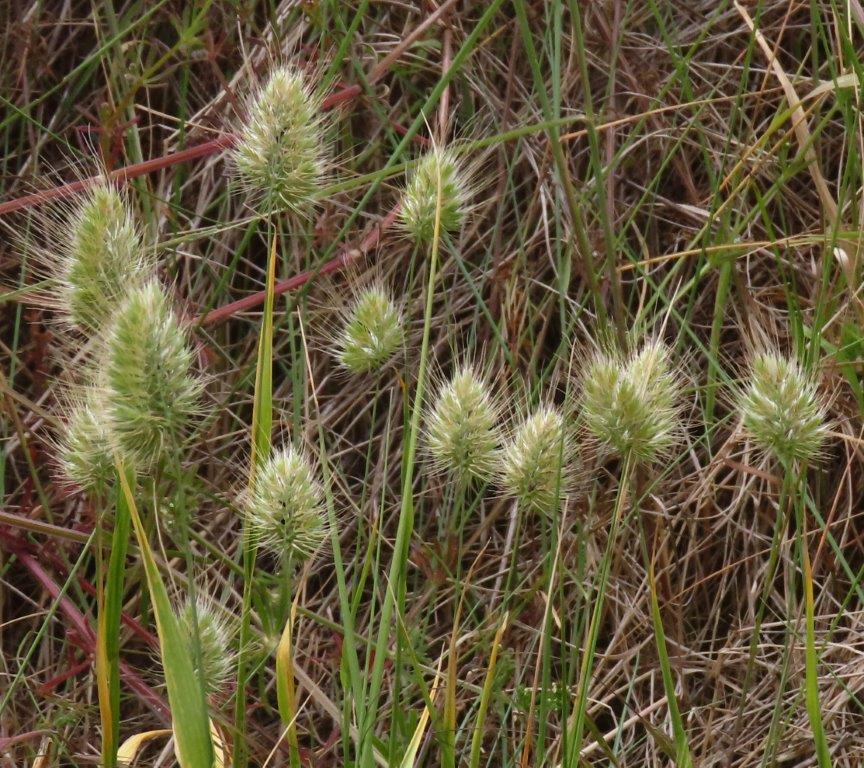
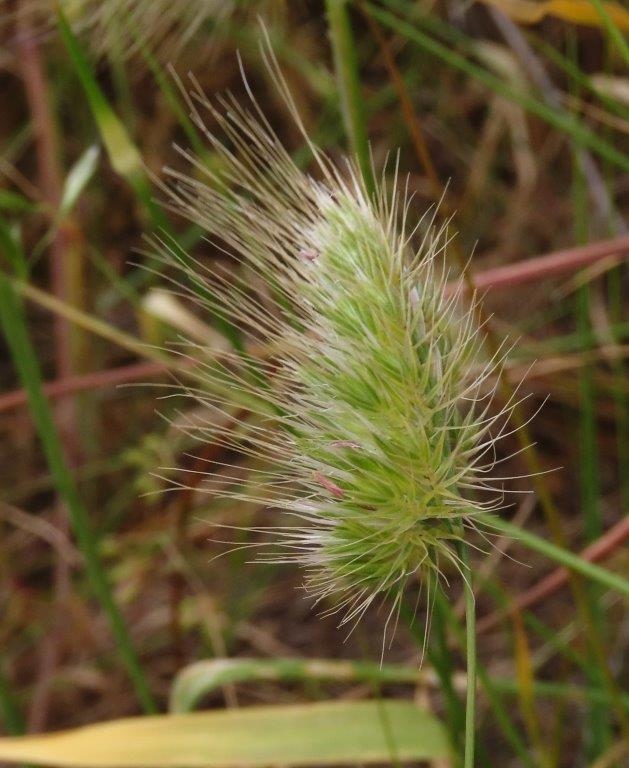
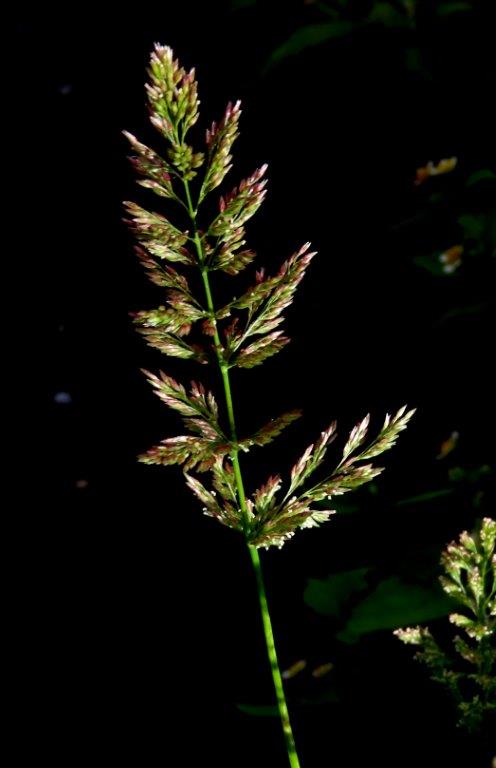
And of course there was also the grasses, many species in fresh flower, and both diverse and beautiful as shown by this Cock’s-foot and Yorkshire-fog.

A Small Tortoiseshell skipped between buttercups, and the big old parkland trees held both Jackdaws and Rooks, whose cawing rose to a crescendo as a Raven swept in (no doubt on the lookout for an easy chick meal) – a dramatic addition to the Essex skyscape over the past five years.

At the foot of Furze Hill, the local springs that led to the 18th century marketing of Mistley Thorn as a spa town coagulate into a streamline fringed with massive Alder trees, harbouring singing Wrens, Blackcaps and a Song Thrush. The leaves were covered in the small galls of the microscopic mite Eriophyes laevis.

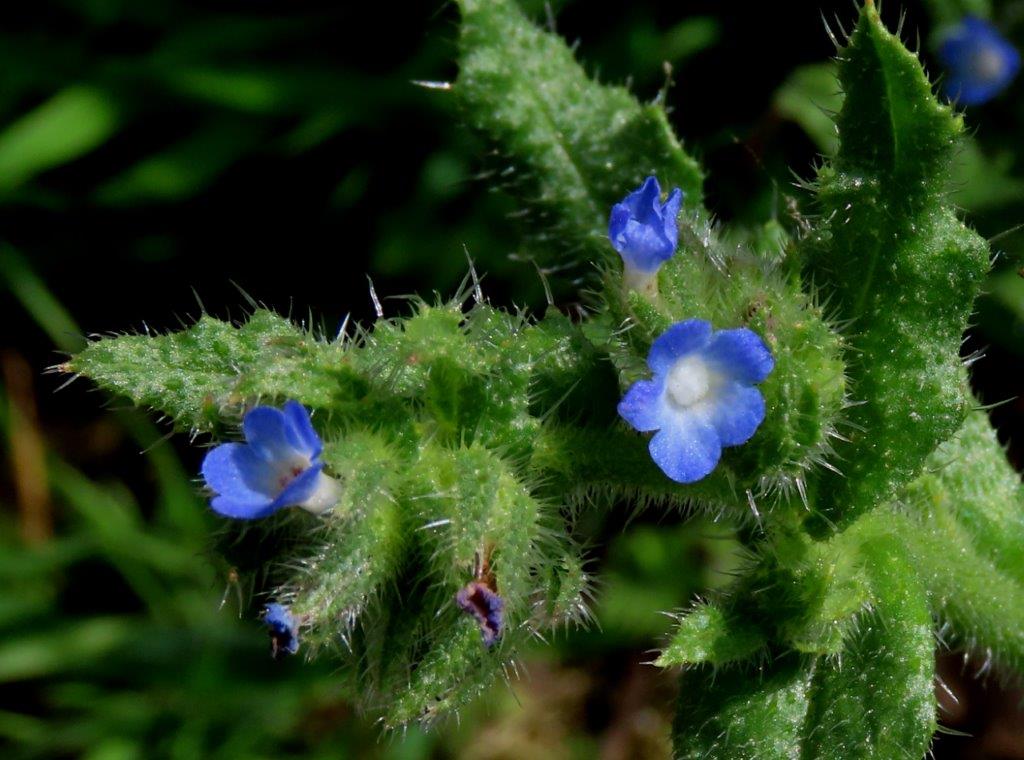
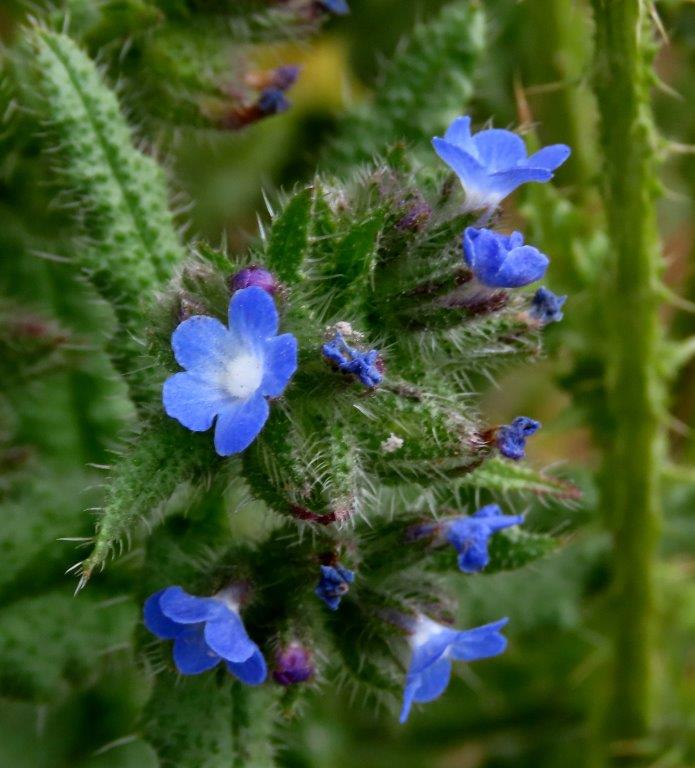
A pleasant walk along a leafy lane ensued (welcome shade!) – many wayside and woodland flowers to be admired, from blue Alkanet and Germander Speedwell, to yellow Wood Avens and white Cow Parsley (going over) and Ground Elder (freshly out), along with many Nettles supporting a myriad of insect life.

After a short walk through a woodland clearing we arrived on to the rec ground where we divided into two groups. Eleanor and Granny went to spend a happy hour on the swings whilst the more ‘grown-up? 😊’ ones enjoyed a walk through the woodland, admiring the natural beauty, in particular the ancient trees.

Of these Old Knobbley was, of course, the star attraction.  According to a rather lovely book by Morag Embleton ‘Old Knobbley the Oak Tree’, it is some 1000 years old and has seen a lot of changes!  Chris’  blogs have more information too Furze Hill, Mistley: home to the Ancients | Chris Gibson Wildlife and #BringingNatureToYou : branching out to Furze Hill, Mistley | Chris Gibson Wildlife.

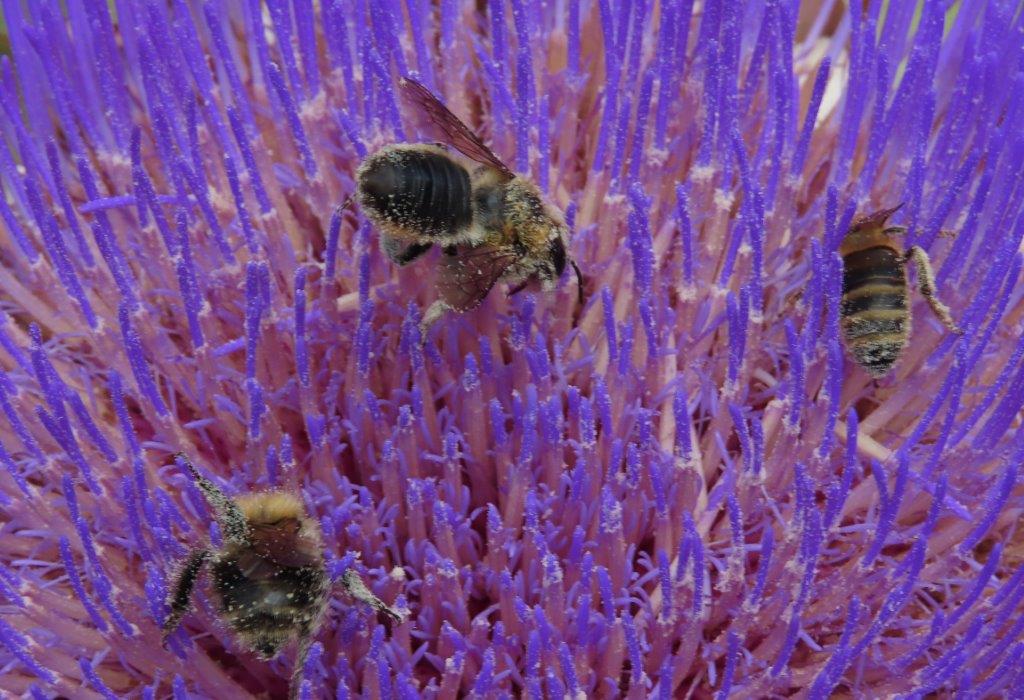
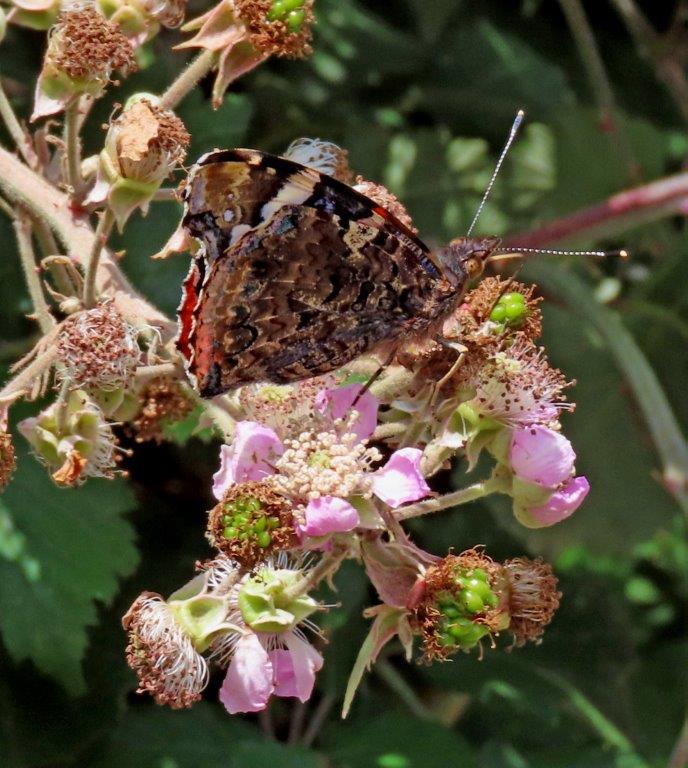
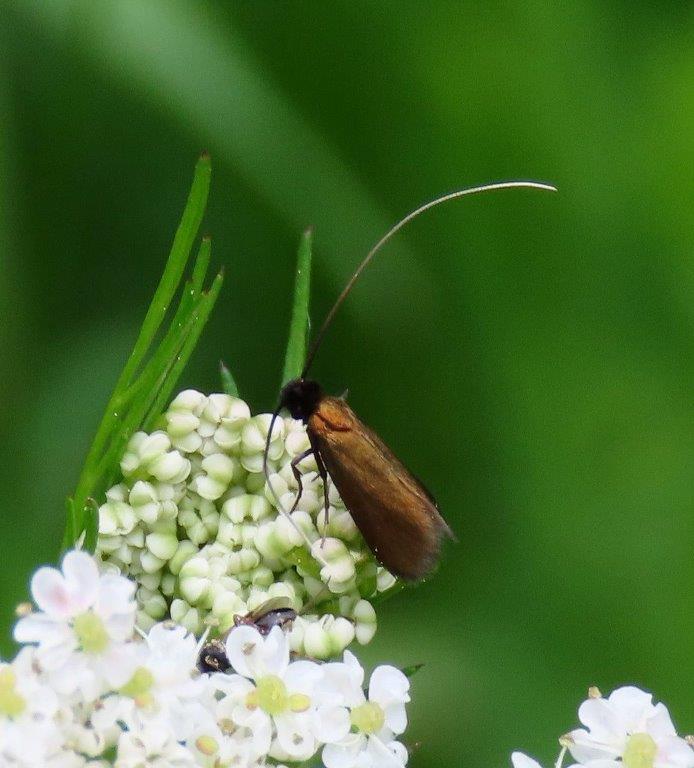
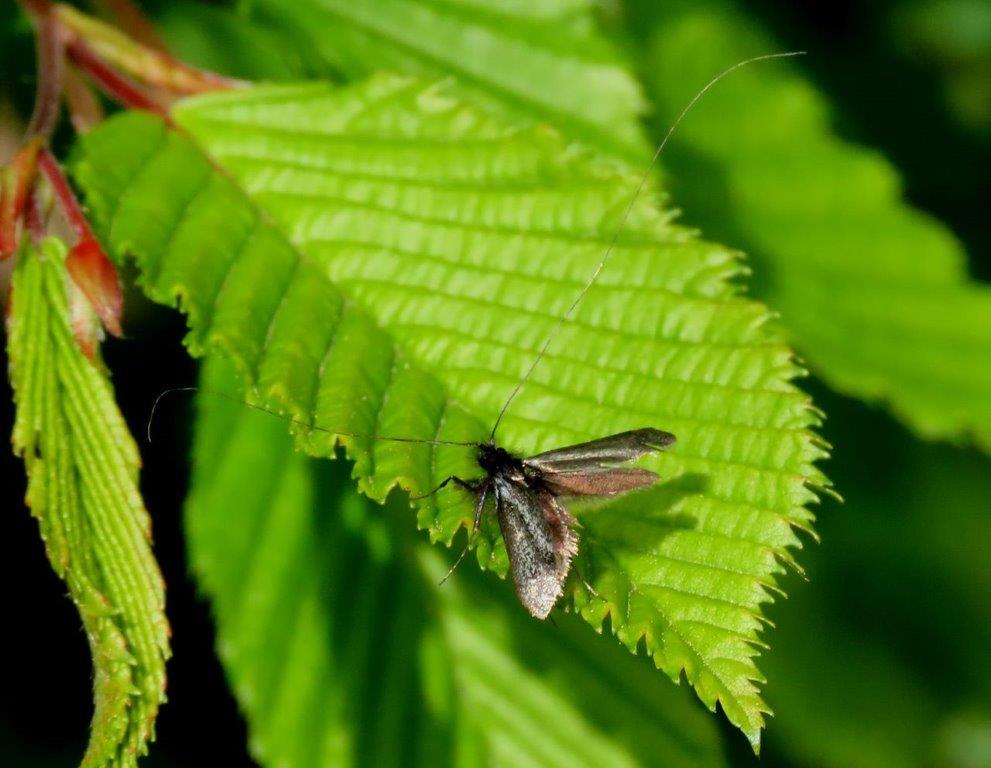
Then where Brambles were bursting into flower, another natural resource was being exploited to the full by Honeybees, bumblebees, Red Admirals and many others, including late-instar nymphs of Red-legged Shield bug Speckled Woods and numerous Gold-barred Longhorn Moths sunning themselves on the leaves.

We completed our session with a stroll over the recreation field itself, which in places has avoided too-regular mowings and been allowed to grow.  Lots of Birds-foot-trefoil (a favourite of bees and Common Blue butterflies) was blooming, together with Lesser Stitchwort, Common Cat’s-ear, Mouse-eared Hawkweed and Sheep’s Sorrel, indicating the sandy nature of the soil. A briskish walk up School Lane back to the station brought the morning to a close.

As always the pleasure was ours, and we hope that everyone enjoyed the experience.  Some of the group continued into Manningtree for a lunch, and we carried on to Harwich to spend the afternoon on the beach.

Looking forward to seeing you all before long, and just to finish with a final mention to be sure to check yourselves for ticks after a countryside walk these days.  Ticks – advice on protection, prevention and removal | Scouts


#WildEssex Walks: Wrabness and the Stour Estuary

Rain, rain and more rain…a feature of our half day walk around beautiful spots of Wrabness, but hopefully not the only memory to be taken away😊 . Our thanks to everyone for their perseverance….’it may brighten up later’….but despite the less-than-perfect conditions we still got a flavour of this relatively unspoilt area, and we hope that it was worth getting a bit damp for!

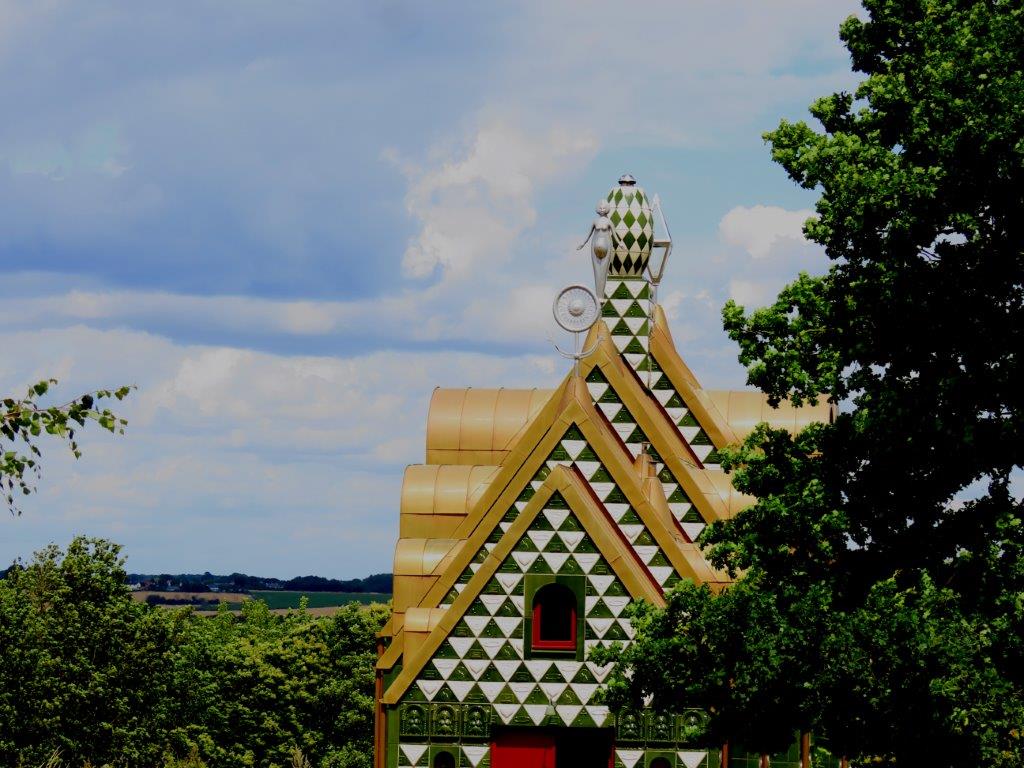
The morning got off to a mixed start – slight issues with the car-parking payment facilities but the prospect of a coffee and use of a loo in the little community shop more than made up for any initial annoyances. We covered quite a distance over the four hours, our first port of call being the House for Essex, the whacky but very interesting Grayson Perry creation.  If you get the chance, do try to visit this on a sunny day, when the whole exterior seems to shine and glow. And to our eyes at least a very fitting addition to the newly-designated Area of Outstanding Natural Beauty.

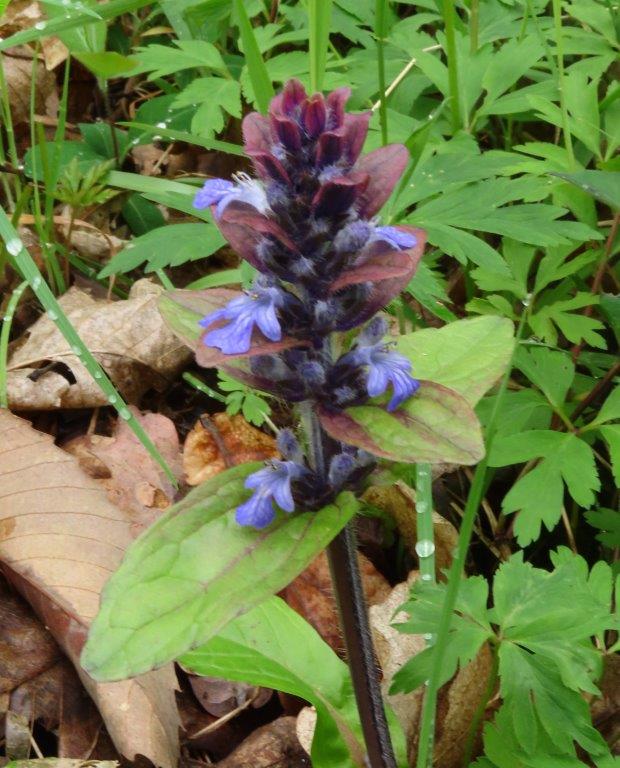
Next, East Grove was a pleasant little diversion from the main route – a perfect little woodland boasting many plants, including Butcher’s Broom, Bugle, Greater Stitchwort and of course Bluebells aplenty.

The juxtaposition of tidal mud and ancient woodland is exceptionally rare in Essex, and the smell of the estuary was a feast for the nose!


Peering out from the trees, we could see a couple of hundred Dark-bellied Brent Geese on the shoreline. The icon of the Essex coast in winter (we are home to a fifth of the world’s population), the Stour is one of its renowned departure points for its return migration…

…and sure enough, a chorus of burbling, and off they went. Next stop the Taimyr Peninsula? Or at least a staging post in the Baltic.

Walking along the seawall we were able to admire many other shore birds: Shelducks, Oystercatchers, Little Egrets and  more. The quiet conditions (hardly any people on foot and a welcome lack of light aircraft overhead which seem to enjoy being noisy), and the damp, still air made Bird Listening (as opposed to Watching) an important part of the day. Farmland birds were in full voice, including Skylarks, Whitethroats and Lesser Whitethroats, with more distant Cuckoo, Nightingale and Yellowhammer.

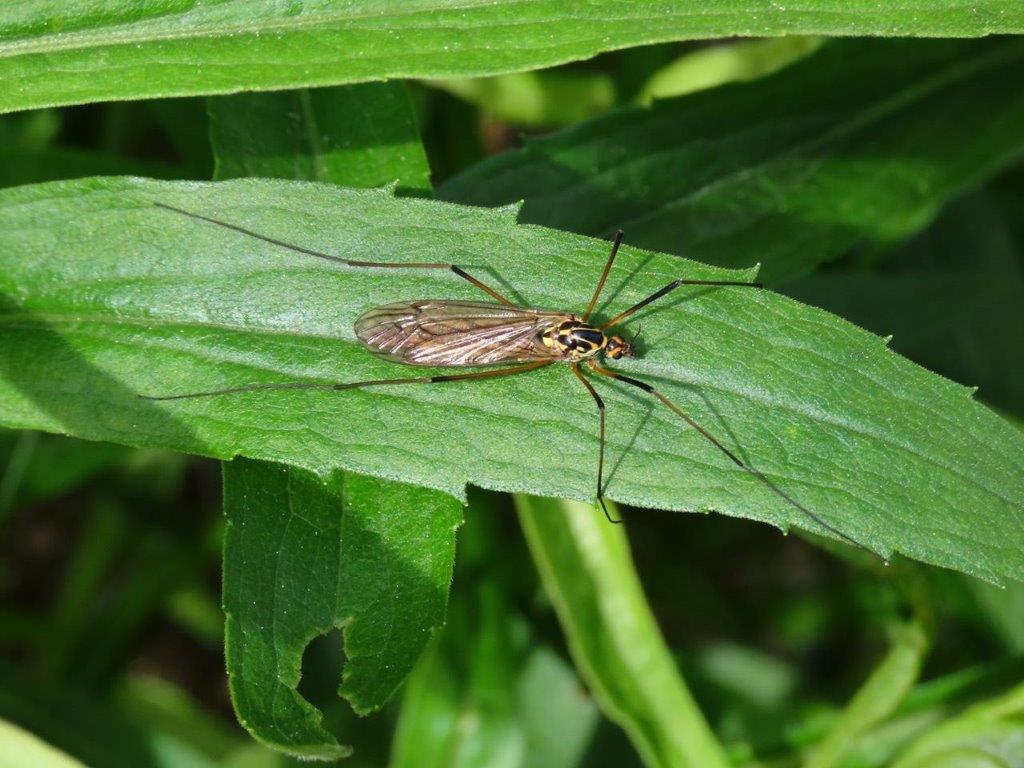
Along this stretch we found virtually the only insects of any note – St Mark’s Flies.  These dangly-legged beasties emerge at roughly the same time as our hirundine visitors, providing food for them after their long flights from Africa. Among the big boys was a smaller, more colourful species, Downland Bibio.

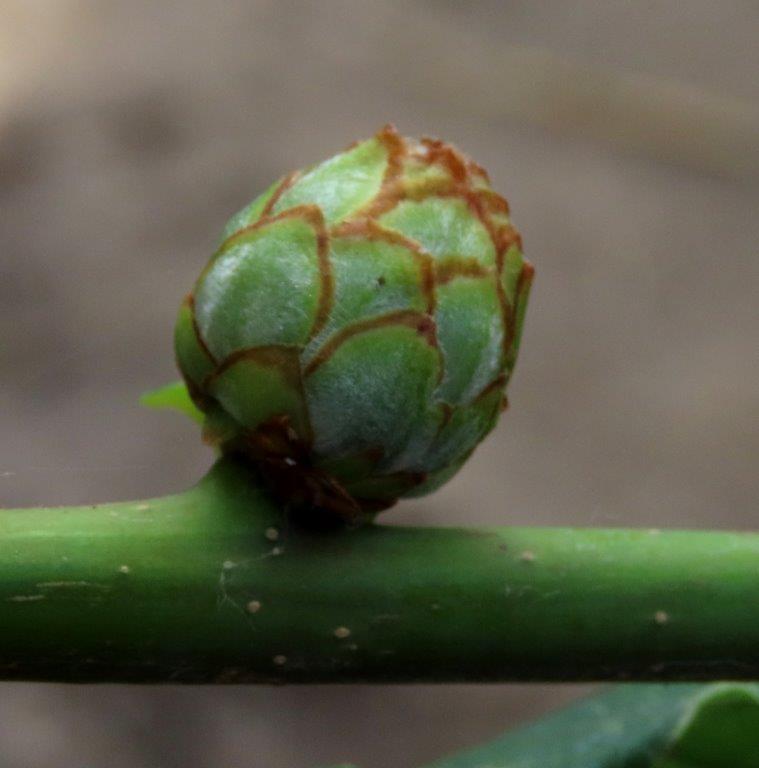
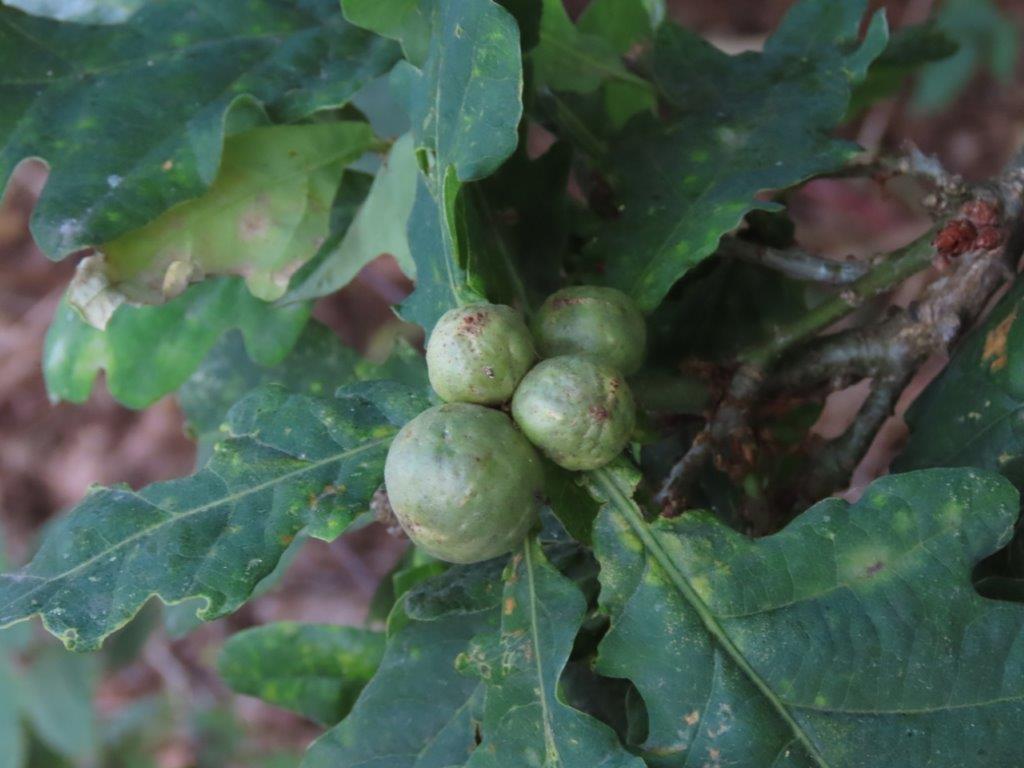
An innocuous field of peas turned out to have a fascinating story – these have been bred to be leafless, the leaflets now being just tendrils which twirl around each other allowing the plants to huddle together, as protection from wind and heavy rains etc. Something we were having to come to terms with ourselves! And some of the Oak trees along the cliff-edge were already laden with galls, even on the leaves which must have burst only a week ago. One or two had huge numbers of large Oak-apples, on one of which we found a micro-hyperparasite, a tiny, long-tailed wasp, presumably a parasite of the gall-causer, itself a tiny wasp!

Next part of the route was along the beach.  Of interest was the geology – the cliffs (SSSI) showing ‘ash layers’ in among the London clay… visible evidence of when these parts were covered in ash from volcanic activity in Caledonia many millions of years ago.  The rocks – part of the Harwich Stone Band (forerunner of the Rolling Stones??) – from which local VIP buildings such as Colchester Castle have been partially constructed – were all around, to be admired, and some adorned with festoons of seaweed. This beach and a similar one at Harwich are the only natural rocky shores between north Norfolk and north Kent.

Rocks and fallen trees  provided a kind of make-your-bum-wet perch on which to eat lunch, though some sensible people in our group found a nice dry boat under tree canopy to eat theirs!  The conditions weren’t really conducive to leisurely beach-combing, but a few shells of interest were found, including Portuguese Oysters (a rampant non-native, potentially squeezing out our local native variety), Slipper Limpets, Cockles in a variety of attractive colours and a Shore Crab’s carapace. Another highlight of the shore walk was seeing the Sand Martins’ nests in the sandy banks – one of only three natural martin nesting sites in Essex.

Onward and up the bank onto the footpath we wended our way into the Essex Wildlife Nature reserve.  By now the wet weather was starting to really take its toll. The rain soaking up from my feet was meeting that dripping down from my coat, and we began to think we should call it a day a bit earlier than originally planned.  This meant missing out the Woodland Burial Site, but perhaps next time! The Nature Reserve – an important site, luckily rescued from development proposals – really does need visiting in the warm (see our evening visit last year, when conditions were perfect…  Wrabness Nature Reserve on a summer’s evening | Chris Gibson Wildlife ). Today there was no insect life whatsoever, but a few plants were worth a mention – Field Horsetail (diminutive relative of the giants from which our coal was laid down, eons ago), White Ramping Fumitory, Spotted Medick and Cowslip – and the many funnel-web spider webs, liberally laced with mercurial droplets…
The birds were not performing as we had hoped. Not a peep from the local Nightingales nor the Corn Buntings. But one important memory that we must take back from the nature reserve was the purring sound of the Turtle Doves…sadly such a rare thing to hear these days, due to merciless hunting in certain Mediterranean countries and the lack of suitable habitat (all they can find are agricultural wastelands ravaged by pesticides and totally lacking the seeds of ‘weeds’) for those that do manage to make it.  But here at least they can find sanctuary.

At this point our group began to separate – some heading for an earlier train, whilst others of us wandered at a more leisurely pace back to the station.  A little stop at the church (unfortunately not open to allow a sit down!), was worth a few minutes of our time, if only to see Annie inside the bell-cage.  Apparently the church tower collapsed in the 17th century, when the bell was ‘caged’, and seemingly that is where it will stay for evermore. And further along the road, we encountered the second of The Twelve Days of Christmas birds – Partridges (Red-legged varieties) which were enjoying the pea-fields.

Again thanks to everyone who stuck with us, and hope that we can repeat this, in more favourable conditions another year.  Writing this, having been home an hour or so, the sun is shining and we can’t help thinking ‘if only….’…